
Meteor Shower Tonight: What's Active and When It Peaks
The major showers with peak nights, rates, radiants and the moon for every year we hold published dates for — plus tonight's cloud cover for your ZIP.
The Draconids are active tonight
Peak night Oct 8–9 (October 8, 2026). Radiant in Draco (high in the north-west after dusk); best evening, right after dark — unusual for a shower. Moon at the peak: 7% lit, excellent — near new moon. Usually quiet, but the Draconids have produced storms of thousands per hour (1933, 1946) and outbursts in 2011 and 2018. Slow, easy-to-photograph meteors.
Active window October 6 – October 10: rates ramp up over the final week and fall off faster after the peak. Check tonight's clouds below, then find a dark sky and look about halfway up, 40–60° from the radiant.
Will it be clear tonight where you are?
Major meteor showers of 2026
| Shower | Peak night 2026 | ZHR | Radiant | Moon at peak | Best time |
|---|---|---|---|---|---|
| Quadrantids | January 3 | 80 | Boötes | 100% · poor | Predawn, 2–6 am |
| Lyrids | April 22 | 18 | Lyra | 33% · good | After midnight to dawn |
| Eta Aquariids | May 5 | 50 | Aquarius | 83% · poor | The last two hours before dawn |
| Perseids | August 12 | 100 | Perseus | 0% · excellent | Midnight to 4 am |
| Draconids active now | October 8 | 5 | Draco | 7% · excellent | Evening, right after dark |
| Orionids | October 21 13 days | 20 | Orion | 81% · poor | After midnight to dawn |
| Taurids (Southern and Northern) | November 5 28 days | 5 | Taurus | 17% · good | Late evening to early morning |
| Leonids | November 17 40 days | 15 | Leo | 57% · fair | After 1 am to dawn |
| Geminids | December 13 | 150 | Gemini | 21% · good | From 9–10 pm through 2 am |
| Ursids | December 22 | 10 | Ursa Minor | 98% · poor | Predawn |
2027 peak nights
| Shower | Peak night 2027 | ZHR | Radiant | Moon at peak | Best time |
|---|---|---|---|---|---|
| Quadrantids | January 3 | 80 | Boötes | 17% · good | Predawn, 2–6 am |
| Lyrids | April 22 | 18 | Lyra | 97% · poor | After midnight to dawn |
| Eta Aquariids | May 5 | 50 | Aquarius | 0% · excellent | The last two hours before dawn |
| Perseids | August 12 | 100 | Perseus | 79% · poor | Midnight to 4 am |
| Draconids | October 8 | 5 | Draco | 59% · fair | Evening, right after dark |
| Orionids | October 21 | 20 | Orion | 60% · fair | After midnight to dawn |
| Taurids (Southern and Northern) | November 6 | 5 | Taurus | 53% · fair | Late evening to early morning |
| Leonids | November 17 | 15 | Leo | 84% · poor | After 1 am to dawn |
| Geminids | December 14 | 150 | Gemini | 98% · poor | From 9–10 pm through 2 am |
| Ursids | December 22 | 10 | Ursa Minor | 29% · good | Predawn |
Peak dates from the International Meteor Organization's Meteor Shower Calendar for each year, converted from IMO's UT maximum to the evening date of the peak night; the peak hour shifts a few hours year to year. Moon illumination computed for 11 pm local on the peak evening.
The ten major showers, and what makes each one worth it
Draconids
Usually quiet, but the Draconids have produced storms of thousands per hour (1933, 1946) and outbursts in 2011 and 2018. Slow, easy-to-photograph meteors.
Radiant: Draco (high in the north-west after dusk). Best: Evening, right after dark — unusual for a shower.
Orionids
Halley's second annual gift. Fast meteors with a broad, multi-night peak — a good shower to combine with autumn aurora season in the northern states.
Radiant: Orion, near the red star Betelgeuse. Best: After midnight to dawn.
Taurids (Southern and Northern)
Low rates but famous for slow, bright fireballs — the "Halloween fireballs." Encke's stream is clumpy, so some years deliver noticeably more bright meteors than others.
Radiant: Taurus, near the Pleiades. Best: Late evening to early morning.
Leonids
The fastest meteors of any annual shower, and the source of the great storms of 1833, 1966 and 1999–2002. Quiet until the parent comet returns in the 2030s.
Radiant: Leo (the Sickle), rising after midnight. Best: After 1 am to dawn.
Geminids
The richest shower of the year, with slow, bright, often colored meteors, and the only major shower from an asteroid rather than a comet. Worth the cold.
Radiant: Gemini, near the bright star Castor. Best: From 9–10 pm through 2 am — the radiant is up early.
Ursids
The solstice shower — overlooked because of the holidays, with occasional outbursts (1945, 1986) reaching 50+ per hour.
Radiant: Ursa Minor, near the Little Dipper's bowl. Best: Predawn; the radiant is circumpolar, so all night works.
Quadrantids
One of the year's strongest showers but with a peak only about six hours wide, so timing and a clear sky matter more than for any other. Bright, occasionally blue fireballs.
Radiant: Boötes (northern sky, below the Big Dipper's handle). Best: Predawn, 2–6 am — the radiant is highest before dawn.
Lyrids
The oldest shower on record — Chinese observers noted it in 687 BC. Modest rates but occasional bright fireballs with persistent trains.
Radiant: Lyra, near the bright star Vega. Best: After midnight to dawn.
Eta Aquariids
Halley's Comet debris. Strong in the Southern Hemisphere; from the US the radiant stays low, so expect long "earthgrazer" meteors skimming the horizon in the hour before twilight.
Radiant: Aquarius (low in the south-east before dawn). Best: The last two hours before dawn.
Perseids
The most-watched shower in the Northern Hemisphere: warm nights, high rates, and plenty of fireballs. The moon makes or breaks it — the calendar on this page computes the phase for each year's peak.
Radiant: Perseus (north-east, rising through the night). Best: Midnight to 4 am; a few earthgrazers in the evening.
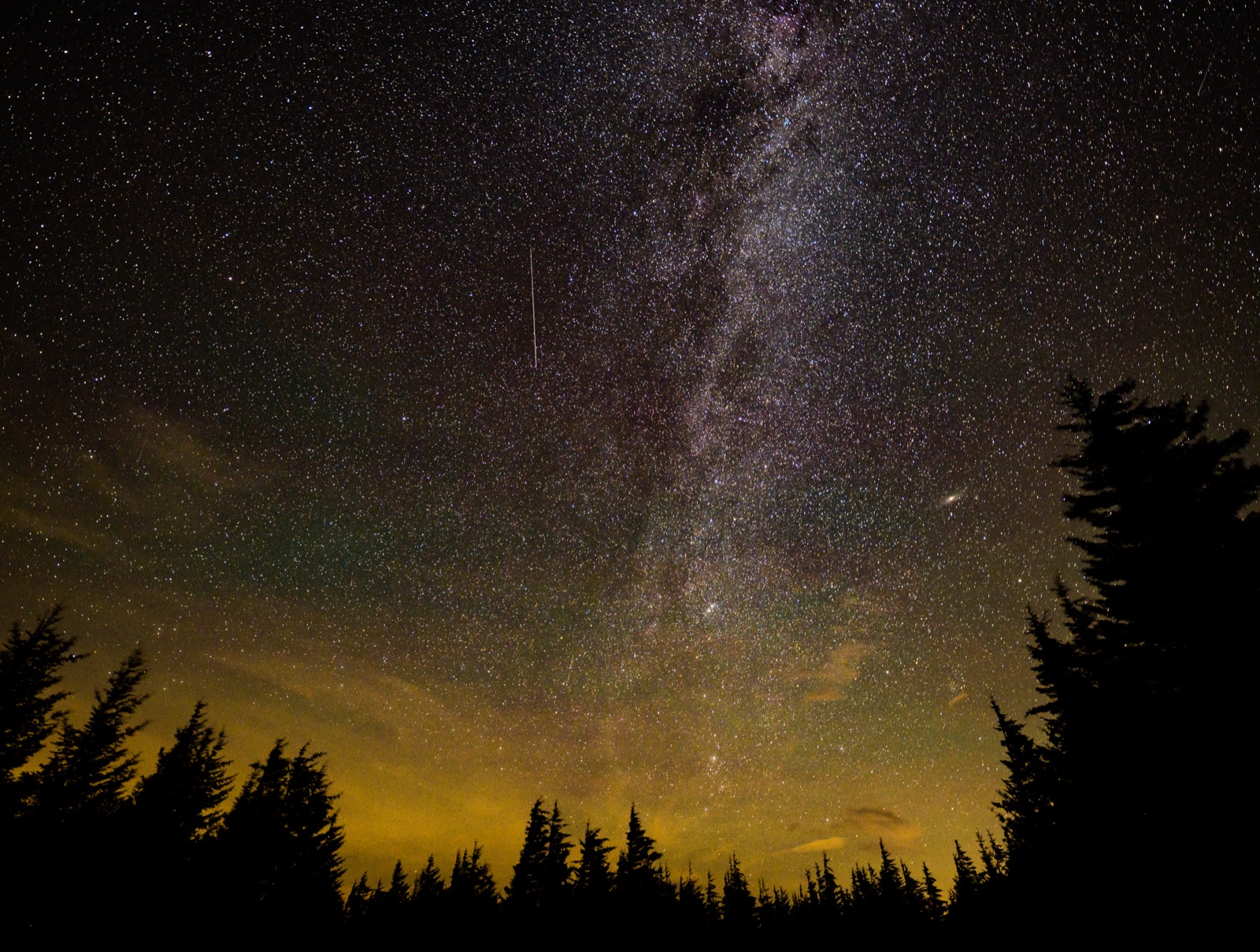
How to watch a meteor shower
Dark, wide, and moon-free
Drive out of city glow, put the moon behind a hill or wait for it to set, and use the widest view of sky you can find. The stargazing forecast page ranks dark-sky sites nationwide.
After midnight
Rates climb through the small hours as your side of Earth turns into the stream. Plan 1 am–dawn for the Perseids, Orionids, Leonids and Quadrantids; 10 pm onward for the Geminids.
Look away from the radiant
A reclining chair, a blanket, no phone screen. Meteors appear anywhere; the longest streaks are 40–60° from the radiant. Give it a full hour — they come in bunches.
Meteor shower FAQ
Cloud cover and sun times from Open-Meteo, read live in your browser; moon phase computed locally. Hero image: “Perseid Meteor Shower (NHQ202108100009)” — Bill Ingalls — Public domain. Related: stargazing forecast tonight · northern lights tonight · aurora forecast by state.