
Snowmobile Trails, State by State
Live trail maps for 18 states from each agency’s own published data, plus season dates and permit rules for every state that runs a trail programme.
Where to check trail conditions
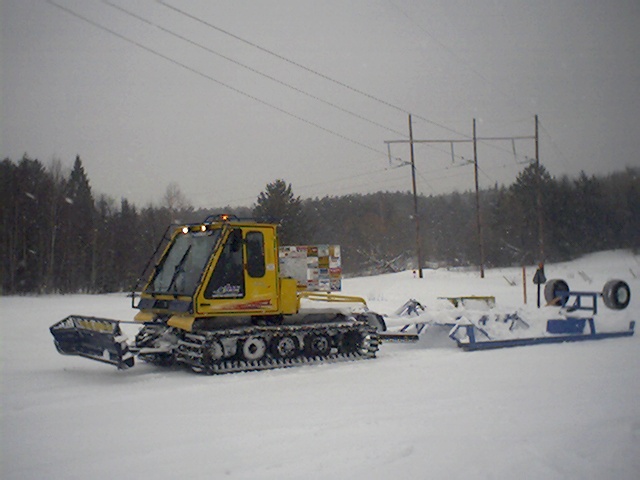
Whether a trail is groomed and rideable is decided where the groomer is: by the club, county board or district forester that maintains that system. Trails close for a bridge out, a landowner withdrawing permission, a timber sale, thin base or open water, and those calls are made locally and often daily. Every state page here links the authority that publishes current conditions for that state.
Michigan is the one state that publishes a per segment status flag, maintained by its Department of Natural Resources with twelve documented values. On the day it was measured, 4,278 of 4,369 Michigan segments were flagged open, with the rest closed for reasons including water on the trail, a bridge under repair, a timber harvest and a washout. The Michigan map shows that flag by colour. In every other state the club or county report is the source, and one Idaho county also publishes per segment grooming dates.
Trail maps by state
18 states publish snowmobile trail geometry through public map services, and the map on each of those state pages loads it live from the agency. The table lists what each state publishes, its season window, and the first thing a rider has to buy.
| State | Map | Season window | First thing to buy |
|---|---|---|---|
| Northeast | |||
| Maine | 3,772 lines | Not published | Ask the agency |
| New Hampshire | 5,989 lines | Not published | Ask the agency |
| Vermont | 2,175 lines | Dec 16 to Apr 15 | Ask the agency |
| Massachusetts | Agency map | Not published | Ask the agency |
| Connecticut | 145 lines | Set locally | Ask the agency |
| New York | 2,911 lines | Not published | Ask the agency |
| Pennsylvania | 78 lines | By rule | Ask the agency |
| Midwest | |||
| Ohio | 61 lines | Not published | Ask the agency |
| Indiana | 9 lines | Not published | Ask the agency |
| Illinois | Agency map | Not published | Ask the agency |
| Michigan | 4,369 lines + status | Dec 1 to Mar 31 | $65 |
| Wisconsin | 13,325 lines | Set locally | Ask the agency |
| Minnesota | 275 lines | Dec 1 to Mar 31 | $113.50 |
| Iowa | 542 lines | Not published | Ask the agency |
| Nebraska | Agency map | Set locally | Ask the agency |
| South Dakota | Agency map | Dec 15 to Mar 31 | $10 |
| North Dakota | 263 lines | Dec 1 to Apr 1 | Ask the agency |
| Rockies | |||
| Montana | Agency map | Not published | $20 |
| Wyoming | 555 lines | Not published | Ask the agency |
| Colorado | 1,906 lines | Not published | Ask the agency |
| Idaho | 7,172 lines | Set locally | $45.50 |
| Utah | 182 lines | Not published | Ask the agency |
| West | |||
| Washington | 1,098 lines | Not published | Ask the agency |
| Oregon | Agency map | Not published | Ask the agency |
| Alaska | Agency map | Not published | Ask the agency |
Massachusetts, Illinois, Nebraska, South Dakota, Montana, Oregon, Alaska run a trail programme and publish no trail geometry a browser can load, so those pages carry the season dates, permit rules and the authority that holds the map. Montana and Alaska publish layers whose terms do not permit reuse here, and their pages link the agency map directly.
Season dates by state
A hunting season is a legal window set for the whole state. A snowmobile trail opening is usually a decision about whether there is enough base to run a groomer over, and that decision sits wherever the groomer sits. 5 states publish a statewide window; the rest open county by county or club by club.
| State | Opens | Closes | Who publishes it |
|---|---|---|---|
| Michigan | December 1 | March 31 | Michigan Department of Natural Resources |
| Minnesota | December 1 | March 31 | Minnesota Department of Natural Resources |
| North Dakota | December 1 | April 1 | North Dakota Parks and Recreation Department |
| South Dakota | December 15 | March 31 | South Dakota Department of Game, Fish and Parks |
| Vermont | December 16 | April 15 | the Vermont Association of Snow Travelers, a nonprofit that runs the statewide trail system |
Two of those five carry a condition written into the window itself. North Dakota’s trails run in that window only where there are at least four inches of packed snow, and Vermont’s open on their date only if there is enough snow to open on. Minnesota hedges its own window with the phrase “when snow conditions allow”, and Michigan pairs its dates with a note that grooming happens once there is enough snow on the ground.
Pennsylvania does something no other state does: it publishes a rule rather than a date. Its state forest trails open the day after the last day of the regular or extended rifle deer season, and close on April 1 or earlier if the district forester decides. That makes the snowmobile opening a function of the deer calendar, which is a genuinely odd and rather charming piece of administrative history, and it is why the Pennsylvania page links to the deer season dates.
Registration and trail passes
States use one of three permit models, and they do not carry across state lines. A rider legal at home can cross a border and need a trail pass that does not exist in their own state, or find that their home registration is not honoured. The state pages name each state’s model and the agency that sells the permit.
Two things to buy. The registration makes the machine legal; the trail pass funds and licenses the groomed network, and visitors usually need it too.
12 states here: Vermont, Massachusetts, Illinois, Michigan, Wisconsin, Minnesota, Iowa, Nebraska, North Dakota, Montana, Oregon, Utah
One thing to buy. The state takes its grooming money out of the registration rather than selling a pass on top, so there is nothing else to hunt for at the counter.
10 states here: Maine, New Hampshire, Connecticut, New York, Pennsylvania, Ohio, Indiana, South Dakota, Colorado, Alaska
One instrument does both jobs, and it is what gets checked on the trail. Visitors are generally not exempt from it.
3 states here: Wyoming, Washington, Idaho
Fees change between seasons and several states publish them only through the issuing agency. Where a state publishes a current figure, its page lists it with the date it was read; otherwise the page links the agency that sets it. Two figures worth knowing: Michigan’s trail permit rose from $52 to $65 under a statutory five year inflation adjustment, and Minnesota’s trail pass is $50 plus a $1 issuing fee, so $51 at the counter.
States without a trail programme
25 states run a snowmobile trail programme and have a page here. The states below have no state trail system; riding there is on federal forest land or at private resorts, and the agency to ask is linked.
- Rhode Island. Rhode Island requires snowmobile registration under state law but runs no state trail system, so there is no trail network to map or to date. Rhode Island Department of Environmental Management
- New Jersey. New Jersey registers snowmobiles through its Motor Vehicle Commission but runs no state trail system. Registration rules and current fees are published by the commission. New Jersey Motor Vehicle Commission
- West Virginia. West Virginia runs no state snowmobile trail programme. Riding is on the Monongahela National Forest and at private resorts, and the forest and the resort are the sources for trail information. West Virginia Division of Natural Resources
- New Mexico. New Mexico registers snowmobiles under its off-highway vehicle programme but has no state trail system. Riding is on the Carson and Santa Fe National Forests, and the forest is the authority to ask. New Mexico Department of Game and Fish
- California. California has high Sierra snowmobiling organised around its Sno-Park system rather than a state trail network, and California State Parks publishes the Sno-Park locations and permit rules. Trail information comes from the national forest for the area you are riding. California Department of Parks and Recreation
- Nevada. Nevada covers snowmobiles under its off-highway vehicle registration and puts the money into a grant programme, but runs no state trail system. Riding is on federal land in the Sierra and the Ruby Mountains, and the managing forest is the source for trail information. Nevada Department of Motor Vehicles
19 states have no snowmobile season: Delaware, Maryland, Virginia, North Carolina, South Carolina, Georgia, Florida, Alabama, Tennessee, Kentucky, Mississippi, Louisiana, Arkansas, Texas, Oklahoma, Missouri, Kansas, Arizona, Hawaii.
Plan the rest of the winter
Snowmobile trail questions
Trail layers load live from the publishing agency, and each state page names the publisher and the newest date in its data. Season dates and permit figures are read from the agency’s own page and carry the date read. Links verified September 4, 2026. Current trail conditions come from the authority named on each state page.