
Ant Season 2027: When Ants Come Indoors, State by State
Carpenter ant swarm windows as each region’s extension service publishes them, the three characters that tell a winged ant from a termite swarmer, and where the federal fire ant quarantine actually runs. No agency publishes a temperature threshold for swarming, so the calendar here is the published one.
There is no temperature that starts ant season
Ants are the highest call volume household pest in the country and their season is spring, which makes the obvious tool a gauge: read a soil temperature, print a number, call it a swarm forecast. The published science does not support one.
Across roughly twenty land grant extension services, including the carpenter ant fact sheets from Penn State, Ohio State, NC State, Nebraska, Clemson, UGA, UF/IFAS, Washington State, New Hampshire and Colorado State, not one publishes a numeric air or soil temperature threshold for carpenter ant swarming. The numbers that circulate online trace back to pest control marketing rather than to an agency. The closest published mechanism is this:
Carpenter ant mating flights are triggered by photoperiod and by changes in temperature rather than by any particular temperature being reached. That is why no agency publishes a number.UF/IFAS Extension, SP486C
Photoperiod and the direction temperature is moving, not a value. Each state page carries the agency’s published calendar with the institution named beside every window, and the live soil temperature tool shows how far spring has come where you are.
Whose calendar is on your state page
Eight institutions, named| Institution | Published window | Serves | Form | States |
|---|---|---|---|---|
| Ohio State University Extension | March to July | the eastern Midwest and Ohio Valley | months the agency named | 8 |
| Nebraska Extension | March to June | the Plains | months the agency named | 6 |
| Washington State University | April to early June | the Pacific coast states | months the agency named | 3 |
| Penn State Extension | spring and early summer | the Northeast and Mid-Atlantic | a season phrase, charted by us | 10 |
| Colorado State University Extension | spring or early summer | the Rockies and interior West | a season phrase, charted by us | 8 |
| University of New Hampshire Extension | spring and summer | northern New England | a season phrase, charted by us | 3 |
| Clemson Home and Garden Information Center | late spring or early summer | the Southeast | a season phrase, charted by us | 9 |
| UF/IFAS Extension | May through November, at dusk and after dark | peninsular Florida | months the agency named | 1 |
Alaska has no published window; its page names the University of Alaska Fairbanks extension service as the source to ask. Hawaii is not on this calendar: it has no mainland winter for a spring emergence to end, and its ant story is stinging species rather than swarm dates.
Flying ant or termite? Three characters, fifteen seconds
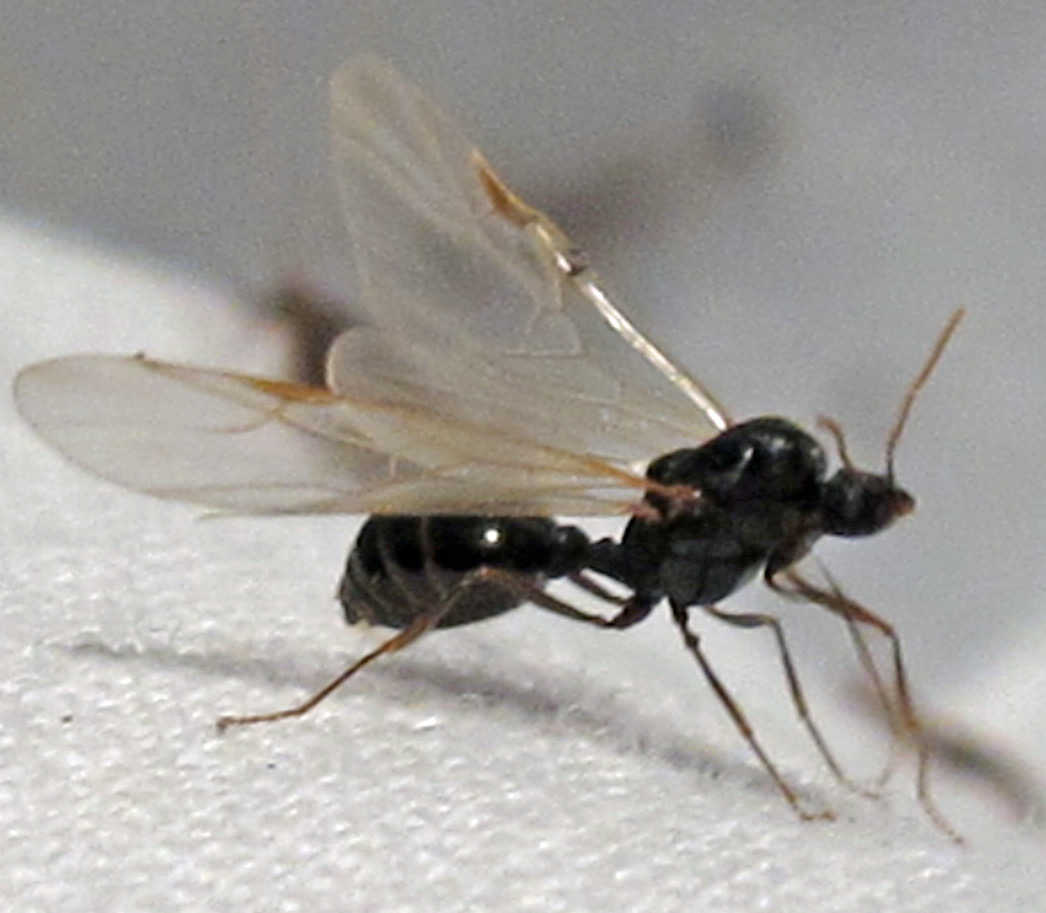
Winged carpenter ants and termite swarmers both fly in spring, both turn up at the same windowsill, and Colorado State University Extension notes plainly that the two are routinely confused. The difference is visible without a hand lens, and getting it right decides everything that follows, including how much anyone should be quoting you.
| Look at | Ant | Termite |
|---|---|---|
| Antennae | Elbowed. They bend sharply partway along, like a jointed arm. The fastest of the three, and it works on a dead specimen under a phone camera. | Straight, made of small beadlike segments, and flexible along their whole length. |
| Waist | Narrowly pinched. Every ant has the wasp waist, and on a swarmer it is obvious. Colorado State singles this one out as the most telling of the three. | Broad. The abdomen joins the thorax in a straight line with no pinch at all. |
| Wings | Four wings of unequal length. The front pair is clearly longer than the hind pair. Read the silhouette rather than counting. Both insects have four wings. | Four wings of roughly equal length, and long, around twice the length of the body. |
Established and published by Penn State Extension, Colorado State University Extension, and University of Maryland Extension. Extension publications are copyrighted, so these findings are stated in our own words and each institution is linked for its own guidance.
A pile of identical discarded wings of EQUAL length, usually on a windowsill or in a bathtub, points to termites. Do not run the inference backwards: sources disagree about how quickly carpenter ants drop theirs, so wings still attached settle nothing on their own.Ohio State University Extension and Mississippi State University Extension both cover wing shedding and do not fully agree on it, so this page claims only the half they both support.
Decided it is a termite after all? That is a different and more urgent page: termite swarm season covers the species, the windows and the infestation probability zones for all 50 states.
And when they are indoors: Winged reproductives emerging in numbers inside a building point to a nest inside it, underneath it, or immediately against it. An emergence during winter or early spring points that way most strongly of all, because nothing outdoors is flying then. Swarmers found outdoors, on a porch, on siding, or on the outside of a window, usually mean a colony nearby in the yard rather than one in the house.
Seeing carpenter ants indoors does not by itself mean the house is infested. One or two winged queens in spring are usually mated females that wandered in from outside looking for somewhere to nest. It is large numbers, and out of season numbers, that mean something.Nebraska Extension. The qualifier travels with the claim: one mated queen on a sill is not an infestation.
The ants that get into American houses
Presence on a state page follows a published range statement, which is why pavement ants stop at Tennessee and Argentine ants stop at the northern tier on this site.
Carpenter ant
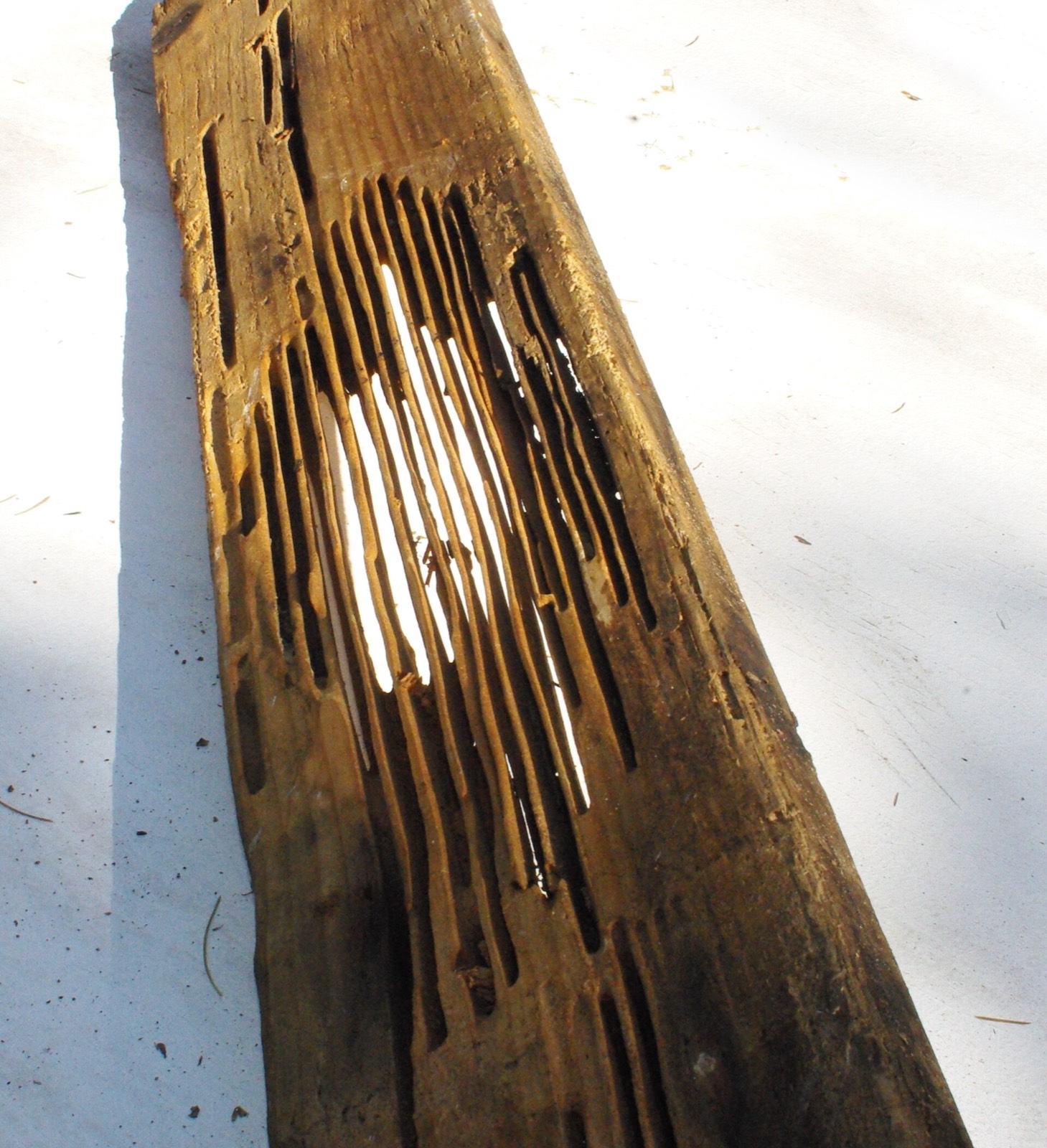
Camponotus speciesThe structural one, and the expensive one. Carpenter ants hollow smooth galleries in damp or decayed wood to nest in it. They do not eat it, which is why the pile of coarse sawdust underneath is the giveaway.
Indoors: Foragers turn up year round, but the thing that matters is a spring flight of winged reproductives at an indoor window.
Range: Camponotus species occur in every state. Which species, and when it flies, is what changes across the country, and the windows on these pages come from each region's own extension service. · on 49 state pages
Odorous house ant
Tapinoma sessileThe one most likely to actually be the ant on your counter, and the easiest to identify anywhere: crush one and it smells, strongly and unpleasantly. That is the fastest field check in this entire vertical.
Indoors: Nests indoors in wall voids and around warmth and moisture, and will settle into wood that termites have already damaged.
Range: Native across most of the United States, from Canada down into Mexico. Penn State Extension · on 49 state pages
Pavement ant
Tetramorium immigransThe sidewalk ant, and the source of the strangest thing you can watch in a city in spring: two neighbouring colonies fighting a pitched battle across a paving slab, thousands of ants deep.
Indoors: Nests under slabs, walkways and patios, then follows cracks in the foundation or the interior slab inside.
Range: Established from New England through the Midwest and south through the Mid-Atlantic as far as Tennessee, plus parts of California and Washington. No qualifying source documents it across the Deep South, so these pages do not claim it there. Penn State Extension · on 31 state pages
Pharaoh ant
Monomorium pharaonisTiny, indoor, and on no calendar whatsoever. It breeds year round inside heated buildings, and it is the reason hospitals and care homes keep an entomologist on speed dial.
Indoors: Never leaves. Nests in wall voids, inside appliances, and in spaces small enough to be measured in thimbles.
Range: A major indoor pest throughout the United States, carried everywhere by commerce. It does not nest outdoors except at southern latitudes, and in colder climates it lives entirely inside heated buildings, so there is no meaningful outdoor range map to draw. UF/IFAS Extension · on 50 state pages
Imported fire ant
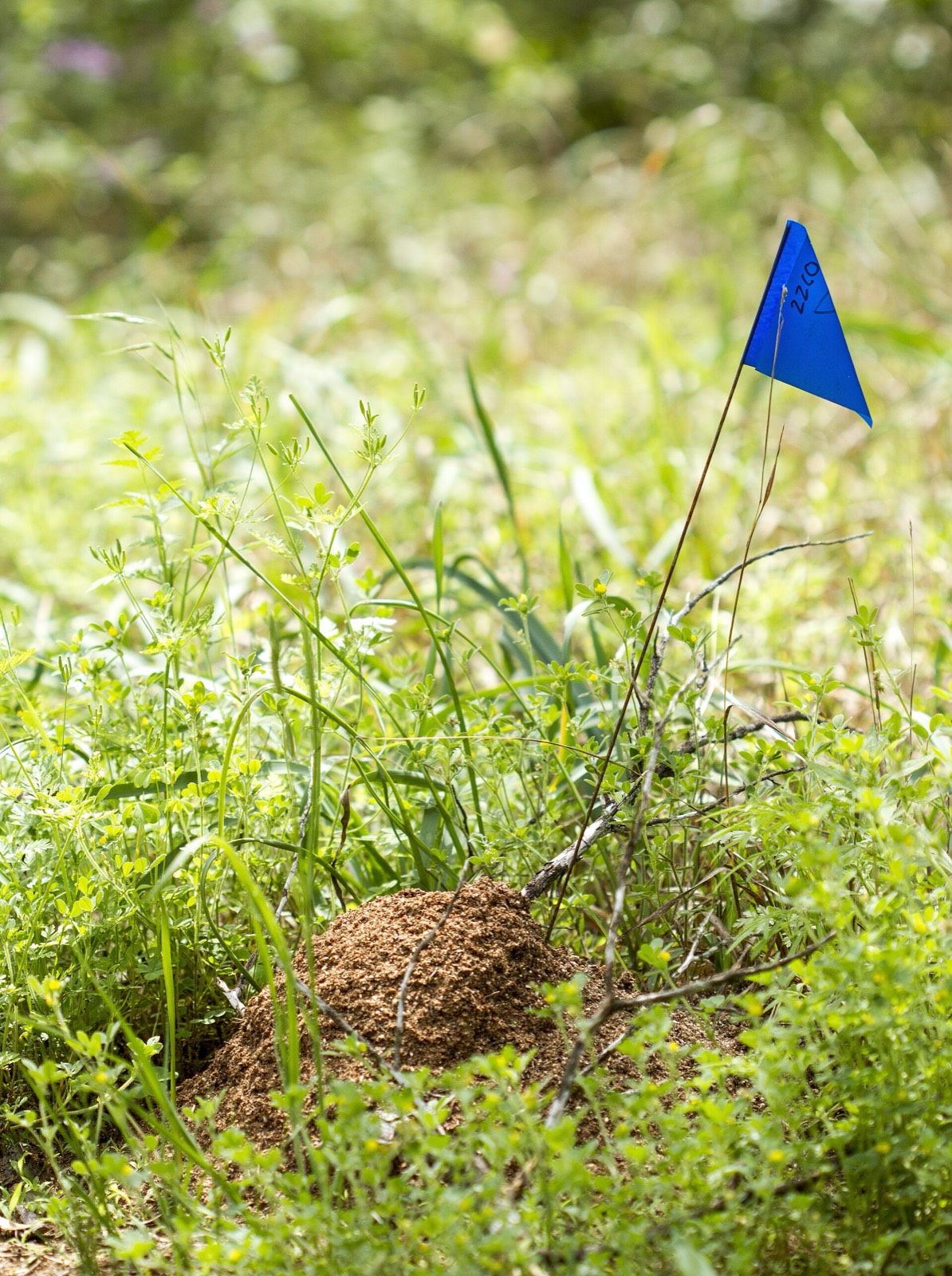
Solenopsis invicta, S. richteri, and their hybridsThe only ant here under a federal quarantine, and the only one that is a genuine stinging hazard. Mounds in turf and pasture, and a sting that different people react to very differently.
Indoors: Mainly an outdoor problem in lawns, pastures and roadsides, though colonies move toward structures after heavy rain.
Range: Defined in federal regulation as living imported fire ants of the species Solenopsis invicta Buren and Solenopsis richteri Forel, and hybrids of these species. Which areas are quarantined is set by USDA APHIS, not by us. eCFR · on 13 state pages
Argentine ant
Linepithema humileNot a set of separate nests but one connected supercolony with many queens, which is why it is so hard to make a dent in and why it displaces nearly every native ant it meets.
Indoors: Moves into buildings particularly in rainy, cold weather.
Range: Documented across the southeastern and southern states and up the western coastline. These pages follow that boundary rather than guessing past it. UF/IFAS Extension · on 18 state pages
Tawny crazy ant
Nylanderia fulvaA Gulf Coast problem that arrives in numbers nothing else matches, gets into electrical equipment, and pushes imported fire ants out where the two overlap.
Indoors: Comes in for sweets and for water, and it is the sheer volume rather than any contamination that people cannot live with.
Range: Confirmed in Texas, Louisiana, Mississippi, Alabama, Georgia and Florida as of a December 2022 Texas A&M AgriLife publication, and concentrated in the Gulf states because that is where it arrived through maritime ports. Published county counts conflict between sources and all are several years old, so this site publishes the state list and no county figure. Texas A&M AgriLife Extension · on 6 state pages
Thief ant
Solenopsis molestaOne of the smallest ants that gets indoors, small enough to walk through a packaging seal, and it arrives on heat rather than on a season.
Indoors: Enters through foundation cracks and small openings in woodwork, most often in hot weather.
Range: A native species found throughout the eastern United States. Penn State Extension · on 31 state pages
Little fire ant
Wasmannia auropunctataFound on the Hawaii page only. It nests in trees as well as on the ground, which is why people get stung on the torso and arms rather than the ankles: the ants drop out of the canopy into clothing.
Indoors: Overruns a house once it is established on the property.
Range: Found on all the major Hawaiian islands except Molokai, with Hawaii Island the most heavily infested. Native to South America, and first found established in Hawaii in 1999. Hawaii Ant Lab · on 1 state page
Tropical fire ant
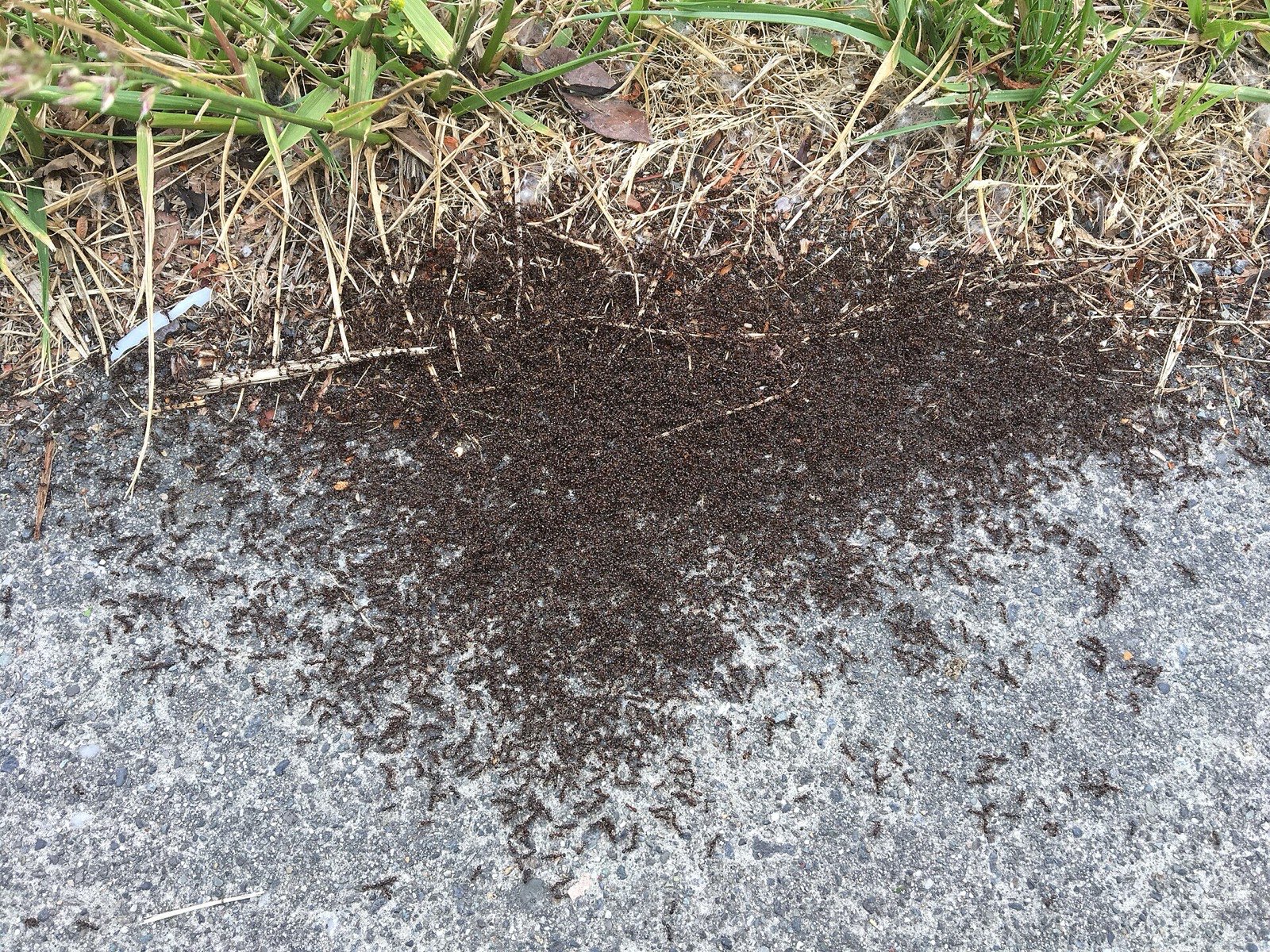
Solenopsis geminataHawaii's older fire ant, and constantly confused with the newer little fire ant because both get called fire ants and neither is the mainland imported fire ant.
Indoors: An outdoor, open ground ant. Stings the feet and lower legs when a nest is stepped on.
Range: Present in Hawaii since the 1940s, and a different species from the little fire ant that arrived decades later. It is much the larger of the two. Hawaii Ant Lab · on 1 state page
The imported fire ant quarantine
This is the one part of these pages resting on federal data rather than on university guidance: it is authoritative, and unlike extension publications it is in the public domain, so it can be quoted directly.
“No person may move interstate from any quarantined area any regulated article except in accordance with this subpart.”7 CFR 301.81
Quarantined in their entirety
Alabama, Florida, Georgia, Louisiana, Mississippi, and South Carolina. Plus Puerto Rico, all 78 municipios.
Quarantined in part
Arkansas (50), California (3), North Carolina (77), Oklahoma (23), Tennessee (87), Texas (189), and Virginia (23).
What is actually regulated
Soil, baled hay and straw stored on the ground, plants and sod with soil attached, and used soil moving equipment, which the regulation defines broadly: “Soil-moving equipment. Equipment used for moving or transporting soil, including, but not limited to, bulldozers, dump trucks, or road scrapers.” The species itself is defined precisely too: “Imported fire ant. Living imported fire ants of the species Solenopsis invicta Buren and Solenopsis richteri Forel, and hybrids of these species.”
Two changes are worth knowing about, because most pages elsewhere have not caught up.
- New Mexico was removed from the quarantine entirely. Dona Ana County had been the only quarantined county in New Mexico since 1999. APHIS rescinded it on August 19, 2025 after three consecutive years of negative survey results. The live USDA service still carries the county, flagged as rescinded.
- Virginia is quarantined and expanding. Virginia was not in the January 2022 codified list and is in the current one, with 23 counties and independent cities under active quarantine and 10 more flagged pending.
Until December 2022 the county list lived in the Code of Federal Regulations. APHIS then removed it so it could update faster: “We are revising the regulations that govern domestic quarantines for various plant pests by removing lists of quarantined areas and regulated articles from the regulations in order to maintain these lists on the Agency's web pages.” (Federal Register, December 29, 2022). Which means any page still quoting the CFR county list, including several that rank well for this, is now wrong about New Mexico and about Virginia.
State and county figures read from the USDA PPQ federal quarantine feature service on August 28, 2026, and cross checked against APHIS Federal Order DA-2025-34. The quarantine moves: check APHIS before acting on anything here. Counts are published here rather than map data: APHIS attaches a restricted use notice to its geospatial holdings, so the shapes stay with APHIS. The APHIS imported fire ant page carries the live list and the interactive map.
Stings
Fire ants bite to hold on and then sting, and the sting burns. Most people get a raised bump that turns into a small fluid filled blister over a day or so. The serious cases are people who are allergic to the venom, where a reaction can be severe and can involve the whole body rather than just the sting site.
If a reaction spreads beyond the sting site, or involves breathing, swelling elsewhere on the body, or feeling faint, that is an emergency: call emergency services. Anything short of that, and a clinician or your state health department is who to ask. CDC NIOSH guidance on insects and scorpions at work is a reasonable starting point, and your state health department is the other.
Ant season by state
| State | Published swarm window | Source | Ants documented | Fire ant quarantine |
|---|---|---|---|---|
| Alabama | May 1 to June 30 | Clemson, read across | 7 | Statewide |
| Alaska | none published | none published | 3 | None |
| Arizona | April 15 to July 10 | Colorado State, read across | 3 | None |
| Arkansas | May 1 to June 30 | Clemson, read across | 6 | 50 counties |
| California | April 1 to June 10 | Washington State, read across | 6 | 3 counties |
| Colorado | April 15 to July 10 | Colorado State | 3 | None |
| Connecticut | April 15 to June 30 | Penn State, read across | 5 | None |
| Delaware | April 15 to June 30 | Penn State, read across | 6 | None |
| Florida | May 1 to November 30 | UF/IFAS | 7 | Statewide |
| Georgia | May 1 to June 30 | Clemson, read across | 7 | Statewide |
| Hawaii | none published | none published | 3 | None |
| Idaho | April 15 to July 10 | Colorado State, read across | 3 | None |
| Illinois | March 1 to July 31 | Ohio State, read across | 5 | None |
| Indiana | March 1 to July 31 | Ohio State, read across | 5 | None |
| Iowa | March 1 to June 30 | Nebraska Extension, read across | 5 | None |
| Kansas | March 1 to June 30 | Nebraska Extension, read across | 4 | None |
| Kentucky | March 1 to July 31 | Ohio State, read across | 6 | None |
| Louisiana | May 1 to June 30 | Clemson, read across | 7 | Statewide |
| Maine | May 1 to July 31 | UNH Extension, read across | 5 | None |
| Maryland | April 15 to June 30 | Penn State, read across | 6 | None |
| Massachusetts | April 15 to June 30 | Penn State, read across | 5 | None |
| Michigan | March 1 to July 31 | Ohio State, read across | 5 | None |
| Minnesota | March 1 to July 31 | Ohio State, read across | 5 | None |
| Mississippi | May 1 to June 30 | Clemson, read across | 7 | Statewide |
| Missouri | March 1 to June 30 | Nebraska Extension, read across | 5 | None |
| Montana | April 15 to July 10 | Colorado State, read across | 3 | None |
| Nebraska | March 1 to June 30 | Nebraska Extension | 4 | None |
| Nevada | April 15 to July 10 | Colorado State, read across | 3 | None |
| New Hampshire | May 1 to July 31 | UNH Extension | 5 | None |
| New Jersey | April 15 to June 30 | Penn State, read across | 5 | None |
| New Mexico | April 15 to July 10 | Colorado State, read across | 3 | None |
| New York | April 15 to June 30 | Penn State, read across | 5 | None |
| North Carolina | May 1 to June 30 | Clemson, read across | 7 | 77 counties |
| North Dakota | March 1 to June 30 | Nebraska Extension, read across | 4 | None |
| Ohio | March 1 to July 31 | Ohio State | 5 | None |
| Oklahoma | May 1 to June 30 | Clemson, read across | 4 | 23 counties |
| Oregon | April 1 to June 10 | Washington State, read across | 5 | None |
| Pennsylvania | April 15 to June 30 | Penn State | 5 | None |
| Rhode Island | April 15 to June 30 | Penn State, read across | 5 | None |
| South Carolina | May 1 to June 30 | Clemson | 6 | Statewide |
| South Dakota | March 1 to June 30 | Nebraska Extension, read across | 4 | None |
| Tennessee | March 1 to July 31 | Ohio State, read across | 7 | 87 counties |
| Texas | May 1 to June 30 | Clemson, read across | 6 | 189 counties |
| Utah | April 15 to July 10 | Colorado State, read across | 3 | None |
| Vermont | May 1 to July 31 | UNH Extension, read across | 5 | None |
| Virginia | April 15 to June 30 | Penn State, read across | 7 | 23 counties |
| Washington | April 1 to June 10 | Washington State | 5 | None |
| West Virginia | April 15 to June 30 | Penn State, read across | 6 | None |
| Wisconsin | March 1 to July 31 | Ohio State, read across | 5 | None |
| Wyoming | April 15 to July 10 | Colorado State, read across | 3 | None |
“Read across” means the window was published by that institution for its own region rather than for this state, and the state page says so. Ant counts follow published range statements only.
Keeping ants out
Prevention here starts with inspection and with fixing the conditions that make a building attractive, not with a scheduled pesticide application. That is the extension position.NC State Extension
- Dry the wood out. Excess moisture is what makes a building attractive in the first place. Fix leaks at attic vents, at pipes and sinks, and around chimneys and skylights, and replace wood that water has already damaged. UGA Extension
- Move water away from the house. Dry a crawl space with a vapor barrier and foundation vents, keep gutters clear, and set downspouts so water runs away from the building rather than against it. UGA Extension
- Break the bridges. Do not let vegetation touch the house. Evergreen shrubs and tree limbs against siding or eaves are a direct route in that skips the foundation entirely. Penn State Extension
- How much clearance is enough. Trim trees and shrubs back so there is at least a foot of clear space between planting and the building walls or roof line. PNW Extension
- Firewood. Store firewood away from the house and off the ground, and carry it inside as you burn it rather than stacking it indoors. Penn State Extension
- Clear the nurseries. Stumps, logs and waste wood near the building are where parent colonies live. Penn State puts the working radius at 100 yards. Penn State Extension
- Seal the ways in. Seal the holes where pipes and wires pass through the exterior, and around utility line penetrations generally. Penn State Extension
- Ventilate. Keep crawl spaces well ventilated, and avoid wood to soil contact anywhere on the structure. Washington State University
Nothing here recommends a bait, a spray, an active ingredient or a brand. Treatment is a licensed activity in every state. The one warning here comes from an agency: with pharaoh ants, a repellent contact spray can split one colony into several inside the same building and leave you worse off than before.
Ant season FAQ
Figures without an agency source
Several figures that circulate about ant season have no agency source, and a few published sources disagree with each other. For ants:
- Little black ant (Monomorium minimum). The only quotable material was a 2009 Mississippi State newsletter. No verified US range statement and no weather trigger.
- Acrobat ant (Crematogaster species). Same 2009 newsletter, same gap. That indoor infestations usually trace to colonies in rotting wood is true but unsupported by any range.
- Pharaoh ant US range map. Every source frames this species globally or by latitude. No state by state or regional US range statement exists, so the pages say indoor, and everywhere there are heated buildings, and leave it there.
- Tawny crazy ant county counts. UF/IFAS says 27 Texas counties, Texas A&M says 43, and every source is three or more years old. The six state list is publishable; no county number is.
- Carpenter ant species by state. Assigning a Camponotus species to each state would need range data no extension service publishes state by state. The pages say carpenter ants, Camponotus species, which is how the sources themselves put it.
- A swarm temperature threshold. Does not exist in the extension literature, in air or in soil. The numbers that circulate online trace back to pest control marketing sites.
- Alaska swarm window. No UAF Cooperative Extension publication gives one, so the Alaska page names UAF as the source to ask.
- Federal fire ant county lists. They moved off the CFR onto the APHIS site in December 2022 and change by Federal Register notice, so the APHIS page is linked as the live list.
- The shed wing disagreement. Ohio State and Mississippi State genuinely conflict on how fast carpenter ants drop their wings, and both sit behind restrictive reuse terms. The pages assert only the common ground.
Swarm windows are climatological typicals published by the land grant cooperative extension services named above and linked. Extension publications are copyrighted, so their findings are stated here in our own words rather than reproduced; federal material, meaning the Code of Federal Regulations and USDA APHIS, is public domain and is quoted directly. Fire ant figures were read from USDA on 2026-08-28 and agree with USDA APHIS Federal Order DA-2025-34, August 19, 2025; the quarantine changes, so check APHIS before acting on anything here. This site gives no medical advice and no treatment advice.
Hero image: “Camponotus pennsylvanicus P1330519a” by xpda, CC BY-SA 4.0