
CWD Testing and Deer Carcass Rules by State
Where a sample is required, what a test costs, how long a result takes, and what may be carried home across a state line. Every state below carries its own agency’s words and the date the page was read.
The carcass rule belongs to the state you are driving into
A hunter reads the regulations of the state they are hunting in, which is the natural thing to do and is not where the carcass rule lives. What may be carried across a line is written by the state on the far side of it. Drive a whole deer out of a state that says nothing about carcasses and into one of the 27 that refuse an intact animal from anywhere, and the rule that applies is the second state’s.
42 of the 50 states restrict what crosses. They do it in four different ways, and the difference between the top two bands below is the one that decides a drive: a blanket refusal applies whether or not the disease has ever been found where the animal was taken, while a rule keyed to affected states leaves an animal from anywhere else alone. Boning an animal out at camp satisfies almost every rule below. Loading it whole satisfies 8 of them.
- No whole carcass from anywhere27 states
The state refuses an intact carcass arriving from any other state, whether or not the disease has ever been found there, and names the parts that may come in instead.
- No whole carcass from an affected state12 states
The state refuses an intact carcass arriving from a state or province where the disease has been found, and leaves an animal from anywhere else alone.
- No published restriction8 states
The state publishes no rule on what may be carried in from another state, which leaves the rule of the state the animal was taken in as the only one in play.
- Listed parts only2 states
The state publishes the list of parts that may cross the line and admits nothing outside it.
- Whole carcass, named destinations1 state
The state lets an intact carcass cross the line and then governs where it may go, naming the destinations it may travel to and what has to be done with the head and spine afterwards.
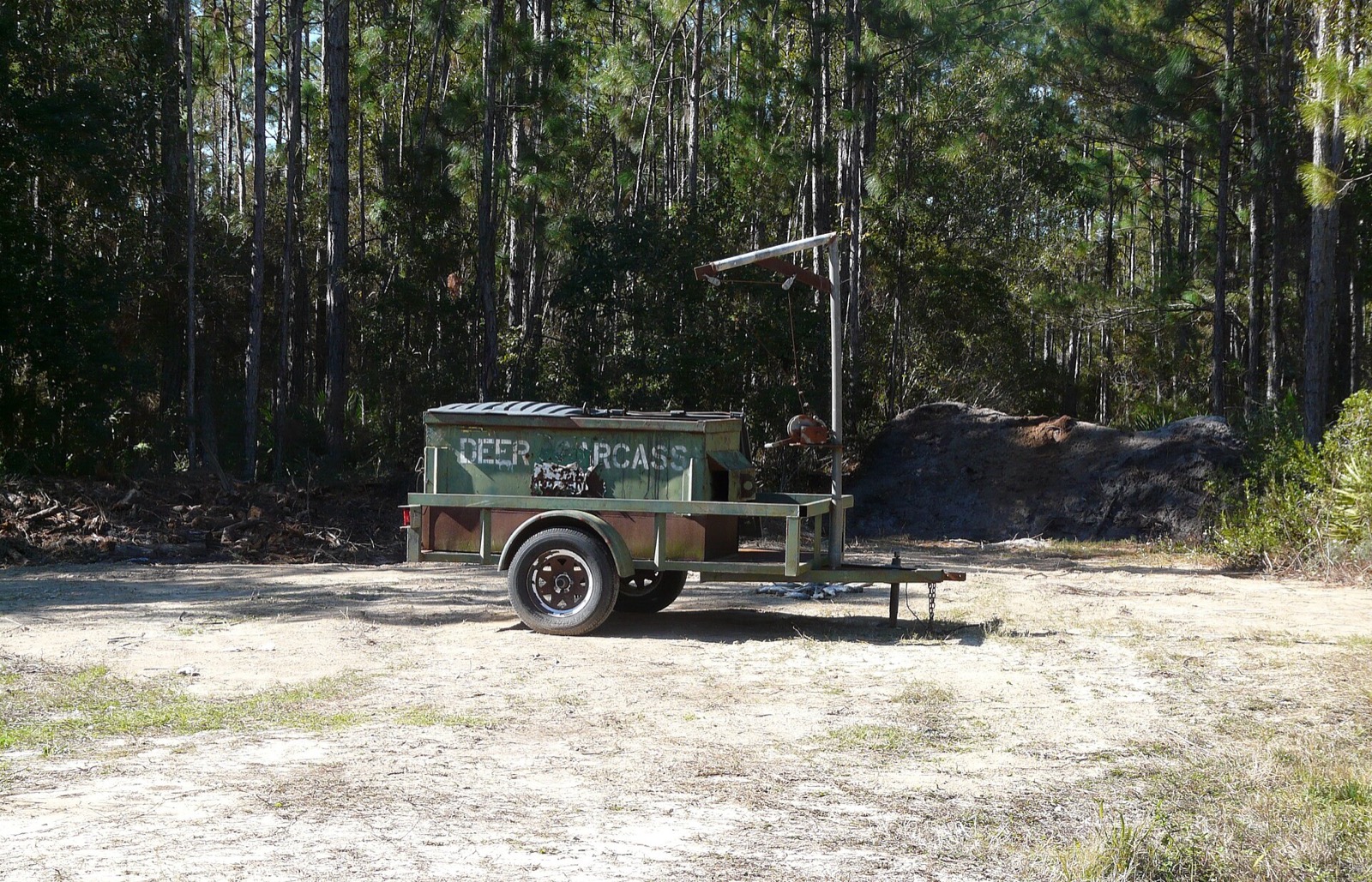
What each state admits across its own line
The exemptions in the third column matter as much as the ban in the second. Several states refuse an intact carcass and then carve out their immediate neighbours, so the same truck is legal on one border and not on the next. 18 of the 50 rules carry a regulation or statute number, printed in the last column and quoted in full on the state page.
| State entered | What may cross | Exempt | Cited as |
|---|---|---|---|
| Alabama | No whole carcass from anywhere | No exemption | 220-2-.167 |
| Alaska | No whole carcass from anywhere | No exemption | Agency guidance |
| Arizona | No whole carcass from anywhere | No exemption | R12-4-305 |
| Arkansas | No whole carcass from anywhere | No exemption | Agency guidance |
| California | No whole carcass from anywhere | No exemption | CCR Title 14, Section 712 |
| Florida | No whole carcass from anywhere | No exemption | Agency guidance |
| Georgia | No whole carcass from anywhere | No exemption | O.C.G.A. 27-5-2.1 |
| Illinois | No whole carcass from anywhere | No exemption | 17 Ill. Adm. Code Section 635.30 Importation of Animal Carcasses and Parts |
| Kentucky | No whole carcass from anywhere | No exemption | 301 KAR 2:095 |
| Louisiana | No whole carcass from anywhere | No exemption | §119 |
| Maine | No whole carcass from anywhere | No exemption | Agency guidance |
| Massachusetts | No whole carcass from anywhere | Connecticut, New Hampshire, Maine, Rhode Island, Vermont | Agency guidance |
| Minnesota | No whole carcass from anywhere | No exemption | Agency guidance |
| Mississippi | No whole carcass from anywhere | No exemption | Agency guidance |
| Missouri | No whole carcass from anywhere | No exemption | Agency guidance |
| Nevada | No whole carcass from anywhere | No exemption | Nevada Senate Bill 85 |
| New Jersey | No whole carcass from anywhere | No exemption | Agency guidance |
| New York | No whole carcass from anywhere | No exemption | NYCRR Part 189 |
| North Carolina | No whole carcass from anywhere | No exemption | Agency guidance |
| North Dakota | No whole carcass from anywhere | No exemption | 2026-2027 Chronic Wasting Disease Proclamation, Section 2, Carcass Transportation |
| Ohio | No whole carcass from anywhere | No exemption | Ohio Administrative Code 1501:31-19-02, Cervidae carcass regulations |
| Oklahoma | No whole carcass from anywhere | No exemption | Agency guidance |
| Oregon | No whole carcass from anywhere | No exemption | Parts Ban, page 16 of the Big Game Hunting Regulations |
| Rhode Island | No whole carcass from anywhere | Connecticut, Massachusetts | 250-RICR-60-00-2 section 2.13 |
| Tennessee | No whole carcass from anywhere | No exemption | Agency guidance |
| Virginia | No whole carcass from anywhere | No exemption | Agency guidance |
| Washington | No whole carcass from anywhere | No exemption | WAC 220-413-030 |
| Connecticut | No whole carcass from an affected state | No exemption | Section 26-55-4 |
| Delaware | No whole carcass from an affected state | No exemption | Agency guidance |
| Idaho | No whole carcass from an affected state | No exemption | Agency guidance |
| Iowa | No whole carcass from an affected state | No exemption | Agency guidance |
| Maryland | No whole carcass from an affected state | No exemption | Agency guidance |
| Montana | No whole carcass from an affected state | No exemption | Agency guidance |
| New Hampshire | No whole carcass from an affected state | No exemption | Agency guidance |
| South Carolina | No whole carcass from an affected state | No exemption | Reg. 123-54 |
| Utah | No whole carcass from an affected state | No exemption | Agency guidance |
| Vermont | No whole carcass from an affected state | No exemption | Agency guidance |
| West Virginia | No whole carcass from an affected state | No exemption | Agency guidance |
| Wisconsin | No whole carcass from an affected state | No exemption | Agency guidance |
| Indiana | Listed parts only | No exemption | Agency guidance |
| Michigan | Listed parts only | No exemption | Agency guidance |
| Wyoming | Whole carcass, named destinations | No exemption | Chapter 2, Section 16, General Hunting Regulation |
| Colorado | No published restriction | No exemption | Agency guidance |
| Hawaii | No published restriction | No exemption | Agency guidance |
| Kansas | No published restriction | No exemption | Agency guidance |
| Nebraska | No published restriction | No exemption | Agency guidance |
| New Mexico | No published restriction | No exemption | Agency guidance |
| Pennsylvania | No published restriction | No exemption | Agency guidance |
| South Dakota | No published restriction | No exemption | South Dakota Administrative Rule 41:06:03:16, Interstate cervid carcass transportation and disposal requirement |
| Texas | No published restriction | No exemption | Agency guidance |
19 states require one, and none of them require it statewide
Every mandatory sampling rule in the country is drawn around named counties, named deer management units or named opening weekend dates. That is the part a summary loses: a hunter in a mandatory state is usually outside the requirement, and a hunter who crosses two counties on opening morning is usually inside it. The scope column is the rule.
| State | Where the requirement applies | Cost |
|---|---|---|
| Alabama | Sampling is required of every deer taken on a wildlife management area, community hunting area or other listed public area inside the CWD Management Zone, and of every deer taken in the High Risk Zone or the Buffer Zone on the dates the agency schedules and announces; on all other days it is voluntary. | Not published |
| Arkansas | Every elk taken anywhere in Arkansas must be checked and its sample submitted for a CWD test, and bonus deer taken on landowner tags inside the CWD Management Zone must be submitted too, while an ordinary deer is voluntary. | free |
| California | Anyone who takes a deer in hunt zones D7, X9a, X9b or X9c must hand in a retropharyngeal lymph node or the head, and the regulation gives ten days from the kill. | Not published |
| Colorado | Submission of the head is required in 2026 from every elk taken during a rifle season under a hunt code CPW selected for mandatory testing, and there is no mandatory testing of deer this year. | $25 |
| Delaware | Every deer taken inside the CWD Management Zone must be brought to a designated check station within 24 hours during the November general firearm season, which the addendum gives as November 13 to November 22, 8am to 8pm. | free |
| Idaho | Testing is required for every hunter harvested mule deer and white-tailed deer taken in Game Management Units 14, 18, 23, 63A, 64, 69 and the part of Unit 1 east of the Selkirk Mountains crest, and the head or lymph nodes must reach the agency within ten days. | Not published |
| Kentucky | Sampling is required of every hunter who takes a deer in the CWD Surveillance Zone during the special antlerless season of September 25 to 28 in the zone counties in Deer Zones 1, 2 and 3, and during the first three days of modern gun season, November 14 to 16, in Henderson, McCreary, Pulaski and Wayne counties. | free |
| Minnesota | Testing is required for any deer a year old or older taken in the 2026 rotational surveillance block of deer permit areas on the opening weekend of the firearms season, Nov. 7 and 8. | free |
| Mississippi | Sampling is required of deer taken in the statewide private lands Velvet Season of September 11 to 13, 2026, and of deer taken on the CWD DMAP 3 Mile Tag Program tags issued near a detection; elsewhere and at other times it is a request, not a requirement. | Not published |
| Missouri | In the 28 counties MDC designates for 2026, any deer killed on Nov. 14 or 15, the opening weekend of the November firearms portion, must be taken to a mandatory sampling station the same day. | free |
| Montana | Required only of hunters using the licences tied to CWD management near Libby, and voluntary everywhere else in the state. | free |
| Nevada | Anyone who takes a deer inside the Transportation Restriction Zone, hunt units 192 to 196, 201 to 208, 211 to 213 and 291, must submit a sample, and it has to reach the agency within one week of the kill. | Not published |
| New Mexico | NMDOW's CWD page states in the present tense that hunters in Game Management Units 19 and 28 must submit their harvested animals for testing, though the 2026 to 2027 rules book does not repeat that requirement anywhere. | free |
| Ohio | Inside the disease surveillance area, on the first two days of the area's own deer gun season and the first two days of the statewide deer gun season, the head of every deer killed must be brought to an official carcass inspection station inside that area by noon the next day. | Not published |
| Rhode Island | Every deer taken anywhere in the state by any method on the first two days of the muzzleloader season and the first two days of the shotgun season has to be brought to a state operated biological checking station, and it is at those stations that the Division takes the lymph node samples it tests for CWD, with deer from Patience, Prudence and Block Islands excepted. | Not published |
| Utah | A hunter who kills a buck deer on the Castle Valley or Moab Valley limited entry any legal weapon hunts, or on the Ogden general season any legal weapon hunt, has to turn in a CWD sample; the kit and instructions arrive in the mail in September. | free on the 2026 sampling units, $30 anywhere else |
| Virginia | A deer taken in Bland, Grayson, Patrick, Shenandoah, Smyth, Tazewell or Wythe county on Saturday November 14, 2026 must be brought in for sampling that day; testing is voluntary everywhere else and at every other time. | free |
| Washington | Anyone who harvests or salvages a deer, elk or moose in the Eastern Region, meaning the 100 series game management units, must hand the head or the extracted lymph nodes to the agency within five days and before leaving that region. | Not published |
| Wyoming | Required of deer hunters in the hunt areas the department designates as mandatory CWD sampling areas for the 2026 season, listed in the 2026 antelope, deer and elk regulation brochure. | free |
What a test costs, and how long the laboratory takes
22 states put the test at no charge to the hunter and 5 publish a fee, 4 of them waiving it inside their own surveillance units and billing for it outside. 25 states publish a turnaround, and the range runs from about a week to more than a month. Every one of those figures is the agency’s own and every one of them stretches in the opening fortnight of a firearm season, when the whole state’s samples reach one laboratory at once.
| State | Cost to the hunter | Results in |
|---|---|---|
| Alabama | Not published | the agency says results come back within three to four weeks |
| Arizona | free | Not published |
| Arkansas | free | Not published |
| California | Not published | The agency says a test often takes three weeks or more. |
| Colorado | $25 | CPW tells hunters to plan on up to five weeks, which it puts at 25 business days, from the day the head is submitted. |
| Connecticut | free | Not published |
| Delaware | free | Usually within 30 days of submission and often sooner. |
| Florida | free | Not published |
| Georgia | free | the agency says two to six weeks for a deer from the management area and months for a deer from elsewhere in the state, and that it contacts the hunter directly only if the deer is positive |
| Idaho | Not published | The agency says results take about four to six weeks and that it does not contact hunters whose samples are negative. |
| Illinois | free | Not published |
| Indiana | free through the DNR program, or for a fee if the hunter submits directly to the Purdue laboratory | The DNR says online results can take eight to 12 weeks. |
| Iowa | free of charge through the DNR surveillance program, or a $25 laboratory fee through the hunter submission pathway | Not published |
| Kansas | free | KDWP says results take about a month when the lab is busy and about two weeks early in the deer season. |
| Kentucky | free | the agency says results usually come back in four to six weeks |
| Louisiana | free | Not published |
| Maryland | Not published | The department says the testing takes several months. |
| Michigan | free | Not published |
| Minnesota | free | The DNR says results usually come back in 7 to 14 days and can take longer when the lab is busy. |
| Mississippi | Not published | The agency says results are usually available within two weeks of sample collection, and that a hunter is notified only if CWD is detected. |
| Missouri | free | Not published |
| Montana | free | The agency says results are posted online and emailed within two weeks, and that moose samples can take three to four. |
| Nebraska | free in the designated surveillance units, at the hunter's expense anywhere else | Game and Parks says a result from its own surveillance program may take three to six weeks. |
| New Mexico | free | Not published |
| North Carolina | Not published | the agency expects four to six weeks for a deer taken in a surveillance area and seven to nine weeks elsewhere |
| North Dakota | the mail in sampling kits are free | Game and Fish says a result takes about four weeks and arrives in the hunter's Game and Fish account inbox. |
| Oregon | Not published | The agency says results usually come back in three to five weeks. |
| Pennsylvania | free | About two to three weeks, with a certified letter if the result is positive. |
| Tennessee | Not published | The agency says results take about two weeks, sometimes three or four weeks during the holidays and the peak of the hunting season. |
| Texas | free | TPWD gives two figures, about two weeks in its hunter FAQ and five weeks on the page where a hunter looks a result up. |
| Utah | free on the 2026 sampling units, $30 anywhere else | four to six weeks |
| Virginia | free | Not published |
| Washington | Not published | The agency says results take about four to six weeks on average. |
| West Virginia | free | the agency warns results may be delayed by a week or more when laboratory volume is high |
| Wisconsin | free | The DNR says results are typically available 10 to 14 days after the deer is brought to a sampling station. |
| Wyoming | free | The department says results are typically available in about three weeks and that hunters are not notified when they post. |
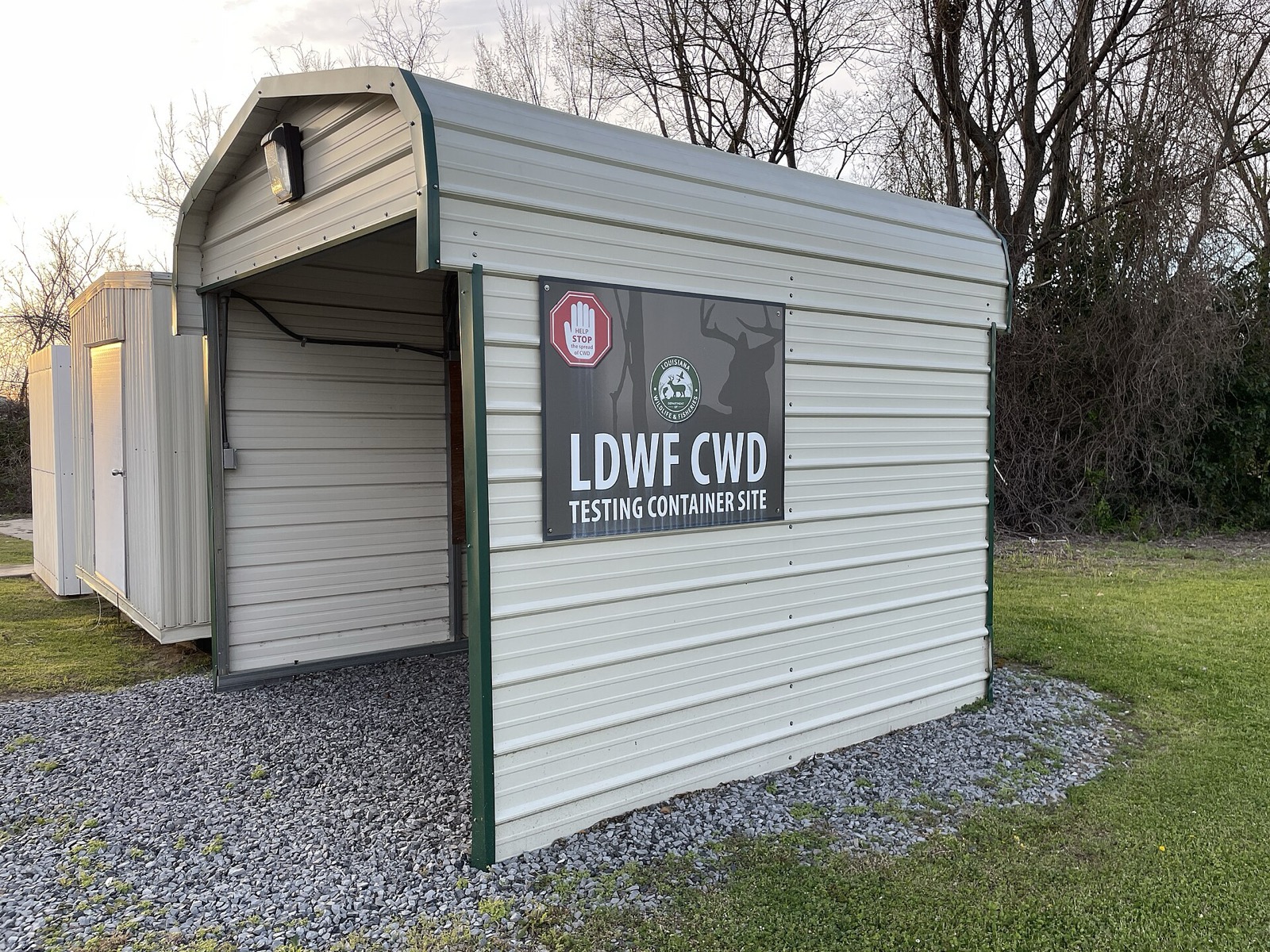
30 states publish a sentence about the meat
The wording differs between states, and the differences are not accidental. Each sentence below is reproduced word for word and attributed to the agency that wrote it, linked to the page it was read from. There is no summary row here and no shared paraphrase, because a summary of one of these sentences is a different statement than the one the agency made, and the agency is the one with standing to make it.
Arkansas
“The Centers for Disease Control and Prevention strongly recommends having your deer or elk tested when hunting in areas where CWD is known to be present before eating the meat.”
California
“The Centers for Disease Control and Prevention (CDC) and the World Health Organization (WHO) recommend that hunters do not eat meat from deer that test positive for CWD or otherwise appear sick.”
Colorado
“Colorado Parks and Wildlife recommends that hunters not eat the meat of an animal that tests positive for Chronic Wasting Disease.”
Delaware
“Although there is no known transmission of CWD to humans, the Centers for Disease Control and Prevention (CDC) recommends that people who harvest deer — such as white-tailed, red, sika or mule deer — and elk or moose from areas where CWD has been confirmed test their animals for CWD before consuming the meat.”
Florida
“Accordingly, hunters are advised not to eat meat from animals known to be infected with CWD.”
Georgia
“CWD has not been shown to infect people, but the CDC recommends not consuming deer that test positive for CWD.”
Idaho
“According to the U.S. Center for Disease Control , there has been no reported cases of CWD infecting people. However, CDC recommends that people do not eat meat from an animal that tests positive for CWD.”
Illinois
“No part of any CWD positive animal should be consumed by humans or other animals.”
Indiana
“If the deer tests positive for CWD, DNR recommends not consuming it.”
Iowa
“Disclaimer: The Iowa Department of Natural Resources is not a human health organization and does not provide advice regarding meat consumption. While there is currently no known evidence that CWD can be transmitted to humans, the Centers for Disease Control and Prevention (CDC) provides guidance and the most current information on CWD and human health here:”
Kansas
“KDWP does not recommend eating any sick wildlife, including CWD-positive deer, even though most positive deer appear to be healthy.”
Kentucky
“However, the CDC recommends that people should not consume meat from an animal that has tested positive for CWD.”
Louisiana
“However, the CDC recommends caution in handling venison in the infected region and that deer be tested for CWD before consuming.”
Minnesota
“To date, there have been no documented cases of CWD in humans and no strong evidence that CWD can spread to people. However, because other prion diseases such as bovine spongiform encephalopathy (BSE or mad cow disease) have been transmitted to people and research on CWD is still ongoing, public health officials recommend that hunters do not consume meat from animals known to be infected.”
Missouri
“However, the CDC recommends that hunters test deer for CWD if hunting in an area where the disease has been found and avoid consuming meat from any deer that appears sick or tests positive for CWD.”
Montana
“However, the Centers for Disease Control and Prevention (CDC) recommends that hunters harvesting a deer, elk, or moose from an area where CWD is known to be present have their animal tested for CWD prior to consuming the meat and do not consume the meat if the animal tests positive.”
Nebraska
“The Centers for Disease Control and World Health Organization recommend avoiding consumption of meat from deer and elk that look sick or that test positive for CWD.”
New Mexico
“Avoid consuming the meat from any animal that tests positive for the disease.”
North Carolina
“The CDC recommends hunters strongly consider having deer that are harvested within CWD Surveillance Areas tested prior to consuming the meat.”
Oklahoma
“However, the U.S. Centers for Disease Control and Prevention recommends, as a precaution, that people or animals do not eat any part of an animal diagnosed with or showing signs of CWD.”
Oregon
“If you're concerned about the safety of the meat, wait until you get your test results back before eating your harvest. The CDC recommends not eating meat from a CWD positive animal.”
Pennsylvania
“Have your animal tested and wait to receive test results. Do not consume animals that test positive for CWD.”
South Carolina
“Therefore, the current recommendation from the World Health Organization (WHO) and the Centers for Disease Control (CDC) is that humans should not consume meat from known infected animals.”
Tennessee
“In CWD affected counties, have your animal tested and do not consume animals that test positive for CWD.”
Texas
“However, as a precaution, it is strongly advised to test susceptible species harvested in known CWD areas and to not eat meat from CWD-positive animals or any sick animal, regardless of the disease.”
Utah
“Do not consume meat from animals known to be infected with CWD.”
Virginia
“The CDC strongly recommends that deer be tested for CWD when harvested in areas known to be affected by CWD prior to eating the meat.”
Washington
“As a precaution, the Washington State Department of Health and the Centers for Disease Control and Prevention recommend not eating any animal that tests positive for CWD or appears to have it.”
Wisconsin
“The U.S. Centers for Disease Control and Prevention states that to date, there have been no reported cases of CWD infection in people. Nonetheless, as a precaution, the Wisconsin Department of Health Services (DHS) recommends that people only consume venison from healthy-appearing deer with test results indicating that CWD was not detected.”
Wyoming
“If the animal you harvested tests positive for CWD, the Centers for Disease Control and Prevention recommends you do not consume the animal's meat.”
27 states draw a management or surveillance zone
A zone is where several rules switch on at once. Inside one, a state is more likely to require a sample, more likely to ban baiting, and more likely to restrict moving a carcass out, and the boundary usually follows county or deer management unit lines rather than anything visible from a truck. Zones are redrawn between seasons more often than any other rule on this site, so the map linked in the second column is the one that governs.
| State | What the state calls the zone | Taking an animal out |
|---|---|---|
| Alabama | CWD Management Zone, containing a High Risk Zone and a Buffer Zone | A deer taken in the High Risk Zone must stay in the High Risk Zone and one taken in the Buffer Zone must stay in the Management Zone, except as deboned meat, a cleaned skull plate with bare antlers, bare antlers or sheds, a raw cape, upper canine teeth with no root, and finished taxidermy or tanned hides. |
| Arkansas | CWD Management Zone, split into Tier 1 and Tier 2 | Only the low risk items may leave the CWD Management Zone, and a whole carcass taken in a Tier 1 county may move among Tier 1 counties but may not go into a Tier 2 county. |
| California | CWD Management Zone (CMZ) | The regulation makes two kinds of zone: in a testing CMZ a hunter must give the agency a sample within ten days of the kill, and in a testing and handling CMZ the hunter must do that and also leave the brain, the spinal column and the entrails where the animal fell. |
| Delaware | CWD Management Zone | A carcass taken inside the zone may be moved, but unless it goes to a taxidermist or processor every remaining part must be double bagged in heavy plastic and sent to a waste hauler or a permitted landfill, and DNREC asks that whole carcasses not leave the zone. |
| Florida | CWD Management Zone | A whole carcass or a high risk part may not leave the management zone, so a deer killed inside it has to be reduced before it goes to a home, a processor or a taxidermist outside. |
| Georgia | CWD Management Area | No published restriction |
| Idaho | CWD Management Zone | No whole carcass of a deer, elk or moose may leave the CWD Management Zone in Units 14 and 18 and the part of Unit 1 east of the Selkirk Mountains crest; only the listed parts may leave, plus a head or lymph nodes carried to the agency for sampling, and the sample is due within ten days of harvest. |
| Illinois | counties with CWD surveillance | In the eighteen named CWD surveillance counties a deer killed in a firearm season may not simply be driven home; it goes whole or field dressed to a designated check station the same day, where it is sampled and given a permanent leg tag. |
| Indiana | CWD Positive Area, and CWD Enhanced Surveillance Zone | The zone rule the DNR prints is about live deer rather than carcasses: a live white-tailed deer may not be moved out of a CWD Positive Area for any purpose, including rehabilitation. |
| Kansas | surveillance zone | Kansas sets no rule on moving a carcass out of a surveillance zone, and KDWP asks hunters to take care when moving one instead. |
| Kentucky | CWD Surveillance Zone | Only deboned meat, antlers with or without a clean skull cap, a clean skull with no brain tissue, clean teeth, hides and finished taxidermy mounts may be carried out of the CWD Surveillance Zone. |
| Louisiana | CWD Management Zone | A deer carcass may not leave the CWD Management Zone; only deboned meat, meat cut and wrapped, quarters with no head or spinal cord, a clean skull plate with antlers, tanned hides, finished taxidermy mounts, cleaned teeth and the cape may be carried out, and a head may go to a taxidermist outside the zone only with a Deer Head Waiver. |
| Maryland | Chronic Wasting Disease Management Area | A whole carcass may not leave the management area unless it goes straight to an approved processor or taxidermist or to a landfill inside those counties, and a hunter must check the deer in and get a confirmation number before moving deboned meat or quarters out. |
| Michigan | The zone map | A deer taken in Montcalm County, in four named townships in Ionia County or in six named townships in Kent County may leave that area only as the listed parts, or by going straight to a registered processor, or with the head going straight to a licensed taxidermist. |
| Minnesota | CWD management zone | A carcass may now leave a CWD management zone right away, but a hunter who took the deer inside the zone has to dispose of the carcass by one of the listed legal means unless the deer comes back not detected. |
| Mississippi | CWD Management Zone | A carcass may not leave a CWD Management Zone at all, only cut or deboned meat, bone in leg quarters, hides with no head, finished taxidermy, clean antlers and clean skulls, plus a head carried to a participating taxidermist within five days on a sample number issued beforehand. |
| Montana | CWD Management Zone | A carcass may be moved anywhere inside Montana no matter where it was taken, as long as the leftover parts go into a Class II landfill after butchering. |
| Nevada | Transportation Restriction Zone (TRZ) | The same parts list that governs bringing a carcass in from out of state governs taking one out of the TRZ, so the spinal column, brain tissue and head must stay inside the zone. |
| New Mexico | Chronic Wasting Disease Control Area | A deer or elk taken in Units 19, 28, 29 or 34 may not leave the unit whole; only cut and wrapped meat, boned meat or quarters with no head or spine, hides with no head, bleach cleaned skull plates with antlers, bare antlers, ivories and finished taxidermy may be carried out, and a whole animal may go to a processor or taxidermist only inside that same unit. |
| North Carolina | CWD Surveillance Area and CWD Management Area | The agency prints no rule holding a carcass inside these areas: what the areas add is a ban on fawn rehabilitation, a feeding and baiting ban from January 2 to August 31, and a ban on cervid scents and attractants, while the carcass disposal rule is statewide. |
| Ohio | disease surveillance area | A deer killed inside the disease surveillance area stays inside it unless it has been reduced to the same nine parts the import rule lists, or unless the whole carcass is delivered to an authorized processor or taxidermist within twenty four hours of being taken. |
| Oklahoma | Selective Surveillance Area (SSA) | A deer or elk killed inside a Selective Surveillance Area has to be processed before it leaves the area, and only the five listed items may be carried out whole. |
| Pennsylvania | Wildlife Management Units where CWD has been detected | Nothing is held inside these units any more; the Game Commission replaced its disease management areas with them, and the high-risk parts disposal rule that replaced the movement ban applies statewide. |
| Tennessee | CWD Management Zone | A carcass may move freely among the counties inside the zone, but once it is in the zone only the approved parts may leave it. |
| Virginia | Disease Management Area | A whole carcass or anything holding brain or spinal tissue may not leave a Disease Management Area for the rest of Virginia, only boned out meat, clean skulls, jaw bones, antlers, hides, upper canine teeth and finished taxidermy, though a carcass may go straight from a DMA to an authorized location in another state. |
| Washington | Mandatory Testing Region (MTR) and Transport Restriction Zone (TRZ) | The same allowed parts list governs moving a deer, elk or moose taken in the 100 series game management units to anywhere else in Washington, and lymph nodes must be handed in before the animal leaves the Eastern Region. |
| West Virginia | CWD Containment Area | Nothing of a deer killed in Berkeley, Grant, Hampshire, Hardy, Jefferson, Mineral or Morgan counties may leave those counties except boned out meat, quarters with no spinal column or head attached, a cleaned hide with no head, a clean skull plate with antlers, bare antlers and finished taxidermy mounts. |
35 states ban baiting, 15 of them everywhere
A pile of corn concentrates animals nose to nose, which is the mechanism every one of these bans is written against. 15 states apply the ban to the whole state and 20 apply it inside their management zones only, which means a legal bait pile and an illegal one can sit a county apart in the same state.
| State | Where the ban applies | The rule |
|---|---|---|
| Arizona | Baiting and feeding banned statewide | Edible or ingestible substances may not be used to aid in taking big game anywhere in Arizona, and water, salt and livestock salt products are the exceptions the rule names. |
| California | Baiting and feeding banned statewide | Feeding big game mammals is prohibited statewide, as is baiting them and importing, using or possessing cervid urine and other cervid biofluid scent products. |
| Colorado | Baiting and feeding banned statewide | Intentionally feeding deer, elk and other big game is illegal statewide, and Chapter W-2 separately makes it unlawful to hunt big game over bait. |
| Illinois | Baiting and feeding banned statewide | Feeding deer is illegal everywhere in Illinois at any time, and so is hunting them over bait. |
| Maine | Baiting and feeding banned statewide | Feeding deer is banned statewide from June 1 through December 15, and the Commissioner may prohibit or limit feeding of deer, bear, moose and wild turkey if CWD is documented in Maine or within 50 miles of its border. |
| Massachusetts | Baiting and feeding banned statewide | Baiting deer is listed among the prohibited hunting methods statewide on the deer hunting regulations page, and MassWildlife separately tells people not to feed deer. |
| Montana | Baiting and feeding banned statewide | Feeding deer and other wildlife is illegal in Montana, and the agency says it enforces laws banning baiting and feeding as part of its CWD response. |
| New Mexico | Baiting and feeding banned statewide | Hunting any game species over bait is unlawful everywhere in New Mexico, and an area counts as baited for ten days after the bait is taken away. |
| New York | Baiting and feeding banned statewide | Feeding wild deer and wild moose is prohibited statewide without a specific permit, including mineral attractants. |
| Rhode Island | Baiting and feeding banned statewide | Feeding deer is banned everywhere in Rhode Island at all times, with narrow exceptions for research permits, farming and food plots, tree and brush cutting, and elevated bird or squirrel feeders close to an occupied dwelling. |
| South Dakota | Baiting and feeding banned statewide | GFP prohibits establishing, using or maintaining a bait station for big game statewide across two date ranges each year, and prohibits one at any time on land GFP owns or leases for public hunting. |
| Utah | Baiting and feeding banned statewide | Baiting big game is unlawful anywhere in Utah, and so is shooting an animal in a baited area or one drawn to or moving away from one. |
| Vermont | Baiting and feeding banned statewide | Baiting and feeding deer are illegal everywhere in Vermont. |
| Washington | Baiting and feeding banned statewide | Feeding deer, elk and moose is banned across the whole state, and so is baiting them for hunting or using scent lures made from cervid urine or glands. |
| Wyoming | Baiting and feeding banned statewide | Baiting big game is prohibited statewide except by hunters who qualify under the named disability and landowner provisions. |
| Alabama | Banned inside the zones | Baiting and supplemental feeding of wildlife is banned inside the CWD Management Zone, with exceptions for farming and food plots, an active hog trap, and bird and squirrel feeders close to a building. |
| Arkansas | Banned inside the zones | Feeding wildlife is unlawful inside the CWD Management Zone, though the agency lists exceptions including baiting deer and elk on private land from September 1 to December 31 and year round food plots. |
| Connecticut | Banned inside the zones | Baiting deer is prohibited in deer management zones 1 to 10 and on state land in zones 11 and 12, which leaves private land in zones 11 and 12 as the only place bait may be used, and natural deer urine products are banned everywhere in the state. |
| Delaware | Banned inside the zones | Baiting and hunting over bait are banned inside the CWD Management Zone, and urine based lures are banned everywhere in the state. |
| Florida | Banned inside the zones | Inside the management zone deer may only be fed during the deer hunting season, and baiting or feeding there is otherwise prohibited. |
| Idaho | Banned inside the zones | Feeding deer and elk is prohibited inside the designated CWD management zones rather than statewide. |
| Kentucky | Banned inside the zones | Baiting is allowed in the CWD Surveillance Zone this season but contact style feeders are not, and baiting stays banned on wildlife management areas and other public land. |
| Louisiana | Banned inside the zones | Inside a CWD Management Zone, supplemental feeding and baiting is allowed from September 1 to March 31 and banned from April 1 to August 31, and the agency says what happens after this season depends on the prevalence and surveillance numbers. |
| Michigan | Banned inside the zones | Baiting and feeding deer are banned across the Lower Peninsula, while baiting and feeding remain allowed in the Upper Peninsula under volume, timing and distance limits. |
| Minnesota | Banned inside the zones | Deer feeding and attractant bans apply in a named list of counties, not statewide, and the DNR adds counties after positives are found in wild deer or on deer farms. |
| Mississippi | Banned inside the zones | Supplemental feeding, including salt licks, mineral licks and feeders, is banned inside every CWD Management Zone. |
| Missouri | Banned inside the zones | Feed and minerals for deer stay banned in any county lying within 10 miles of a CWD detection, a list that now adds Benton, Johnson and Pettis counties. |
| North Carolina | Banned inside the zones | Inside the surveillance and management areas, minerals and salt put out to congregate wildlife are banned outright and bait or food is banned from January 2 to August 31, which leaves baiting legal there from September 1 to January 1. |
| North Dakota | Banned inside the zones | Baiting big game is unlawful on Game and Fish Department Wildlife Management Areas, which is where the proclamation's ban falls rather than on the state as a whole. |
| Ohio | Banned inside the zones | Feeding and baiting deer is unlawful inside the disease surveillance area, with an exception for feed left by bona fide agricultural operations. |
| Pennsylvania | Banned inside the zones | The Game Commission may prohibit deer feeding in areas it specifies to address CWD, and the current areas are shown on its CWD map. |
| Tennessee | Banned inside the zones | Baiting and feeding are prohibited inside the CWD Management Zone and in every CWD positive county outside it, while a bait privilege license allows baiting elsewhere in the state. |
| Virginia | Banned inside the zones | Feeding deer is illegal year round in every county within 25 miles of a known CWD positive deer. |
| West Virginia | Banned inside the zones | Baiting and feeding of deer is illegal at any time in the Containment Area, which the agency gives as all of Berkeley, Grant, Hampshire, Hardy, Jefferson, Mineral, Morgan and Pendleton counties. |
| Wisconsin | Banned inside the zones | Baiting and feeding deer is banned county by county, and a ban renews in a county with each new positive CWD or TB result. |
| Georgia | No baiting or feeding ban published | Georgia sets no baiting or feeding restriction inside the management area and offers practices it recommends to anyone who chooses to bait there. |
| Kansas | No baiting or feeding ban published | Baiting deer is legal on private land in Kansas and prohibited on public land and on walk in hunting access areas. |
| Maryland | No baiting or feeding ban published | Maryland allows hunters to bait deer everywhere except on state owned or state controlled property. |
| Nebraska | No baiting or feeding ban published | Nebraska does not ban feeding deer, but hunting big game within 200 yards of a baited area is illegal. |
| New Hampshire | No baiting or feeding ban published | New Hampshire Fish and Game publishes no statewide feeding ban on its deer disease page and instead urges hunters not to feed deer, while its deer hunting page lists dated deer baiting seasons. |
| New Jersey | No baiting or feeding ban published | Baiting deer is legal in New Jersey except where the landowner prohibits it, and it is banned on National Wildlife Refuges. |
| Oklahoma | No baiting or feeding ban published | ODWC publishes no statewide ban on baiting or feeding deer and elk, and none inside the Selective Surveillance Areas either; the only baiting rule printed in the deer season regulations is the 100 yard rule for turkey taken during the youth deer gun season. |
| Texas | No baiting or feeding ban published | Baiting game animals is lawful in Texas on private land, and unlawful on most public property. |
From 1985 to last season
The spread explains why neighbouring states write such different rules. A state that has been managing the disease for decades has zones, a laboratory pipeline and a baiting ban that predate most of its hunters’ licences. A state that found its first case two seasons ago is still writing the first version of all three, which is also why its rules change between one regulations booklet and the next.
- 1985WyomingThe department describes CWD as now found across most of the state, and it maps the disease by hunt area and herd unit rather than by county.
- 2000NebraskaGame and Parks says it has now found CWD in free ranging deer and elk in 68 counties.
- 2001KansasKDWP says every one of its five surveillance zones now has a confirmed detection, though not every county does.
- 2002IllinoisIDNR says the disease now reaches 28 counties, with several core areas across northern Illinois, and names Stark, Scott and Effingham as its newest detections.
- 2002New MexicoNMDOW describes the spread by game management unit rather than by county: the disease sits in Units 19, 28, 29 and 34, which the 2026 to 2027 rules book marks as the CWD units, and the agency places it in the Organ, Sacramento and Hueco mountains.
- 2002UtahThe DWR maps the disease by deer hunting unit, not county, and says it sits in areas of northern, northeastern, central and southeastern Utah; 435 mule deer and 11 elk have tested positive as of February 2026.
- 2002WisconsinThe DNR publishes statewide positive locations and county level result summaries rather than a single count of affected counties, and it maintains an interactive map of positive detections.
- 2009VirginiaThe agency lists eighteen counties where CWD has been confirmed and says that in the 2025-2026 season over 7,800 deer were tested, 126 came back positive, and no detection was made outside a Disease Management Area.
- 2010MarylandThe department says 354 infected deer have been documented and that it maintains a management area covering the seven counties where the disease has been detected.
- 2010MinnesotaThe DNR describes where it has been found by deer permit area rather than by county, naming eighteen permit areas as CWD management zones, and says the disease remains relatively rare in the state.
- 2012MissouriMDC's own summary of what changed for 2026 says most Missouri counties either have had a case or lie within 10 miles of a confirmed case, which is why it retired the CWD Management Zone.
- 2012PennsylvaniaThe Game Commission now maps CWD by Wildlife Management Unit rather than by county, and says the disease has been detected in wild white-tailed deer in the units shown on its map.
- 2012TexasTPWD says the cases so far are in relatively small areas of the Panhandle, West Texas and a few other places.
- 2013IowaThe DNR says the disease has spread from its first county to cover 39 counties and 715 positive wild deer.
- 2015MichiganThe DNR lists the counties with previous positive detections in free ranging white-tailed deer, one in the Upper Peninsula and seventeen in the Lower Peninsula plus a set of unknown origin, and gives a running total of positives.
- 2016ArkansasThe agency names Newton County as the first case and then lists a further twenty five counties where positives have since been found, and says the CWD Management Zone itself gained Grant and Sevier counties on July 1, 2026.
- 2017MontanaThe agency talks about where CWD is in hunting districts rather than counties, naming CWD positive hunting districts, Priority Sampling Areas across northwestern and central Montana, and the Libby CWD Management Zone.
- 2018MississippiThe agency maps CWD positive deer by county for last season and draws three mile buffers around detections, and it groups the affected ground into three named management zones in north Mississippi, around Issaquena and Warren, and on the coast in Harrison and Hancock.
- 2018TennesseeThe agency says CWD has been found in wild white-tailed deer in twenty-three counties, with the heaviest concentration in the southwest corner of the state.
- 2021IdahoThe agency describes detections around Slate Creek and White Bird and east toward Grangeville, and manages a CWD Management Zone in Game Management Units 14 and 18 plus part of Unit 1 in Boundary County.
- 2022Alabamathe agency's management zone covers three counties in the northwest corner of the state, and it names the county where the first deer was found
- 2022Louisianathe agency's own table counts positives by parish over five seasons, almost all of them from one parish in the northeast of the state
- 2022North Carolinathe agency says it has found positive deer in seven counties
- 2023Floridaevery case the agency reports is from one county in the panhandle, and the later ones were found within five miles of the first
- 2023Kentuckythe agency names a hunter harvested wild deer in one county and a captive deer farm in another, and has since announced a second wild deer in a third county
- 2023OklahomaODWC prints a timeline rather than a county count: a captive elk herd in Oklahoma County in 1998, a farmed elk in Lincoln County in 2019, the first wild deer in Texas County in 2023, then wild deer near Woodward, in Cimarron County near Felt, in the Panhandle and near the Arkansas line by McCurtain County.
- 2024CaliforniaThe agency names Inyo and Madera counties as where CWD has been found.
- 2024IndianaThe DNR's first CWD Positive Area is the county where the positive deer was found, LaGrange, plus the three adjacent counties of Steuben, Noble and DeKalb; the page's map is labelled as current to March 2026.
- 2024WashingtonThe agency describes the detection as confined so far to its Eastern Region, which it treats as the Mandatory Testing Region and Transport Restriction Zone.
- 2025Georgiathe agency names four counties in the south of the state as its CWD Management Area, drawn as the county of the positive plus any county touching a five mile radius around it
- 2026DelawareDNREC describes the detections by wildlife management zone rather than by county: two deer harvested in the 2025/26 season and a third collected in September 2026, all from Wildlife Management Zone 14. Zones 11, 14 and 16 now make up the CWD Management Zone.
CWD testing questions
CWD rules in every state
Fifty states read September 23, 2026 from each state wildlife agency’s own site or the state’s own code, linked on every state page. Carcass rules, zone boundaries and sampling requirements change between one season’s regulations and the next, and a state can add a rule mid season after a new detection, so the agency document linked on each state page is the one that governs.