
Frost Line Depth by State: How Deep the Ground Freezes
The frost line depth is the figure a footing has to reach below grade, and a building department enforces it. Below is what every state itself publishes, quoted from the code and linked, beside the freezing index measured at 141 weather stations, which is the quantity the codes take as their own input.
What the frost line depth actually is
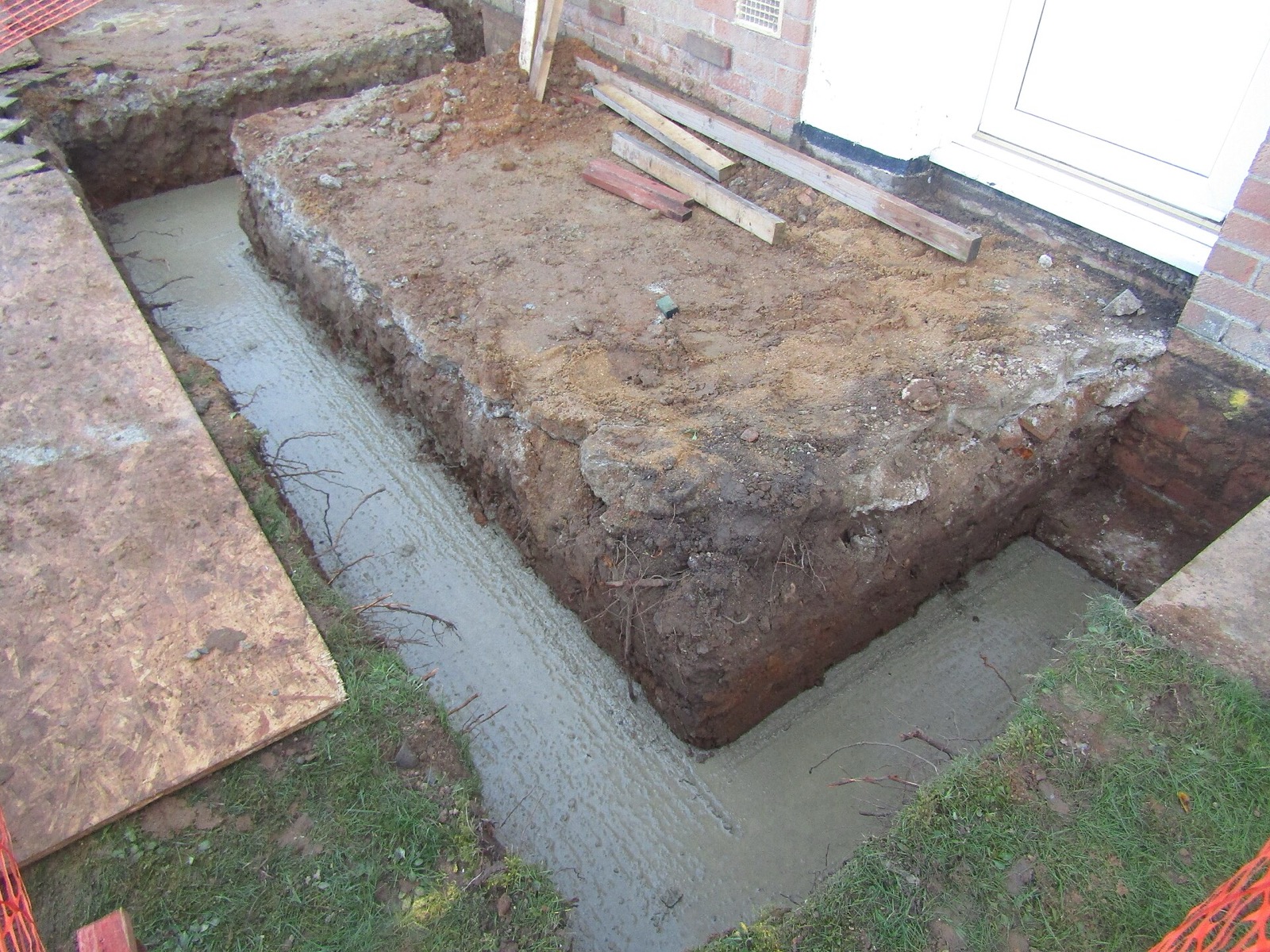
Water expands when it freezes. Ground with water in it lifts as the freezing front works down through it, and drops again in spring, and anything resting in that moving layer rides up and down with it. A footing set below the moving layer sits in ground that never freezes, so it stays where it was put. That is the whole idea, and the frost line depth is the number a code fixes it at.
The number matters because it is enforced. It sets how deep a deck footing, a porch pier, a garage slab edge and a house foundation must go, and it is usually the figure a buried water line is measured against as well. It is not a forecast and it is not a reading of this winter: it is a design figure chosen once and written into law, and the plainest codes say so in a single sentence.
R403.1.4. Minimum depth. All exterior footings and foundation systems shall extend 42 inches below actual grade. Where applicable, the depth of the footings shall also conform to section R403.1.4.1 of the code.R 408.30522 Minimum depth, Construction Code, Part 5. Residential Code, Michigan Administrative Rules, read September 23, 2026. Read it at the source
14 states also write a separate depth for buried water piping. It is often expressed as a clearance below the frost line rather than a figure of its own, which is one reason the frost line depth keeps turning up in plumbing work that has nothing to do with a foundation.
Frost protection for a building sewer shall not be required where the predicted depth of frost as determined from Figure 382.30-1 and Table 382.30-6 does not extend below the top of the building sewer.Chapter SPS 382, Design, Construction, Installation, Supervision and Inspection of Plumbing, Table 382.30-6, Wisconsin Administrative Code. Read it at the source
Where the number for an address comes from
States answer this question in five different shapes, and knowing which shape a state uses is most of the work. 6 states write one depth into the residential code and it applies from the border to the border. 5 publish a table instead, a depth per county or per zone, 155 rows between them.
The rest hand the figure downward. 37 states adopt a code that asks for the frost line depth and leave the value itself to the local building department, which is the office that issues the permit and the office whose number is binding. For an address in one of those states, the call to the building department is the answer, and the state page below has the agency, the code in force and what the state does say about footings and water lines.
In the absence of a determination by an engineer competent in soil mechanics, the minimum allowable footing depth in feet due to freezing is five feet in Zone I and 3-1/2 feet in Zone II.1303.1600 Footing Depth for Frost Protection, Minnesota Office of the Revisor of Statutes. Read it at the source
| State | What the state publishes | Depth in the code | Freezing index |
|---|---|---|---|
| Alabama | Local | From the building department | 23 |
| Alaska | Local | From the building department | 2,588 |
| Arizona | Local | From the building department | 98 |
| Arkansas | Local | From the building department | 73 |
| California | Local | From the building department | 84 |
| Colorado | Local | From the building department | 811 |
| Connecticut | Statewide | 42 inches | 521 |
| Delaware | Local | From the building department | 126 |
| Florida | None set | From the building department | 1 |
| Georgia | Local | From the building department | 35 |
| Hawaii | Local | From the building department | No station |
| Idaho | Local | From the building department | 429 |
| Illinois | Local | From the building department | 435 |
| Indiana | By county or zone | 24 to 36 inches | 379 |
| Iowa | Local | From the building department | 1,044 |
| Kansas | Local | From the building department | 300 |
| Kentucky | By county or zone | 24 to 33 inches | 153 |
| Louisiana | Local | From the building department | 6 |
| Maine | Local | From the building department | 1,270 |
| Maryland | Local | From the building department | 263 |
| Massachusetts | Statewide | 4 feet | 422 |
| Michigan | Statewide | 42 inches | 1,120 |
| Minnesota | By county or zone | 42 to 60 inches | 2,150 |
| Mississippi | Local | From the building department | 17 |
| Missouri | Local | From the building department | 250 |
| Montana | Local | From the building department | 734 |
| Nebraska | Local | From the building department | 639 |
| Nevada | Local | From the building department | 225 |
| New Hampshire | Local | From the building department | 978 |
| New Jersey | By county or zone | 30 to 36 inches | 287 |
| New Mexico | Local | From the building department | 83 |
| New York | Local | From the building department | 781 |
| North Carolina | Statewide | 12 inches | 34 |
| North Dakota | Local | From the building department | 2,169 |
| Ohio | Local | From the building department | 428 |
| Oklahoma | Local | From the building department | 91 |
| Oregon | Per address | From the building department | 76 |
| Pennsylvania | Local | From the building department | 325 |
| Rhode Island | By county or zone | 30 to 40 inches | 320 |
| South Carolina | Local | From the building department | 13 |
| South Dakota | Local | From the building department | 1,295 |
| Tennessee | Local | From the building department | 68 |
| Texas | Local | From the building department | 58 |
| Utah | Local | From the building department | 348 |
| Vermont | Statewide | 5 feet | 1,148 |
| Virginia | Local | From the building department | 57 |
| Washington | Local | From the building department | 225 |
| West Virginia | Local | From the building department | 237 |
| Wisconsin | Statewide | 4 feet | 1,162 |
| Wyoming | Local | From the building department | 942 |
One row per state. The depth column shows what the state publishes; a state that sets it locally shows where to ask instead. The freezing index column is the average of that state’s reference cities, in degree days, and is a measurement of winter rather than a depth.
How deep the state codes go
The 11 states that publish a depth, deepest first. A bar shows the span for a state whose code carries a table, because those states do not have one number at all: Minnesota asks five feet across its northern third and three and a half feet everywhere else, and that difference is the table doing its job.
- Minnesota42 to 60 inches
- Vermont5 feet
- Massachusetts4 feet
- Wisconsin4 feet
- Connecticut42 inches
- Michigan42 inches
- Rhode Island30 to 40 inches
- Indiana24 to 36 inches
- New Jersey30 to 36 inches
- Kentucky24 to 33 inches
- North Carolina12 inches
Each figure is quoted on that state’s page with the section it comes from and the date the code was read.
The freezing index, city by city
Codes do not pick a depth out of the air. The quantity behind frost protection design is the air freezing index: for one winter, add up how far each day’s mean temperature fell below freezing, in degree days, and take the deepest run the winter managed. A winter that sits at 22 degrees for a month scores 300; a winter that dips below freezing for a week and recovers scores almost nothing. It is the closest thing to a measurement of how much cold the ground had to absorb.
Below is that figure for 141 cities, computed from the NOAA daily temperature record for each station since 1951, coldest first. The once a century column is the freezing index a Gumbel fit puts at a one in a hundred winter, which is the return period the frost protection standards themselves work to.
| City | State | Freezing index | Once a century | Nights below freezing |
|---|---|---|---|---|
| Fairbanks | Alaska | 5,310 | 7,689 | 222 |
| International Falls | Minnesota | 2,783 | 4,569 | 198 |
| Minot | North Dakota | 2,330 | 4,210 | 187 |
| Fargo | North Dakota | 2,251 | 4,104 | 176 |
| Duluth | Minnesota | 2,174 | 3,649 | 182 |
| Caribou | Maine | 1,956 | 3,079 | 182 |
| Bismarck | North Dakota | 1,926 | 3,744 | 185 |
| Anchorage | Alaska | 1,902 | 3,754 | 190 |
| Aberdeen | South Dakota | 1,843 | 3,629 | 179 |
| Leadville | Colorado | 1,797 | 2,790 | 266 |
| Sault Ste. Marie | Michigan | 1,623 | 3,012 | 173 |
| Wausau | Wisconsin | 1,591 | 2,960 | 166 |
| Jackson | Wyoming | 1,566 | 2,874 | 241 |
| Lake Placid | New York | 1,547 | 2,619 | 187 |
| Minneapolis | Minnesota | 1,492 | 2,889 | 152 |
| Berlin | New Hampshire | 1,407 | 2,438 | 176 |
| Sioux Falls | South Dakota | 1,391 | 2,820 | 164 |
| Decorah | Iowa | 1,211 | 2,557 | 154 |
| St. Johnsbury | Vermont | 1,175 | 2,184 | 166 |
| Marquette | Michigan | 1,172 | 2,192 | 157 |
| Burlington | Vermont | 1,120 | 2,314 | 150 |
| Dubuque | Iowa | 1,116 | 2,328 | 147 |
| Bangor | Maine | 1,115 | 2,040 | 156 |
| Madison | Wisconsin | 1,099 | 2,304 | 155 |
Showing the 24 coldest of 141. Every state page carries its own cities in full. Source: NOAA National Centers for Environmental Information, Global Historical Climatology Network daily.
What the states with one number made of the same winter
The 6 states that answer with a single statewide depth are the only ones whose codes can be set beside each other directly. Ranking them by the freezing index at their own reference cities shows the coldest at 1,162 degree days and the mildest at 34, a fivefold spread of winter, against depths running 12 inches to 5 feet.
- North Carolina3412 inches
- Massachusetts4224 feet
- Connecticut52142 inches
- Michigan1,12042 inches
- Vermont1,1485 feet
- Wisconsin1,1624 feet
Left to right, the mildest winters to the hardest. The figure on the right is what that state wrote into its code.
They do not line up, and the exceptions are the interesting part. Massachusetts has the milder winter of the two and asks for the deeper footing: 4 feet against Michigan’s 42 inches, at a freezing index of 422 against 1,120. 3 such pairs turn up among the 6. A code depth carries soil, snow cover, drainage, a margin for the hard winter nobody has seen yet, and the judgement of whoever wrote the amendment, so the freezing index explains a lot of the ordering and never all of it.
What the scale is good for is reading a code, not choosing a depth. A depth belongs to a jurisdiction, and the one that counts is the one the building department issuing the permit enforces. Only Minnesota publishes how deep frost actually drove in a given winter, and it does so because the state measures roadbeds all winter for load restrictions.

Frost line depth, state by state
Each state page has the depth the state publishes in its own words, the code it sits in and the agency that adopts it, the separate footing and water line rules where the state writes them, and the freezing index for that state’s reference cities.
Codes read September 23, 2026 from each state’s own published code or the agency that adopts it, with the page and the date on every state page. Freezing index computed from NOAA daily temperature records for the 2026 record. Codes are amended, and a local amendment can be deeper than the state figure, so the building department issuing the permit has the number that binds. Start with your state in the table above.