
Skip to content
Michigan, statewide, 3 cities measured

Michigan Frost Line Depth: 42 inches

Michigan states one number for the whole state: exterior footings and foundations go 42 inches below actual grade, the same 42 inches the state writes into the frost line depth column of its climatic design table, and only the building official can change it on documented local evidence.

42 inches
Frost line depth
one figure statewide
2015 IResidential Code
Code in force
Michigan Department of Licensing and Regulatory Affairs, Bureau of Construction Codes
1,623
Freezing index
degree days a winter at Sault Ste. Marie
173
Nights below freezing
a winter at Sault Ste. Marie, since 1951
The answer

How deep is the frost line in Michigan?

One statewide depth

42 inches

Michigan's residential code sets one frost line depth for the whole state: 42 inches.

Who publishes it
Michigan Department of Licensing and Regulatory Affairs, Bureau of Construction Codes
Code in force
Michigan Residential Code (Construction Code, Part 5, R 408.30500 to R 408.30547g)
Based on
2015 International Residential Code
All exterior footings and foundation systems shall extend 42 inches below actual grade.
R 408.30522 Minimum depth, Construction Code, Part 5. Residential Code, Michigan Administrative Rules, read September 22, 2026. Read it at the source
Advertisement
What the code asks

Footings and buried water lines in Michigan

A frost line depth turns into two separate requirements in most codes: how far a footing has to bear below grade, and how far a buried water service has to sit below the same line. Michigan writes one of them out.

Footings

Michigan amends the International Residential Code to a single statewide number, 42 inches below actual grade for every exterior footing and foundation system, and lets the building official modify that only on evidence of freezing degree days, soil type, ground water, snow depth experience or exposure.

Depth
42 inches
Below the frost line
Yes, the code says so in these words
Exemptions
Modular ramp systems approved pursuant to the act are not required to comply with the requirements of section R403.1.4 of the code.
R403.1.4. Minimum depth. All exterior footings and foundation systems shall extend 42 inches below actual grade. Where applicable, the depth of the footings shall also conform to section R403.1.4.1 of the code.
R 408.30522 Minimum depth, Construction Code, Part 5. Residential Code, Michigan Administrative Rules, read September 22, 2026. Read it at the source
The winter behind it

The freezing index in Michigan

The air freezing index is the quantity the frost provisions of the model codes are written on: add up how far each day’s mean temperature fell below freezing over a winter, in degree days, and take the deepest run the winter managed. It measures how much cold the ground had to absorb, which is why it is the honest way to set one place beside another. Sault Ste. Marie is the coldest of the 3 cities on the record in Michigan.

Sault Ste. Marie

Severe

1,623degree days

average freezing index a winter

Hardest winter on record
2,548 degree days, winter of 2013
Hard winter, once a century
3,012 degree days
Nights below freezing
173 a year
Days that never thaw
88 a year
Winters measured
75, 1951 to 2025

Sault Ste Marie Sanderson Field
CityStateFreezing indexOnce a centuryNights below freezing
Sault Ste. MarieMichigan1,6233,012173
MarquetteMichigan1,1722,192157
DetroitMichigan5661,455127

Computed from NOAA National Centers for Environmental Information, Global Historical Climatology Network daily temperature records for each station, from 1951 onward. These are measurements of winter, not depths.

In context

What states with a comparable winter ask for

Only a handful of states answer with one number for the whole state, and they are the only codes that can be set beside each other directly. Ranked by the freezing index at their own reference cities, with Michigan marked at 1,120 degree days for comparison alongside what those codes settled on:

  1. North Carolina3412 inches
  2. Massachusetts4224 feet
  3. Connecticut52142 inches
  4. Michigan1,12042 inches
  5. Vermont1,1485 feet
  6. Wisconsin1,1624 feet
  7. Michigan1,120None published

Left to right, the mildest winters to the hardest. The figure on the right is what that state wrote into its code.

The nearest by winter are Vermont at 5 feet, Wisconsin at 4 feet and Connecticut at 42 inches. That is a reading of other states’ codes rather than a depth for an address in Michigan: soil, drainage, snow cover and local amendments all move the figure, and the building department issuing the permit is the office whose number binds.

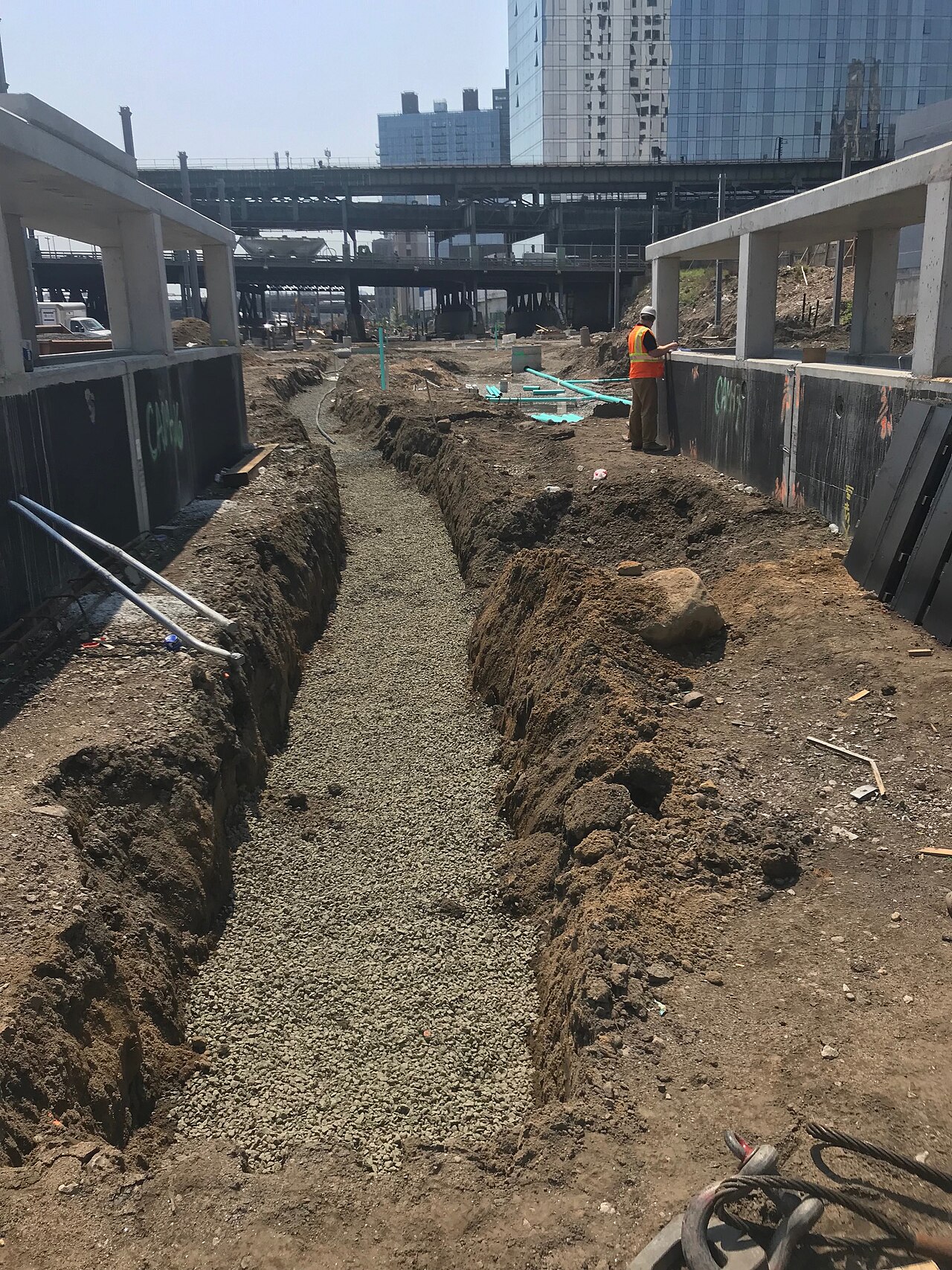
A long open trench with a gravel bed running down the middle of a city construction site, lengths of blue water pipe staged on the ground beside it
A water main trench, bedded and waiting for pipe, in Queens. Buried water service has its own depth rule in the plumbing side of a state code, written separately from the footing rule and not always to the same number. “Excavation for a water main trench in the future LIRR Mid-day Storage Yard”, MTA Capital Construction Mega Projects, CC BY 2.0

Michigan frost line questions

Advertisement

Michigan code read September 22, 2026 from R 408.30522 Minimum depth, Construction Code, Part 5. Residential Code, Michigan Administrative Rules. Codes are amended and a local amendment can be deeper than the state figure, so the building department issuing the permit has the number that binds. Every state is on the frost line depth hub.