The last seven days on iNaturalist, checked against five years
Rare Bird Alert: The Unusual Birds Seen Near You This Week
Every bird reported within 25 miles of your ZIP in the last seven days, with the ones that are rare there, out of season or uncommon pulled to the top and the reason for each.
Near you
See the rare birds around your ZIP this week
Enter a ZIP code. The alert reads every bird posted to iNaturalist within 25 miles in the last seven days and checks each one against five years of confirmed sightings in the same circle, so a bird that is ordinary in Texas and a stray in Ohio is judged where you are.
Five years of bird records, by the numbers
iNaturalist, research grade
11,711,690
Confirmed bird sightings behind the list
research grade iNaturalist records in the 50 states, five years
754
Most bird species in one state
California, in the same five years
2,871
Species rare in their own state
summed over the states: 3 or fewer confirmed records there
46
Records committees linked
covering 47 states, each linked from its state page
Counted from iNaturalist’s research grade bird records for each state from October 9, 2021 to October 1, 2026, read October 9, 2026. Committees from each state’s own pages, linked on the state pages.
Live, all 50 states
This week’s rare birds, state by state
For each state, the birds reported anywhere in it this week that have 3 or fewer confirmed records in that state in five years. Each name opens its iNaturalist species page, and each state opens its own page with the list near its biggest birding city.
358 species on record, 80 of them seen 3 times or fewer
A state’s list names the birds reported there in the last seven days that have 3 or fewer research grade records anywhere in the state from October 9, 2021 to October 1, 2026. This week counts needs ID sightings too, so a new name is worth a look at its photographs.
Advertisement
The method
How we decide what is rare
Three questions go to iNaturalist for your circle: which birds were reported this week, how many confirmed records each of those birds has there in five years, and how many of those fall in these same four weeks of the year. Each bird gets the strongest label it earns.
Rare here
3 or fewer research grade records within 25 miles in five years. A bird that almost nobody has confirmed around you in that time is the news of the week.
Out of season
Plenty of records in five years, but almost none in these four weeks of the year: at most 10 percent of what the area's own seasonal pattern predicts, where that prediction is 5 records or more.
Uncommon
Seen before, but rarely: 40 or fewer records, and no more than 0.15 percent of all the five year records for this week's birds around you.
A label needs a well watched circle. The week must have at least 6 species, the typical one with 50 or more records, and 1,000 records across the list. In a quiet rural county a Rock Pigeon can have four records only because few people post there; the guard keeps it off the rare list, and the page shows the week’s birds as they are.
Subspecies count toward their species, so records split across a junco’s forms never make a common bird look rare, and domestic forms are left out. Hybrids are listed with the week’s other birds but never labeled, since a pairing has no range of its own to be out of. The circle reaches 40 kilometers, about 25 miles, from the center of the ZIP.
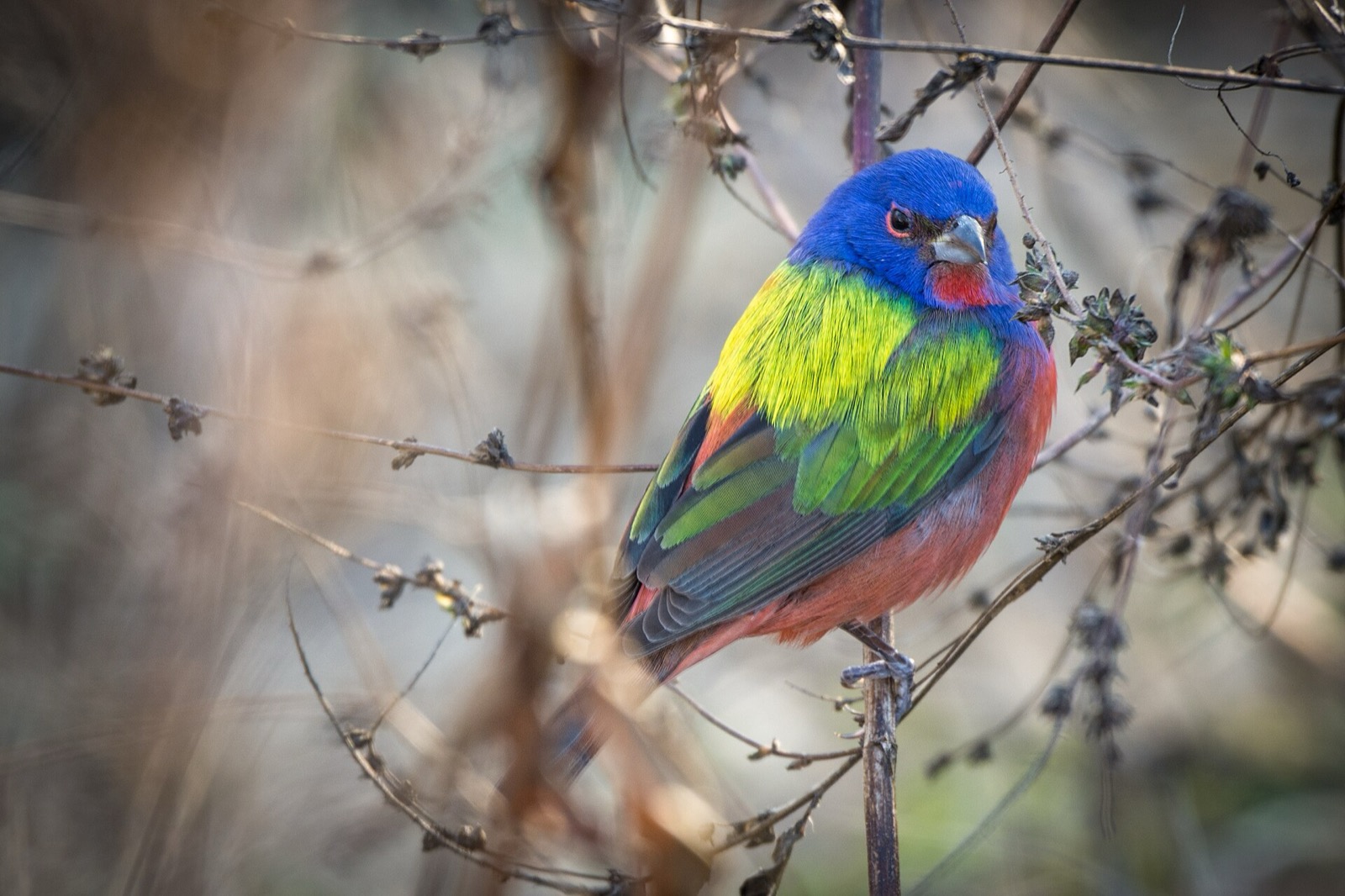
A male Painted Bunting in Prospect Park, Brooklyn, on January 2, 2016, the kind of bird the alert puts first: a species with few or no confirmed records nearby, photographed so others can check it. “Painted Bunting (Passerina ciris)” by Andrew C, CC BY 2.0
It compares this week’s bird sightings within 25 miles of your ZIP with five years of confirmed sightings in the same circle. A species with 3 or fewer confirmed records there is Rare here. One seen plenty of times, but almost never in these four weeks of the year, is Out of season. The few with the smallest share of the area’s sightings are Uncommon.
iNaturalist, where people post photographs and recordings and other observers check the identification. This week’s list counts research grade and needs ID sightings, because a fresh sighting takes days to confirm; the five year baseline counts research grade only.
iNaturalist’s help pages say observations become research grade “Observations become Research Grade when the community agrees on species-level ID or lower”, and until then a verifiable observation is labeled Needs ID. A needs ID sighting of a rare bird is worth checking before you drive to see it.
Either nothing unusual was posted near you in the last seven days, or the area has too few sightings in its five year record to call anything rare with confidence. In both cases the alert shows the birds people are seeing near you this week, most reported first.
40 kilometers, about 25 miles, around the center of the ZIP code. Each bird links to its species page on iNaturalist, and the state pages add a statewide list.
Each state’s bird records committee, which reviews photographs and written reports and keeps the official state list. The state pages link 46 of them, and quote what each one says it does.
Every time you open it: the last seven days are read live from iNaturalist. Most weeks bring a new bird or two somewhere near you during migration, and fewer in midsummer and midwinter.
50 states
Rare bird alerts by state
Each state page opens on the week near its biggest birding city, then the whole state, then the committee that confirms its rare birds and the strays it names.
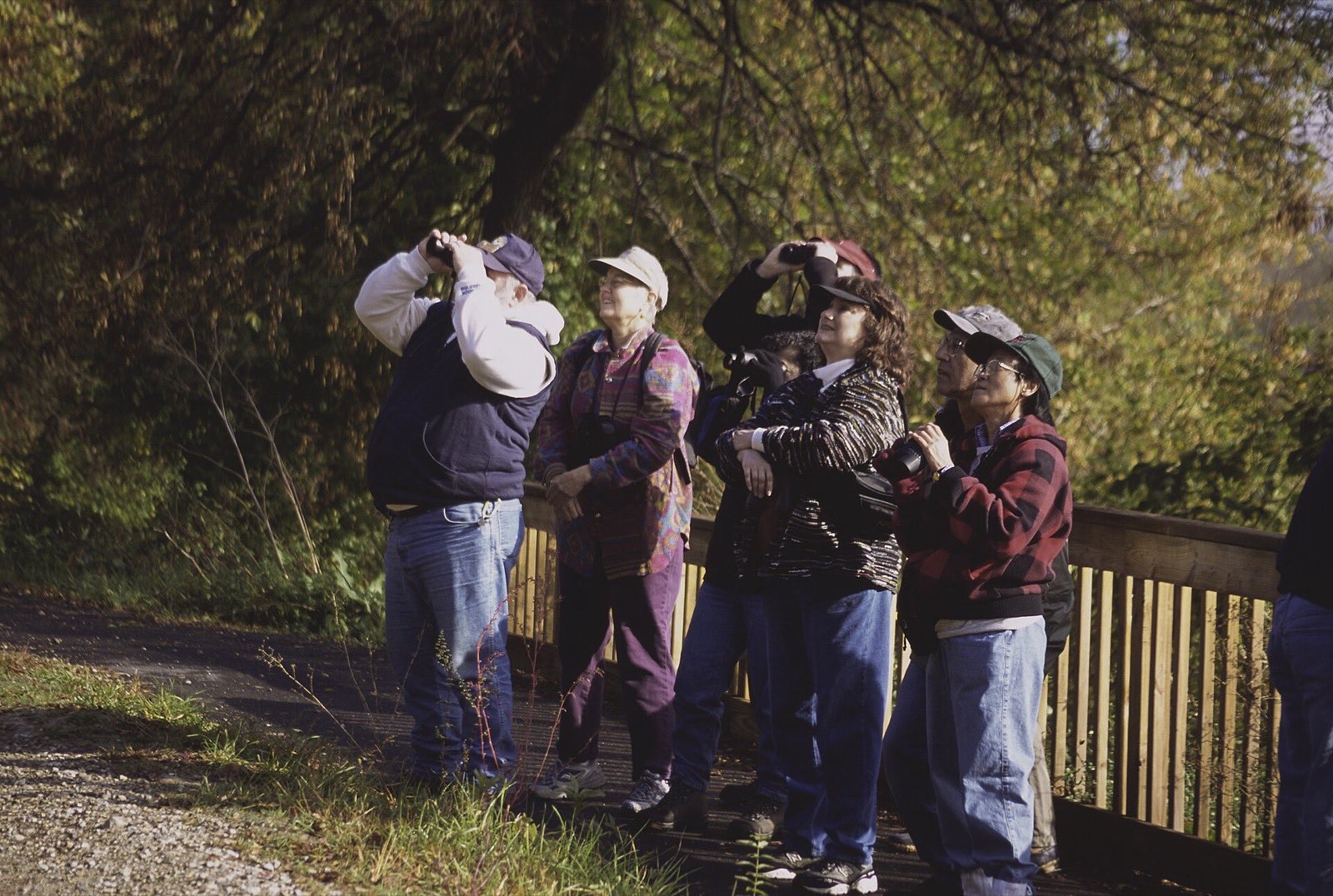
A volunteer led birding walk at John Heinz National Wildlife Refuge in Pennsylvania, October 2003. Most of what a group like this sees is on the common list, which is what makes the one unusual bird stand out. “Birdwatching”, Elizabeth Jackson, U.S. Fish and Wildlife Service, Public domain