
Skip to content
The next seven days, from the live National Weather Service forecast

Deer Movement Forecast: The Best Days to Hunt This Week

Each day rated Slow, Fair, Good, Great or Prime for daylight deer movement, from the rut stage where you hunt, the forecast and first and last light, with the best sit for the day and the study behind every point.

Your week

Rate the next seven days where you hunt

Enter a ZIP code. The forecast reads the hourly weather for that spot, places it in the rut calendar for that part of the state, and returns a rating, a best window and the reasons for each of the next seven days.

44
States with a rut calendar
39 with a peak breeding date, 8 split into rut zones
132
Reference towns, rated live
three per state, each checked against its weather service gridpoint
38
Research findings behind the weights
quoted word for word from 6 studies and agencies
7
Days rated per ZIP
with the best morning or evening window for each
The research

Why deer move when they do

GPS collar studies from Pennsylvania to Louisiana have followed white-tailed deer through every hour of the year, and they agree on the order of things. The breeding calendar and the hour of the day decide most of it: deer are on their feet in the first and last two hours of light, and bucks cover the most ground in the week or two before peak breeding. The weather nudges a day up or down from there, and less than the hunting lore says.

So the rut stage sets each day’s base score and the weather moves it within a capped range. Wind and the moon score zero everywhere: the week ahead shows both every day and the November calendars mark the full and new moons for reference, because the studies that measured them found effects too weak or too mixed to stand on. Each card below gives the weight and the sentence from the study that set it.

The rut sets the week

Biggest factor. A day scores 45 to 74 from the rut stage alone, highest in the chasing week just before peak breeding.

  • “within the reproductive season, movements and space use were greatest during the rut, followed by pre-rut and post-rut, and least during the non-breeding season.”

    Simoneaux 2015 Bucks cover the most ground during the rut, then the pre rut and post rut, and the least outside the breeding season.

  • “Hunters should remember that breeding periods vary annually and peak breeding times are not necessarily peak buck movement times. Bucks may be more active before or after peak breeding periods, but research has shown that peak buck movement is one to two weeks before peak breeding.”

    Louisiana Wildlife and Fisheries Buck movement peaks one to two weeks before peak breeding, which is why the chasing week scores highest.

  • “Once the peak of the rut arrives a week or two later, hunters will typically see fewer bucks because they are courting and breeding receptive does, rather than searching for receptive does.”

    Mississippi State Deer Lab At peak breeding, bucks stay with a doe, so the lockdown week scores lower than the weeks before it.

  • “During the rut, males will expand their home range 2-4 times in size.”

    Farther and Faster, 2023 Rutting bucks roam two to four times their usual range.

  • “within each region the duration is relatively consistent; about 30-45 days with most of breeding taking place within a 21-day period centered on the peak breeding date. There may be a second, much smaller peak of breeding 3-4 weeks later”

    Mississippi State Deer Lab Most breeding falls in the three weeks around the peak, with a smaller second peak three to four weeks later.
The clock sets the window

Picks the best window: the first two hours of light or the last two, or all day in the chasing week.

  • “Activity was greater at night than during the day and was highest within 2 hours of sunrise or sunset.”

    Wandering in the Moonlight, 2017 Deer move most in the two hours around sunrise and sunset, which is where the best window sits every day.

  • “Female and male movements were primarily crepuscular.”

    Webb et al. 2010 Both bucks and does move mostly at dawn and dusk.

  • “If we look at the average hourly speed of Buck 12776 from November 3rd through November 12th – the two weeks leading up to when half the does are bred – there are no morning and evening bursts of activity.”

    Chasing the Ladies, 2017 In the chasing days before the peak, a collared buck moved all day, so the window opens up to midday.

A colder day helps, a little

Up to 14 points for a day 5 or more degrees colder than the days before it; down up to 10 for a day 6 or more degrees warmer.

  • “activity of both sexes decreased with increasing daytime ambient temperatures, and generally increased with increasing nighttime temperatures during the breeding and post- breeding seasons.”

    Goethlich 2019 In the breeding season, deer moved less by day as the daytime temperature rose.

  • “Changing weather can stimulate deer movement, but a drop in temperature does not influence when the breeding season occurs.”

    Mississippi State Deer Lab A change in weather can get deer moving, while the rut keeps its own dates.

  • “Deer may respond to cold fronts but we likely would need a lot more data to tease out any effect.”

    Cold Wet Winds of Change, The Verdict, 2023 The cold front effect is real enough to count and small enough to keep modest.

  • “First off, I could find no effect of temperature on deer movements.”

    Deer and Rain, 2015 Penn State found no temperature effect, which is why the cold front lift is capped at 14 points.

A hot day slows daytime movement

Minus 8 for a high of 77 degrees or more, minus 14 at 85.

  • “temperatures above 25˚C caused increased energy expenditure due to heat stress”

    Goethlich 2019, citing Holter et al. 1975 Above 77 degrees, deer spend energy just staying cool, so a hot day loses points.

  • “activity of both sexes decreased with increasing daytime ambient temperatures, and generally increased with increasing nighttime temperatures during the breeding and post- breeding seasons.”

    Goethlich 2019 In the breeding season, deer moved less by day as the daytime temperature rose.

Steady rain slows bucks

Minus 8 for a tenth of an inch or more of daylight rain at 50 percent odds or better, minus 3 for a 30 to 49 percent chance.

  • “when it rains they travel about 4-tenths of a mile less per day.”

    Deer and Rain, 2015 Bucks travel about four tenths of a mile less on a rainy day.

  • “Rain alone causes a decrease in buck movement.”

    Blown Away, 2018 Rain on its own cuts buck movement.

  • “For females I found NO EFFECT of rain on their movements.”

    Deer and Rain, 2015 Does kept moving in the rain, so a wet day loses 8 points, not more.

  • “less likely to be active when rain was falling at night, and more likely to be active when rain was falling during the day.”

    Goethlich 2019 In South Carolina, daytime rain did not stop deer, which is another reason the rain penalty stays small.

A steady barometer

Today only, from the nearest weather station: plus 3 when the barometer held within 1.5 millibars over a day, minus 3 when it swung 5 or more.

  • “Tomberlin (2006) observed that white-tailed deer were most active when barometric pressure was stable and were less active as barometric pressure increased or decreased.”

    Goethlich 2019, citing Tomberlin 2006 Deer were most active with a steady barometer, so a steady day earns 3 points and a big swing costs 3.

  • “change in barometric pressure was a better predictor of activity than barometric pressure at the time of each activity event, although patterns of activity relative to barometric pressure change were not consistent across sexes, seasons, or diel period in our study.”

    Goethlich 2019 The change in pressure matters more than the reading, and even that is inconsistent, so the barometer is worth 3 points at most.

Windy days move bucks more

Shown each day at zero points. Penn State bucks moved more on windy days and a South Carolina study saw does slow on windy nights, so the two cancel out.

  • “It seems that for both males and females, deer move MORE during a windy day, but they’ll move LESS during a windy night!”

    Wind’s Surprising Effects, 2015 Collared deer moved more on windy days, so wind does not lower the rating.

  • “A strong wind caused buck activity to increase significantly whether or not it was raining but had no effect on does.”

    Blown Away, 2018 Strong wind raised buck activity and left does unchanged.

  • “Additionally, female activity decreased with increasing wind speed.”

    Goethlich 2019 In South Carolina, does were less active at night as wind rose, the opposite pull, so wind scores zero either way.

The moon matters far less than weather

Shown each day at zero points. The collar studies find the moon moves deer far less than the weather does.

  • “We found moon phase had no effect on daily, nocturnal, and diurnal deer movements and fine-scale temporal weather conditions had an inconsistent influence on deer movement patterns within season.”

    Webb et al. 2010 Moon phase had no effect on how far deer moved, day or night.

  • “Moon phase has an insignificant effect on deer movement”

    Wandering in the Moonlight, 2017 Penn State found the same: the moon barely registers.

  • “There is no relationship between the rut and the moon.”

    How to Predict the Rut, 2014 The moon does not set the rut dates either.

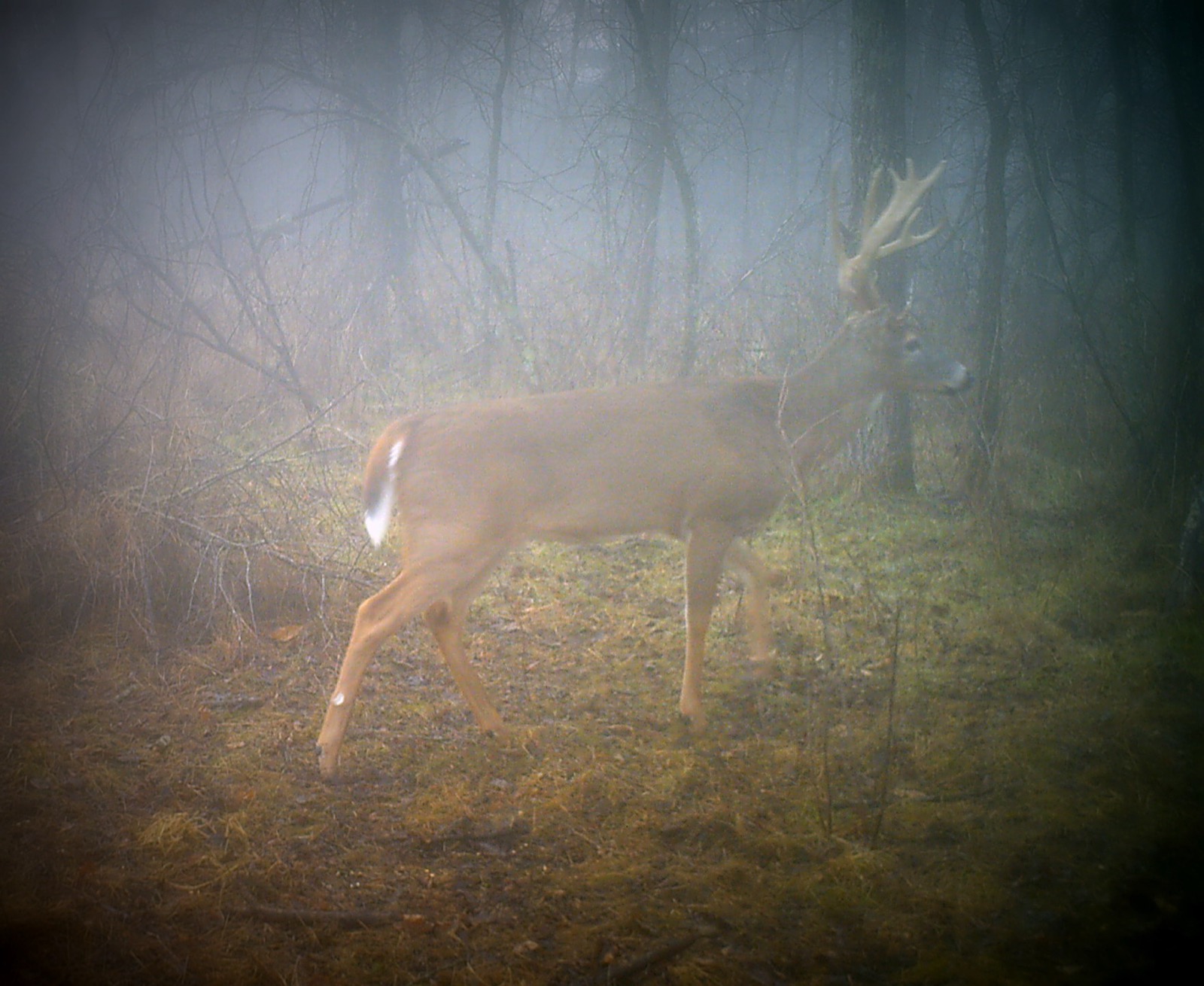
A large white-tailed buck walking left to right through a misty hardwood stand, bare branches around it and grass underfoot
A big buck on his feet in early morning fog. Wet weather slows bucks more than does: Penn State's collared bucks walked about four tenths of a mile less on rainy days, and the does did not change at all. So the forecast takes a few points off when rain is likely in daylight, a little for a chance of it, and leaves a grey, dry morning alone. “Foggy Buck”, National Park Service, Public domain

The studies

Live, coast to coast

The best day this week, region by region

Eighteen reference towns, three to a region, each rated from its own National Weather Service forecast and its own rut zone. Each town links to its state’s full week.

RegionTownBest day this weekBest windowRut stage
NortheastState College, PALoads as you scroll
Albany, NYLoads as you scroll
Bangor, MELoads as you scroll
SoutheastCharlottesville, VALoads as you scroll
Siler City, NCLoads as you scroll
Jackson, MSLoads as you scroll
MidwestWausau, WILoads as you scroll
Rolla, MOLoads as you scroll
Decorah, IALoads as you scroll
RockiesMissoula, MTLoads as you scroll
Casper, WYLoads as you scroll
Gunnison, COLoads as you scroll
SouthwestGiddings, TXLoads as you scroll
Ada, OKLoads as you scroll
Alpine, TXLoads as you scroll
WestRoseburg, ORLoads as you scroll
Bend, ORLoads as you scroll
Ketchikan, AKLoads as you scroll
Advertisement
44 states

Deer movement forecasts by state

Each state page carries the live week for three towns, the rut timeline from its agency’s breeding data, and a November calendar marking the days the rut and the open seasons line up.

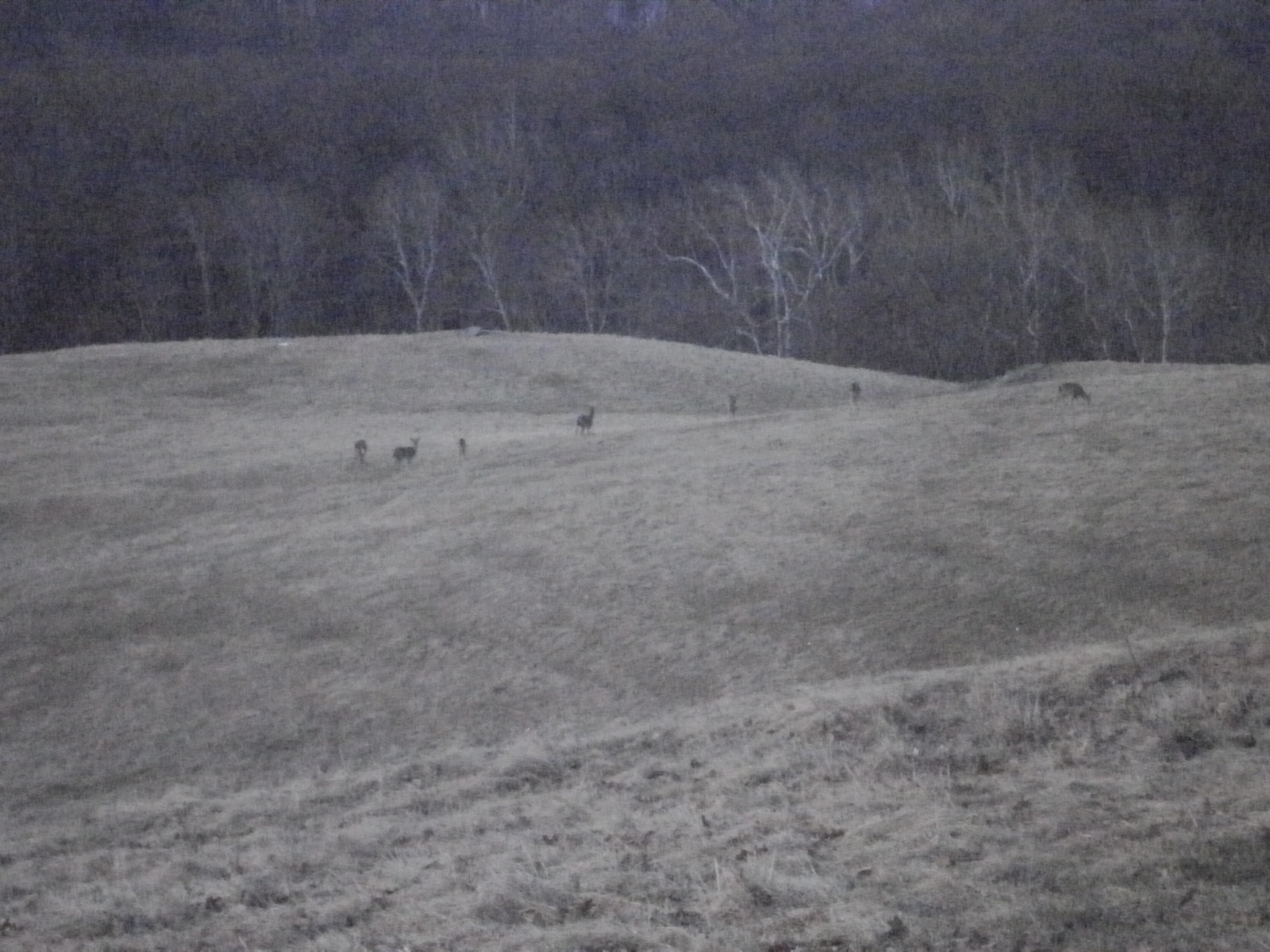
Six white-tailed deer spread across a rolling grass meadow in dim light, with a bare winter forest on the hill behind them
Six deer spread across a Virginia state park meadow in low light, in early March. Outside the rut this is most of what deer movement is, the first and last hours of light, which is why the best window on every day of the forecast is one of those two, except in the chasing week. “SK Deer on the Meadow” by Virginia State Parks staff, CC BY 2.0

Deer movement questions

Every ZIP code

The forecast works in all fifty states

The state pages cover the 44 states whose wildlife agency publishes when its deer breed. A ZIP code anywhere else gets the full seven days too, with the rut counted as even:

  • West Virginia: the full week on the weather and the light; Pennsylvania and Virginia next door publish a mid November peak.
  • South Dakota: the full week on the weather and the light; Minnesota and North Dakota next door publish a mid November peak.
  • Nebraska: the full week on the weather and the light; Kansas and Iowa next door publish a mid November peak.
  • Arizona: the full week on the weather and the light, the same way New Mexico next door is rated.
  • Nevada: the full week on the weather and the light; Utah and Idaho next door publish a mid November peak.
  • Hawaii: the full week on the weather and the light; the islands’ axis deer keep a breeding calendar of their own.

The rut peaks come from the deer rut pages, which quote each agency, and the open seasons from the deer season pages. Legal shooting hours are set by each state; the forecast uses the common rule of 30 minutes before sunrise to 30 minutes after sunset.

More for deer season

Advertisement