
Hurricane Season 2026
The dates, the September 10 peak, NOAA's outlook, and 175 years of strike history for every coastal state. Climatology and history; live storms are at the National Hurricane Center.
The 2026 Atlantic season is open: June 1 to November 30. For anything live, go to the National Hurricane Center.Is there a storm anywhere right now? Go to the National Hurricane Center.
The panel just below republishes the National Hurricane Center’s own latest advisories and outlook, verbatim and timestamped. Tracks, cones and forecasts are the National Hurricane Center’s. If a storm is active or approaching, NHC is the source of official forecasts and warnings, and your emergency management agency is the source of evacuation and shelter decisions.
- National Hurricane Center for current storms, forecasts, watches, and warnings
- Your state emergency management agency for evacuation orders and shelter information
- Ready.gov hurricane preparedness for how to prepare, in FEMA’s own words
“It only takes one hurricane (or tropical storm) to cause a disaster.” NOAA Climate Prediction Center
What NHC is saying right now
Republished verbatim from the National Hurricane Center via the National Weather Service API, with NHC’s own issuance times. For anything that matters, read it at nhc.noaa.gov where it is always current.
Loading the latest NHC products…
The season at a glance
From NOAA’s own records, 1851 to 2025Every number on these pages comes from NOAA: the National Hurricane Center’s HURDAT2 best-track database and the NOAA AOML landfall list derived from it. We add arithmetic and never a forecast.
When is hurricane season?
NOAA sets the dates, and its own sentences say it best:
“The Atlantic hurricane season runs from June 1 to November 30.”National Hurricane Center, source
“The peak of the Atlantic hurricane season is September 10, with most activity occurring between mid-August and mid-October.”National Hurricane Center, source
“Based on a 30-year climate period from 1991 to 2020, an average Atlantic hurricane season has 14 named storms, 7 hurricanes, and 3 major hurricanes (Category 3, 4, or 5 on the Saffir-Simpson Hurricane Wind Scale).”National Hurricane Center, source
The eastern Pacific season opens earlier, on May 15, and the central Pacific season around Hawaii runs June 1 to November 30 like the Atlantic. The dates are administrative, not physical: the off season page counts every storm the Atlantic has produced outside them.
What NOAA expects from the 2026 season
NOAA issues a seasonal activity outlook each May and updates it in early August. It is a basin-wide activity forecast, quoted here with its date, and NOAA itself is emphatic about what it is not:
Atlantic
NOAA Climate Prediction Center, issued 6 August 2026. Snapshot taken 2026-08-27; always current at the source.
“NOAA's updated outlook for the 2026 Atlantic Hurricane Season indicates that a below-normal season is the most likely outcome, with low chances for a near-normal season, and a very small chance that the season would be above-normal.”
- 7 to 13 named storms
- 2 to 6 hurricanes
- 0 to 2 major hurricanes
“NOAA does not make seasonal hurricane landfall predictions. Hurricane landfalls are largely determined by the weather patterns in place as the hurricane approaches, and those patterns are usually only predictable when the storm is within several days of making landfall.” NOAA Climate Prediction Center
Central Pacific (Hawaii)
NOAA Central Pacific Hurricane Center / NWS Honolulu, issued May 2026. Snapshot taken 2026-08-27; always current at the source.
“Forecasters with NOAA's National Weather Service are predicting an above-normal hurricane season for the central Pacific basin this year.”
- 5 to 13 tropical cyclones in the central Pacific
“NOAA's outlook is for overall seasonal activity based on large-scale weather and climate patterns. It does not indicate where or when any storms may affect land, as that is determined by short-term and variable weather patterns, and is not a landfall forecast.” NOAA Central Pacific Hurricane Center / NWS Honolulu
When storms actually happen
This is the whole season in one chart: the number of named storms active in each calendar month across the 1851 to 2025 HURDAT2 record. September dwarfs everything, exactly as NHC’s September 10 peak suggests, and the wings of the chart are why the season dates are where they are.
Each month has its own page with landfalls, notable storms, and the record behind it:
How often each state actually gets hit
Hurricane strikes by state, 1851 to 2025, as attributed by NOAA AOML’s continental US landfall list (Hawaii’s row counts tropical cyclones passing within 75 miles of the islands since 1949, a different measure for a different ocean). Click through for the monthly histogram, the full strike table, and the state’s own record caveats.
| State | Hurricane strikes | Major (Cat 3+) | Peak month |
|---|---|---|---|
| Florida | 129 | 40 | September |
| Texas | 67 | 19 | August |
| Louisiana | 65 | 20 | September |
| North Carolina | 57 | 7 | September |
| South Carolina | 33 | 5 | September |
| Alabama | 23 | 5 | September |
| Mississippi | 21 | 8 | September |
| Georgia | 16 | 3 | August |
| New York | 15 | 3 | September |
| Massachusetts | 12 | 1 | September |
| Hawaii | 12 nearby | see page | August |
| Virginia | 11 | 0 | September |
| Connecticut | 11 | 2 | September |
| Rhode Island | 10 | 3 | September |
| New Jersey | 4 | 0 | September |
| Maryland | 2 | 0 | August |
| Delaware | 2 | 0 | September |
| Maine | 2 | 0 | September |
| New Hampshire | 1 | 0 | September |
How complete is this record?
“Because of the sparseness of towns and cities before 1900 in some coastal locations along the United States, the above list is not complete for all states. Before the Gulf of Mexico and Atlantic coasts became settled, hurricanes may have been underestimated in their intensity or missed completely for small-sized systems (i.e., 2004's Hurricane Charley).”NOAA Atlantic Oceanographic and Meteorological Laboratory, Hurricane Research Division, source
Which states have a hurricane season page
The 18 Atlantic and Gulf coastal states in NOAA’s landfall list, plus Hawaii, each have a page. The states below sit outside that record, and each card gives the reason. NOAA AOML’s FAQ explains the West Coast case in its own words:
“In the Northeast Pacific, a west-northwest track takes those hurricanes farther off-shore, well away from the U.S. west coast. In addition to the general track, a second factor is the difference in water temperatures along the U.S. east and west coasts.”NOAA AOML Hurricane Research Division FAQ, source
California
No hurricane landfall appears in NOAA's modern eastern Pacific record for California. NOAA AOML's FAQ explains why: storms track west-northwest away from the coast, and the water offshore is too cold to sustain them. The rare impacts that do occur arrive as tropical storms or remnants, and anything current is published by the National Hurricane Center.
Oregon
The eastern Pacific's cold coastal water and offshore steering keep hurricanes away from the Pacific Northwest entirely; NOAA's best-track record contains no Oregon hurricane landfall. The big wind events here are winter mid-latitude storms, which are a different phenomenon monitored by the NWS, not the National Hurricane Center.
Washington
Like Oregon, Washington has no hurricane landfall in NOAA's record: the eastern Pacific steers its storms out to sea and its coastal waters are far too cold. October windstorms of extratropical origin are the state's real coastal wind hazard, and the NWS Seattle office is the agency that covers them.
Alaska
Alaska's storms are extratropical: powerful Bering Sea and Gulf of Alaska lows, sometimes seeded by former Pacific typhoons, but not tropical cyclones at landfall. The National Weather Service Alaska Region covers them; Alaska has no tropical cyclone season to chart.
Pennsylvania
Pennsylvania has no coastline, and appears in NOAA's landfall list exactly once, as an inland hurricane-condition entry from the October 1878 storm. Its serious tropical cyclone history is inland flooding from remnants, which the NWS and state emergency management cover as a flood hazard rather than a hurricane season.
Vermont
Vermont is landlocked and absent from NOAA's hurricane strike list entirely. Its defining tropical cyclone event, Irene in 2011, arrived as a tropical storm and did its damage through river flooding, and anything current is published by the NWS and Vermont Emergency Management.
West Virginia
West Virginia is a mountain state with no entry in NOAA's hurricane strike list. Tropical remnants reach it as rain events in steep terrain, a flash flood problem the NWS covers, not a hurricane season.
Hurricane season FAQ
More seasonal timing
Season dates, peak, and averages are the National Hurricane Center’s, quoted verbatim. Strike counts are NOAA AOML’s landfall list (Revised in March 2026 to add in the 2025 season); basin month counts are derived from NOAA HURDAT2 (hurdat2-1851-2025-02272026.txt). Outlooks are NOAA’s, quoted with issue dates. For anything current: nhc.noaa.gov.
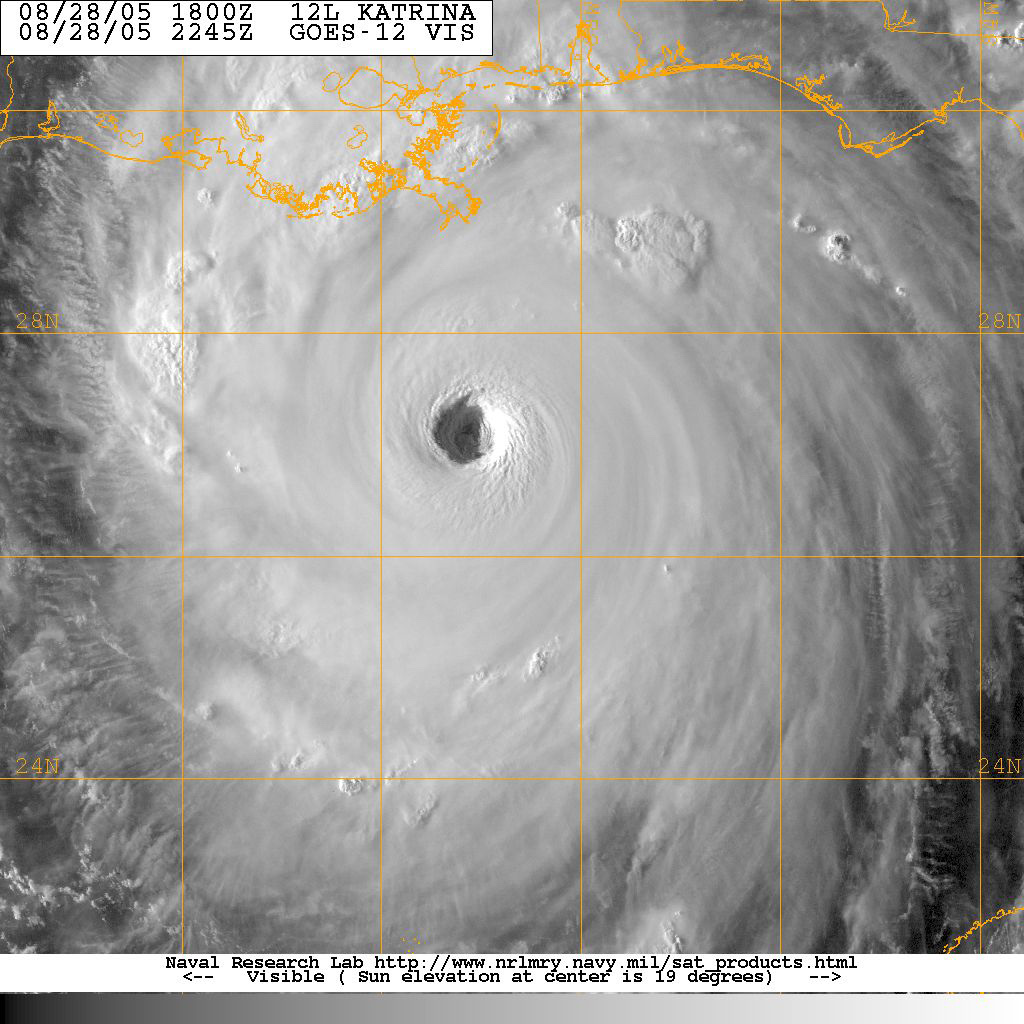
Hero image: “Katrina 2005-08-28 2245Z” — U.S. Navy / Naval Research Laboratory — Public domain