Arizona
Efficiency Arizona
Up to $8,000
Applies from 1 September 2026 only as a replacement for existing electric equipment, not for a gas system.
Income ruleApproved contractor

Where every state actually stands, not what it has announced. The 155 dollar figures the offices print, the condition attached to each one, who has an income rule, who requires an approved contractor, and the page every line was read from.
Forty eight states have a home energy rebate programme of some kind on paper. 13 of them will let a homeowner apply for one today. The other 37 are somewhere between a press release and a waiting list, and the commonest single position in the country, at 31 states, is a programme that has been announced and never opened.
This is not a distinction a state energy office draws clearly on its own website. An announcement page and a live application look almost identical: the same programme name, the same dollar figures, the same photograph of a technician, and the word that separates them buried in the fourth paragraph or in a dated note near the footer. A homeowner reading their own state’s page alone has no way of telling which of the two they are looking at, because there is nothing on the page to compare it against. The bar below is that comparison.
26% of the 50
Accepting applications
2% of the 50
Taking names, not applications
4% of the 50
Open once, not taking applications now
2% of the 50
Ran and stopped
62% of the 50
Announced, no application yet
4% of the 50
No state programme published
Arizona, Connecticut, Georgia, Indiana, Maine, Michigan, New Mexico, New York, North Carolina, Rhode Island, Vermont, Washington and Wisconsin. They have little in common: the list runs from Maine to New Mexico and includes three of the warmest states in the country, which is a useful corrective to the assumption that this money follows the cold. What separates an open state from a closed one is almost entirely administrative, a matter of how quickly the office finished designing its programme and how much federal money it had left when it did.
The figure on each card is that state’s largest heat pump line, and the sentence under it is the condition the office attached to it. The condition is the half that decides whether the figure applies, and it is quoted rather than summarised on every state page.
Efficiency Arizona
Up to $8,000
Applies from 1 September 2026 only as a replacement for existing electric equipment, not for a gas system.
Income ruleApproved contractor
Residential Air Source Heat Pump Energy Optimization Incentive
Starting at $1,500 per ton up to $10,000 combined incentives
Applies replacing natural gas, oil, propane or electric resistance heating.
Approved contractor
Georgia's Home Energy Rebates: Home Efficiency Rebates (HER) and Home Electrification and Appliance Rebates (HEAR)
No heat pump figure printed
Income ruleApproved contractor
Apply at Georgia Environmental Finance Authority (Georgia's Home Energy Rebates)
Indiana Energy Saver Program
$8,000
Applies ENERGY STAR certified heat pump for space heating and cooling, Home Appliance Rebate track.
Income ruleApproved contractor
Residential Heat Pump Rebates
$13,900
Applies ducted heat pumps for single-wide mobile homes, low income maximum.
Income ruleApproved contractor
Michigan Home Energy Rebates (MiHER)
may not exceed $14,000 per household
Applies the HEAR pathway household cap, which covers heat pumps among other electric equipment; no separate heat pump figure is printed.
Income ruleApproved contractor
Apply at Michigan Department of Environment, Great Lakes, and Energy (EGLE)
Home Electrification and Appliance Rebates (HEAR)
30%, up to $9,000
Applies printed as a state tax credit, not a rebate.
Approved contractor
EmPower+
$10,000
Applies through the Sustainable Futures Program, on top of the EmPower+ project cap.
Income ruleApproved contractor
Apply at New York State Energy Research and Development Authority
Energy Saver North Carolina (HEAR and HOMES)
$8,000
Applies ENERGY STAR certified electric heat pump for space heating, one system, lifetime maximum per product category.
Income ruleApproved contractor
Clean Heat Rhode Island
60% of Heat Pump system and install cost. These incentives are capped at $11,500.
Applies products on the Rhode Island NEEP list; R-410A equipment ineligible from 1 January 2026.
Approved contractor
Ducted and Ductless Heat Pump rebates
$2,200 discount
Applies ducted system 4 ton or larger.
Income ruleApproved contractor
State Home Electrification and Appliance Rebates Program (HEAR)
No heat pump figure printed
Apply at Washington State Department of Commerce, Energy Division
Wisconsin IRA Home Energy Rebates (Home Efficiency Rebates and Home Electrification and Appliance Rebates)
Up to $8,000
Applies ENERGY STAR electric heat pump for space heating and cooling, must go through a registered contractor.
Income ruleApproved contractor
Ordered by how close the money is to being spendable rather than alphabetically, so the states worth opening first are at the top. The programme column carries the name the office itself uses, which is the thing to search for when a link goes stale, and 15 states publish a direct application link that is carried through to their own page here.
| State | Where it stands | Programme | Largest figure printed | Heat pump line | Income rule |
|---|---|---|---|---|---|
| Arizona | Open | Efficiency Arizona | up to $14,000 per household | Up to $8,000 | Yes |
| Connecticut | Open | Residential Air Source Heat Pump Energy Optimization Incentive | Starting at $1,500 per ton up to $10,000 combined incentives | Starting at $1,500 per ton up to $10,000 combined incentives | |
| Georgia | Open | Georgia's Home Energy Rebates: Home Efficiency Rebates (HER) and Home Electrification and Appliance Rebates (HEAR) | $16,000 | None printed | Yes |
| Indiana | Open | Indiana Energy Saver Program | $18,000 or 100% of project cost | $8,000 | Yes |
| Maine | Open | Residential Heat Pump Rebates | $13,900 | $13,900 | Yes |
| Michigan | Open | Michigan Home Energy Rebates (MiHER) | may not exceed $20,000 per household | may not exceed $14,000 per household | Yes |
| New Mexico | Open | Home Electrification and Appliance Rebates (HEAR) | 30%, up to $9,000 | 30%, up to $9,000 | |
| New York | Open | EmPower+ | capped at $12,000 per project for upstate customers and $14,000 per project for downstate customers | $10,000 | Yes |
| North Carolina | Open | Energy Saver North Carolina (HEAR and HOMES) | Up to $16,000 or 100% of project cost | $8,000 | Yes |
| Rhode Island | Open | Clean Heat Rhode Island | capped at $18,000 per address | 60% of Heat Pump system and install cost. These incentives are capped at $11,500. | |
| Vermont | Open | Ducted and Ductless Heat Pump rebates | $2,200 discount | $2,200 discount | Yes |
| Washington | Open | State Home Electrification and Appliance Rebates Program (HEAR) | None printed | None printed | |
| Wisconsin | Open | Wisconsin IRA Home Energy Rebates (Home Efficiency Rebates and Home Electrification and Appliance Rebates) | 100% of project cost, up to $10,000 | Up to $8,000 | Yes |
| West Virginia | Waiting list | Home Energy Rebate Programs: Home Owner Managing Energy Savings (HOMES) and Home Efficiency Appliance Rebates (HEAR) | $20,000 | $8,000 | Yes |
| California | Paused | Home Electrification and Appliance Rebates (HEEHRA) Phase I | up to $14,000 per unit | up to $8,000 | Yes |
| Oregon | Paused | Oregon Heat Pump Purchase Program | $2,000 | $2,000 | |
| Colorado | Closed | Colorado Home Energy Rebate Program | up to $16,000 | $8,000 | Yes |
| Alabama | Announced | Inflation Reduction Act Home Energy Rebates Program | None printed | None printed | |
| Alaska | Announced | Home Owner Managing Energy Savings (HOMES) and High-Efficiency Electric Home Rebate (HEEHR) | $10,000 | None printed | |
| Arkansas | Announced | Home Energy Rebates Program | None printed | None printed | Yes |
| Delaware | Announced | Home Efficiency Rebate Program and Home Electrification and Appliance Rebate Program | may range from $2,000 to $8,000 per home or unit | may range from $500 to $8,000 | Yes |
| Florida | Announced | Florida Energy Saver Program: High-Efficiency Electric Home Rebates (HEEHR) and Home Owner Managing Energy Savings (HOMES) | $20,000 | $8,000 | Yes |
| Hawaii | Announced | eHale Energy Saver | None printed | up to 100% of the eligible project cost | Yes |
| Idaho | Announced | Not named | None printed | None printed | |
| Illinois | Announced | Illinois Home Energy Rebate Program (Home Efficiency Rebates and Home Electrification and Appliance Rebates) | None printed | None printed | |
| Iowa | Announced | Iowa Home Energy Rebate Programs | a rebate cap of $14,000 | a rebate cap of $14,000 | Yes |
| Kansas | Announced | Kansas Home Rebates Program | None printed | None printed | Yes |
| Kentucky | Announced | Kentucky Home Energy Rebates Program | None printed | None printed | |
| Louisiana | Announced | Home Efficiency Rebate (HER) Program and Home Electrification and Appliance Rebate (HEAR) Program | None printed | None printed | |
| Maryland | Announced | IRA Home Energy Rebate Programs: Home Efficiency Rebates Opportunity Program (HERO) and Home Electrification & Appliance Rebates Program (HEAR) | None printed | None printed | |
| Massachusetts | Announced | Home Efficiency Rebates (HER) and Home Electrification and Appliance Rebates (HEAR) | None printed | None printed | |
| Minnesota | Announced | Save Energy Minnesota | $2,000 to $8,000 or more per home | None printed | Yes |
| Mississippi | Announced | Home Energy Rebates (HER) | None printed | None printed | |
| Missouri | Announced | Home Energy Rebates Program | None printed | None printed | |
| Montana | Announced | Montana Home Energy Rebates Program | None printed | None printed | Yes |
| Nebraska | Announced | Home Electrification and Appliance Rebates Program | None printed | None printed | |
| Nevada | Announced | Home Energy Rebates (Inflation Reduction Act) | None printed | None printed | |
| New Hampshire | Announced | Home Electrification and Appliance Rebates (HEAR) Program | $14,000 | $8,000 | Yes |
| New Jersey | Announced | Inflation Reduction Act Home Energy Rebates in New Jersey | None printed | None printed | |
| North Dakota | Announced | Home Energy Rebates Program | None printed | None printed | |
| Ohio | Announced | Home Energy Savings Program | $8,000 cap for heat pump costs | $8,000 cap for heat pump costs | Yes |
| Oklahoma | Announced | HOME and HERRA Rebate Programs | $14,000 cap per household | $8,000 cap per heat pump | Yes |
| Pennsylvania | Announced | Penn Energy Savers | None printed | None printed | Yes |
| South Carolina | Announced | South Carolina Home Energy Rebates (HOMES and HEAR) | ranging from $2,000 to $16,000 | $8,000 | Yes |
| Tennessee | Announced | Home Energy Rebate Programs: Home Owner Managing Energy Savings (HOMES) and High-Efficiency Electric Home Rebate (HEEHR) | Up to $8,000 | Up to $8,000 | Yes |
| Texas | Announced | Texas Home Energy Rebates: Home Efficiency Rebates (HOMES) and Home Electrification and Appliance Rebate (HEAR) | up to $14,000 per household | None printed | Yes |
| Utah | Announced | Home Energy Rebates (HER) | None printed | None printed | |
| Virginia | Announced | Home Energy Rebate Programs (Home Efficiency Rebates and High Efficiency Appliance Rebates) | Up to $8,000 | Up to $8,000 | Yes |
| South Dakota | Nothing published | Not named | None printed | None printed | |
| Wyoming | Nothing published | Not named | None printed | None printed |
Most state energy offices with a shut programme are aware that a homeowner arriving on their page this winter cannot wait for it, and they publish a route: your own utility, a weatherization agency, a bill assistance office, or in a few cases a federal tax credit that is claimed rather than applied for. 31 of the fifty do this. It is the single most useful sentence on most of those pages and it is almost never near the top of them.
A utility programme is a different thing from a state one, with its own rules, its own contractor list and its own deadline, and in a handful of states it is worth more. Each row below carries the office’s own wording and the page it points at.
| State | Where it stands | Where the office sends a homeowner meanwhile |
|---|---|---|
| Arkansas | Announced | The state sends a homeowner who needs help now to weatherization, bill assistance, the federal tax credit or their own utility. Source |
| Colorado | Closed | With the single family programme closed, the office points readers at its own navigator of other equipment incentives and utility bill assistance. Source |
| Connecticut | Open | The incentive is delivered through the electric utilities and is limited to their residential customers. Source |
| Georgia | Open | The state says a household may use weatherization and local utility rebates alongside its own programme, but not on the same upgrade. Source |
| Hawaii | Announced | The state answers the reader who cannot wait by sending them to the ratepayer funded programme Hawaii Energy on every island but Kaua'i, to the KIUC appliance programmes on Kaua'i, and to the Green Infrastructure Authority's on bill financing for a heat pump water heater. Source |
| Illinois | Announced | Under a heading marked available now, the state tells readers to ask their own gas or electric utility, and points low income households to the state weatherization and energy assistance programmes. Source |
| Indiana | Open | Beside the state programme, the energy office points readers to their own utility's efficiency programmes and lists the six large Indiana utilities. Source |
| Iowa | Announced | The state says nothing is available yet and tells readers to look at federal tax credits, weatherization assistance and their own utility instead. Source |
| Maryland | Announced | While the federal rebates wait on DOE approval, MEA points a household at EmPOWER Maryland, the efficiency programmes the five largest electric utilities run for their own customers, with a separate low income programme through the state housing agency. Source |
| Massachusetts | Announced | The state's own page of energy programmes for individuals sends residents to Mass Save, run by the gas and electric utilities, for rebates available today. Source |
| Michigan | Open | EGLE tells households that do not qualify to go to their utility or the federal tax credits instead, and says state rebates can often be combined with utility rebates. Source |
| Minnesota | Announced | With nothing to apply for, the state tells readers not to wait and to look at the programmes that already exist. Source |
| Mississippi | Announced | Mississippi is running its rebates through local electric utilities rather than as a state application of its own. Source |
| Missouri | Announced | The state says nothing can be applied for yet and that its rebates, once they exist, will be combinable with utility rebates. Source |
| Montana | Announced | On the same page the state tells anyone who needs help now to look to their utility, naming NorthWestern Energy, Montana-Dakota Utilities and the electric cooperatives, alongside the weatherization programme run by the state health department. Source |
| New Hampshire | Announced | Until the state programme opens, the page sends homeowners to the utility run NH Saves programme for rebates available now. Source |
| New Jersey | Announced | New Jersey runs no heat pump rebate of its own. The Clean Energy Program's own page sends a homeowner to the seven investor owned electric and gas utilities, which take applications on a rolling basis and run the HVAC rebate, Whole Home Energy Solutions and building decarbonisation offers. Source |
| New Mexico | Open | The state says utility rebates can be taken on top of the state rebate, and points readers over 80 percent AMI at their utility and at state tax credits instead. Source |
| New York | Open | A New York household above the EmPower+ income bands is sent to NYS Clean Heat, the statewide heat pump rebate delivered by the seven sponsoring utilities, where the rebate is looked up by home address and claimed through a participating contractor. Source |
| Oregon | Paused | The separate federal rebate programmes, when they open, will be run by Energy Trust of Oregon and Earth Advantage rather than by the state, split by which utility serves the address. Source |
| Rhode Island | Open | The state programme covers existing homes only and sends new construction projects to the Rhode Island Energy utility programme. Source |
| South Carolina | Announced | The state says a resident may use weatherization or a local utility rebate programme alongside the rebates, but it names no utility page to go to while waiting. Source |
| South Dakota | Nothing published | South Dakota runs no home energy rebate of its own and its utilities commission sends homeowners to their own utility and to the federal Energy Star rebate finder. Source |
| Tennessee | Announced | The state tells a homeowner who needs help today to go to the TVA's own rebates or to weatherization instead. Source |
| Texas | Announced | The state notes in passing that a local utility or municipality may have incentives of its own. Source |
| Utah | Announced | The office's own energy efficiency page sends homeowners to their electric and gas utilities for rebates, naming Rocky Mountain Power's Wattsmart programme and Dominion Energy's ThermWise programme, and tells everyone else to ask their local provider. Source |
| Vermont | Open | The statewide discount is funded by the homeowner's electric utility, and several utilities add their own offer on top which is claimed from the utility. Source |
| Virginia | Announced | While the rebates are not available, the state sends readers to its own incentive hub and to weatherization and utility efficiency programmes. Source |
| Washington | Open | The state does not take applications itself. It hands money to forty local bodies, many of them public utility districts, counties, cities and tribes, and sends the reader to whichever one covers their address. Source |
| Wisconsin | Open | Beside the rebates, the same programme runs its own long standing Focus on Energy rebates and points low income households to weatherization, and says the two can be combined. Source |
| Wyoming | Nothing published | The energy authority's list of everything it offers Wyoming residents contains exactly one entry, and it sends the reader to a different state agency for weatherization and winter heating bill help rather than to any rebate. Source |
The largest figure any state prints is $20,000, in Florida. At the other end, several offices publish a few hundred dollars for a single appliance and nothing else. The spread is not about climate and not really about generosity: it tracks how a state chose to divide a federal allocation that arrived in roughly proportional amounts, between a small number of large whole home awards and a large number of small per appliance ones.
The 21 states printing no figure at all are not an omission in the research. An office that has announced a programme and published no amount has told a reader something real: the design is not finished, and a figure quoted from anywhere else for that state is somebody’s estimate rather than the state’s number.
| Amount | Measure | State | Where it stands | Condition the office attached |
|---|---|---|---|---|
| $20,000 | Whole home project cap | Florida | Announced | HOMES, single family, 35% or greater modelled energy savings, under 80% of area median income, up to 100% of the project cost |
| may not exceed $20,000 per household | Whole home project cap | Michigan | Open | the HOMES pathway, paid on modelled energy savings |
| $20,000 | Whole home project cap | West Virginia | Waiting list | HOMES, household below 80% AMI reaching 35% or greater modeled energy savings, 100% of project cost |
| $18,000 or 100% of project cost | Whole home project cap | Indiana | Open | single family under 80% AMI modelling 35% or more energy savings; above 80% AMI the same tier is $4,000 or 50% of project cost |
| capped at $18,000 per address | Whole home project cap | Rhode Island | Open | total across the eligible heat pump portion of a project |
| up to $16,000 | Whole home project cap | Colorado | Closed | Home Efficiency Rebates for manufactured and mobile homes, stated as available in 2026 |
| $16,000 | Whole home project cap | Florida | Announced | HOMES, single family, 20% to 34% modelled energy savings, under 80% of area median income, up to 100% of the project cost |
| $16,000 | Whole home project cap | Georgia | Open | HER, household under 80% of area median income reaching 35% or greater energy savings, up to 98% of cost |
| Up to $16,000 or 100% of project cost | Whole home project cap | North Carolina | Open | HOMES rebate, single family under 80% AMI at 20% or greater modeled energy savings |
| ranging from $2,000 to $16,000 | Whole home project cap | South Carolina | Announced | HOMES, depending on energy savings achieved and household income |
| up to $14,000 per household | Whole home project cap | Arizona | Open | a share of project cost that depends on income |
| up to $14,000 per unit | Whole home project cap | California | Paused | income qualified multifamily properties, which the page says are still open |
| up to $14,000 | Whole home project cap | Georgia | Open | HEAR household cap covering heat pumps and other electric measures, currently closed to new applications; Georgia publishes no per measure heat pump figure |
| a rebate cap of $14,000 | Air source heat pump | Iowa | Announced | the whole household cap on the electrification track; no separate heat pump figure is printed |
| may not exceed $14,000 per household | Air source heat pump | Michigan | Open | the HEAR pathway household cap, which covers heat pumps among other electric equipment; no separate heat pump figure is printed |
| $14,000 | Whole home project cap | New Hampshire | Announced | household maximum across multiple appliances |
| capped at $12,000 per project for upstate customers and $14,000 per project for downstate customers | Whole home project cap | New York | Open | low income, single family, no cost improvements |
| $14,000 cap per household | Whole home project cap | Oklahoma | Announced | the household ceiling across all the electrification measures |
| up to $14,000 per household | Whole home project cap | Texas | Announced | HEAR household cap across efficient electrical appliances and supporting upgrades, income qualified only |
| $13,900 | Air source heat pump | Maine | Open | ducted heat pumps for single-wide mobile homes, low income maximum |
| 60% of Heat Pump system and install cost. These incentives are capped at $11,500. | Air source heat pump | Rhode Island | Open | products on the Rhode Island NEEP list; R-410A equipment ineligible from 1 January 2026 |
| 60% of Heat Pump system and install cost. These incentives are capped at $11,500. | Ground source heat pump | Rhode Island | Open | ENERGY STAR and AHRI matched equipment |
| $10,000 | Whole home project cap | Alaska | Announced | the state funded New Home Construction Rebate, open now, for a newly built home only and not for work on an existing one |
| $10,000 | Whole home project cap | Alaska | Announced | the same rebate stated as an eligibility test, with the energy standard the house must reach |
| up to $10,000 per home | Whole home project cap | Connecticut | Open | combined heat pump incentives |
| Starting at $1,500 per ton up to $10,000 combined incentives | Air source heat pump | Connecticut | Open | replacing natural gas, oil, propane or electric resistance heating |
| $10,000 | Whole home project cap | Georgia | Open | HER, household under 80% of area median income reaching 20% to 34% energy savings, up to 98% of cost |
| $10,000 | Air source heat pump | New York | Open | through the Sustainable Futures Program, on top of the EmPower+ project cap |
| $10,000 | Ground source heat pump | New York | Open | through the Sustainable Futures Program, on top of the EmPower+ project cap |
| 100% of project cost, up to $10,000 | Whole home project cap | Wisconsin | Open | single family under 80% AMI saving 35% or more; the same tier is up to $4,000 between 80% and 150% AMI and up to $3,000 above 150% |
| $3,000 per rebate-eligible outdoor unit up to a lifetime limit of $9,000 | Air source heat pump | Maine | Open | low income household |
| 30%, up to $9,000 | Ground source heat pump | New Mexico | Open | printed as a state tax credit, not a rebate |
| Up to $8,000 | Air source heat pump | Arizona | Open | from 1 September 2026 only as a replacement for existing electric equipment, not for a gas system |
| up to $8,000 | Air source heat pump | California | Paused | single family, household income under 80 percent of area median income; single family reservations are not being taken right now |
| $8,000 | Air source heat pump | Colorado | Closed | cold climate heat pump; HEAR single family is closed |
| may range from $2,000 to $8,000 per home or unit | Whole home project cap | Delaware | Announced | the planned Home Efficiency Rebates, paid on a whole house energy saving |
| may range from $500 to $8,000 | Air source heat pump | Delaware | Announced | this is the planned Home Electrification and Appliance Rebates band across every eligible measure, not a heat pump specific figure, and the page prints no separate heat pump amount |
| $8,000 | Air source heat pump | Florida | Announced | HEEHR, heat pump for space heating or cooling, rebate amount not to exceed |
| $8,000 | Air source heat pump | Indiana | Open | ENERGY STAR certified heat pump for space heating and cooling, Home Appliance Rebate track |
| ranging from $2,000-$8,000 for individual households | Whole home project cap | Iowa | Announced | expected funding for the HOMES track, not yet available |
| $8,000 | Insulation | Maine | Open | low income maximum; $6,000 moderate income; $4,000 any income |
| $2,000 to $8,000 or more per home | Whole home project cap | Minnesota | Announced | Home Efficiency Rebates, scaled by modelled savings and household income, not yet available |
| $8,000 | Air source heat pump | New Hampshire | Announced | space heating and cooling; not payable until the programme opens |
| Up to $8,000 | Air source heat pump | New Mexico | Open | Must be ENERGY STAR certified and installed by an Authorized Program Contractor |
| $8,000 | Air source heat pump | North Carolina | Open | ENERGY STAR certified electric heat pump for space heating, one system, lifetime maximum per product category |
| $8,000 cap for heat pump costs | Air source heat pump | Ohio | Announced | under the High-Efficiency Electric Homes Rebate (HEEHR) household cap, not yet available |
| $8,000 cap per heat pump | Air source heat pump | Oklahoma | Announced | a cap for the forthcoming programme, with no application open |
| $8,000 | Air source heat pump | South Carolina | Announced | single family rebate amount published ahead of launch |
| Lesser of $8,000 or 80% of project cost | Whole home project cap | Tennessee | Announced | HOMES, single family, 35% or greater modelled energy savings, under 80% of area median income |
| Up to $8,000 | Air source heat pump | Tennessee | Announced | HEEHR, heat pump for space heating and cooling, listed as a measure proposed for the Tennessee programme |
| up to $8,000 | Whole home project cap | Texas | Announced | HOMES, open to all incomes, scaled by household income and expected energy savings |
| up to $8,000 per household | Whole home project cap | Virginia | Announced | Home Efficiency Rebate, for retrofit projects reaching at least 15% energy savings |
| Up to $8,000 | Air source heat pump | Virginia | Announced | ENERGY STAR certified heat pump for space heating and cooling, under the High Efficiency Appliance Rebate |
| $8,000 | Air source heat pump | West Virginia | Waiting list | HEAR rebate limit, requires a limited home assessment before installation |
| Up to $8,000 | Air source heat pump | Wisconsin | Open | ENERGY STAR electric heat pump for space heating and cooling, must go through a registered contractor |
| 50% of the cost of the energy efficiency improvements capped at $6,000 per project for upstate customers and $7,000 for downstate customers | Whole home project cap | New York | Open | moderate income, single family |
| $2,000 per rebate-eligible outdoor unit up to a lifetime limit of $6,000 | Air source heat pump | Maine | Open | moderate income household |
| $5,000 | Heat pump water heater | New York | Open | through the Sustainable Futures Program, on top of the EmPower+ project cap |
| $5,000 | Electrical panel | New York | Open | through the Sustainable Futures Program |
| Up to $4,000* | Electrical panel | Arizona | Open | All electrical services are only eligible with the installation of a qualified appliance |
Sixty of the 155 figures are shown, largest first. The rest are on their own state pages beside the sentence each was read from.
A home energy rebate is rarely one rebate. Most states publish a list of measures with a separate figure against each, and the shape of that list says what the office thinks the programme is for. The states that lead with a whole home cap are funding projects; the ones that lead with an appliance figure are funding purchases, and the two produce very different paperwork.
Ground source heat pumps are the outlier at the bottom of the table. Four states price them at all, against twenty five for an air source pump, and the reason is physical rather than political: a ground loop needs land, a pond or a drilling rig, and a rebate written for a suburban lot has nowhere to put any of the three.
| Measure | States | Figures | Largest | Smallest |
|---|---|---|---|---|
| Air source heat pump | 25 | 37 | a rebate cap of $14,000 (Iowa) | $375-$475 instant discount (Vermont) |
| Whole home project cap | 24 | 33 | $20,000 (Florida) | $2,000 (Georgia) |
| Heat pump water heater | 19 | 19 | $5,000 (New York) | Up to $1,000 off (Vermont) |
| Electrical panel | 16 | 16 | $5,000 (New York) | Up to $4,000 (Wisconsin) |
| Insulation | 15 | 15 | $8,000 (Maine) | Up to $1,600 (Wisconsin) |
| Electrical wiring | 13 | 13 | $2,500 max rebate amount (Arizona) | Up to $2,500 (Wisconsin) |
| Heat pump clothes dryer | 8 | 8 | Up to $840 (Arizona) | Up to $840 (Wisconsin) |
| Induction range or cooktop | 7 | 7 | Up to $840 (Arizona) | Up to $840 (Virginia) |
| Ground source heat pump | 4 | 4 | 60% of Heat Pump system and install cost. These incentives are capped at $11,500. (Rhode Island) | $3,000 (Maine) |
| Air sealing | 2 | 2 | Up to $1,600 (New Mexico) | $1,600 (New York) |
| Weatherization | 1 | 1 | No flat figure | No flat figure |
Income is the commonest condition in the country and the one most often misread, because the two versions of it behave completely differently. A threshold decides whether there is an award. A tier decides how large it is, and in 28 states the same measure is worth two or three times as much to a household under the area median as it is to one above it. A headline figure quoted without saying which tier it belongs to is the single commonest error on pages about this money.
Below is each office in its own words. An income rule turns on household size, tax filing status and who owns the building, so the office's own sentence is the one that settles it.
Any household that is above the 150% area median income limits are not eligible for this program.
Per U.S. DOE guidelines, low-income households (those below 80% area median income) and moderate-income households (those between 80 and 150% area median income) are eligible.
The HEEHRA rebates are based on verified, annual household income. California residents with single family household incomes between 80 percent and 150 percent area median income (AMI) are eligible for up to a $4,000 rebate. Californians with single family household incomes that are less than 80 percent AMI are eligible for up to an $8,000 rebate.
Below 80% AMI 100% of qualified project cost, up to the HEAR maximum rebate amounts 80% - 150% AMI 50% of qualified project cost, up to the HEAR maximum rebate amounts
Rebates are specifically targeted to low-income households and may range from $500 to $8,000 depending on the type of appliance or efficiency measure.
Please note, households making more than 150% of Area Median Income (AMI) will not be eligible for this program.
For the Home Efficiency Rebates (HER), rebates are available to individuals conducting energy efficiency upgrades of single-family homes and multifamily buildings. These rebates are available to households of any income. For households with a total annual income below 80 percent of the area median income (AMI), rebates can cover a higher percentage of the total project costs. The Home Electrification and Appliance (HEAR) program is only available to households with an annual income that is less than 150 percent of the area median income (AMI) of their county.
HEEHR pathway eligibility is based entirely on total household income. Rebates are available for household income under 150% Area Median Income (AMI).
The Home Appliance Rebate (HEAR) provides cost savings to low- and moderate-income households earning less than 150% of the Area Median Income (AMI) with eligible upgrades.
Iowa expects to receive approximately $60 million in funding to provide prescriptive rebates on a percentage of the cost for an efficiency project based on household income, with a rebate cap of $14,000.
Eligible rebate amounts are dependent on the Program path selected, household income and existing conditions of the home. Rebate caps are being finalized with the Department of Energy. The caps will be published closer to the program launch.
Low-Income – Homeowner or homeowner’s household member participates in MaineCare, HEAP, SNAP, or TANF and income eligibility verified here. Moderate-Income – Homeowner’s Adjusted Gross Income (AGI) is up to $70,000 for individual tax filers, or $100,000 for joint filers and income eligibility verified here. Any Income – Homeowner of any income
Applications are currently open to low- to moderate-income households only .
Check if your total household income is at or below 80% or 150% of Area Median Income (AMI).
Rebate Qualification is based on Area Median Income (AMI). The Home Electrification and Appliance Rebate Program rebates are tiered based on your gross household income with higher incentives available below 80% AMI and slightly reduced incentives available between 80-150% AMI; eligibility is capped at 150% AMI.
Rebates are only available to households who earn up to 150% of the area median income, subject to the rebate amounts listed above. For households whose earnings are between 80% and 150% of the area median income, the maximum rebate amount is 50% of the project costs subject to the rebate amounts listed above.
This is the condition that ends the most applications, and it is almost always discovered after the equipment is bought. Where a state runs an approved contractor list, work done by anybody not on it is generally not eligible, and that includes work a homeowner does themselves and work done by a licensed installer who simply never registered with the programme. Several states publish the list on a different page from the rebate itself.
The Efficiency Arizona program offers two options for approved applicants: using a qualified contractor or going through a qualified rebate retailer. The contractor option includes rebates for heat pumps, heat pump water heaters, heat pump dryers, electric cooking appliances, insulation, air sealing, and electrical wiring or panel upgrades.
Rebates are only available through contractors who are enrolled in TECH and trained in the HEEHRA rebates. Qualified contractors can be found through The Switch Is On's Contractor Finder.
The Colorado Energy Office (CEO) will issue rebates through registered contractors. These registered contractors will pass the rebate savings on as discounts to households and multifamily building owners and operators.
Equipment must be installed by a contractor participating in the Energize CT Heat Pump Installer Network.
Participants will receive the rebate in the form of a discount on the eligible product and installation by a qualified contractor.
To get started, households will need to contact a program-approved contractor for a home energy assessment.
Yes. Rebate applicants for point-of-sale rebates must use a certified contractor to install and verify proper completion of home upgrades. A certified rebate program contractor list will be made available.
Participants will receive the rebate in the form of a discount on the eligible product and installation by a qualified contractor.
No, projects must be installed by an approved program contractor.
The program will also be developing a network of qualified contractors that will support Kentucky based businesses in communities across the state
Must be installed by an Efficiency Maine Residential Registered Vendor for heat pumps
Eligible rebate work must be performed by an approved MiHER Registered Contractor. Approved Contractors and their contact information can be found in the Find a Contractor tool .
IMPORTANT! Rebates are only available through program-approved contractors. If your contractor is not in this directory or if you are unsure, please call our Contact Center at 888-290-9337 before moving forward.
No-cost direct install improvements identified during the assessment can be installed by participating program contractors.
These are two different programmes and conflating them is the commonest error on pages about this subject. A state rebate is money off the job, applied for through a state energy office under its own rules, with its own contractor and income conditions. The federal credit is money off a tax bill, claimed when filing, with no application and no approval step. The timing is different, the paperwork is different, and the conditions attached to one are not the conditions attached to the other.
Whether both can be claimed on a single job is a tax question. Only 10 state offices address it on their own pages, and those sentences are reproduced below exactly as written rather than summarised, because a summary of a sentence about tax is a different statement than the sentence.
Please note that the federal 25C tax credit expires at the end of the year and is only available for heat pumps placed into service by December 31, 2025. This Energy Efficient Home Improvement Credit tax credit could provide additional financial benefits to homeowners.
Neither the HER nor HEAR may be combined with other federal grants or rebates for the same single upgrade.
Some residential tax credits are available for homeowners to obtain residential efficiency products and improvements. For example, qualifying home improvements made after December 31, 2021, may be eligible for these federal tax credits, including purchases of ENERGY STAR certified products and improvements to the building shell.
HOMES and HEAR may not be combined with each other for the same single upgrade. Additionally, neither program may be combined with other federal grants or rebates for the same single upgrade.
Both the HER and HEAR program allow the "stacking" or combining of rebates and other discounts on the same measures. So, depending on the rules regarding your utility rebates, you may be eligible for utility rebates in addition to these Home Rebates.
NYS Clean Heat rebates can be combined with federal tax credits included in the Inflation Reduction Act.
This is not an IRS tax credit program. For information regarding specific tax credits, please contact the IRS.
The incentive shall not exceed the total cost of the heat pump minus incentives from other sources included (manufacturer, utility, or state incentives), and cannot be stacked with funding from other federally funded programs such as HOMES and HEAR.
Additionally, HOMES or HEAR rebates may not be combined with other federal incentives for the same project component.
Note: One street address may not receive a rebate from both IRA Home Efficiency Rebates (HOMES) and HEAR for the same upgrade type. Projects receiving rebates from either of these programs may also be eligible to receive Focus on Energy rebates.
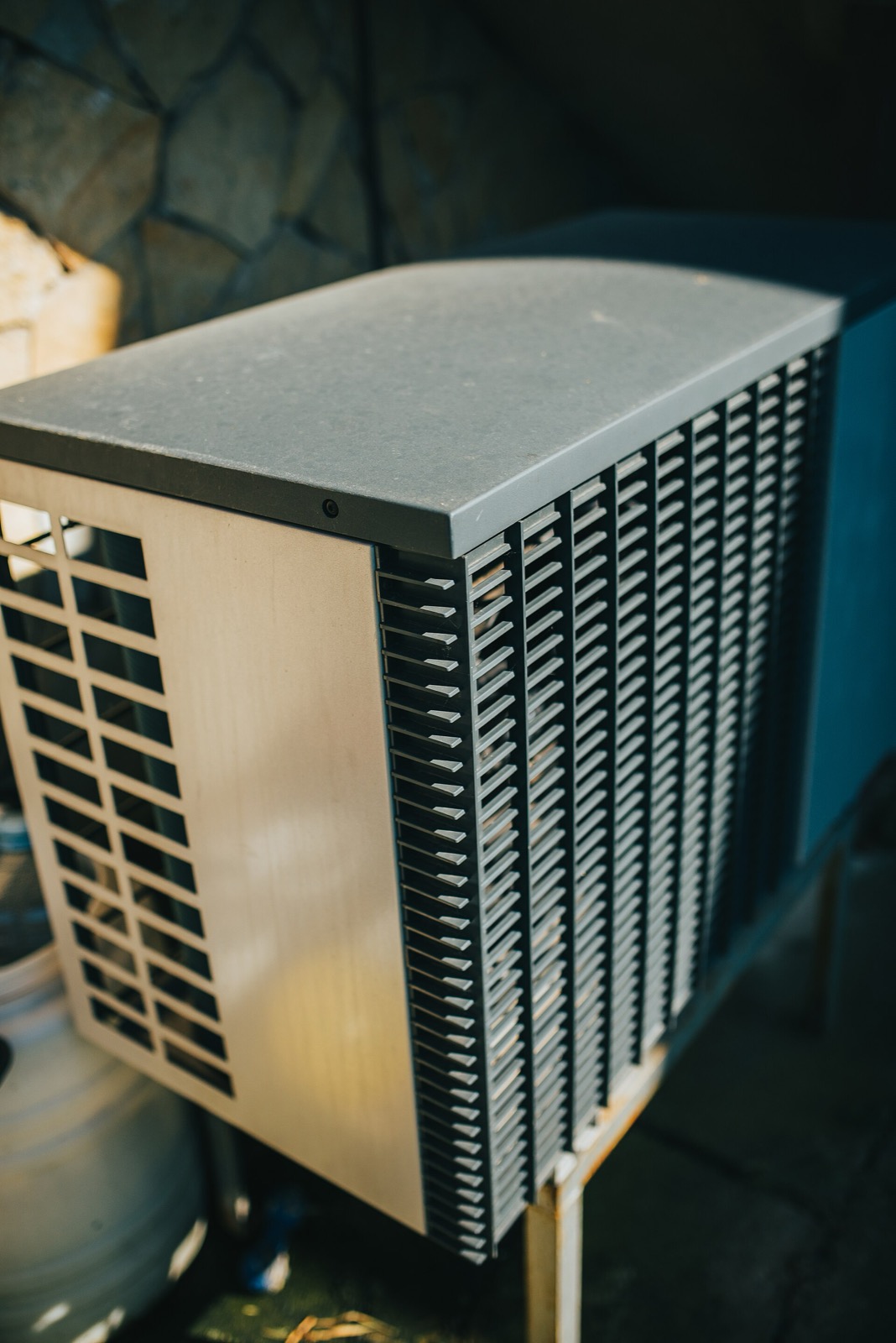
A heat pump is an air conditioner that can run backwards, and the outdoor half of one sits in the same place and looks much the same, which is why a surprising number of homeowners cannot tell from the yard which one they already own. It matters to the paperwork rather than to the comfort: an office paying for a swap usually wants to know what the house burns today, and the answer changes which figure in its table applies.
Fifty state energy offices read September 23, 2026, each figure and status linked to the page it came from. This moves quickly: a programme can open, reserve its funding and stop taking applications inside a single season, and at least one state has done exactly that more than once. The office page linked beside each line is what governs on the day.