
Earthquakes Near Me: Every Quake Around Your ZIP Code
Every earthquake near you in the last 7 and 30 days, on a map and in a list, with how strong it was, how deep, how far away and how many people felt it.
Was that an earthquake? Check your ZIP code
Enter a ZIP code. The list reads the USGS catalog live for 155 miles around it, newest first, and you can widen it to 310 miles or narrow it to 60.
The fifty states, by the numbers
USGS catalog, 2016 to 2025Counted from every quake in the USGS catalog inside each state’s borders or within 150 km of its coast, read October 10, 2026.
Earthquakes in the US this week
Every quake of magnitude 2.5 or more in the fifty states over the past seven days, the largest first, with a count for each state.
Which states have the most earthquakes
Ranked by the yearly average of quakes of magnitude 2.5 and up from 2016 to 2025. Alaska leads with 5,039 a year; Hawaii and California follow. Each state links to its own page: the ten largest on record, the years since 1990 and a live list around its largest city.
| # | State | M2.5+ a year | Largest since 1900 |
|---|---|---|---|
| 1 | Alaska | 5,039 | M9.2, 1964 |
| 2 | Hawaii | 1,739 | M7.7, 1975 |
| 3 | California | 1,269 | M7.9, 1906 |
| 4 | Oklahoma | 421 | M5.8, 2016 |
| 5 | Texas | 393 | M6.3, 1931 |
| 6 | Nevada | 283 | M7.1, 1954 |
| 7 | Idaho | 237 | M6.9, 1983 |
| 8 | Kansas | 60 | M4.9, 2014 |
| 9 | Montana | 47 | M7.2, 1959 |
| 10 | Wyoming | 43 | M6.5, 1959 |
| 11 | Utah | 39 | M6.6, 1901 |
| 12 | New Mexico | 32 | M5.8, 1906 |
| 13 | Washington | 31 | M6.8, 2001 |
| 14 | Oregon | 27 | M7.0, 1991 |
| 15 | Colorado | 17 | M5.5, 1960 |
What an earthquake feels like
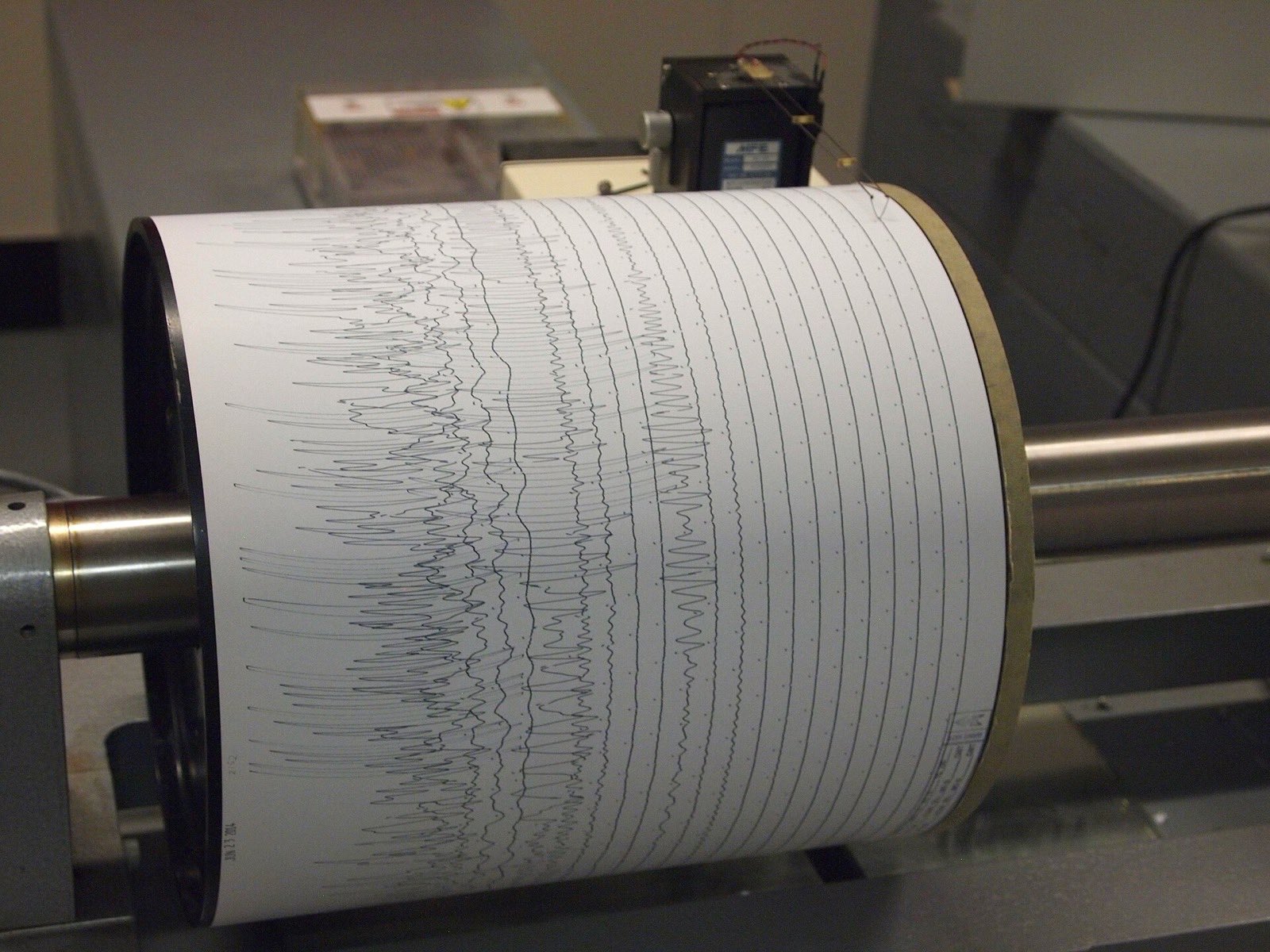
A quake has one magnitude, the size at its source, and many intensities, the shaking at each place it reaches. The USGS: “The magnitude of an earthquake is thus represented by a single, instrumentally determined value.” And on the steps between numbers: “each whole number increase in magnitude represents a tenfold increase in measured amplitude; as an estimate of energy, each whole number step in the magnitude scale corresponds to the release of about 31 times more energy than the amount associated with the preceding whole number value.”
The shaking is measured on the Modified Mercalli scale, I to XII. When a quake in the list shows felt reports, the Roman numeral beside them is the level the people who felt it described, from the USGS Did You Feel It? survey.
- INot felt except by a very few under especially favorable conditions.
- IIFelt only by a few persons at rest, especially on upper floors of buildings. Delicately suspended objects may swing.
- IIIFelt quite noticeably by persons indoors, especially on upper floors of buildings. Many people do not recognize it as an earthquake. Standing motor cars may rock slightly. Vibration similar to the passing of a truck. Duration estimated.
- IVFelt indoors by many, outdoors by few during the day. At night, some awakened. Dishes, windows, doors disturbed; walls make cracking sound. Sensation like heavy truck striking building. Standing motor cars rocked noticeably.
- VFelt by nearly everyone; many awakened. Some dishes, windows broken. Unstable objects overturned. Pendulum clocks may stop.
- VIFelt by all, many frightened. Some heavy furniture moved; a few instances of fallen plaster. Damage slight.
- VIIDamage negligible in buildings of good design and construction; slight to moderate in well-built ordinary structures; considerable damage in poorly built or badly designed structures; some chimneys broken.
- VIIIDamage slight in specially designed structures; considerable damage in ordinary substantial buildings with partial collapse. Damage great in poorly built structures. Fall of chimneys, factory stacks, columns, monuments, walls. Heavy furniture overturned.
- IXDamage considerable in specially designed structures; well-designed frame structures thrown out of plumb. Damage great in substantial buildings, with partial collapse. Buildings shifted off foundations.
- XSome well-built wooden structures destroyed; most masonry and frame structures destroyed with foundations. Rails bent.
- XIFew, if any (masonry) structures remain standing. Bridges destroyed. Rails bent greatly.
- XIIDamage total. Lines of sight and level are distorted. Objects thrown into the air.
The Modified Mercalli Intensity scale, verbatim from the USGS publication The Severity of an Earthquake, read October 9, 2026. The maximum observed intensity generally occurs near the epicenter.
Drop, Cover and Hold On
Three steps, the same everywhere in the country, in Ready.gov’s words.
- 1
Drop
Drop where you are onto hands and knees.
- 2
Cover
Cover your head and neck with one arm and hand. If a sturdy table or desk is nearby, crawl underneath it for shelter. If no shelter is nearby, crawl next to an interior wall (away from windows). Stay on your knees; bend over to protect vital organs.
- 3
Hold On
Hold until the shaking stops. If under shelter, hold on with one hand and be ready to move with it when the shelter moves. If not under shelter, hold on to your head and neck with both arms and hands.
If you are inside, stay and do not run outside; avoid doorways.
If you are in bed, turn face down and cover your head and neck with a pillow.
If you are in a car, pull over and stop. Set your parking brake.
If you’re outside, stay there. Move to an open area away from buildings, trees, streetlights and power lines.
- Expect aftershocks to follow the main shock of an earthquake. Be ready to Drop, Cover and Hold On if you feel an aftershock.
- If you are in an area that may experience tsunamis, go inland or to higher ground immediately after the shaking stops.
- Secure heavy items in your home like bookcases, refrigerators, water heaters, televisions and objects that hang on walls. Store heavy and breakable objects on low shelves.
Ready.gov’s words, from Ready.gov: Earthquakes (updated Sep 9, 2026, read October 9, 2026). Practice it with The Great ShakeOut: Earthquake Drills.
One more line from Ready.gov: “A standard homeowner’s insurance policy does not cover earthquake damage.”
Earthquake questions, answered
Earthquakes by state
More of what the ground and sky are doing
Sources. Live quakes: the USGS FDSN event service and the USGS M2.5+ past week feed. State counts and the largest on record: the USGS ComCat catalog, read October 10, 2026; a quake belongs to a state when it falls inside the state’s Census boundary or within 150 km of its coast with the state named in the USGS place. Magnitude, intensity and the Mercalli scale: The Severity of an Earthquake, read October 9, 2026. Felt reports: USGS Did You Feel It?, read October 9, 2026. What to do: Ready.gov: Earthquakes, read October 9, 2026. The largest quake on record in the fifty states is the M9.2 of March 28, 1964, the Prince William Sound, Alaska Earthquake.
Older years hold fewer small quakes because fewer instruments were listening, so the counts are most complete for recent years.
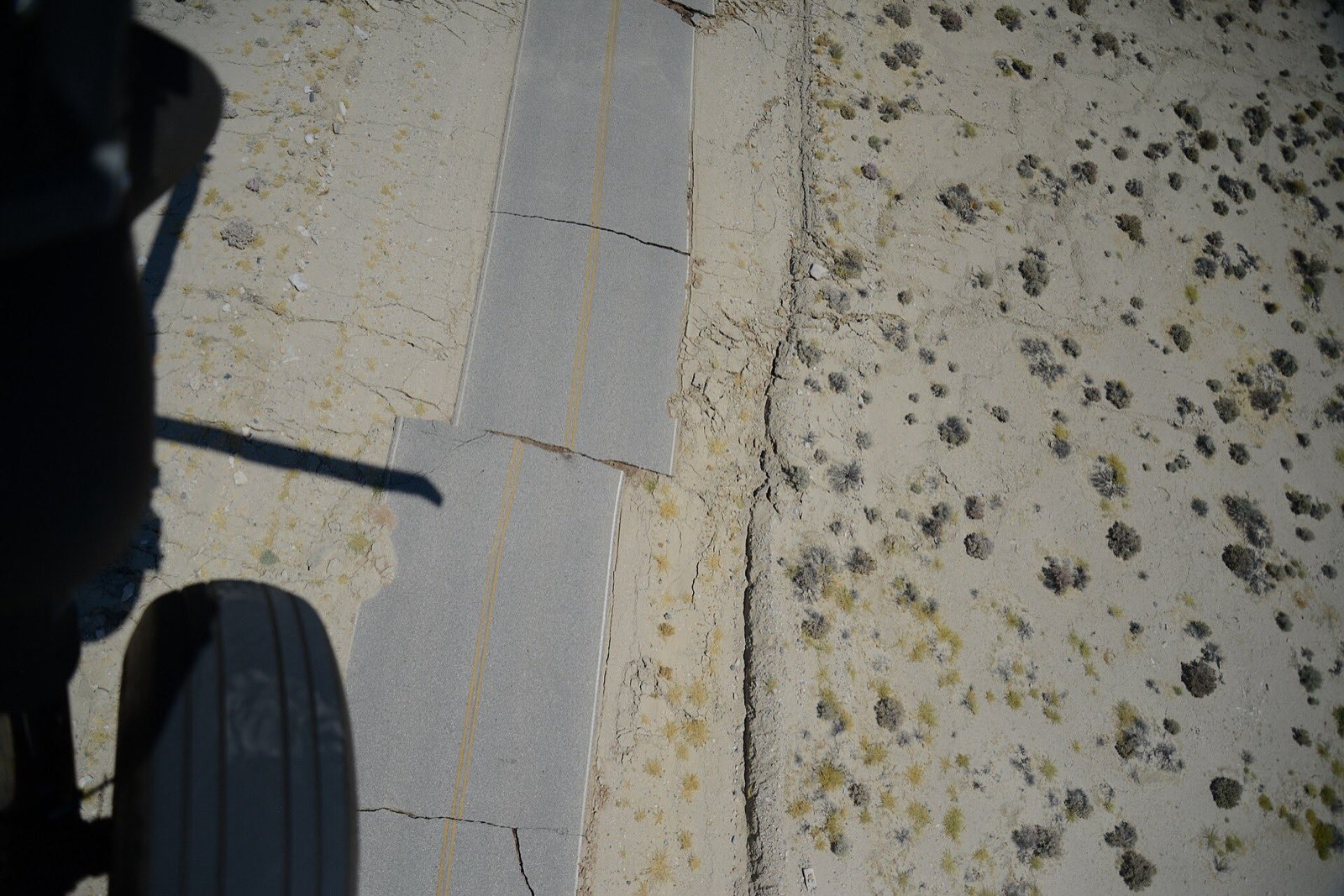
Hero photograph: the San Andreas Fault across the Carrizo Plain. “Kluft-photo-Carrizo-Plain-Nov-2007-Img 0327” by Ikluft, CC BY-SA 4.0