

Today’s Tick Risk in Rhode Island – Real-Time Forecast & Activity Map
Check your ZIP code for local tick activity, real-time risk levels, and prevention insights.
Built from CDC and NOAA data
How bad are ticks in Rhode Island in 2026?
Rhode Island sits in the heart of the Lyme belt, with dense deer tick populations across its woodlands, stone walls, and coastal brush. The 2026 season is expected to be active following a mild winter. Peak nymph activity runs May through July; the live map above shows current conditions.
Surveillance Insights
- Annual Lyme Cases
- ~900+ confirmed cases annually
- extremely high per capita
- Based on CDC surveillance data
- Long-Term Trend
- High and sustained
- Based on CDC surveillance data
- High Risk Zones
- Washington, Newport, Block Island, Prudence Island, Western Coventry and West Greenwich, Tiverton and Little Compton, Narragansett Bay islands
Current Situation in Rhode Island
Rhode Island, despite its small size, has a massive tick problem. The state consistently ranks among the highest for Lyme disease incidence per capita. The combination of dense suburban development, fragmented forests, and a high deer population creates a perfect storm for tick proliferation. Coastal humidity keeps tick habitats moist, allowing for high survival rates. The tick forecast for Rhode Island is often severe, with risk extending into the shoulder seasons due to the moderating influence of the ocean. Residents in every county, from Providence to Washington, are at risk.
Snapshot of the current tick situation in Rhode Island, based on regional surveillance data and seasonal activity patterns.
- Risk Level
- High
- Peak Activity
- May - July
- Dominant Vector
- Deer Tick (Ixodes scapularis)
Where Ticks Hide in Rhode Island
Rhode Island's tick habitats are dominated by mixed oak forests and the "edge habitats" created by suburban sprawl. Stone walls, common throughout the state, provide shelter for mice and chipmunks, the primary reservoirs for Lyme disease. The coastal scrub and tall grasses found in areas like Block Island and along the Narragansett Bay coastline are also prime tick territory. The state's high housing density means that for many residents, the primary tick habitat is their own backyard, particularly where lawns meet wooded areas.

Seasonal Activity Pattern
Rhode Island's coastal climate moderates temperatures, often extending the tick season. Nymph activity peaks in June and July, but adults can be active year-round if temperatures remain above freezing. The "spring" peak often starts earlier here than in northern New England, sometimes as early as March. Fall activity is robust, typically lasting well into December. The state's high humidity levels during summer can keep ticks active during parts of the day when they might otherwise seek shelter in drier states.
Check Your Local Tick Risk
Ready to see current tick activity in your area? Get today's tick forecast and personalized risk assessment for your ZIP code.
Local Vector Analysis
Understanding which ticks are active in Rhode Island helps you identify threats and take appropriate precautions.

Deer Tick / Blacklegged Tick
Ixodes scapularis
Appearance: Dark reddish-brown body with black shield on back. Adults are 3-5mm.
Peak Season: Adults: Oct-May | Nymphs: May-Aug
Habitat: Deciduous forests, shady moist areas, and leaf litter. Loves the boundary between lawns and woods.
Diseases: Lyme Disease, Anaplasmosis, Babesiosis, Powassan Virus, B. miyamotoi
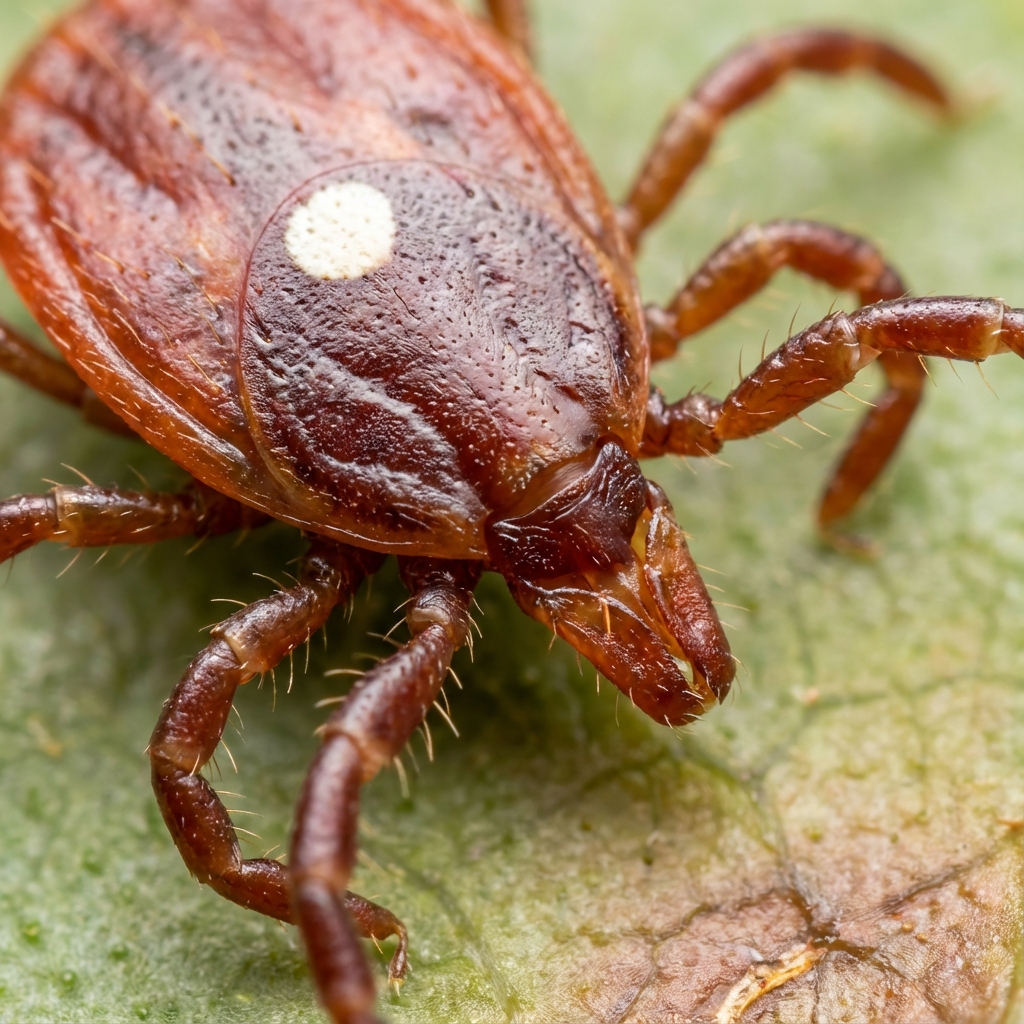
Lone Star Tick
Amblyomma americanum
Appearance: Distinct white dot or "lone star" on female's back. Reddish-brown body.
Peak Season: Active from early Spring through late Fall
Habitat: Woodlands with dense undergrowth and around animal resting areas.
Diseases: Ehrlichiosis, Alpha-gal Syndrome, STARI, Heartland Virus, Bourbon Virus
Note: Aggressive hunter. Actively pursues hosts.

American Dog Tick
Dermacentor variabilis
Appearance: Brown with white/grey mottling. Ornate white patterns on shield.
Peak Season: Spring and Summer
Habitat: Grassy fields, walkways, and trails. More tolerant of dry conditions than Deer Ticks.
Diseases: Rocky Mountain Spotted Fever, Tularemia

Lyme Disease
Vector: Deer tick (Ixodes scapularis)
Lyme Disease
Lyme disease is a bacterial infection transmitted by deer ticks. If caught early, it's highly treatable with antibiotics. Left untreated, it can cause serious complications affecting joints, heart, and nervous system.
Early Warning Signs
- Erythema migrans (EM) rash - appears in 70-80% of cases
- Bullseye rash (circular red rash with clear center)
- Rash appears 3-30 days after bite
- Fever and chills
Progression & Symptoms
- Severe headaches and neck stiffness
- Facial palsy (loss of muscle tone on one or both sides of face)
- Arthritis with severe joint pain, especially knees
Prevention Strategies
The best way to avoid tick-borne diseases is to prevent tick bites in the first place. These strategies work together to create multiple layers of protection.
Permethrin-Treated Clothing
Permethrin is an insecticide that kills ticks on contact. When applied to clothing, it remains effective through multiple washes.
Daily Tick Checks
Since disease transmission typically requires 24-48 hours of attachment, finding and removing ticks quickly dramatically reduces infection risk.
Landscaping Defense
Creating a tick-hostile environment in your yard reduces the chance ticks will be waiting when you step outside.
Shower Within 2 Hours
Showering after outdoor activity gives you a chance to wash off ticks before they bite.
Tick Bite Protocol
Acting quickly and correctly is your best defense against infection.Follow these 6 critical steps.
Don't Panic
Most tick bites do not transmit disease, especially if removed quickly.
- Infection rates vary by region (20-50%)
- Transmission usually takes 24-48 hours
- Stay calm and use proper technique
Gather Tools
Use fine-tipped tweezers. Avoid fingers or chemicals.
- Fine-tipped tweezers are best
- Rubbing alcohol for cleaning
- Small container to save the tick
Grasp & Pull
Grasp close to skin and pull upward with steady pressure.
- Grab mouthparts near skin (not body)
- Pull straight up—don't twist
- Maintain steady, even pressure
Clean Area
Disinfect the bite site and your hands thoroughly.
- Wash with soap and water
- Apply rubbing alcohol
- Wash hands well
Save Tick
Keep the tick in a sealed container for potential testing.
- Seal in bag or container
- Label with date and location
- Bring to doctor if symptoms appear
Monitor (30 Days)
Watch for rash or flu-like symptoms for a month.
- Check for expanding rash daily
- Watch for fever or fatigue
- Seek care if you feel unwell
When does tick season end in Rhode Island?
Tick activity winds down after the first hard freeze, which in Rhode Island typically arrives around Oct 18. See the local first-frost window and city-by-city freeze dates.
Rhode Island first frost datesAlso worried about mosquitoes in Rhode Island?
West Nile virus, EEE, and the local mosquito season vary by state. Check your Rhode Island mosquito risk profile.
View Rhode Island mosquito forecastStay Safe in Rhode Island
Get personalized tick forecasts and prevention tips for your area