Emerald ash borer
Agrilus planipennis
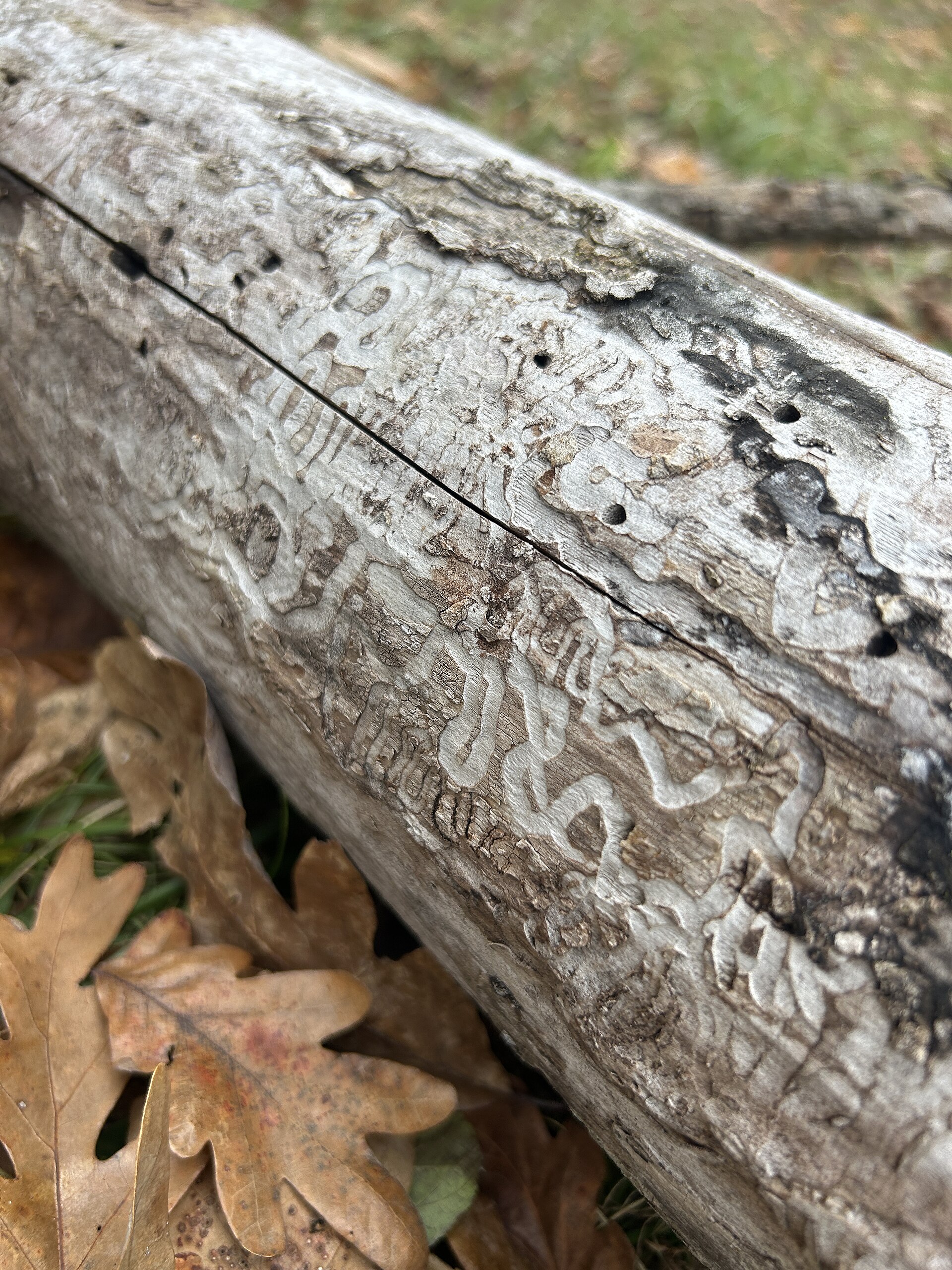
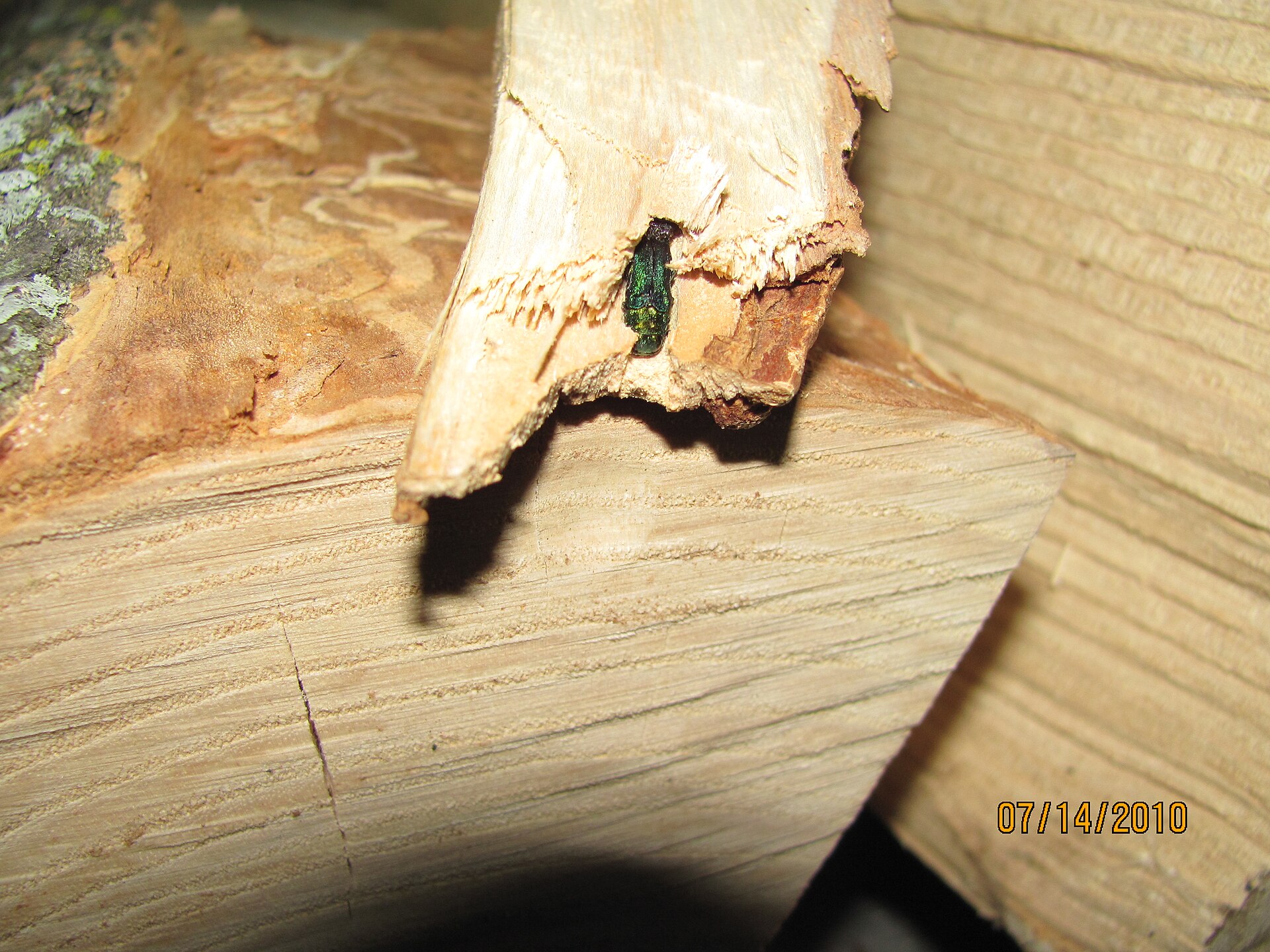
The reason the ash trees died. A half inch metallic green beetle whose larvae girdle the tree from the inside.
- Kills
- Ash (Fraxinus), and white fringetree
- When you would notice it
- May 15 to Sep 1: adult beetles, and thinning in the top of the crown. Then again Nov 1 to Mar 31: blonde bark where woodpeckers have stripped it, plus D shaped exit holes, both far easier to see with the leaves off.
- Photographed in the United States
- 4,362 research grade iNaturalist records, all time
Commonly confused with Every metallic green beetle in the Midwest gets reported as emerald ash borer, and most of them are six spotted tiger beetles or Japanese beetles. The tell is the tree, not the beetle: emerald ash borer is only ever on ash.
Spotted lanternfly
Lycorma delicatula
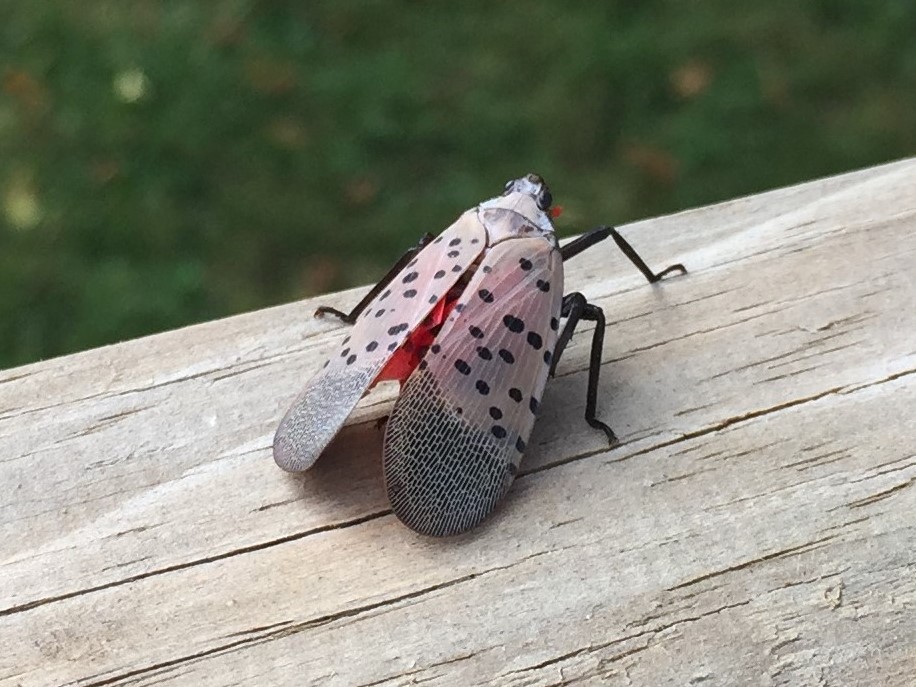
The one people actually see. A planthopper that swarms trunks by the hundred and rains sticky honeydew on everything under it.
- Kills
- Rarely kills mature trees outright. Kills tree of heaven and grapevine, and stresses maple, walnut, birch and willow
- When you would notice it
- Jul 15 to Nov 15: adults, in numbers, on trunks and fences. Then again Oct 1 to May 15: egg masses on any hard surface, which is the stage that hitches a ride on your car.
- Photographed in the United States
- 91,063 research grade iNaturalist records, all time
Commonly confused with A lanternfly on your maple is not what is killing your maple. It is a real quarantine pest and a genuine nuisance, and it is also the thing people blame for damage that turns out to be drought, girdling roots or construction.
Hemlock woolly adelgid
Adelges tsugae
White woolly dots on the underside of hemlock needles. The tree starves over several years and does not come back on its own.
- Kills
- Eastern and Carolina hemlock (Tsuga)
- When you would notice it
- Nov 1 to Apr 30: the white woolly egg sacs, which stand out most on bare winter branches.
- Photographed in the United States
- 7,880 research grade iNaturalist records, all time
Commonly confused with The woolly dots are easy to mistake for spider egg sacs or scale. Position is the tell: adelgid sits at the base of a needle, on the underside of the twig, in rows.
Beech leaf disease
Litylenchus crenatae
Dark bands between the veins of a beech leaf, visible from underneath against the sky. First recorded in Ohio in 2012 and moving fast.
- Kills
- American beech (Fagus grandifolia), and ornamental European beech
- When you would notice it
- May 1 to Jul 31: dark interveinal banding on newly expanded leaves, seen from below looking up.
- Photographed in the United States
- 8,003 research grade iNaturalist records, all time
Commonly confused with Banded beech leaves look enough like drought scorch or anthracnose that people wave them off. The difference is geometry: beech leaf disease bands follow the veins in stripes, and they are darkest looking up through the leaf.
Spongy moth
Lymantria dispar
The caterpillar that eats a whole oak ridge bare in June, formerly called the gypsy moth. Still federally quarantined, and the boundary still moving.
- Kills
- Oak above all, plus aspen, birch, apple and many others. Repeated defoliation kills
- When you would notice it
- May 15 to Jul 15: caterpillars, frass falling like rain, and bare crowns in high summer. Then again Aug 1 to Apr 30: tan felt egg masses on trunks, walls, grills and wheel wells.
- Photographed in the United States
- 28,732 research grade iNaturalist records, all time
Commonly confused with A defoliated oak in June looks dead and usually is not. Healthy oaks refoliate. It is the second and third consecutive year, especially with drought on top, that kills them.
Asian longhorned beetle
Anoplophora glabripennis
The one the federal government is still actively trying to eradicate, tree by tree, in four states.
- Kills
- Maple above all, plus birch, elm, willow, horsechestnut
- When you would notice it
- Jul 1 to Oct 15: adults, which are large, glossy black with white spots and antennae longer than the body.
- Photographed in the United States
- 45 research grade iNaturalist records, all time
Commonly confused with Whitespotted pine sawyer is the common native beetle people mistake for it. If it is on a conifer it is not Asian longhorned beetle.
Oak wilt
Bretziella fagacearum
A fungus that plugs an oak's water vessels. A red oak can go from green to bare in a few weeks in midsummer.
- Kills
- Red oak group fast, white oak group slowly
- When you would notice it
- Jun 1 to Aug 31: a single oak browning from the top down and shedding half green leaves while its neighbours stay green.
- Photographed in the United States
- 30 research grade iNaturalist records, all time
Commonly confused with Oak wilt, bur oak blight, anthracnose and plain drought all brown an oak. Only a laboratory can tell you which, and this is the single most common case where a homeowner needs a diagnosis before a decision.
Laurel wilt
Harringtonia lauricola
A beetle the size of a sesame seed carries a fungus that kills a redbay in weeks. It has taken out redbay across the coastal South.
- Kills
- Redbay, swampbay, sassafras, avocado, and the rest of the laurel family
- When you would notice it
- Apr 1 to Oct 31: wilted brown foliage that stays hanging on the tree instead of dropping.
- Photographed in the United States
- 33 research grade iNaturalist records, all time
Commonly confused with Wilted leaves that stay on the tree is the diagnostic detail. Most dying trees drop their leaves; a laurel wilt redbay holds a full brown canopy for months.
Thousand cankers disease
Geosmithia morbida
Thousands of tiny cankers, each around one beetle tunnel, that merge until the branch dies. Named for the arithmetic.
- Kills
- Black walnut and other walnuts (Juglans)
- When you would notice it
- Jul 1 to Sep 30: yellowing and thinning in the upper crown of a walnut, then branch by branch dieback over several years.
- Photographed in the United States
- No research grade iNaturalist records, which is a statement about photographers rather than about the pest
Commonly confused with Walnut anthracnose yellows and drops leaves every August in humid country and alarms people annually. Thousand cankers kills from the top down and does not recover.
Southern pine beetle
Dendroctonus frontalis
A native beetle the size of a rice grain that in outbreak years kills pine by the stand, in expanding spots visible from the air.
- Kills
- Loblolly, shortleaf, Virginia and pitch pine
- When you would notice it
- Jun 1 to Oct 31: popcorn sized pitch tubes on the trunk, then a crown that fades yellow and then red.
- Photographed in the United States
- 92 research grade iNaturalist records, all time
Commonly confused with Ips engraver beetles and black turpentine beetle also attack stressed pines and are far more common in a drought year. Southern pine beetle is the one that kills healthy trees in expanding spots.
Dutch elm disease
Ophiostoma novo-ulmi
The one that already happened. It removed the American elm from the American street between the 1930s and the 1970s and it is still here.
- Kills
- American elm, and other elms to varying degrees
- When you would notice it
- Jun 1 to Aug 31: flagging: one branch high in the crown yellowing and wilting while the rest of the tree is green.
- Photographed in the United States
- 1 research grade iNaturalist records, all time
Commonly confused with Elm yellows, elm leaf beetle and simple drought all yellow an elm. Flagging, one branch at a time from the top, is the classic Dutch elm pattern.
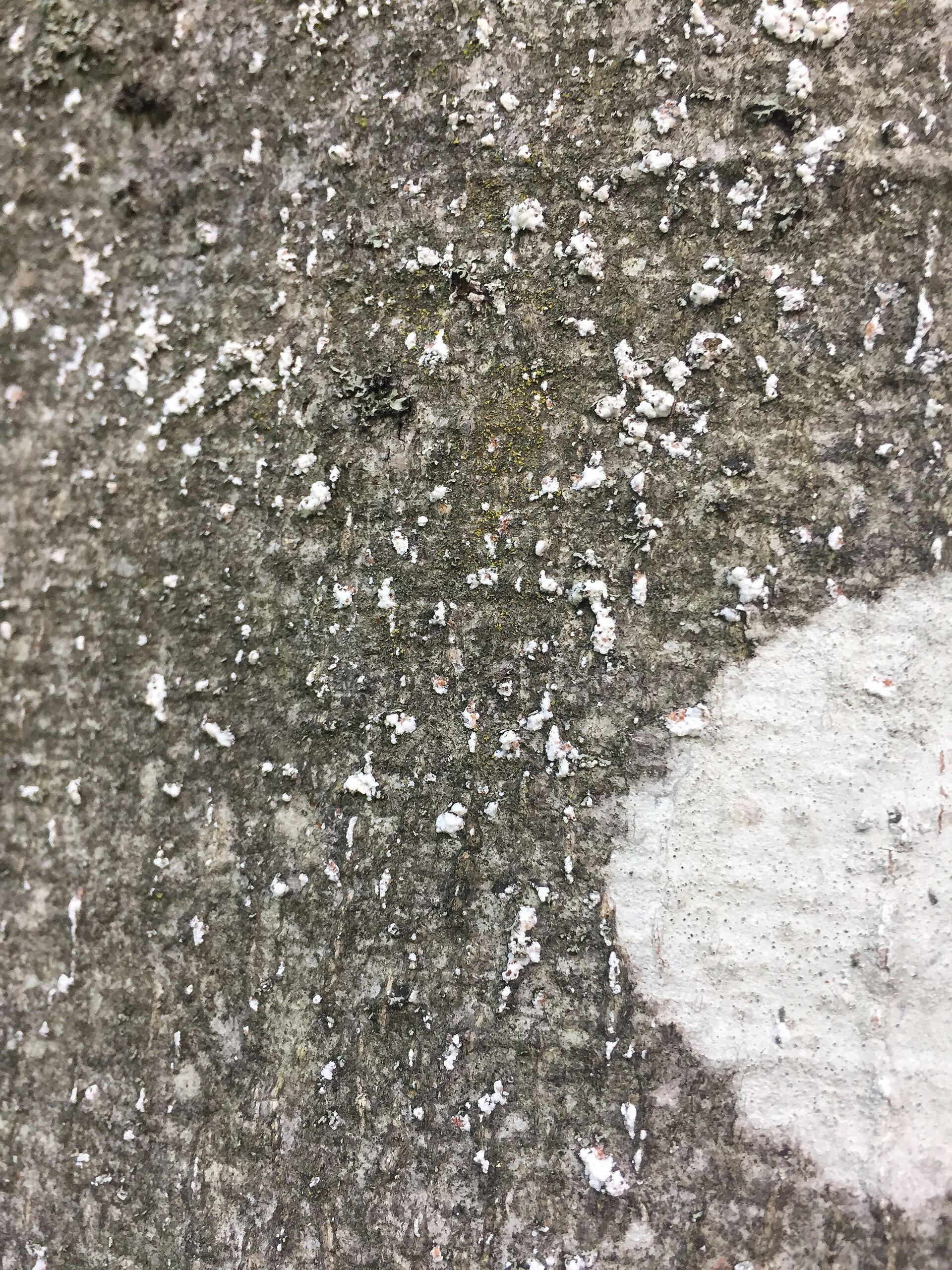
A scale insect first, then a fungus through the wounds it makes. Not the same thing as beech leaf disease, and the two now overlap.
- Kills
- American beech
- When you would notice it
- Sep 1 to Apr 30: a white waxy crust on the trunk, then sunken cankers, then a snapped stem in a wind event.
- Photographed in the United States
- 803 research grade iNaturalist records, all time
Commonly confused with Beech bark disease is on the TRUNK and beech leaf disease is on the LEAF. They are unrelated organisms with similar names attacking the same tree in the same forests, and confusing them is the most common mistake in this whole subject.
Sudden oak death
Phytophthora ramorum
The West Coast answer to "what is killing my oak". A water mould, federally quarantined, and there is no cure.
- Kills
- Tanoak and coast live oak above all, plus over a hundred other hosts
- When you would notice it
- Apr 1 to Sep 30: dark bleeding seeps on the lower trunk, then a whole crown browning over a few weeks in summer.
- Photographed in the United States
- 245 research grade iNaturalist records, all time
Commonly confused with The name is a lie about the timing. The tree has usually been infected for a year or more; what is sudden is the browning, not the disease.
Mountain pine beetle
Dendroctonus ponderosae
The native beetle behind the red hillsides of the Interior West. Drought and warm winters are what turn it from background noise into an outbreak.
- Kills
- Lodgepole, ponderosa, limber and whitebark pine
- When you would notice it
- Jun 1 to Sep 30: pitch tubes and boring dust in bark crevices this year, red needles next year.
- Photographed in the United States
- 31 research grade iNaturalist records, all time
Commonly confused with Every red conifer in the Rockies gets called beetle kill. Drought, root disease, dwarf mistletoe and simple old age all do it too.
Spruce beetle
Dendroctonus rufipennis
The dominant killer of spruce from Alaska to Colorado, and the one whose outbreaks track warm summers most clearly.
- Kills
- White, Engelmann, Sitka and Lutz spruce
- When you would notice it
- Jun 1 to Sep 30: reddish boring dust at the base of the trunk, and a crown fading to grey rather than red.
- Photographed in the United States
- 63 research grade iNaturalist records, all time
Commonly confused with A spruce crown killed by beetles goes grey, not red, which is why people miss it for a season longer than they miss mountain pine beetle.
Two fungi that can brown a whole ohia crown in a matter of days. It has killed more than a million trees on Hawaii Island.
- Kills
- Ohia lehua (Metrosideros polymorpha), the foundation tree of Hawaiian forest
- When you would notice it
- Jan 1 to Dec 31: a crown that browns from healthy to dead in days to weeks, holding its leaves.
- Photographed in the United States
- 2 research grade iNaturalist records, all time
Commonly confused with Ohia drop their leaves in drought too. The rapid ohia death pattern is a crown that browns and KEEPS its leaves.
Goldspotted oak borer
Agrilus auroguttatus
Southern California's own Agrilus, a close relative of the emerald ash borer, doing to oaks what that one did to ash.
- Kills
- Coast live oak, California black oak, canyon live oak
- When you would notice it
- May 1 to Sep 30: D shaped exit holes, dark staining and weeping on the trunk, and thinning in the crown.
- Photographed in the United States
- 31 research grade iNaturalist records, all time
Commonly confused with A D shaped exit hole means an Agrilus, not specifically an emerald ash borer. On an oak in southern California it means this one.