Skip to content
Historical record · 1807 to 2020

Lake Ice Out and Ice In Dates, State by State

Somebody wrote down the day the ice went off Sebago Lake in 1807, and somebody has written it down almost every year since. This is what those records say, for every United States lake that has one worth the name.

116
Lakes with a record
40 or more recorded years each
14,221
Observations
across nine states
1807
Oldest observation
Sebago Lake
73 of 78
Moving earlier
of the long enough ice out records

Dates from past winters. For today’s ice, ask the agency that manages the water.

Ice out and ice in are timing questions, answerable from records that already exist: everything on these pages is a date somebody observed in a past year. Ice strength is a different question, one that varies across a single lake on a single day, and the agency linked on each state page is the source for the current season.

Where the records are

The eight states with a lake ice record

Lake ice records exist where somebody kept them. The two compilations behind these pages together cover 116 United States water bodies across nine states, and eight of those states have enough for a page. They are the places where lake ice mattered enough to a water company, a railway, a newspaper or a university that someone made it their job to write the date down.

StateLakesRecord startsDeepest recordIts median ice out
Minnesota311844Detroit (128 yrs)Apr 20
Wisconsin241851Lake Monona (165 yrs)Mar 31
Maine221807Damariscotta Lake (182 yrs)Apr 17
New York221816Otsego (174 yrs)Apr 14
Michigan61852Grand Traverse Bay (122 yrs)Apr 7
New Hampshire41869Sunapee Lake (151 yrs)Apr 24
Massachusetts31886Houghtons (hoosicwhisick) Pond (133 yrs)Mar 23
Iowa31916East Okoboji Lake (93 yrs)Apr 1
Advertisement
The long ones

The deepest lake ice records in the country

These two are among the longest continuously observed lakes on earth. Neither record was started for science. Both became one anyway, because somebody kept going.

Otsego

Lake in New York · 174 recorded years, 1843 to 2019

Apr 14
median ice out
Apr 11
last 30 recorded years
Feb 28
earliest, 1991
May 7
latest, 1875

Across the whole record, ice out has moved 5 days earlier per century across the record.

Freeze over has moved 7 days later per century across the record, median Jan 11.

3 winters on record it did not freeze across at all, most recently 2017.

1840sApr 131850sApr 141860sApr 161870sApr 231880sApr 201890sApr 111900sApr 101910sApr 121920sApr 81930sApr 121940sApr 81950sApr 101960sApr 171970sApr 141980sApr 71990sApr 42000sApr 112010sApr 9

Mean date per decade. Only decades with four or more observations are shown, and the scale starts near the shortest bar rather than at January 1, so small differences stay visible.
Lake Monona

Lake in Wisconsin · 165 recorded years, 1852 to 2019

Mar 31
median ice out
Mar 25
last 30 recorded years
Feb 26
earliest, 2002
May 4
latest, 1857

Across the whole record, ice out has moved 12 days earlier per century across the record.

Freeze over has moved 8 days later per century across the record, median Dec 15.

1850sApr 41860sApr 101870sApr 91880sApr 91890sApr 31900sApr 41910sMar 311920sMar 311930sMar 281940sMar 291950sMar 291960sMar 301970sMar 251980sMar 241990sMar 222000sMar 212010sMar 27

Mean date per decade. Only decades with four or more observations are shown, and the scale starts near the shortest bar rather than at January 1, so small differences stay visible.
LakeStateRecordMedian ice outChange per century
OtsegoNY1843 to 2019Apr 14-5.3 days
Lake MononaWI1852 to 2019Mar 31-11.7 days
Lake MendotaWI1853 to 2019Apr 4-8.9 days
CazenoviaNY1839 to 2019Apr 8-4.4 days
Lake Superior at BayfieldWI1858 to 2019Apr 10-16.2 days
Lake GenevaWI1863 to 2019Apr 2-5.4 days
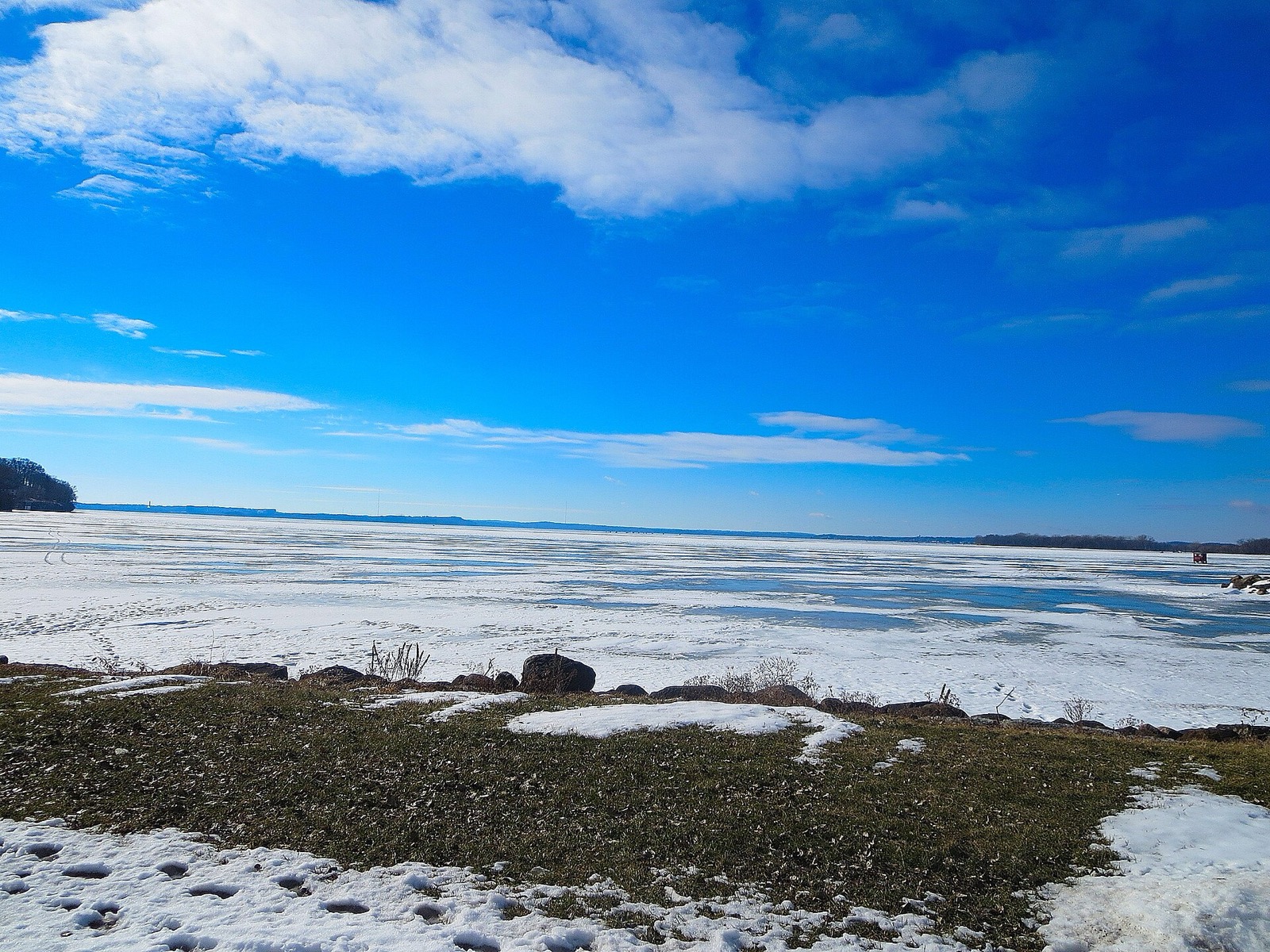
A frozen lake stretching to the horizon under a blue sky, with patchy snow and a rocky grass bank in the foreground
Lake Mendota in Madison. Its record, and neighbouring Lake Monona’s, run back to the early 1850s and are among the most cited lake series in climate science. Neither was begun with that in mind. “Frozen Lake Mendota - panoramio” by Corey Coyle, CC BY 3.0
What two centuries show

The ice is going out earlier and arriving later

This is the part the record shows directly. Of the 78 lakes with a record spanning at least 80 years, 73 show ice out moving earlier across the record, with a median of -6 days per century. Of the 23 with a long enough freeze over record, 22 show the lake closing later, median 7.4 days per century. The ice season is being squeezed from both ends.

The most direct evidence is not a trend line at all, it is the winters that produced no ice cover. Grand Traverse Bay failed to freeze across in 44 of its recorded winters, and six of the most recent are 2008, 2010, 2011, 2012, 2016, 2017.

Otsego, mean ice out by decade

1840sApr 131850sApr 141860sApr 161870sApr 231880sApr 201890sApr 111900sApr 101910sApr 121920sApr 81930sApr 121940sApr 81950sApr 101960sApr 171970sApr 141980sApr 71990sApr 42000sApr 112010sApr 9

Each bar is the mean ice out date for that decade on Otsego, over 174 recorded years. Only decades with four or more observations appear, and the scale starts near the shortest bar rather than at January 1 so that a three week shift does not vanish.

Otsego, mean freeze over by decade

1850sJan 81860sJan 61870sJan 51880sJan 101890sJan 141900sJan 121910sJan 131920sJan 101930sJan 221940sJan 121950sJan 181960sJan 111970sJan 101980sJan 121990sJan 242000sJan 182010sJan 20

Freeze over dates are measured on a winter axis, so a January date sorts after a December one rather than jumping back to the start of the year. The labels are ordinary calendar dates.

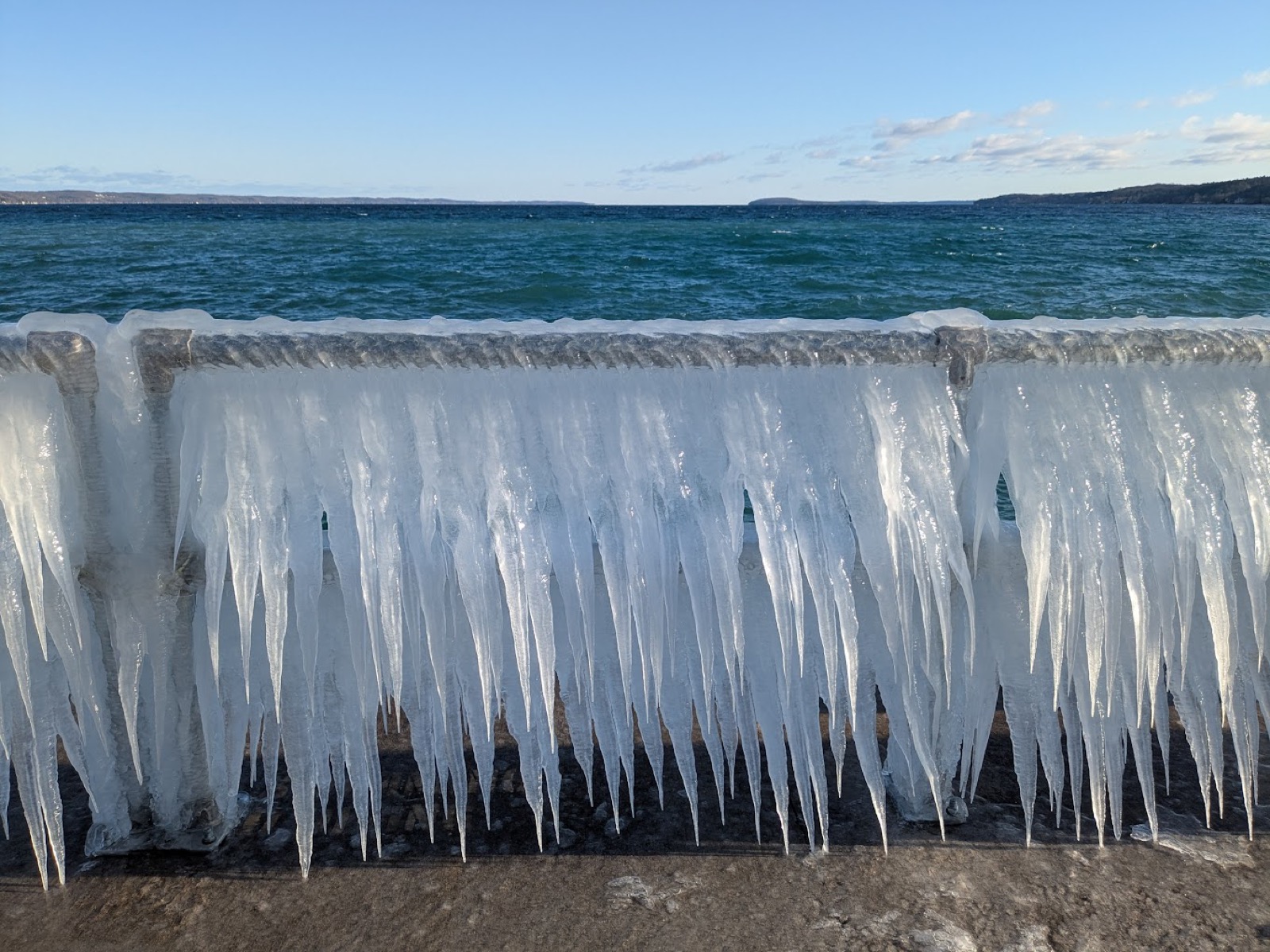
A shoreline railing encased in spray ice with a dense row of long icicles hanging from it, and open windblown bay water behind
Grand Traverse Bay on Lake Michigan, watched since 1852. Spray has welded the shoreline rail into a wall of ice while the bay itself stays open and moving, which is the shape of most recent winters here: it carries more winters without a complete freeze than any other water body in this data, and most of them are recent. “Ice on Grand Traverse Bay” — Sheet7568 — CC0
Other states

States without a lake ice record

Ice out is not like frost or foliage, which happen everywhere on different dates; it exists only where lakes freeze, and a record of it exists only where somebody kept one. 8 states have that record and a page here. The rest are listed with the reason.

Vermont

USGS searched all six New England states for long-term lake ice-out records and found none in Vermont. Its one deep series is Lake Champlain's freeze-over record, which the database files under New York and which is an ice-in record rather than an ice-out one. Joe's Pond in West Danville has kept a continuous ice-out record since 1988, as a lake association contest rather than an agency dataset, and the association publishes it.

Connecticut and Rhode Island

Named in the same USGS search, with the same result: no long-term lake ice-out record was found in either state. One Connecticut pond appears in the international database with six observations, which is not enough to say anything about a typical date.

Alaska

Alaska has one long freeze-up and breakup record in the database, and it is the Tanana River at Nenana, watched since 1917 by the Nenana Ice Classic. A river breakup is a different physical event from a lake losing its ice cover, so it does not belong in a lake ice-out table. It is a magnificent record and it deserves its own treatment.

The Dakotas, Montana, Idaho, Wyoming, Colorado, Washington

Cold enough for lake ice every winter, with no lake in either compilation. Records exist locally in places, held by lake associations and resorts, and none of them has been gathered into a published series.

Everywhere else

Roughly two thirds of the country either does not reliably grow lake ice or has never had anyone write down the date it went, so no lake ice record exists for it.

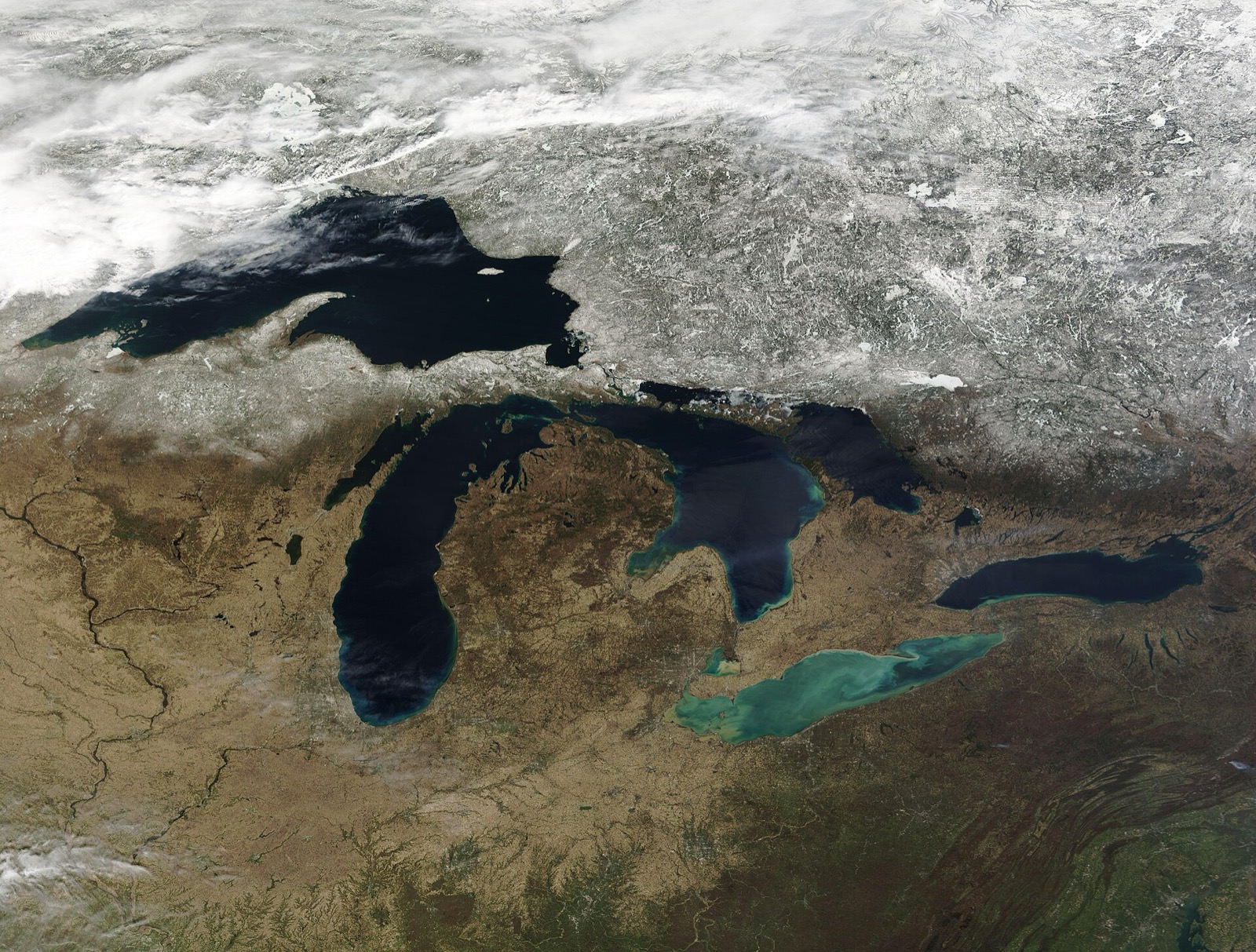
Satellite view of the Great Lakes with the northern land still under snow, the lakes themselves dark open water, and pale green sediment plumes in the western basin of Lake Erie
Snow still lying north of the lakes, and no ice at all left on the water. Below the ice line there is nothing to record; above it, records exist only where somebody chose to keep them. “Spring Thaw across the Great Lakes (MODIS)” — MODIS Land Rapid Response Team, NASA GSFC — Public domain
Provenance

Where all of this came from

The spine: 116 water bodies, nine states

Every figure on these pages is derived from the international ice phenology database held at the National Snow and Ice Data Center. These pages cover every United States water body in it with 40 or more usable observations, and the medians, extremes, decade means and least squares trends are computed from those observations.

Benson, B., Magnuson, J. and Sharma, S. (2000). Global Lake and River Ice Phenology Database. (G01377, Version 1). Boulder, Colorado USA. National Snow and Ice Data Center. https://doi.org/10.7265/N5W66HP8 Accessed 2026-08-24.

The New England lakes: 29 of them, public domain

The Maine, New Hampshire and Massachusetts series come originally from a United States Geological Survey compilation that is in the public domain, and that also names the observers for every lake. It credits Charles B. Fobes of Portland, Maine, who collected ice clearing dates from the 1940s onward and dug older ones out of newspapers, and says outright that much of the data would have been lost or never collected without his work. Sixty three known individuals and organisations contributed to it.

Hodgkins, G.A., 2010, Historical ice-out dates for 29 lakes in New England, 1807 to 2008: U.S. Geological Survey Open-File Report 2010-1214, 32 p. https://pubs.usgs.gov/of/2010/1214/

The USGS report says of its own data that ice out definitions for individual lakes can vary over time and between observers, and that the exact definition, including the observation location, is not known with confidence in most cases. That is the single most important caveat on any comparison between two lakes.
Common questions

Lake ice out FAQ

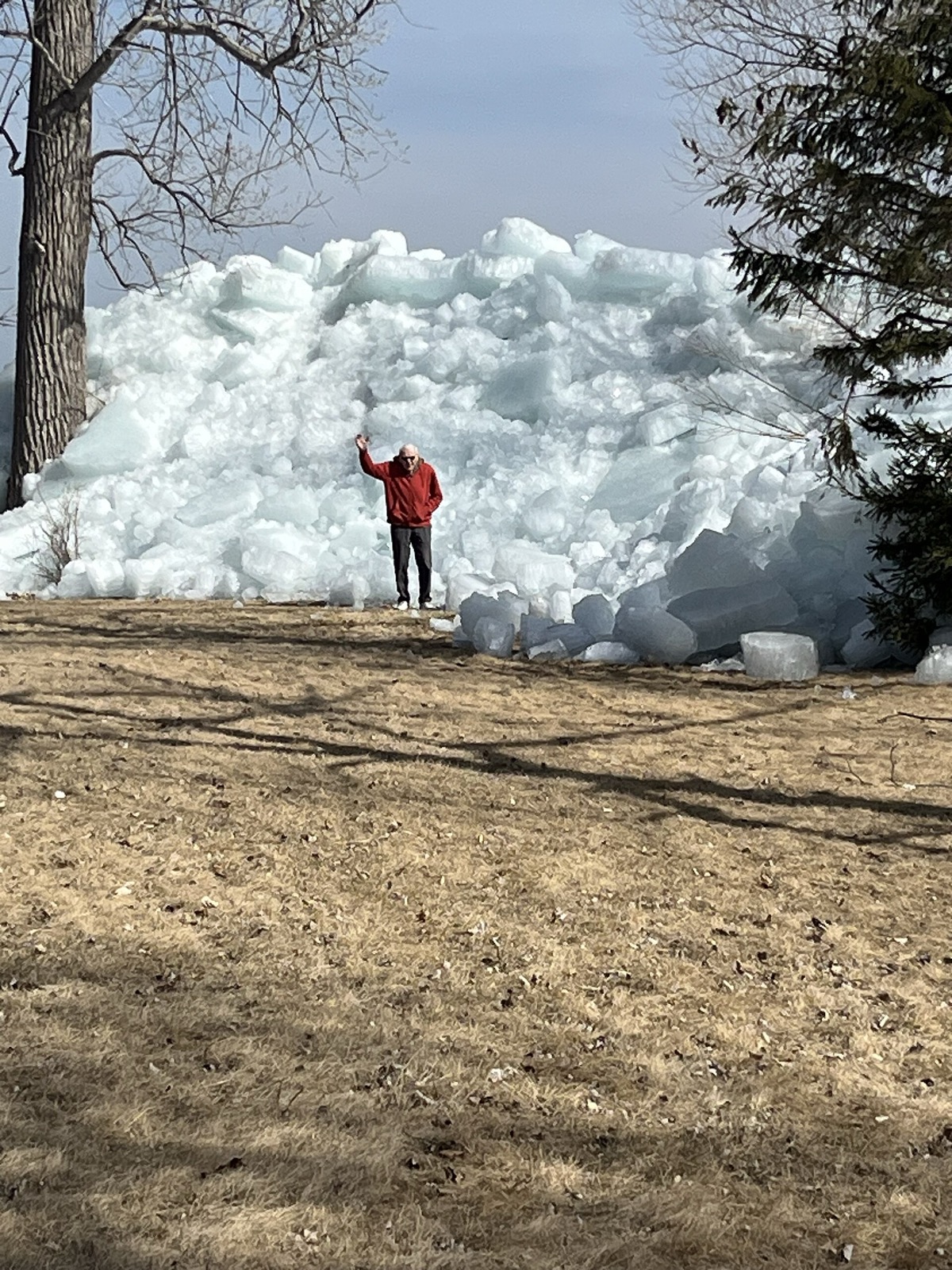
A person in a red jacket standing on brown grass at the foot of a wall of shattered lake ice piled far higher than they are
An ice shove on Lake Winnebago in Wisconsin, with a person on the bank for scale. Rotten spring ice driven ashore by wind can stack well above head height in minutes, which is one more reason a tidy single date hides a genuinely messy few days. “Ice shove - Lake Winnebago, Oshkosh, WI USA - March 2025” by Jm mortellwi, CC BY-SA 4.0
Advertisement

All dates on these pages are historical observations, not forecasts. The most recent observation anywhere in this data is from 2020; for the current season, each state page links to the agency that publishes it. These pages carry no live measurement and no statement about ice condition or ice strength; for anything involving going out on ice, the state agency is the source. Median, earliest, latest, decade mean and change per century are computed from the observations. The other end of the season: lake ice in dates, when lakes typically freeze over. Related: winter outlook, ski season, lake guides.
Hero image: “Gfp-wisconsin-madison-ice-over-the-lake” — Yinan Chen — Public domain
Median ice out on the deepest record here, Otsego: April 14.