
Skip to content
Historical record · Wisconsin

Lake Ice Out and Ice In Dates in Wisconsin

Two lakes in the middle of Madison hold what is probably the longest continuous lake ice record in the world. Observers have written down the day Lake Monona and Lake Mendota froze over and the day they opened, every winter, since the 1850s.

24
Lakes with a record
40 or more recorded years each
3,521
Observations
individual dates written down
1851
Oldest observation
Lake Monona
9
Century long records
spanning 100 years or more

Dates from past winters. For today’s ice, ask the agency that manages the water.

Where this year’s dates come from

The State Climatology Office at UW Madison publishes per-lake tables of freeze-over date, thaw date and days of ice cover for the Madison lakes, updated every winter. Theirs is the current record; ours is the long one.

Wisconsin State Climatology Office lake ice tables

Today against the record

How this date has usually played out

Where today sits in the record for Lake Monona

40 of 40 of the most recent recorded years had already seen ice out on Lake Monona by this date.

The median across the whole record is March 31, which is 173 days from now on this year’s calendar. The record itself runs to 2019, so this is a comparison against history and not a statement about the current season.

This counts recorded years, not this year; the current season comes from the agency linked above.

Lake by lake

The deepest Wisconsin records

Ordered by how much record there is behind them. The median is across every recorded year; the second figure is across the most recent 30 recorded years, which is the fairer thing to compare against a lake you know today.

Names are reproduced exactly as the source database records them, which is often a shortened form: a lake filed as “Detroit” or “George” is Detroit Lake or Lake George to everyone who lives on it. The names stay as recorded, because United States lakes split unpredictably between “Lake X” and “X Lake”.

Lake Monona

Lake in Wisconsin · 165 recorded years, 1852 to 2019

Mar 31
median ice out
Mar 25
last 30 recorded years
Feb 26
earliest, 2002
May 4
latest, 1857

Across the whole record, ice out has moved 12 days earlier per century across the record.

Freeze over has moved 8 days later per century across the record, median Dec 15.

1850sApr 41860sApr 101870sApr 91880sApr 91890sApr 31900sApr 41910sMar 311920sMar 311930sMar 281940sMar 291950sMar 291960sMar 301970sMar 251980sMar 241990sMar 222000sMar 212010sMar 27

Mean date per decade. Only decades with four or more observations are shown, and the scale starts near the shortest bar rather than at January 1, so small differences stay visible.
Lake Mendota

Lake in Wisconsin · 165 recorded years, 1853 to 2019

Apr 4
median ice out
Mar 28
last 30 recorded years
Feb 27
earliest, 1998
May 6
latest, 1857

Across the whole record, ice out has moved 9 days earlier per century across the record.

Freeze over has moved 8 days later per century across the record, median Dec 20.

1850sApr 71860sApr 111870sApr 111880sApr 121890sApr 51900sApr 41910sApr 41920sApr 31930sMar 301940sApr 31950sApr 51960sApr 61970sApr 71980sMar 281990sMar 252000sMar 282010sMar 27

Mean date per decade. Only decades with four or more observations are shown, and the scale starts near the shortest bar rather than at January 1, so small differences stay visible.
Lake Superior at Bayfield

Lake in Wisconsin · 158 recorded years, 1858 to 2019

Apr 10
median ice out
Apr 1
last 30 recorded years
Mar 3
earliest, 1878
May 13
latest, 1875

Across the whole record, ice out has moved 16 days earlier per century across the record.

Freeze over has moved 15 days later per century across the record, median Jan 1.

4 winters on record it did not freeze across at all, most recently 2017.

1860sApr 181870sApr 211880sApr 251890sApr 201900sApr 161910sApr 131920sApr 151930sApr 141940sApr 51950sApr 111960sApr 71970sApr 61980sMar 301990sApr 32000sMar 262010sMar 30

Mean date per decade. Only decades with four or more observations are shown, and the scale starts near the shortest bar rather than at January 1, so small differences stay visible.
Lake Geneva

Lake in Wisconsin · 153 recorded years, 1863 to 2019

Apr 2
median ice out
Mar 28
last 30 recorded years
Feb 5
earliest, 1999
May 4
latest, 1881

Across the whole record, ice out has moved 5 days earlier per century across the record.

Freeze over has moved 11 days later per century across the record, median Jan 2.

4 winters on record it did not freeze across at all, most recently 2017.

1860sApr 41870sApr 51880sApr 61890sApr 41900sApr 11910sMar 301920sMar 271930sMar 271940sApr 21950sApr 21960sApr 41970sApr 41980sMar 291990sMar 202000sMar 262010sMar 30

Mean date per decade. Only decades with four or more observations are shown, and the scale starts near the shortest bar rather than at January 1, so small differences stay visible.

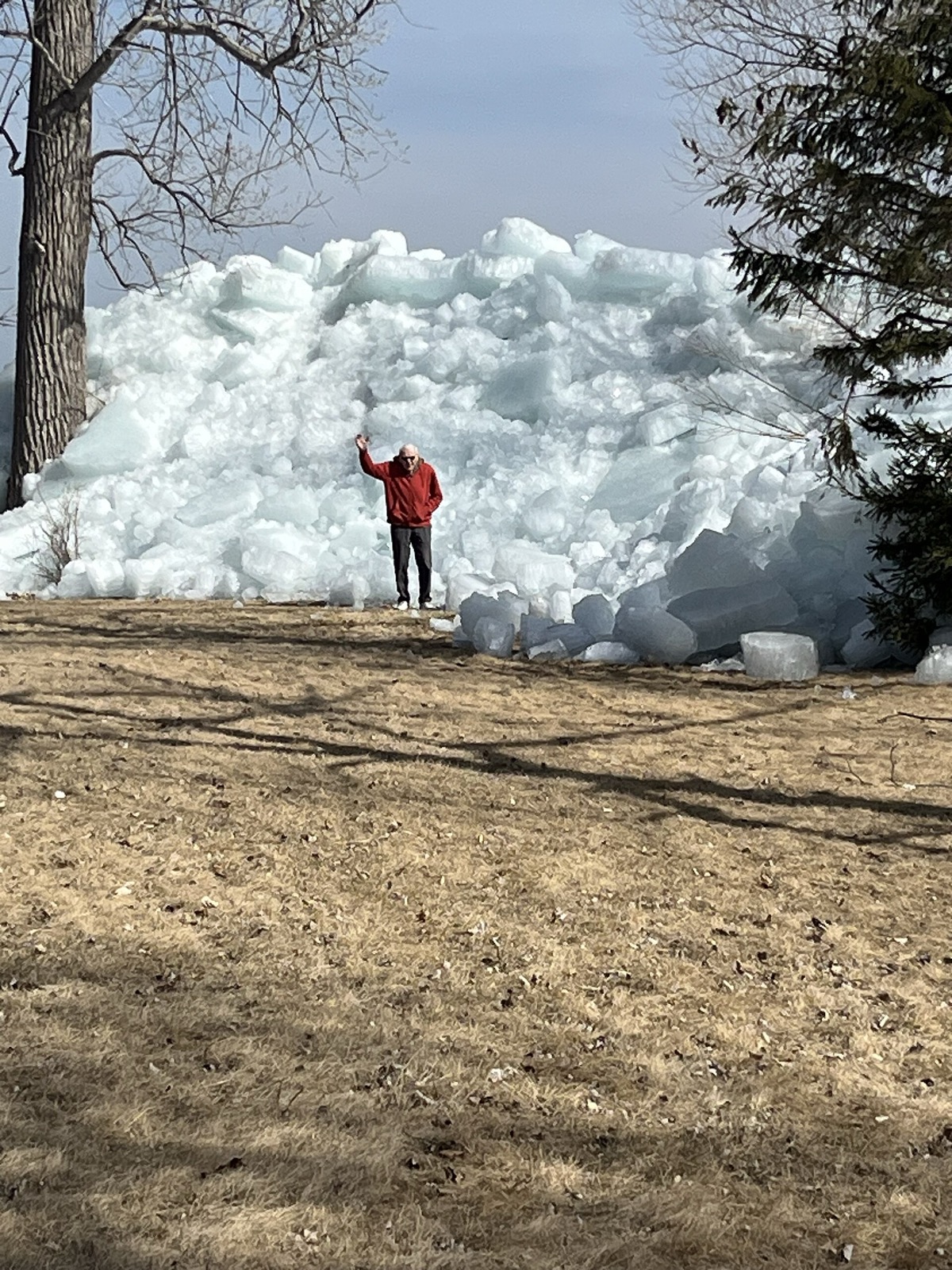
A person in a red jacket standing on brown grass at the foot of a wall of shattered lake ice piled far higher than they are
An ice shove on Lake Winnebago in Wisconsin, with a person on the bank for scale. Wind on a rotting spring sheet can drive it ashore in minutes and stack it well above head height, which is one reason a tidy single ice out date hides a genuinely messy few days. “Ice shove - Lake Winnebago, Oshkosh, WI USA - March 2025” by Jm mortellwi, CC BY-SA 4.0
Advertisement
Every lake

All 24 Wisconsin water bodies with a long record

LakeRecordMedian ice outLast 30 yearsEarliestLatestChange per century
Lake Monona1852 to 2019 (165)Mar 31Mar 25Feb 26 2002May 4 1857-11.7 days
Lake Mendota1853 to 2019 (165)Apr 4Mar 28Feb 27 1998May 6 1857-8.9 days
Lake Superior at Bayfield1858 to 2019 (158)Apr 10Apr 1Mar 3 1878May 13 1875-16.2 days
Lake Geneva1863 to 2019 (153)Apr 2Mar 28Feb 5 1999May 4 1881-5.4 days
Shell Lake1892 to 2019 (118)Apr 20Apr 19Mar 25 2012May 11 1909-4.7 days
Lake Kegonsa1903 to 2007 (100)Mar 28Mar 24Feb 26 1998Apr 19 1923-9 days
Lake Wingra1878 to 2020 (83)Mar 25Mar 24Feb 26 1998Apr 29 1881-7.7 days
Big Green Lake1940 to 2020 (80)Apr 5Apr 4Jan 16 1957Apr 23 1976-12.7 days
Lake Escanaba1955 to 2019 (65)Apr 22Apr 21Mar 23 2012May 15 1996record too short
Fisher Lake1890 to 2013 (124)Apr 20Apr 17Mar 21 2012May 12 1909-5.3 days
Rock Lake1887 to 2007 (121)Apr 1Mar 27Feb 27 1998Apr 20 1972-6.2 days
Devils Lake1923 to 2004 (58)Apr 6Apr 4Mar 3 1998Apr 24 1993-17.4 days
Lake Nebish1959 to 2019 (61)Apr 22Apr 21Mar 23 2012May 16 1996record too short
Spruce Lake1960 to 2019 (60)Apr 19Apr 17Mar 21 2012May 11 1996record too short
Maple Lake1953 to 2005 (53)Apr 18Apr 18Apr 1 2000May 9 1996record too short
Big Muskellunge Lake1945 to 2018 (53)Apr 22Apr 21Mar 21 2012May 25 1959record too short
Mystery Lake1960 to 2019 (57)Apr 19Apr 18Mar 21 2012May 11 1996record too short
Black Oak Lake1909 to 2006 (98)Apr 27Apr 24Apr 1 1910May 18 1996-2.5 days
Chequamegon Bay1911 to 2001 (91)Apr 22Apr 23Mar 27 2000May 13 1972-1.7 days
Lake Superior at Madeline Island1964 to 2007 (43)Apr 2Apr 2Mar 4 1983Apr 26 1996record too short
Lake Shishebogama1958 to 2001 (42)Apr 22Apr 21Mar 31 2000May 12 1996record too short
North Twin Lake1949 to 2001 (53)Apr 14Apr 12Mar 16 2000Apr 29 1965record too short
Lake Koshkonong1947 to 1993 (47)Apr 1Mar 29Mar 8 1983Apr 17 1975record too short
Anderson Lake1958 to 2006 (43)Apr 23Apr 23Apr 11 1987May 15 1996record too short

Dates are day of year, rendered on a common non leap calendar so the same stored value always reads the same way. “Change per century” is a least squares line through the observations, shown only where a record spans 80 years or more; a century figure extrapolated from a 40 year window describes the decades that happened to be sampled rather than the lake. Where a record ends before 2010 the card says so; a great many of these series stopped when a particular person stopped keeping them.

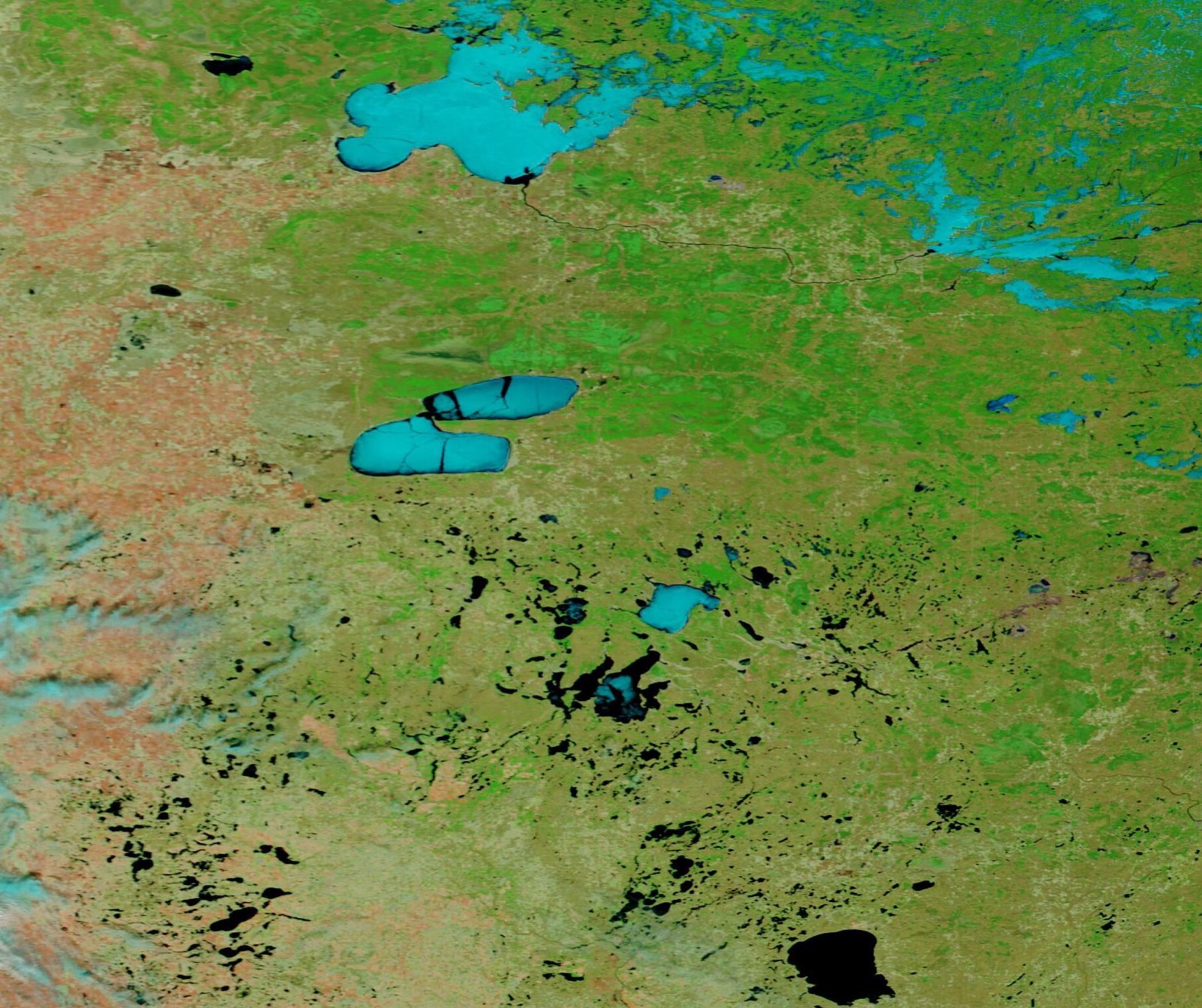
False colour satellite view of Minnesota in spring, with ice covered lakes showing as pale cyan and lakes that have already opened showing as black, against green and tan land
Spring thaw over Minnesota, in false colour. Ice still on a lake reads pale cyan; a lake that has already opened reads black. You can watch ice out happen across a whole state in a single frame, which is how agencies now sanity check reports that used to come only from people standing on a shore. “Spring Thaw in Minnesota (MODIS 2025-04-30)” — MODIS Land Rapid Response Team, NASA GSFC — Public domain
What the record says

What the Wisconsin record shows

Of the 13 Wisconsin lakes with a record long enough to state a century trend, 13 show ice out moving earlier. The median shift across those lakes is -7.7 days per century. That is a description of a line fitted to observations, not a forecast, and any single lake can and does swing three or four weeks between consecutive years.

17 of these Wisconsin water bodies also carry a freeze over record. Freeze up is the harder half to observe and there is far less of it nationally, which is a shame, because in this dataset it moves more than ice out does.

4 of them have winters on record in which the water never froze across at all. Those years are kept in the data rather than dropped, because a winter with no ice is an observation and treating it as a gap would quietly bias every average toward an earlier thaw.

The Wisconsin State Climatology Office defines the freezing date as the first date the majority of the lake surface is estimated to be frozen, and states plainly on the same page that no reliable information on ice thickness is available.

A record kept because someone kept it. The Madison series survives because a chain of observers, starting at the Washburn Observatory, simply wrote the dates down every year for over a century and a half. It is now one of the most cited lake records in climate science, and none of it was collected for that purpose.

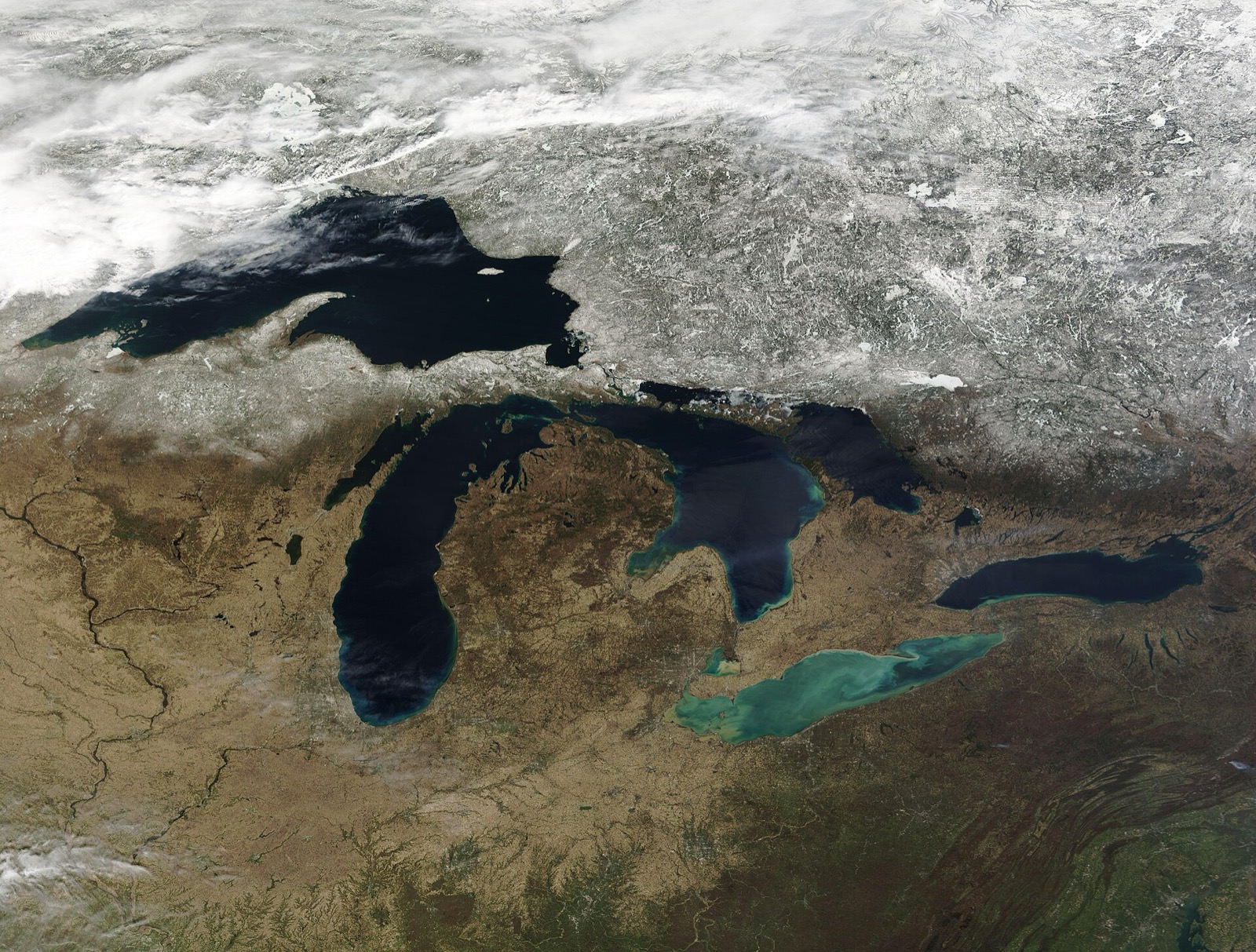
Satellite view of the Great Lakes with the northern land still under snow, the lakes themselves dark open water, and pale green sediment plumes in the shallow western basin of Lake Erie
The Great Lakes with snow still lying on the land north of them and no ice left on the water. On a lake this size, freezing over and opening are not single moments: shallow bays close first, the deep middle may never freeze at all in a mild winter, and the date somebody writes down is a judgement call. “Spring Thaw across the Great Lakes (MODIS)” — MODIS Land Rapid Response Team, NASA GSFC — Public domain
Provenance

Where these Wisconsin numbers came from

The observations

Benson, B., Magnuson, J. and Sharma, S. (2000). Global Lake and River Ice Phenology Database. (G01377, Version 1). Boulder, Colorado USA. National Snow and Ice Data Center. https://doi.org/10.7265/N5W66HP8 Accessed 2026-08-24.

Lake Monona has a slightly older start than Mendota: its record begins with the winter of 1851 to 1852, a year before Mendota's.

Common questions

Wisconsin lake ice FAQ

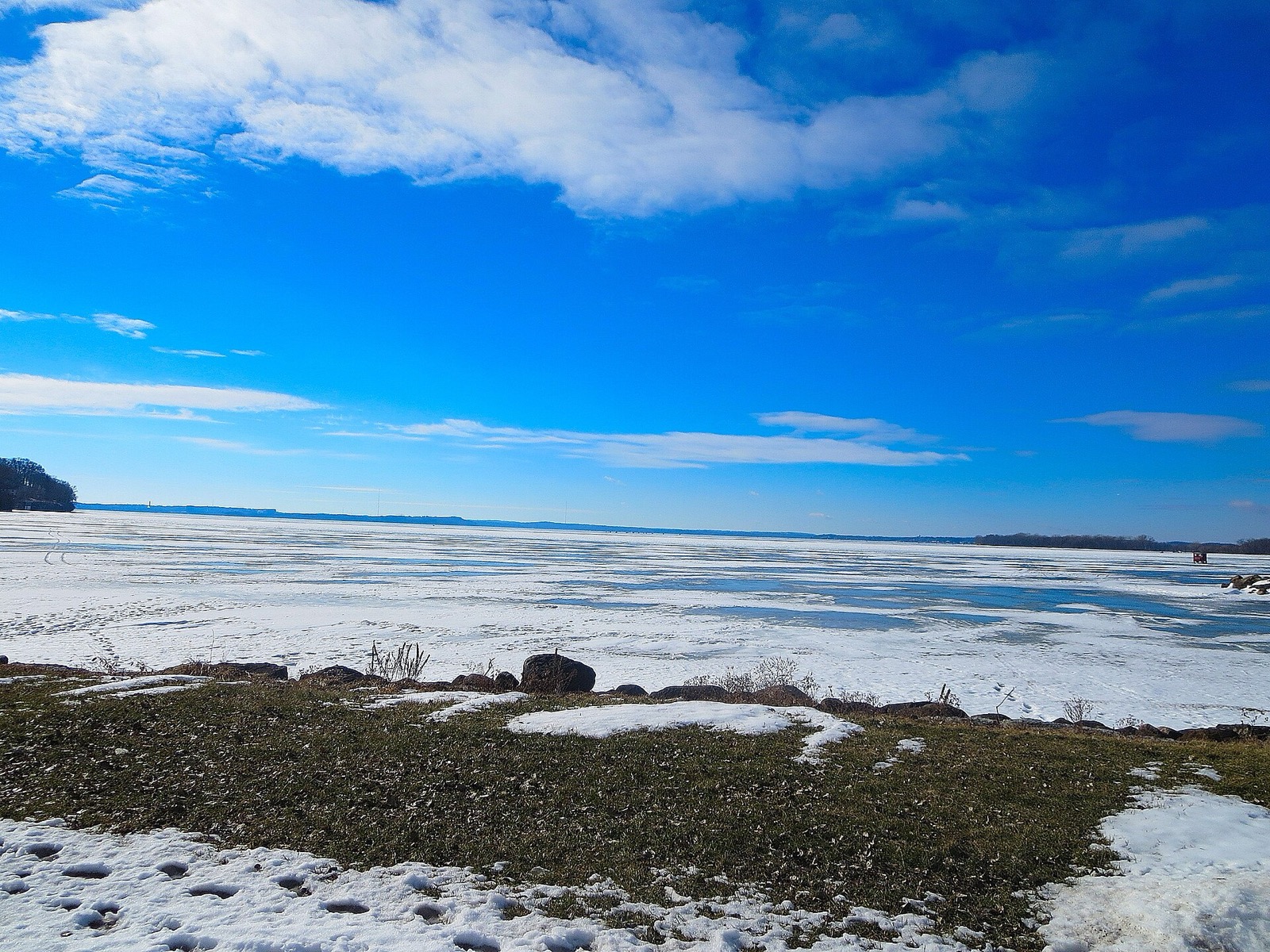
A wide sheet of lake ice with a city skyline low on the far shore and a rough snow crust in the foreground
Wisconsin water. Ice out is the day this becomes possible again, and in most of these records it is the day somebody decided a boat could cross. “Frozen Lake Mendota - panoramio” by Corey Coyle, CC BY 3.0
The rest of the Wisconsin year

Plan the rest of your Wisconsin calendar

More Midwest states with lake ice records

Advertisement

Ice out and ice in dates are historical observations compiled by the National Snow and Ice Data Center and, for the New England lakes, by the U.S. Geological Survey. They describe past years only, and a past year says nothing about the ice on a lake today. For current ice and for anything involving going out on it, contact Wisconsin DNR. National picture: every state with a lake ice record →
Hero image: “Frozen Lake Mendota - panoramio” by Corey Coyle, CC BY 3.0