
Skip to content
Historical record · Michigan

Lake Ice Out and Ice In Dates in Michigan

Michigan's ice record is thinner than its neighbours', and the deepest part of it is not an inland lake at all. Grand Traverse Bay, an arm of Lake Michigan, has been watched since 1852 and has failed to freeze in more than a quarter of those winters.

6
Lakes with a record
40 or more recorded years each
780
Observations
individual dates written down
1852
Oldest observation
Grand Traverse Bay
1
Century long records
spanning 100 years or more

Dates from past winters. For today’s ice, ask the agency that manages the water.

Where this year’s dates come from

Michigan does not publish a statewide ice-out dataset. The long Michigan series in this data come from federal Great Lakes research and from university field stations rather than from a state programme.

Michigan Department of Natural Resources

Today against the record

How this date has usually played out

Where today sits in the record for Grand Traverse Bay

40 of 40 of the most recent recorded years had already seen ice out on Grand Traverse Bay by this date.

The median across the whole record is April 7, which is 180 days from now on this year’s calendar. The record itself runs to 2015, so this is a comparison against history and not a statement about the current season.

This counts recorded years, not this year; the current season comes from the agency linked above.

Lake by lake

The deepest Michigan records

Ordered by how much record there is behind them. The median is across every recorded year; the second figure is across the most recent 30 recorded years, which is the fairer thing to compare against a lake you know today.

Names are reproduced exactly as the source database records them, which is often a shortened form: a lake filed as “Detroit” or “George” is Detroit Lake or Lake George to everyone who lives on it. The names stay as recorded, because United States lakes split unpredictably between “Lake X” and “X Lake”.

Grand Traverse Bay

Lake in Michigan · 122 recorded years, 1852 to 2015

Apr 7
median ice out
Apr 6
last 30 recorded years
Feb 24
earliest, 1981
May 8
latest, 1874

Across the whole record, ice out has moved 6 days earlier per century across the record.

Freeze over has moved 6 days later per century across the record, median Feb 10.

44 winters on record it did not freeze across at all, most recently 2017.

1850sApr 51860sApr 21870sApr 221880sApr 231890sApr 31900sApr 21910sApr 81920sApr 51930sApr 101940sMar 281950sMar 311960sApr 31970sApr 61980sMar 30

Mean date per decade. Only decades with four or more observations are shown, and the scale starts near the shortest bar rather than at January 1, so small differences stay visible.
Gull Lake

Lake in Michigan · 89 recorded years, 1925 to 2019

Mar 26
median ice out
Mar 21
last 30 recorded years
Jan 10
earliest, 1933
Apr 26
latest, 1961

Across the whole record, ice out has moved 9 days earlier per century across the record.

Freeze over has moved 15 days later per century across the record, median Jan 6.

3 winters on record it did not freeze across at all, most recently 2002.

1920sMar 271930sMar 131940sMar 311950sMar 191960sApr 41970sMar 261980sMar 241990sMar 152000sMar 182010sMar 15

Mean date per decade. Only decades with four or more observations are shown, and the scale starts near the shortest bar rather than at January 1, so small differences stay visible.
Green Bay at Menominee

Lake in Michigan · 73 recorded years, 1900 to 1973record ends 1973

Apr 8
median ice out
Apr 9
last 30 recorded years
Mar 4
earliest, 1932
May 4
latest, 1972

The record spans 73 years, under the 80 year span needed to state a century trend.

One winter on record, 1964, it did not freeze across at all.

1900sApr 41910sApr 101920sApr 61930sApr 31940sApr 51950sApr 121960sApr 71970sApr 13

Mean date per decade. Only decades with four or more observations are shown, and the scale starts near the shortest bar rather than at January 1, so small differences stay visible.
Fair Lake

Lake in Michigan · 63 recorded years, 1956 to 2019

Mar 20
median ice out
Mar 18
last 30 recorded years
Feb 1
earliest, 1989
Apr 9
latest, 2014

The record spans 63 years, under the 80 year span needed to state a century trend.

1950sMar 271960sMar 231970sMar 221980sMar 121990sMar 122000sMar 192010sMar 17

Mean date per decade. Only decades with four or more observations are shown, and the scale starts near the shortest bar rather than at January 1, so small differences stay visible.

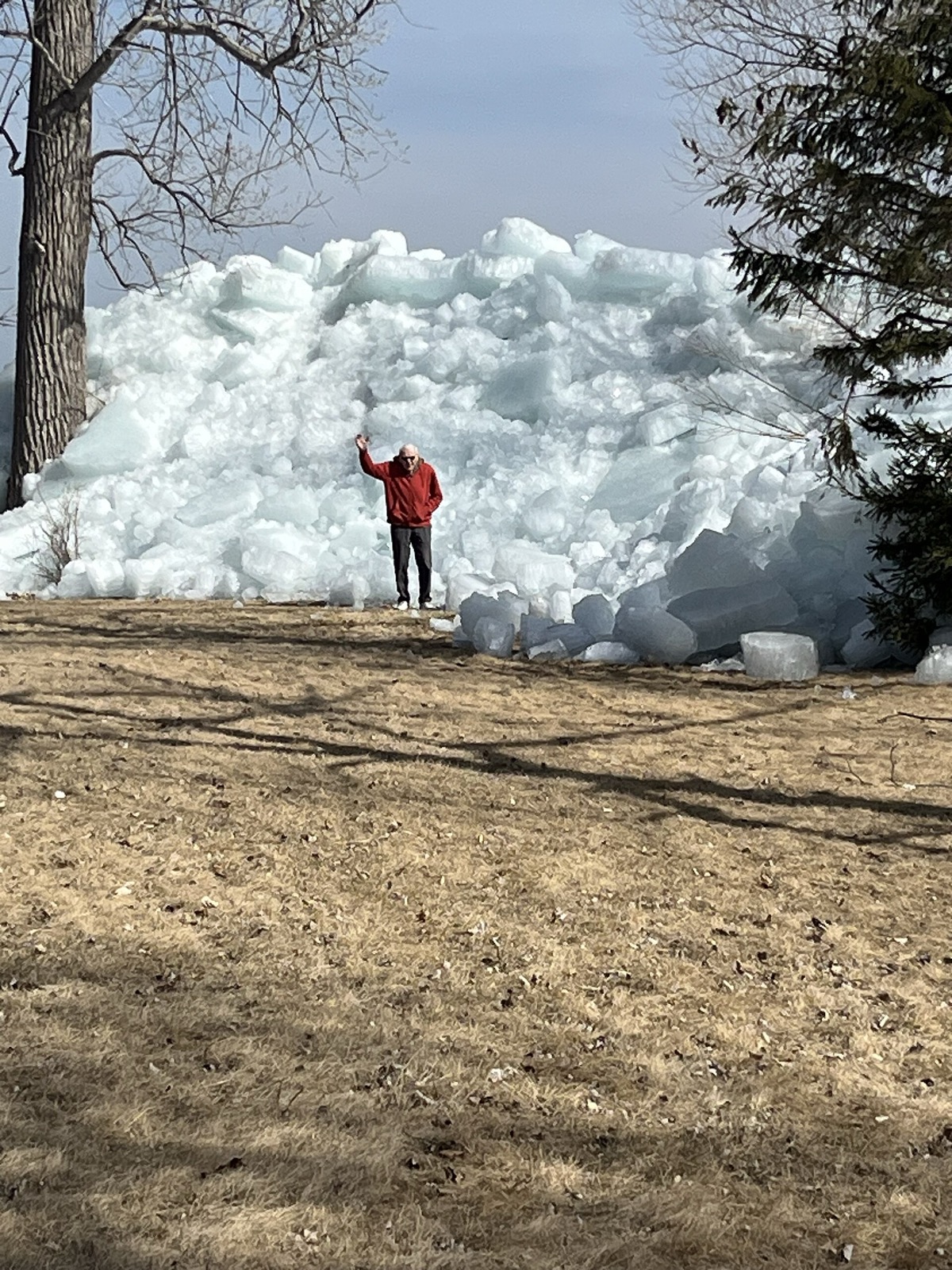
A person in a red jacket standing on brown grass at the foot of a wall of shattered lake ice piled far higher than they are
An ice shove on Lake Winnebago in Wisconsin, with a person on the bank for scale. Wind on a rotting spring sheet can drive it ashore in minutes and stack it well above head height, which is one reason a tidy single ice out date hides a genuinely messy few days. “Ice shove - Lake Winnebago, Oshkosh, WI USA - March 2025” by Jm mortellwi, CC BY-SA 4.0
Advertisement
Every lake

All 6 Michigan water bodies with a long record

LakeRecordMedian ice outLast 30 yearsEarliestLatestChange per century
Grand Traverse Bay1852 to 2015 (122)Apr 7Apr 6Feb 24 1981May 8 1874-5.7 days
Gull Lake1925 to 2019 (89)Mar 26Mar 21Jan 10 1933Apr 26 1961-9.4 days
Green Bay at Menominee1900 to 1973 (73)Apr 8Apr 9Mar 4 1932May 4 1972record too short
Fair Lake1956 to 2019 (63)Mar 20Mar 18Feb 1 1989Apr 9 2014record too short
Houghton Lake1951 to 2002 (52)Apr 13Apr 12Mar 10 2000May 1 1972record too short
Duck Lake1962 to 2002 (40)Mar 23Mar 22Feb 22 1999Apr 13 1982record too short

Dates are day of year, rendered on a common non leap calendar so the same stored value always reads the same way. “Change per century” is a least squares line through the observations, shown only where a record spans 80 years or more; a century figure extrapolated from a 40 year window describes the decades that happened to be sampled rather than the lake. Where a record ends before 2010 the card says so; a great many of these series stopped when a particular person stopped keeping them.

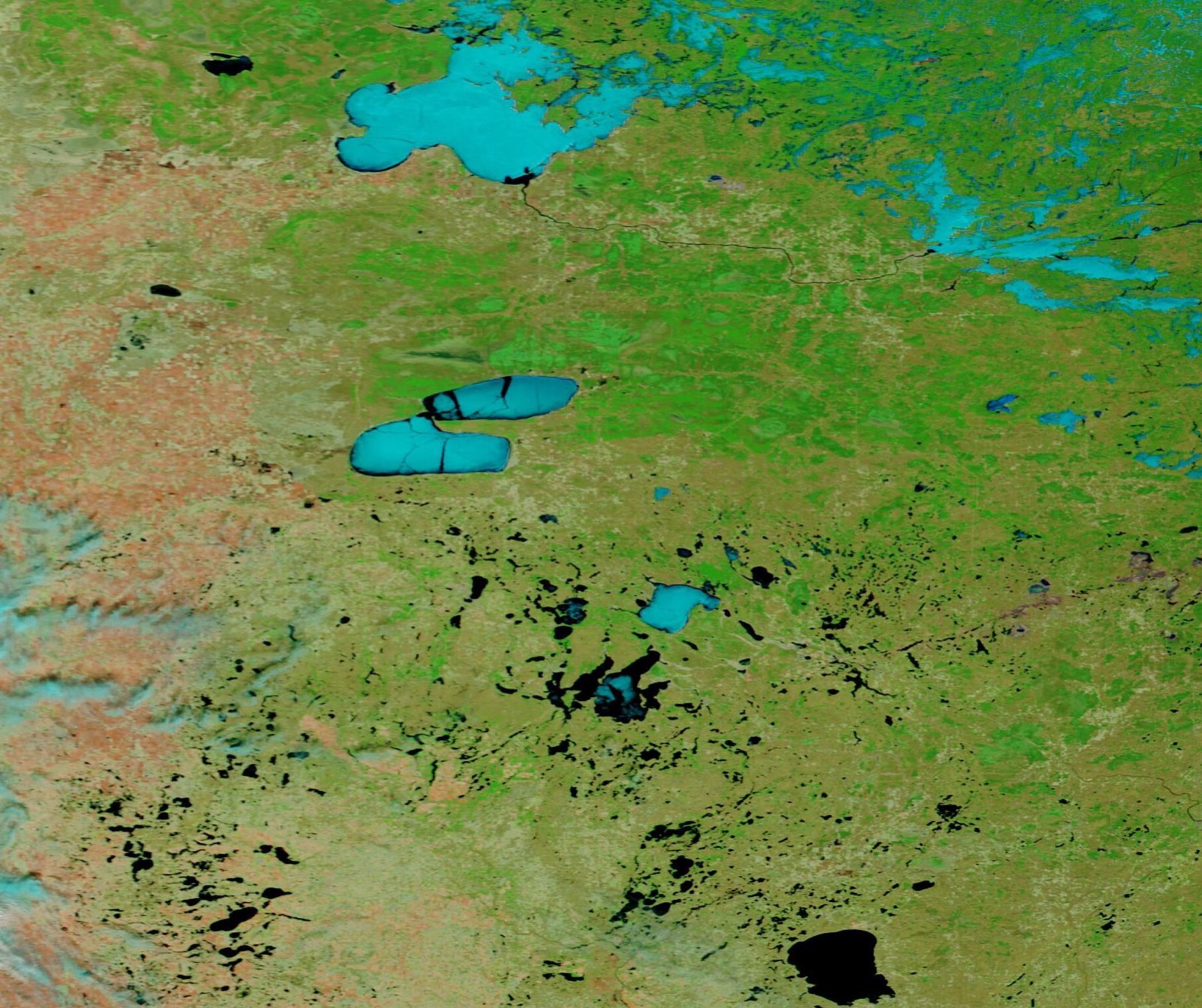
False colour satellite view of Minnesota in spring, with ice covered lakes showing as pale cyan and lakes that have already opened showing as black, against green and tan land
Spring thaw over Minnesota, in false colour. Ice still on a lake reads pale cyan; a lake that has already opened reads black. You can watch ice out happen across a whole state in a single frame, which is how agencies now sanity check reports that used to come only from people standing on a shore. “Spring Thaw in Minnesota (MODIS 2025-04-30)” — MODIS Land Rapid Response Team, NASA GSFC — Public domain
What the record says

What the Michigan record shows

Of the 2 Michigan lakes with a record long enough to state a century trend, 2 show ice out moving earlier. The median shift across those lakes is -5.7 days per century. That is a description of a line fitted to observations, not a forecast, and any single lake can and does swing three or four weeks between consecutive years.

4 of these Michigan water bodies also carry a freeze over record. Freeze up is the harder half to observe and there is far less of it nationally, which is a shame, because in this dataset it moves more than ice out does.

3 of them have winters on record in which the water never froze across at all. Those years are kept in the data rather than dropped, because a winter with no ice is an observation and treating it as a gap would quietly bias every average toward an earlier thaw.

For a bay of one of the Great Lakes, freezing over and opening are messier ideas than they are on a small inland lake, and the Michigan series reflect that. Several of them record winters where the water never froze across at all.

Higgins Lake has no published record. Michigan's best known ice-out lakes are not the ones with published records. Higgins Lake in particular appears in neither compilation behind these pages.

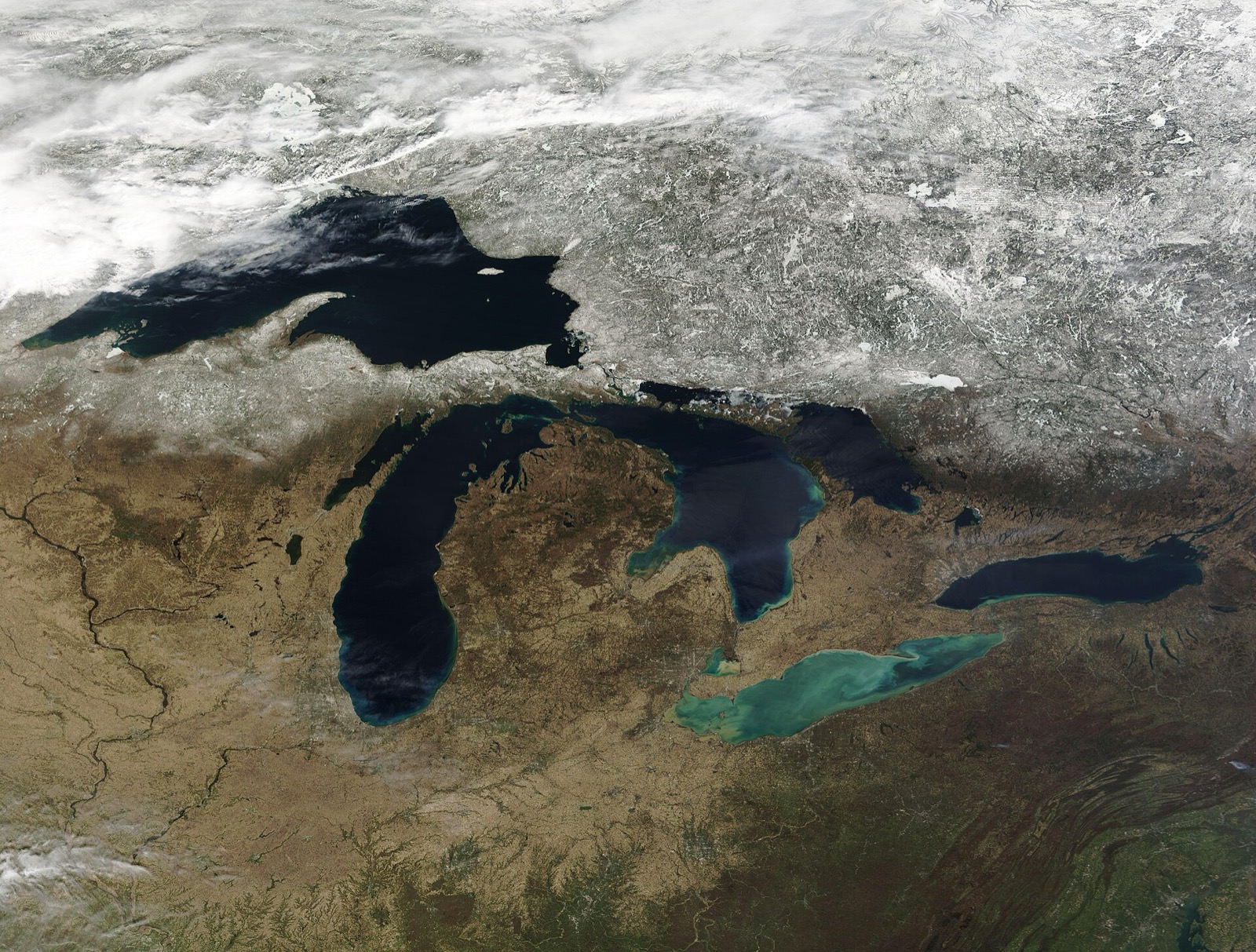
Satellite view of the Great Lakes with the northern land still under snow, the lakes themselves dark open water, and pale green sediment plumes in the shallow western basin of Lake Erie
The Great Lakes with snow still lying on the land north of them and no ice left on the water. On a lake this size, freezing over and opening are not single moments: shallow bays close first, the deep middle may never freeze at all in a mild winter, and the date somebody writes down is a judgement call. “Spring Thaw across the Great Lakes (MODIS)” — MODIS Land Rapid Response Team, NASA GSFC — Public domain
Provenance

Where these Michigan numbers came from

The observations

Benson, B., Magnuson, J. and Sharma, S. (2000). Global Lake and River Ice Phenology Database. (G01377, Version 1). Boulder, Colorado USA. National Snow and Ice Data Center. https://doi.org/10.7265/N5W66HP8 Accessed 2026-08-24.

Grand Traverse Bay carries 44 winters on record in which it never froze across, more than any other water body in this dataset.

Common questions

Michigan lake ice FAQ

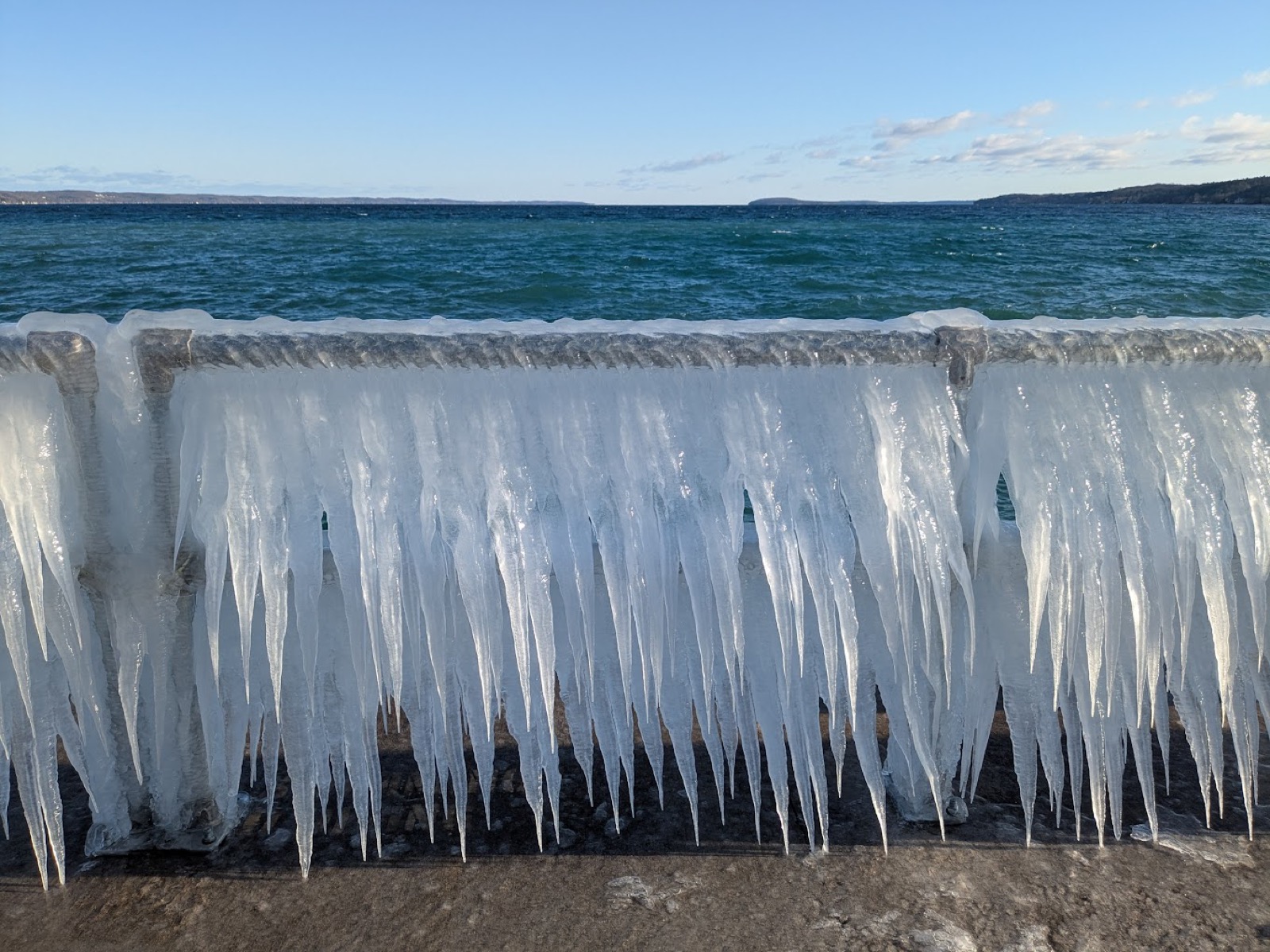
Broken plates of lake ice pushed up against a rocky shoreline with open grey water beyond
Michigan water. Ice out is the day this becomes possible again, and in most of these records it is the day somebody decided a boat could cross. “Ice on Grand Traverse Bay” — Sheet7568 — CC0
The rest of the Michigan year

Plan the rest of your Michigan calendar

More Midwest states with lake ice records

Advertisement

Ice out and ice in dates are historical observations compiled by the National Snow and Ice Data Center and, for the New England lakes, by the U.S. Geological Survey. They describe past years only, and a past year says nothing about the ice on a lake today. For current ice and for anything involving going out on it, contact Michigan Department of Natural Resources. National picture: every state with a lake ice record →
Hero image: “Ice on Grand Traverse Bay” — Sheet7568 — CC0