
Monarch Migration 2026: When They Reach Your State
The autumn migration is a wave that takes about ten weeks to cross the country. Every window below is derived from research grade observation records of ADULT monarchs, corrected for how many people were outdoors, and checked against Monarch Watch’s tagging model. Then the half nobody pairs with it: which milkweed to plant where you are, and when to sow it.
Where monarch sightings peak, week by week
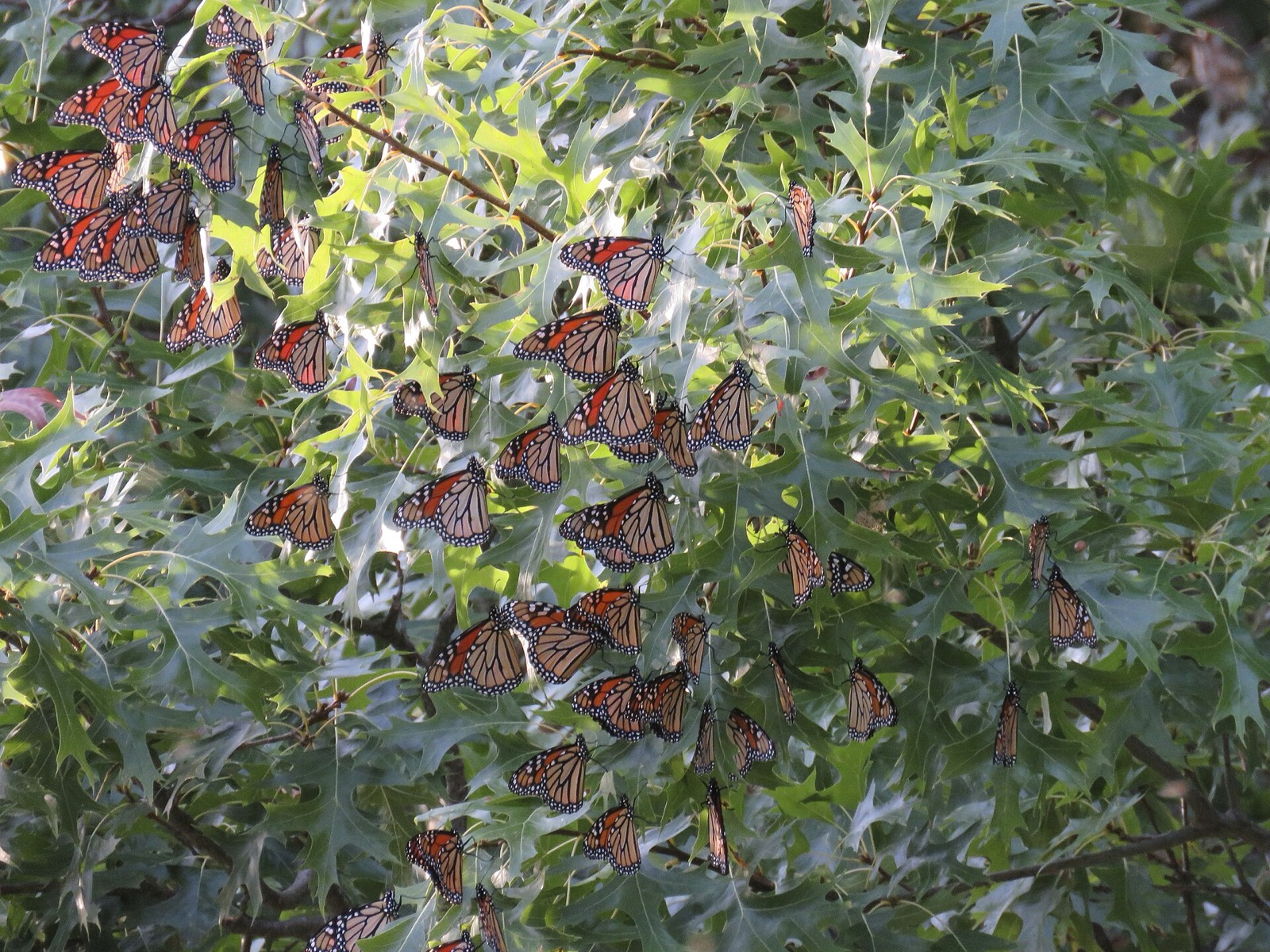
The single most misleading thing about a national monarch map is that it implies one date. There is no national date. Sightings crest in the northern tier through August and do not crest in Florida until the start of November, and the band below that matches today is the one to watch this week. Peaking about now: New Jersey, Kansas, Colorado, Oklahoma, North Carolina, Tennessee.
These are the dates monarchs are most likely to be SEEN in each state, which is not quite the same as the date the migration passes. Individual states scatter, and the ones that scatter most are the ones that breed their own monarchs all summer. Across the 40 states where the comparison is valid, the further south a state is, the later its peak, which is the same latitude structure the Monarch Watch tagging model describes.
The wave outlasts the first frost
Measured against each state’s own median first freeze from NOAA normals, in all 44 covered states the last regular monarch sightings fall after the median first freeze, by a median of 22 days. A first freeze is a light radiational frost at 32 degrees in a low spot before dawn, not the hard freeze that ends a season, and the autumn generation keeps going. The practical version of that finding is on every state page: do not cut the garden back at the first frost, because the butterflies are still passing through.
Autumn windows, the freeze margin, and where they winter
| State | Peak | Thins by | First freeze | Past freeze | Winters in |
|---|---|---|---|---|---|
| Alabama | Oct 18 | Nov 29 | Nov 10 | 19 d | Mexico |
| Arizona | Nov 1 | all winter | Nov 15 | 46 d | Either |
| Arkansas | Oct 18 | Nov 15 | Oct 30 | 16 d | Mexico |
| California | Oct 18 | all winter | Dec 1 | 30 d | California |
| Colorado | Oct 4 | Nov 1 | Oct 2 | 30 d | Either |
| Connecticut | Sep 20 | Nov 1 | Oct 14 | 18 d | Mexico |
| Delaware | Aug 16 | Nov 8 | Oct 28 | 11 d | Mexico |
| Florida | Nov 1 | all winter | Dec 10 | 21 d | Mexico |
| Georgia | Oct 18 | Nov 22 | Nov 10 | 12 d | Mexico |
| Illinois | Sep 6 | Oct 25 | Oct 16 | 9 d | Mexico |
| Indiana | Sep 13 | Oct 25 | Oct 16 | 9 d | Mexico |
| Iowa | Sep 13 | Oct 25 | Oct 10 | 15 d | Mexico |
| Kansas | Oct 4 | Nov 1 | Oct 20 | 12 d | Mexico |
| Kentucky | Sep 27 | Nov 15 | Oct 22 | 24 d | Mexico |
| Louisiana | Oct 25 | all winter | Nov 26 | 35 d | Mexico |
| Maine | Sep 20 | Nov 1 | Sep 28 | 34 d | Mexico |
| Maryland | Aug 16 | Nov 8 | Oct 24 | 15 d | Mexico |
| Massachusetts | Jul 26 | Nov 1 | Oct 12 | 20 d | Mexico |
| Michigan | Aug 2 | Oct 18 | Oct 5 | 13 d | Mexico |
| Minnesota | Aug 23 | Oct 18 | Sep 26 | 22 d | Mexico |
| Mississippi | Oct 25 | Dec 6 | Nov 10 | 26 d | Mexico |
| Missouri | Sep 27 | Nov 8 | Oct 22 | 17 d | Mexico |
| Nebraska | Sep 20 | Oct 25 | Oct 10 | 15 d | Mexico |
| Nevada | Oct 25 | all winter | Oct 2 | 86 d | California |
| New Hampshire | Sep 13 | Oct 25 | Sep 25 | 30 d | Mexico |
| New Jersey | Oct 4 | Nov 8 | Oct 20 | 19 d | Mexico |
| New Mexico | Aug 30 | Nov 15 | Oct 15 | 31 d | Either |
| New York | Aug 16 | Nov 8 | Oct 5 | 34 d | Mexico |
| North Carolina | Oct 11 | Nov 22 | Oct 28 | 25 d | Mexico |
| North Dakota | Aug 23 | Oct 18 | Sep 22 | 26 d | Mexico |
| Ohio | Aug 16 | Oct 25 | Oct 16 | 9 d | Mexico |
| Oklahoma | Oct 4 | Nov 8 | Nov 1 | 7 d | Mexico |
| Oregon | Aug 2 | Nov 1 | Oct 28 | 4 d | California |
| Pennsylvania | Aug 9 | Oct 25 | Oct 10 | 15 d | Mexico |
| Rhode Island | Sep 20 | Nov 15 | Oct 18 | 28 d | Mexico |
| South Carolina | Oct 18 | Dec 6 | Nov 12 | 24 d | Mexico |
| South Dakota | Sep 20 | Oct 11 | Sep 30 | 11 d | Mexico |
| Tennessee | Oct 11 | Nov 22 | Oct 26 | 27 d | Mexico |
| Texas | Oct 25 | Dec 13 | Nov 20 | 23 d | Mexico |
| Utah | Aug 23 | Nov 1 | Oct 8 | 24 d | California |
| Vermont | Sep 6 | Oct 25 | Sep 24 | 31 d | Mexico |
| Virginia | Aug 23 | Nov 8 | Oct 25 | 14 d | Mexico |
| West Virginia | Sep 27 | Nov 8 | Oct 12 | 27 d | Mexico |
| Wisconsin | Sep 6 | Oct 25 | Oct 2 | 23 d | Mexico |
Peak dates are derived here from adult annotated iNaturalist records corrected for observer effort. The thinning date is where raw adult sightings fall to a tenth of their level at that peak. First freeze is the median from NOAA normals at representative stations, the same figures the frost vertical publishes. Past freeze is the gap between the two, and it is a comparison of two datasets rather than a biological claim.
Adult records, corrected for observer effort
Monarchs are photographed as adults, as caterpillars and as eggs, and iNaturalist records which through its Life Stage annotation. A page about migration wants adults. The caterpillars belong to the breeding generations and they peak weeks before the migrants move, so an unfiltered curve quietly times the wrong thing.
The correction is only worth making because monarchs are annotated so well. Across the covered states the great majority of records carry a life stage, which is far better coverage than most taxa manage and is what makes the filter a real measurement rather than a small biased subsample.
The second correction is observer effort. A raw count is butterflies multiplied by how many people were outside with a phone, and in the United States that denominator has an enormous artificial spike in late April for the City Nature Challenge. Every curve here can be divided by all research grade observations in the same place and month, and the charts open on that adjusted series.
The Monarch Watch check
Monarch Watch, at the University of Kansas, publishes midpoints of the autumn migration by latitude. Monarch Watch states: “These predictions are derived from reports to Monarch Watch, first-hand observations and the records of thousands of tagged butterflies that have been recovered over the years.” That is a genuinely different instrument from ours. A tagged butterfly that is recovered in Mexico is known to have been a migrant. That is a different instrument from a photograph, which cannot tell a migrant from a local. It is the reason their midpoints are the better number for the migration itself, and the reason this site treats them as the check rather than as a competitor.
For each state, the published row nearest its populated centre latitude sits beside this site’s derived peak. 25 of the 40 states the table applies to agree within two weeks, from two datasets that share no observations and no method. Where they disagree the state page says which to trust and why. The table describes the EASTERN migration, so the 4 western states here sit outside that comparison. Their table is linked in full: it is theirs and it is worth reading whole.
Mexico or California, and how you know which
“The Rocky Mountains generally divide these two populations, limiting their contact.” That is USFWS, and it is the line every state page here is placed against.
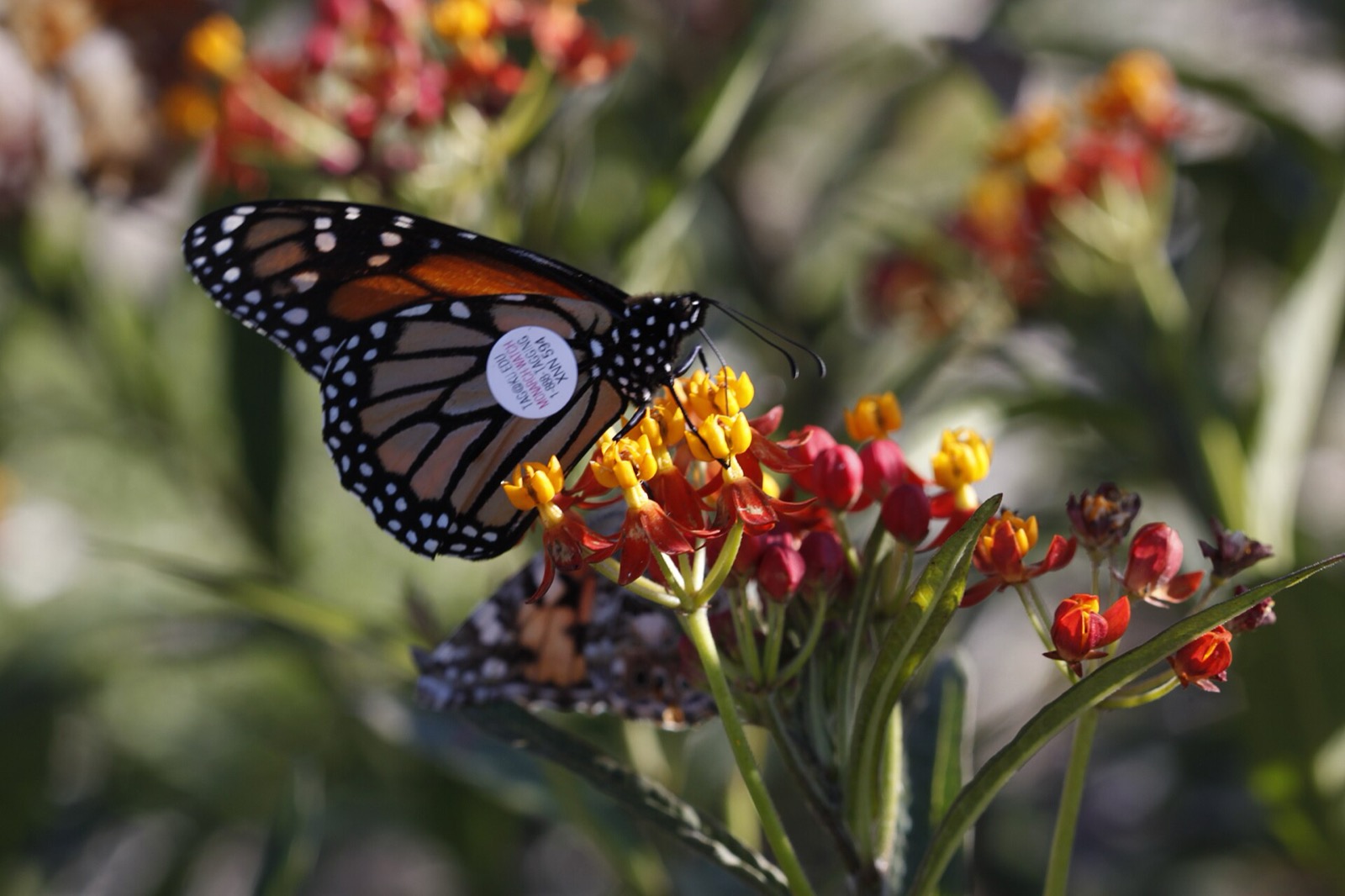
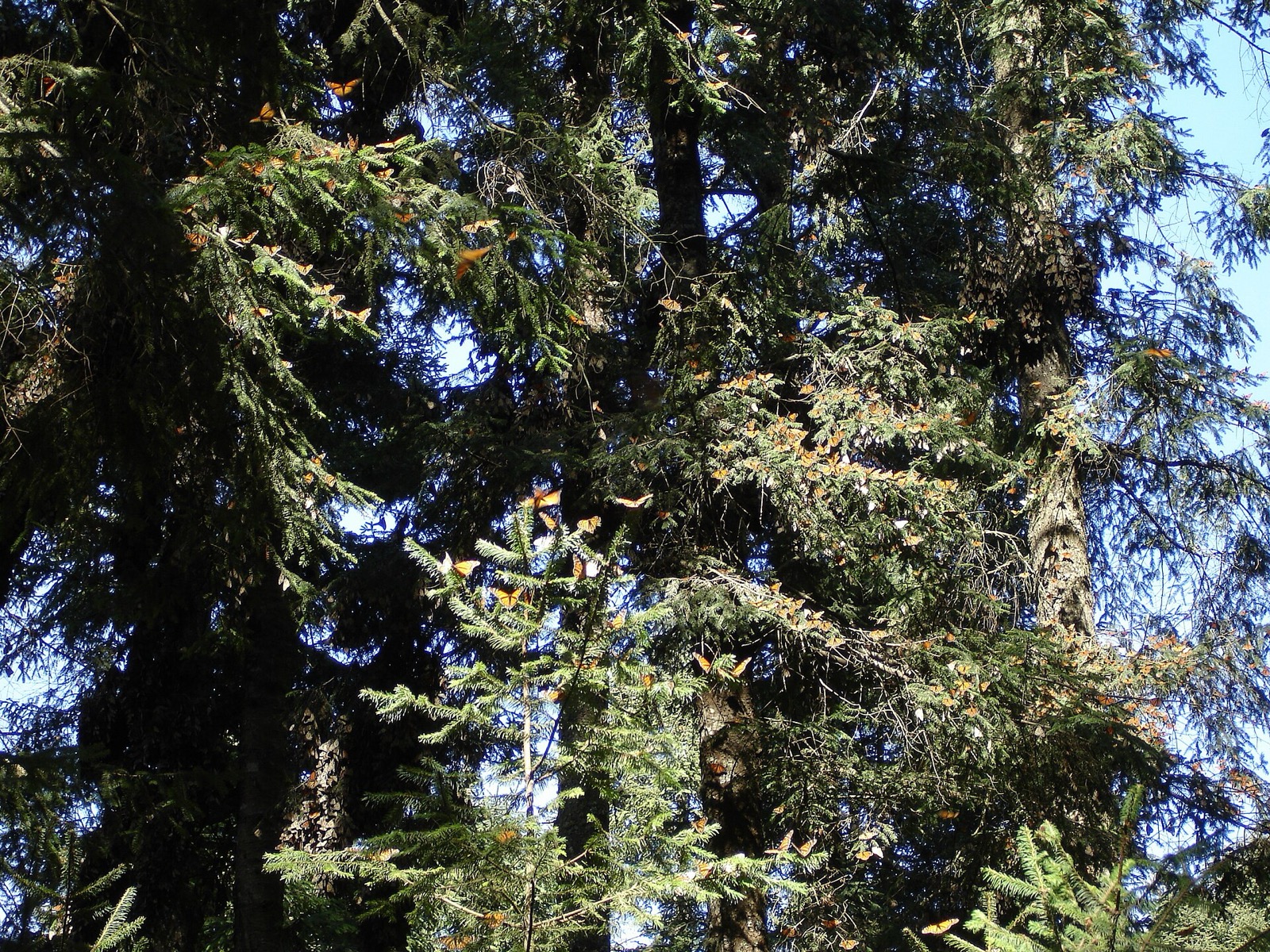
East of the Rockies, which is most of the country, monarchs head for the oyamel fir forests of Michoacan. In the fall, USFWS states, they “In the fall, they may fly more than 2,000 miles (3,000 km) to reach overwintering sites in Mexico.” The generation that makes that flight is unlike the ones before it: “Most breeding adult butterflies live approximately two to five weeks, but overwintering adults that enter into reproductive diapause can live six to nine months.”
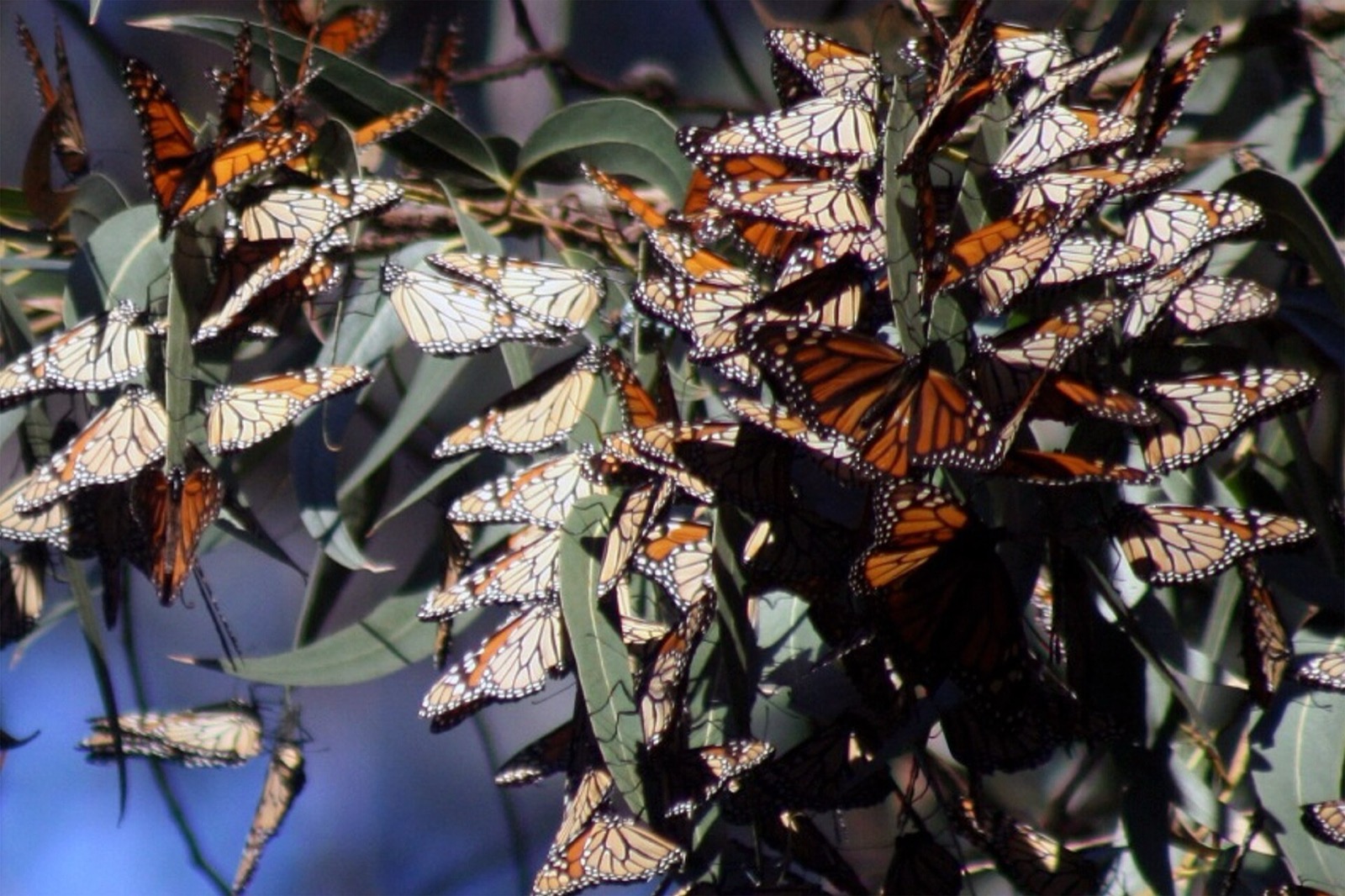
West of the Rockies they do something quite different. “The western population overwinters in hundreds of groves (clusters of trees) along the California coast and into northern Baja California, Mexico.” Those groves are counted every winter by volunteers. The Western Monarch Count website is administered by the Xerces Society for Invertebrate Conservation on behalf of the Western Monarch Count. The most recent figures published are about 12,260 monarchs across 249 sites in the 2025 mid season count, the one usually called the thanksgiving count, and 6,464 monarchs across 193 sites in the 2025 to 2026 late season count, surveys ending january 11, 2026. The percentage decline figures that circulate for the western population against a 1980s baseline do not appear on the Western Monarch Count’s own pages. The 2026 to 2027 survey windows are early season Oct 17 to Nov 1, 2026, mid season Nov 14 to Dec 6, 2026, late season Dec 26, 2026 to Jan 10, 2027.
USFWS also states that the two populations are not completely isolated and still occasionally interbreed, which is why the states along the Rockies are tagged here as a boundary rather than assigned to one side. On this site 3 states sit on that boundary and are tagged as neither: Colorado, Arizona, New Mexico.
Spring runs the opposite way and is not a mirror image. “As temperatures warm at the overwintering sites in the spring, monarchs begin to breed and lay eggs on milkweed throughout their spring journey.” The monarchs that reach a northern state in June are two or three generations removed from the ones that left it in September, which is why the spring dates on these pages describe when monarchs are recorded again rather than when anyone arrives.
Proposed as threatened, and still not listed
Proposed as threatened. Not currently listed.
The proposal would list the monarch as threatened, with a section 4(d) rule and designated critical habitat. The comment period was reopened and closed in May 2025. As of the date above no final rule has been published, so the monarch has no federal listing yet.
The monarch is very widely described online as endangered. Under United States law it is not. The International Union for Conservation of Nature, which is a different body with no legal force in the US, assessed the migratory monarch separately, and its assessment has itself been revised. Those two things get merged constantly. This site states the federal position and names it as the federal position.
US Fish and Wildlife Service, checked August 24, 2026. https://www.fws.gov/species/monarch-danaus-plexippusMilkweed, and the one not to plant
A timing page that stops at timing has answered half the question. The other half is what to put in the ground, and it is per state, because Xerces states: “The Xerces Society recommends planting milkweed species that are locally native and for which regionally-sourced seeds and plants are available.” Every state page here lists the milkweeds with the most research grade records in that state, which is a data driven starting point for what is locally native, and links the Xerces Milkweed Seed Finder for who sells it.
On timing, Xerces states: “In most regions, fall planting is a good approach because the seeds' exposure to cold, moist conditions during winter and spring will help stimulate germination.” That makes the sowing date a frost date, so each state page derives it from that state’s median first freeze rather than from a national rule.
Tropical milkweed is the one to avoid, and it is the one on the shelf. This is the one piece of monarch gardening advice that is actively harmful to get wrong, and it is the milkweed most garden centres stock because it is the easiest to grow. It matters most where winters are mild enough that the plant never dies back.
“we do not recommend planting tropical milkweed”
“tropical milkweed that remains evergreen through winter allows for OE levels to build up on the plant over time”
“The presence of tropical milkweed in winter may cause monarchs to breed rather than migrating and overwintering.”
If you already have it: “plants can be cut back to the ground twice during the growing season to limit the spread of disease, and that plants should be removed late in summer so as not to interfere with migration”
Justin Wheeler, Emma Pelton and Stephanie Frischie, Tropical Milkweed, a No-Grow, Xerces Society for Invertebrate Conservation. https://xerces.org/blog/tropical-milkweed-a-no-grow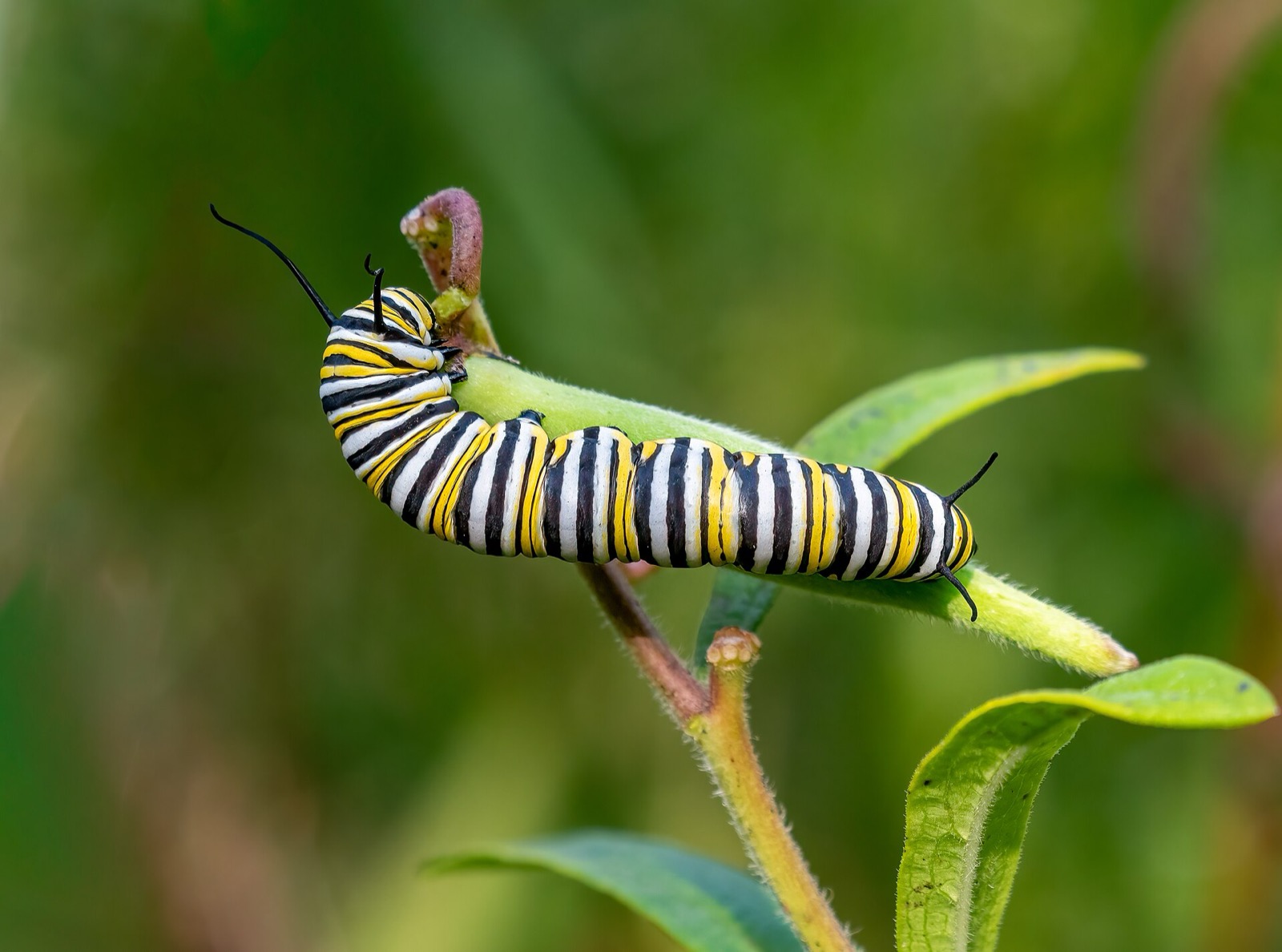
Use Journey North for where they are today
Volunteers report monarch eggs, larvae, adults and autumn roosts as they see them, and the reports are plotted on a live map. For the question of where the leading edge of the migration is this week, in this particular year, it is the best resource in North America and it has been for decades.
It is a map of what has been reported, not a statement of what to expect. It has no per-state page and no typical window, so it cannot answer "when should I expect them in Ohio" before the sightings exist. It also does not cover the planting half of the question.
This site is the other half: a typical window per state, derived from the open observation record, and the milkweed and nectar answer next to it. When the season is live, go and look at their map.
Their records are published under a NonCommercial licence, which is why this site links them rather than building on them. Journey North publishes under CC BY-NC-SA: “Journey North follows the Creative Commons BY-NC-SA copyright policy (Attribution-NonCommercial-Share-Alike)” Journey North sightings are linked, not ingested, re-mapped or re-hosted here: this site carries advertising, which their licence classes as commercial use. For the live question of where the leading edge is this week, their map is the best thing that exists. Monarch Watch publishes under All rights reserved: “All material on this site © Monarch Watch unless otherwise noted.” Each state page quotes the single published latitude row nearest to that state, with attribution and a link to the full table, as an independent check on the window derived here.
Journey North monarch tracking is run by the University of Wisconsin-Madison Arboretum, it is free, and it is where your own sighting should go.
States without a monarch window
44 states have a page. The 6 below have no derivable window, each for the reason given.
1 stateNo monarch record to build a window from
Alaska. Alaska has no research grade iNaturalist records of Danaus plexippus at all, so there is no curve to derive a window from. Monarchs are not part of the Alaskan fauna in any regular way.
1 stateMonarchs, but no migration
Hawaii. Hawaii has a well established monarch population and thousands of records, and it does not migrate. The butterflies breed year round on introduced milkweeds, so an arrival window and a departure window would describe an event that does not happen there. The species is present; the migration is not.
4 statesToo few adult records to derive a window
Idaho, Montana, Washington, Wyoming. These states fall below the floor of 300 research grade records annotated as adult monarchs. Below that the weekly curve is dominated by a handful of individual observers and the thresholds move by weeks when a single record moves. Monarchs occur in all of them; the observation record is too thin to date them.
Common monarch claims, checked
- The western monarch population has declined by more than 95 percent since the 1980s. It is repeated on almost every monarch page online, but the Western Monarch Count does not state the baseline figure on its own pages, so there is nothing behind it to attribute. The recent counts, which the Count does publish, are above.
- The monarch butterfly is an endangered species. Wrong as stated. It is proposed as threatened under the Endangered Species Act and has no final listing. The IUCN assessment is a separate thing under a separate body and has itself been revised. Saying "endangered" flatly is wrong in the United States legal sense that readers assume.
- Monarchs travel 3,000 miles on their autumn migration. USFWS states they may fly more than 2,000 miles, which is the figure quoted on this page. Longer distances are reported for individual tagged butterflies, and no agency puts a flat 3,000 on the migration.
- A single monarch makes the whole round trip. Half right, and the half that is wrong matters. The autumn generation flies the whole way south and overwinters, but the northbound spring journey is made over successive generations. USFWS is quoted on both halves above.
- Journey North sighting counts for this state this year. Journey North publishes under a CC BY-NC-SA licence, and its live map is where this year's sightings are read. It is linked above, and it is the best resource in North America for where the leading edge is this week.
- A per-state milkweed planting date from that state’s cooperative extension service. Extension services publish milkweed guidance unevenly and many states have none. Every state page here derives its fall sowing date from that state's own median first freeze and quotes the Xerces sentence that makes fall sowing work, with the derivation shown on the page.
Monarch migration questions
Windows on this site are climatology derived from iNaturalist research grade observation records, not a forecast and not a sightings map. Monarch Watch’s latitude rows are quoted with attribution and remain their work. Journey North’s map is linked, not reproduced. Federal listing status checked August 24, 2026, and it changes: check the USFWS species page before relying on it.