
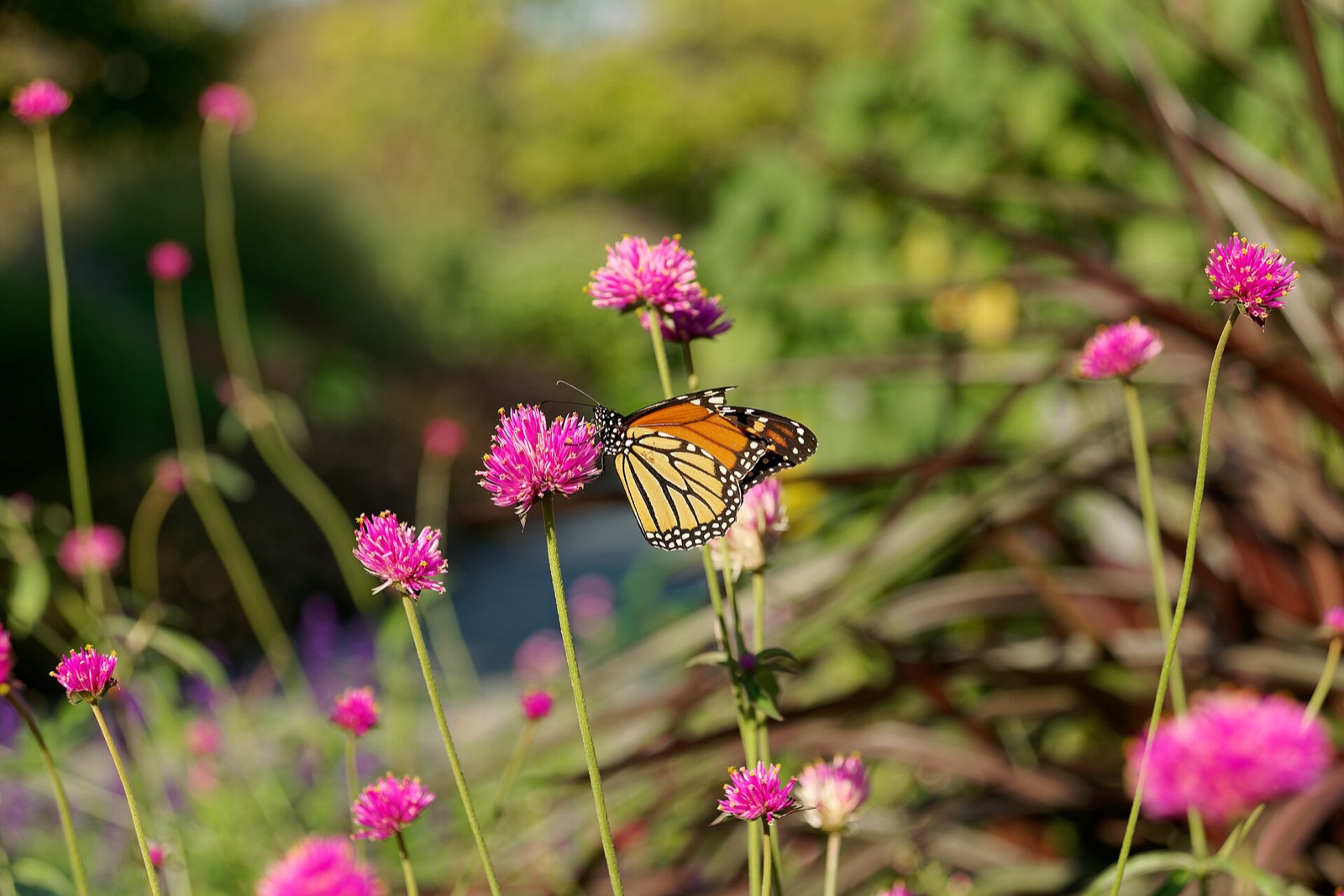
Monarch Migration in Alabama: 2026 Timing
Sightings peak around October 18 from 1,507 adult monarch records here, and Monarch Watch puts the migration midpoint at this latitude at October 7. Both numbers are on this page, with what separates them.
Autumn migration building. Peak typically October 18, in 8 daysThe Alabama monarch year at a glance
Eastern populationAlabama adult monarch records peak around October 18 and thin to a trickle by November 29, which is 19 days after the state's median first freeze on November 10. Monarchs here are still moving well past the first frost of the autumn. The milkweed with the most records here is butterfly milkweed, Asclepias tuberosa.
When monarchs move through Alabama
Two numbers, and they are not the same number. One is when you are most likely to see a monarch in Alabama. The other is when the migration itself passes this latitude. In a state that breeds its own monarchs all summer those can be weeks apart, and most pages online quietly publish one and call it the other.
Sightings, from observation records
Peaking around October 18, with numbers already halved by November 15.
1,507 research grade iNaturalist records of Danaus plexippus in Alabama that a human annotated as adult, grouped by week and divided by all observations in Alabama in the same week.
Monarch Watch, from recovered tags
Midpoint October 7 at latitude 33, the published row nearest Alabama’s populated centre at 32.98 degrees north. Agrees within 11 days
Monarch Watch states: “These predictions are derived from reports to Monarch Watch, first-hand observations and the records of thousands of tagged butterflies that have been recovered over the years.” Their table by latitude.
Our own curve and Monarch Watch land within 11 days of each other in Alabama, from two datasets that share no observations and no method, which is about the strongest thing either of us can say about a date like this.
The two are measuring different things and it is worth being clear about which is which. A recovered tag proves the butterfly was a migrant. A photograph cannot: it records a monarch, not a monarch that is going anywhere. So where the two diverge, Monarch Watch is the better number for the migration itself and ours is the better number for the plainer question of when you will actually see one in Alabama. Both are on this page.
What to plant in Alabama, and when to sow it
Timing is only half the question people are actually asking. The other half is what to put in the ground, and it is the half a sightings map cannot answer. Xerces states: “The Xerces Society recommends planting milkweed species that are locally native and for which regionally-sourced seeds and plants are available.”
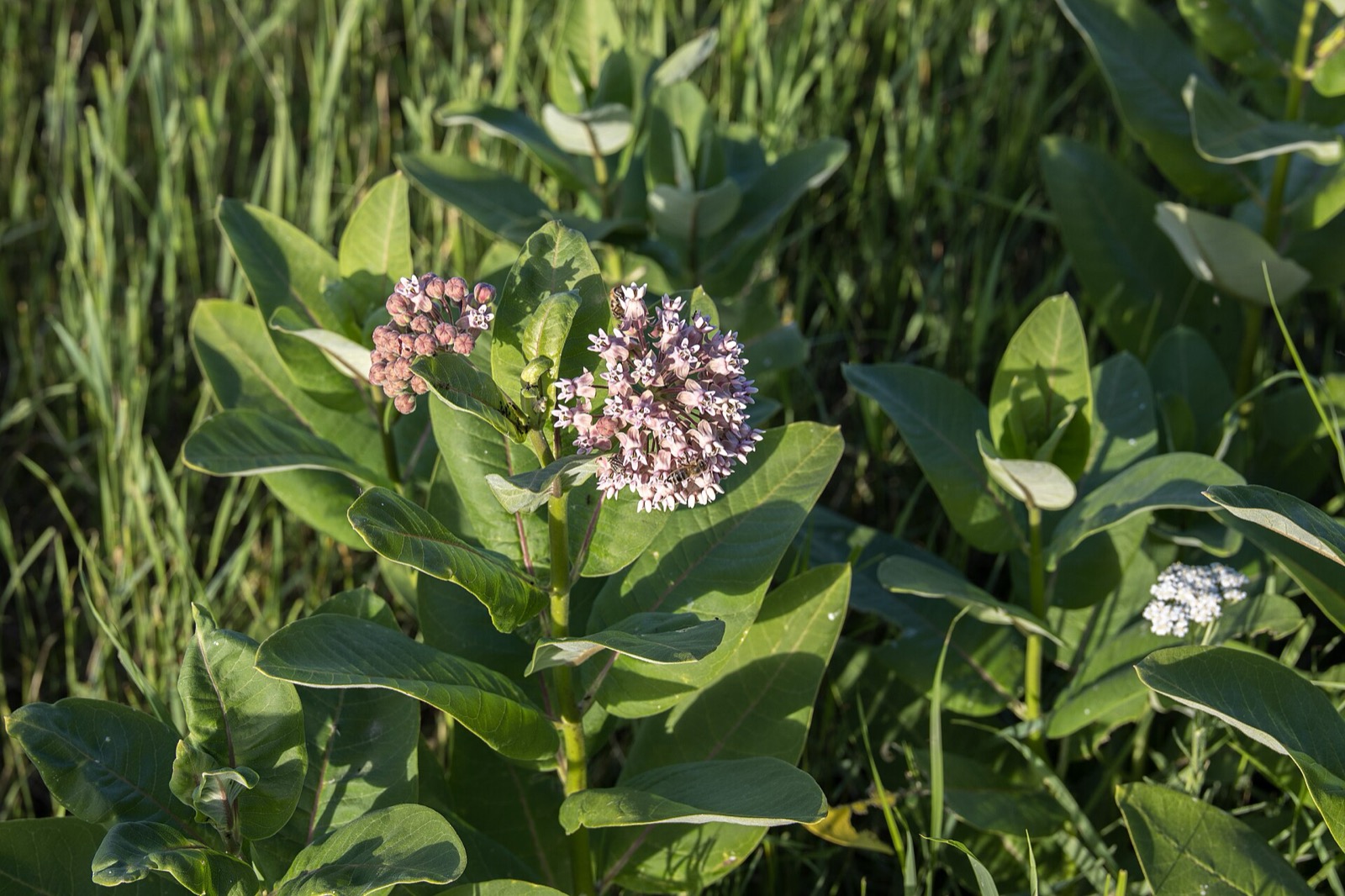
Here are the milkweeds with the most research grade records in Alabama. This is a statement about what is recorded growing here, which is a reasonable proxy for what is locally native and a much better starting point than a national list.
Sow from November 10
Milkweed seed wants a cold winter before it will germinate well, which makes the sowing date a frost date rather than a separate thing to look up. Xerces states: “In most regions, fall planting is a good approach because the seeds' exposure to cold, moist conditions during winter and spring will help stimulate germination.” and “Following site preparation to remove weeds, seeds can simply be scattered onto the soil surface by hand.” Alabama’s median first freeze is November 10, so sowing from about then through the autumn gives the seed the winter it needs. The Xerces Milkweed Seed Finder will tell you who sells regionally sourced seed of the species above.
The one to avoid, and it is the one on the shelf. This is the one piece of monarch gardening advice that is actively harmful to get wrong, and it is the milkweed most garden centres stock because it is the easiest to grow. It matters most where winters are mild enough that the plant never dies back.
“we do not recommend planting tropical milkweed”
“tropical milkweed that remains evergreen through winter allows for OE levels to build up on the plant over time”
“The presence of tropical milkweed in winter may cause monarchs to breed rather than migrating and overwintering.”
If you already have it, Xerces states that “plants can be cut back to the ground twice during the growing season to limit the spread of disease, and that plants should be removed late in summer so as not to interfere with migration”
Justin Wheeler, Emma Pelton and Stephanie Frischie, Tropical Milkweed, a No-Grow, Xerces Society for Invertebrate Conservation. https://xerces.org/blog/tropical-milkweed-a-no-grow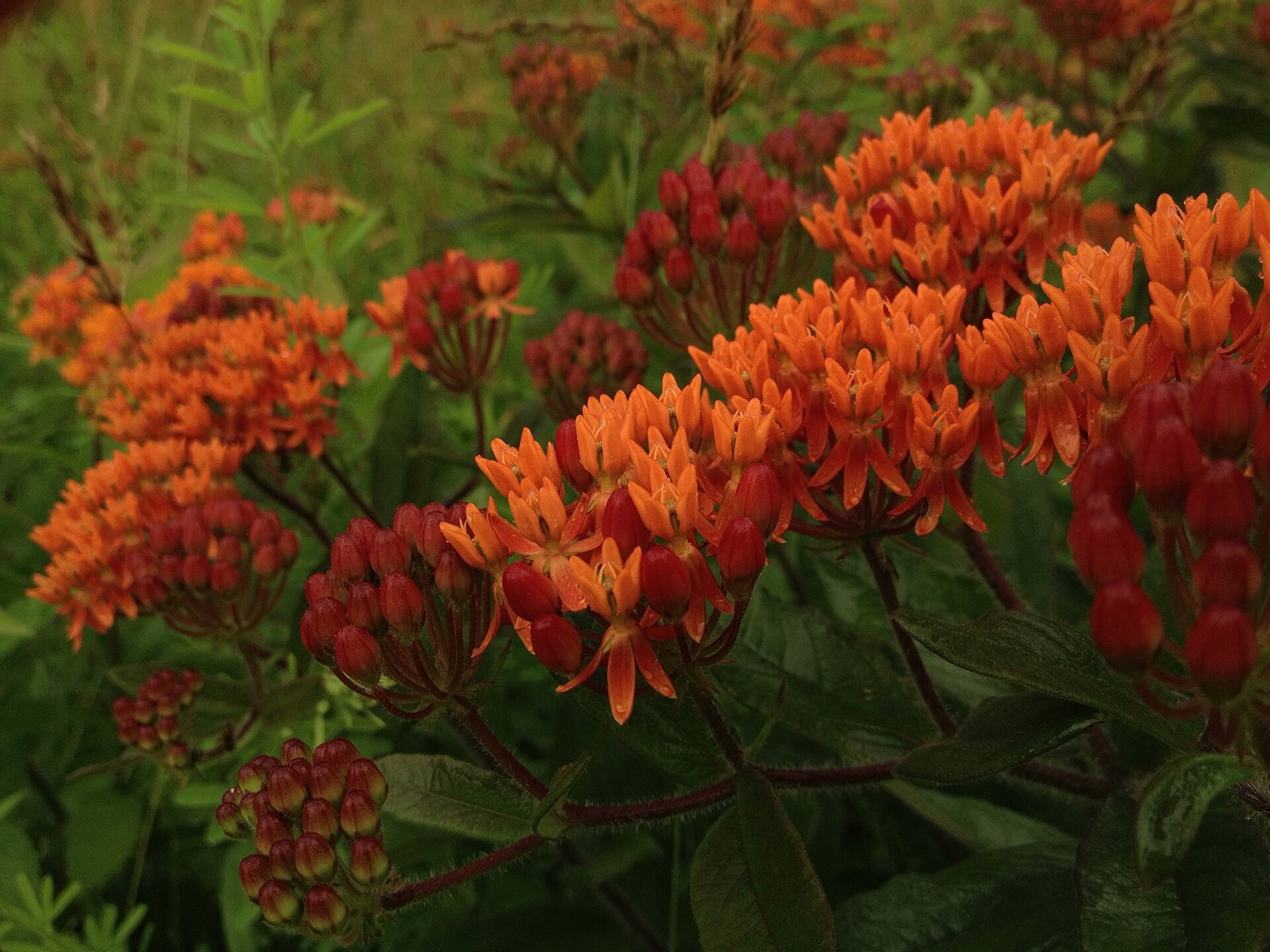
Alabama monarchs are still moving after the first freeze
In all 44 states covered here, the last regular monarch sightings fall after the median first freeze, not before it. In Alabama adult records typically run to November 29, and the median first freeze from NOAA normals at representative stations is November 10, 19 days earlier.
That is not a paradox and it is not a claim that frost is harmless. A first freeze in the NOAA sense is a light radiational frost at 32 degrees, usually an hour before dawn in a low spot, and it is a long way from the hard freeze that ends a season. What it does mean, and this is the practical part, is that cutting the garden back at the first frost in Alabama removes nectar from butterflies that are still passing through. The autumn generation is fuelling a flight to central Mexico and it does not stop because the lawn went white once.
The marker on the bar above shows where the freeze lands inside this state’s own departure tail, which varies a lot: in some states it falls early in the tail and in others it is nearly at the end of it. Alabama frost dates in full, including the spread between Birmingham and Mobile.
Adult monarch records in Alabama, month by month
Adults, caterpillars and eggs are all photographed and all annotated separately on iNaturalist, and a page about MIGRATION wants adults. In Alabama the unfiltered record peaks in October and the adult only record peaks in October. Of the 2,072 monarch records here, 90 percent carry a life stage annotation, which is unusually high and is what makes the filter worth applying rather than a rounding error.
The second correction is the toggle above. The chart opens on the adjusted series, which divides by every research grade observation in Alabama in the same month. Raw counts measure butterflies multiplied by how many people were outside with a phone, and late April in particular is the City Nature Challenge rather than biology. See the underlying Alabama records on iNaturalist.
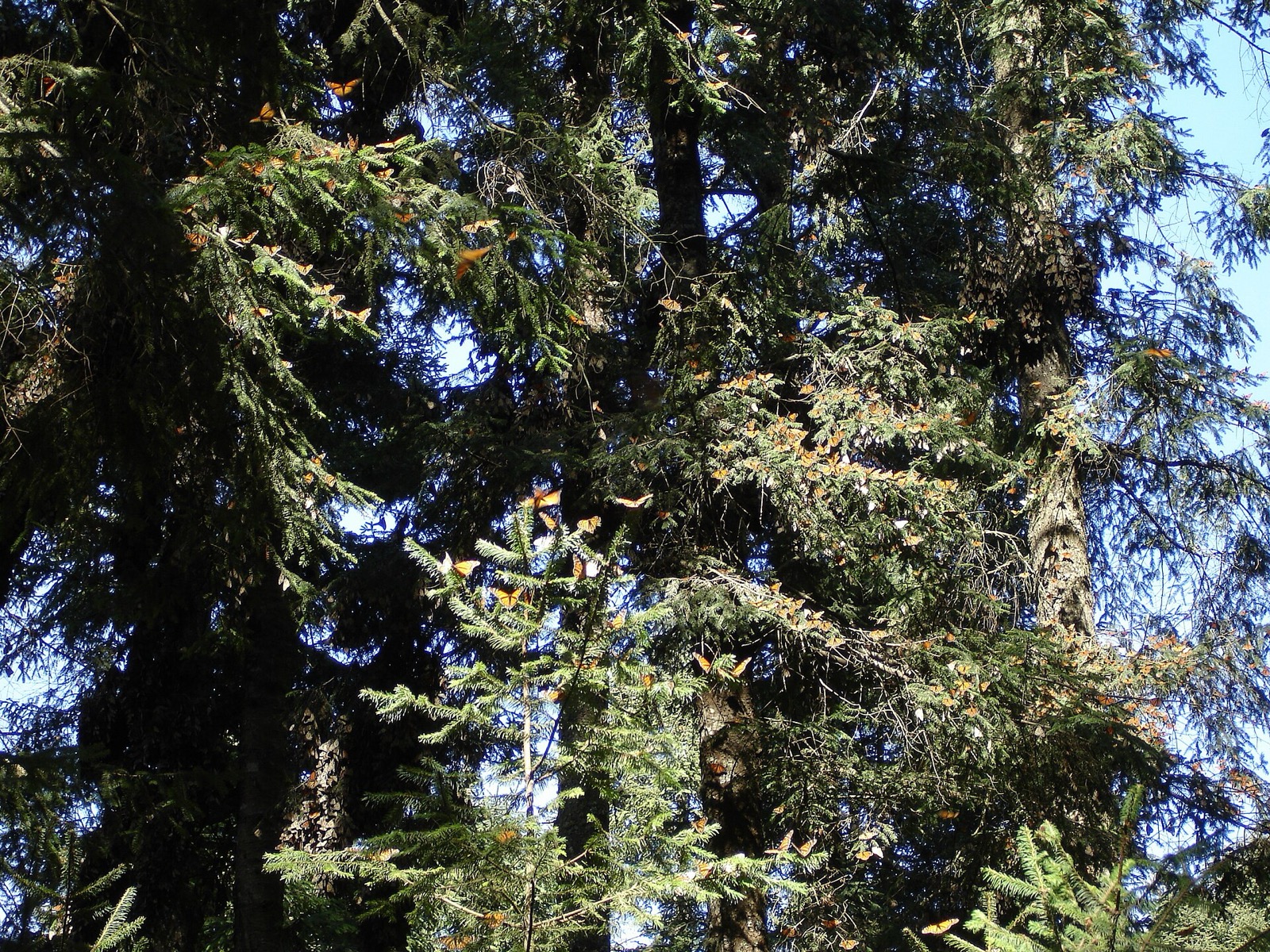
Michoacan, over more than 2,000 miles
The Rocky Mountains generally divide these two populations, limiting their contact. That is USFWS, and it is why this page tags Alabama as eastern population.
In the fall, USFWS states, monarchs “In the fall, they may fly more than 2,000 miles (3,000 km) to reach overwintering sites in Mexico.”
The generation that makes that flight is not like the ones before it. “Most breeding adult butterflies live approximately two to five weeks, but overwintering adults that enter into reproductive diapause can live six to nine months.” The monarch you see over a Alabama field in September will still be alive in March.
Northbound in spring works the other way round. “As temperatures warm at the overwintering sites in the spring, monarchs begin to breed and lay eggs on milkweed throughout their spring journey.” The butterflies that reach Alabama around May 10 are usually two or three generations removed from the ones that left.
Go and look at Journey North
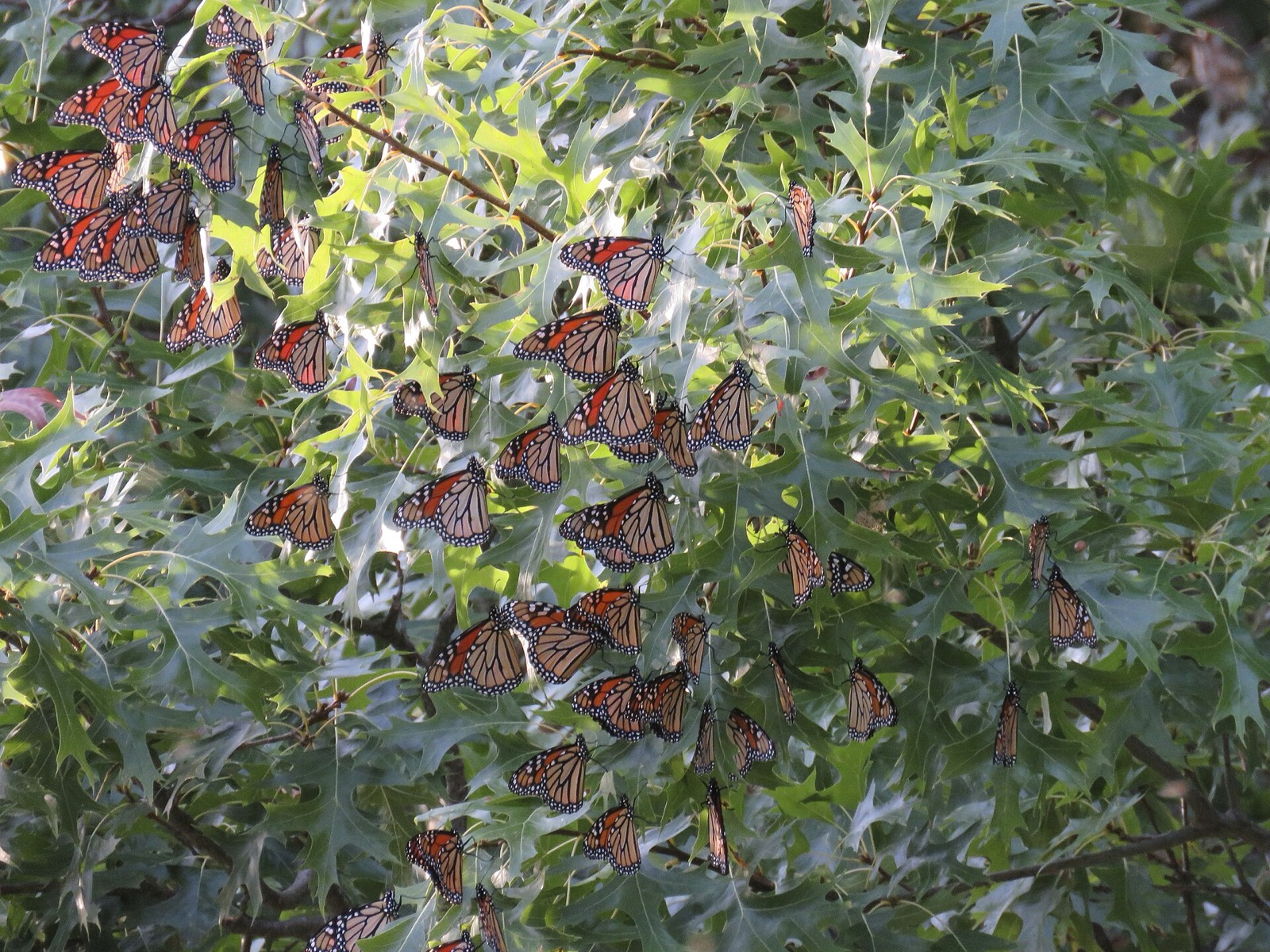
Volunteers report monarch eggs, larvae, adults and autumn roosts as they see them, and the reports are plotted on a live map. For the question of where the leading edge of the migration is this week, in this particular year, it is the best resource in North America and it has been for decades.
It is a map of what has been reported, not a statement of what to expect. It has no per-state page and no typical window, so it cannot answer "when should I expect them in Ohio" before the sightings exist. It also does not cover the planting half of the question. This site is the other half: a typical window per state, derived from the open observation record, and the milkweed and nectar answer next to it. When the season is live, go and look at their map.
The Journey North monarch map is free, run by the University of Wisconsin-Madison Arboretum, and it is where your own Alabama sighting should go.
Monarch migration in other states
Alabama monarch questions
Windows on this page are climatology derived from iNaturalist research grade observation records in Alabama, not a forecast and not a sightings map. They describe when adult monarchs have historically been recorded here, not what is flying this week. Monarch Watch’s latitude row is quoted with attribution and is their work. Journey North’s map is linked, not reproduced: their licence is NonCommercial. Federal listing status checked August 24, 2026.