
Burn Permits by State: Who Needs One and When
24 states issue a burn permit themselves, 6 leave it to your town or fire district, and 16 ask for nothing at all before you burn yard debris. Below is the answer for every state, quoted from the agency that sets it, with the season, the hours, what may go on the pile and where the day’s burn ban is posted.
Do you need a burn permit?
For burning yard debris on your own property, the country splits four ways. 24 states run a permit themselves, usually through the forestry agency or the state fire marshal, and 20 of those take the application online. 6 states adopt a rule that requires a permit and then hand the issuing to the town, the county or the fire district, which means the permit exists but the state is not the office to ask. 3 states ask you to notify someone before you light rather than to hold a permit, which is a real distinction: there is nothing to apply for and nothing to carry, but the call still has to happen.
The remaining 16 states require no permit from the state for household yard debris. That is not the same as no rules. Those states still set what may be burned, how far from a building, in what hours and under what conditions, and most of them still post a burn ban when the weather turns, which is binding whether or not a permit was ever involved.
If open burning is allowed in your community, contact your local fire department to obtain an open burning permit in advance. You will not find any links on the state website for open burning permits. You must contact your local fire department directly. Open burning permits are issued at the local level based on local conditions.Open Burning Safety, Department of Fire Services and Massachusetts Department of Environmental Protection, read September 23, 2026. Read it at the source
A state that sets the rule and delegates the issuing is the case worth being careful about, because a search usually turns up the state page and the state page cannot tell you the answer for your address. The state page here names the office that can.
A person shall not burn any brush, stumps, logs, fallen timber, fallows, slash, grass-covered land, brush-covered land, forest-covered land, or other flammable material, in any state responsibility area, area receiving fire protection by the department by contract, or upon federal lands administered by the United States Department of Agriculture or Department of the Interior, unless the person has a written permit from the department or its duly authorized representative or the authorized federal officer on federal lands administered by the United States Department of Agriculture or of the Interior and in strict accordance with the terms of the permit: (a) At any time in Zone A. (b) At any time in Zone B between May 1st and the date the director declares, by proclamation, that the hazardous fire conditions have abated for that year, or at any other time in Zone B during any year when the director has declared, by proclamation, that unusual fire hazard conditions exist in the area.Public Resources Code, Division 4, Part 2, Chapter 6, Article 2, Section 4423, California Legislative Information. Read it at the source
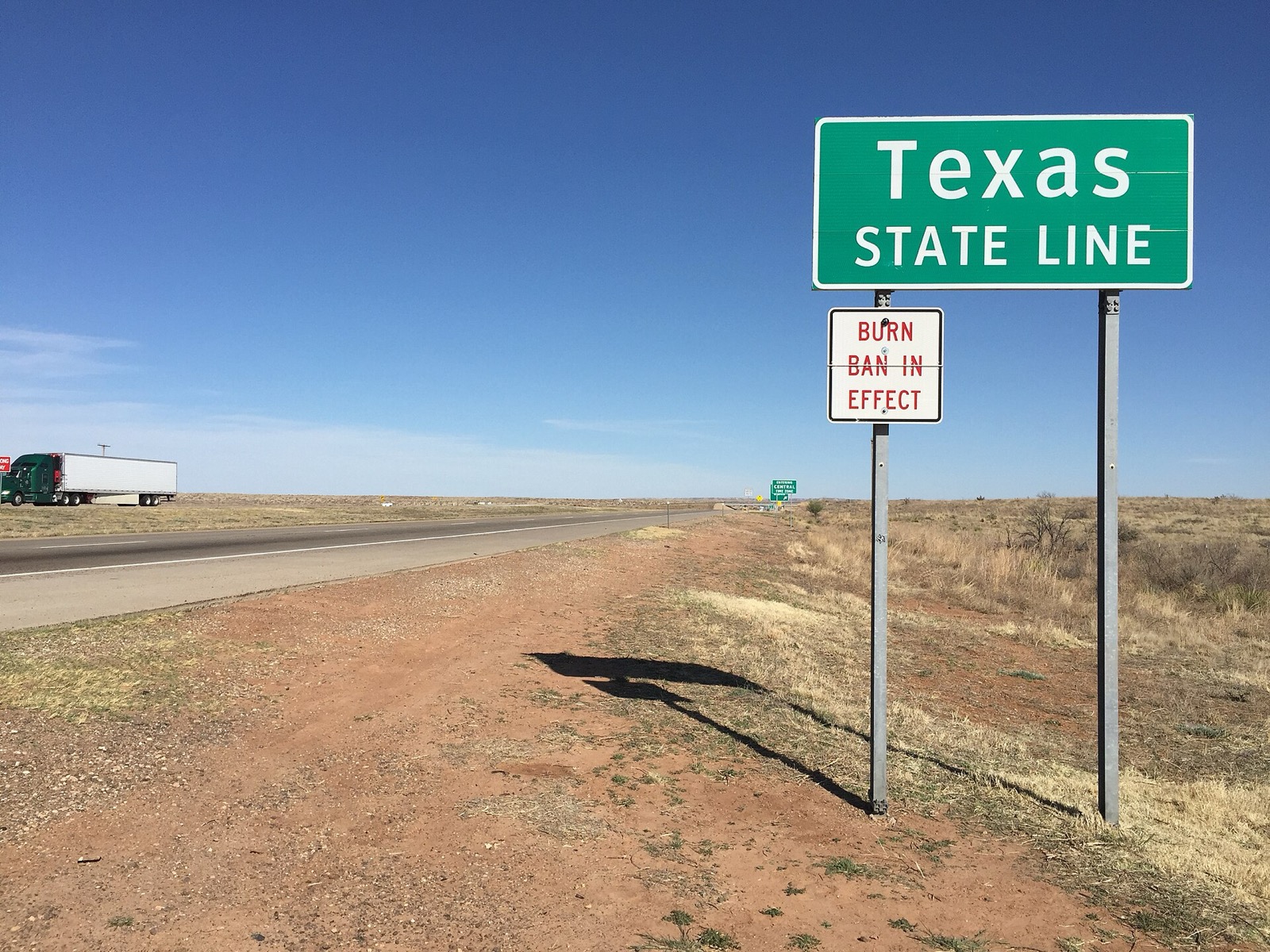
Burn permits and burning seasons, state by state
One row per state: whether the state issues a permit for yard debris, when the state closes burning, and the agency to ask. Where the season column names a shape instead of a date pair, the state’s dates do not apply statewide or do not mean what they appear to, and that state’s page carries the rule in the agency’s own words.
| State | Permit for yard debris | When the state closes burning | Who to ask |
|---|---|---|---|
| Alabama | State permit | No closed season | Alabama Forestry Commission |
| Alaska | State permit | A permit season, not a burning season | Alaska Department of Natural Resources, Division of Forestry & Fire Protection |
| Arizona | State permit | Some counties only | your county air quality department or control officer, not a single state office |
| Arkansas | No state permit | No closed season | Arkansas Department of Energy and Environment, Division of Environmental Quality |
| California | State permit | No closed season | California Department of Forestry and Fire Protection (CAL FIRE) |
| Colorado | State permit | Some counties only | Colorado Department of Public Health and Environment, Air Pollution Control Division |
| Connecticut | State permit | No closed season | Connecticut Department of Energy and Environmental Protection |
| Delaware | Notify first | May 1 to Sep 30 | Delaware Department of Natural Resources and Environmental Control, Division of Air Quality |
| Florida | No state permit | No closed season | Florida Forest Service |
| Georgia | No state permit | Some counties only | Georgia Forestry Commission |
| Hawaii | Prohibited | No end date | Hawaii State Department of Health, Clean Air Branch |
| Idaho | State permit | No closed season | Idaho Department of Lands |
| Illinois | No state permit | No closed season | Illinois Environmental Protection Agency, Bureau of Air |
| Indiana | No state permit | No closed season | Indiana Department of Environmental Management, Office of Air Quality |
| Iowa | No state permit | No closed season | Iowa Department of Natural Resources |
| Kansas | No state permit | Some counties only | Kansas Department of Health and Environment, Bureau of Air |
| Kentucky | Ask your town | Hours, not days | Kentucky Energy and Environment Cabinet, Division for Air Quality |
| Louisiana | No state permit | No closed season | Louisiana Department of Environmental Quality |
| Maine | State permit | No closed season | Maine Forest Service |
| Maryland | State permit | Some counties only | Maryland Department of the Environment |
| Massachusetts | State permit | Jan 15 to May 1 | Massachusetts Department of Fire Services and Massachusetts Department of Environmental Protection |
| Michigan | State permit | No closed season | Michigan Department of Natural Resources, Forest Resources Division |
| Minnesota | State permit | No fixed dates | Minnesota Department of Natural Resources, Division of Forestry |
| Mississippi | State permit | No closed season | Mississippi Forestry Commission |
| Missouri | No state permit | No closed season | Missouri Department of Natural Resources, Air Conservation Commission |
| Montana | State permit | No closed season | Montana Department of Environmental Quality, Air Quality Bureau |
| Nebraska | State permit | No closed season | Nebraska State Fire Marshal |
| Nevada | Ask your town | No closed season | Nevada Division of Environmental Protection, Bureau of Air Quality Planning |
| New Hampshire | State permit | No closed season | New Hampshire Division of Forests and Lands |
| New Jersey | State permit | No closed season | New Jersey Forest Fire Service |
| New Mexico | No state permit | No closed season | New Mexico Environment Department, Air Quality Bureau |
| New York | No state permit | Mar 16 to May 14 | New York State Department of Environmental Conservation |
| North Carolina | State permit | Hours, not days | N.C. Forest Service, North Carolina Department of Agriculture and Consumer Services |
| North Dakota | No state permit | No closed season | North Dakota Department of Environmental Quality, Division of Air Quality |
| Ohio | No state permit | More than one window | Ohio Environmental Protection Agency, Division of Air Pollution Control |
| Oklahoma | No state permit | No closed season | Oklahoma Department of Environmental Quality |
| Oregon | Ask your town | More than one window | Oregon Department of Environmental Quality |
| Pennsylvania | Ask your town | State forest land only | Pennsylvania Department of Conservation and Natural Resources, Bureau of Forestry |
| Rhode Island | State permit | No closed season | Rhode Island Department of Environmental Management |
| South Carolina | Notify first | No closed season | South Carolina Forestry Commission |
| South Dakota | Ask your town | No closed season | South Dakota Wildland Fire Division |
| Tennessee | State permit | A permit season, not a burning season | Tennessee Division of Forestry |
| Texas | No state permit | No closed season | Texas Commission on Environmental Quality |
| Utah | State permit | More than one window | Utah Department of Environmental Quality, Division of Air Quality |
| Vermont | State permit | No closed season | Vermont Department of Forests, Parks and Recreation |
| Virginia | Ask your town | Hours, not days | Virginia Department of Forestry |
| Washington | State permit | No closed season | Washington State Department of Natural Resources, Wildland Fire Management Division |
| West Virginia | No state permit | Hours, not days | West Virginia Division of Forestry |
| Wisconsin | State permit | No closed season | Wisconsin Department of Natural Resources |
| Wyoming | Notify first | No closed season | Wyoming Department of Environmental Quality, Air Quality Division |
Permit column answers for household yard debris only. Agricultural, forestry, land clearing and prescribed burning are separate programs in most states, often with their own permit and their own season.
The 17 states a date table gets wrong
The usual way to publish this subject is fifty rows of two dates each. For 17 states that produces a wrong answer, and the reasons are worth reading because they are not all the same reason. Some dates apply in named counties and nowhere else. Some apply on state forest land and not on private land at all. Some are hours within a day rather than a stretch of the calendar. Some mark the window in which a permit is required, which is the opposite of a window in which burning is allowed. And some states run two separate seasons in one year.
Alaska is the shape of the problem. Alaska does not close burning for part of the year, but the state only issues burn permits from April 1 through August 31, so that is the window in which a permit is both available and required.
Every state page on this site takes its season sentence from one function, and that function returns nothing at all when the shape of the rule would make a date pair misleading. Those pages print the agency’s sentence instead.
The Summer Burn Ban reduces ozone by prohibiting certain open burning activities from May 1 through September 30 in specific counties.Open Burning Rules for Georgia, Georgia Environmental Protection Division. Read it at the source
- AlaskaA permit season, not a burning season
Alaska does not close burning for part of the year, but the state only issues burn permits from April 1 through August 31, so that is the window in which a permit is both available and required.
In the Phoenix area, which the statutes call area A, open outdoor fires are unlawful from May 1 through September 30 every year. The rest of Arizona has no statutory season and is governed by its county instead.
The seven county Denver and Boulder metro area is closed to open burning from November 1 through March 31, the winter high pollution season. The rest of Colorado has no statutory season and burns on the day's conditions instead.
Most of Georgia has no state burning season and a homeowner may burn leaves and limbs any day of the year, but in the 54 counties named by the Environmental Protection Division the summer burn ban shuts leaf burning down from May 1 through September 30.
- HawaiiNo end date
There is no open burning season in Hawaii. Backyard burning of garbage and yard waste has been prohibited on every island since January 2012, and the only routine open burning the state permits is agricultural burning by a working farm.
Kansas sets no burning season for most of the state, but in sixteen named counties the state closes open burning for the whole month of April to keep Flint Hills range smoke out of the cities, with range and pasture management burns, residential burning and cooking fires exempted.
Kentucky runs two forest fire hazard seasons, Feb. 15 through Apr. 30 in spring and Oct. 1 through Dec. 15 in fall. They do not close burning outright: inside them, burning within 150 feet of woodland or brushland is legal only between 6 pm and 6 am, so a daytime brush pile near the woods is out.
Maryland sets no statewide burning window, but open burning is prohibited every summer in the central counties and Baltimore City; elsewhere burning is allowed any day of the year subject to the hours and safety rules.
- MinnesotaNo fixed dates
Minnesota closes a spring window every year in the fire prone parts of the state, but the dates are not fixed in advance: the DNR sets them on the condition of the dead grass and posts them each spring, and they lift at green up.
- North CarolinaHours, not days
North Carolina sets no seasonal open burning window; a permit is required year round for a fire in or within 500 feet of state protected woodland, and in most counties only for fires lit between midnight and 4 p.m.
- OhioMore than one window
Outside municipal limits Ohio forbids open burning between six in the morning and six at night during March, April, May, October and November, so those five months are the closed part of the year and burning happens in the evening.
Oregon names two yard debris burning seasons, a spring one from March 1 to June 15 and a fall one from Oct. 1 to Dec. 15, and a yard debris permit covers one of them or both in a calendar year.
- PennsylvaniaState forest land only
Pennsylvania sets no statewide open and close dates for burning on private land: the dates that stop you are a temporary county burn ban, a municipal ordinance, or a governor's statewide proclamation. On state forest land the state does set dates, closing fires in fire rings and fireplaces from March 1 through May 25.
- TennesseeA permit season, not a burning season
Tennessee closes no part of the year to open burning. What changes with the calendar is the permit: the Division of Forestry requires one from October 15 through May 15, and requires none in summer, though counties and cities may have their own rules any month of the year.
Utah opens two burn windows everywhere, April 1 to May 31 and September 15 to October 31, and adds a third from November 1 to March 31 in attainment areas only, and in every window the application will not open unless the clearing index is high enough that day.
From February 15 through April 30 the state closes only the daylight hours: open air burning within 300 feet of woods or dry grass is banned before 4 p.m. and allowed from 4 p.m. to midnight, and outside those dates the state sets no seasonal window at all.
West Virginia runs two forest fire seasons, March 1 through May 31 and October 1 through December 31, and during both of them outdoor burning is closed in daylight and allowed only between 5 p.m. and 7 a.m.
When the burning season actually runs
There is no national burning season, and the states that have one do not agree on which half of the year it is. 23 states close no part of the calendar at all and leave the answer entirely to the day’s conditions. 13 write dates into the rule, and those dates point in both directions: the northeast tends to open burning in late winter and shut it for the growing season, while much of the south and west shuts it for the dry months instead.
Hours matter as much as dates and are easier to miss. 26 states restrict burning to certain hours of the day, most commonly some version of after sunrise and out before sunset, or a late afternoon start so the fire burns down overnight in cooler, damper air.
11 states set no state dates whatsoever, which means the calendar for your address is written by your town, county or fire district and nowhere else.
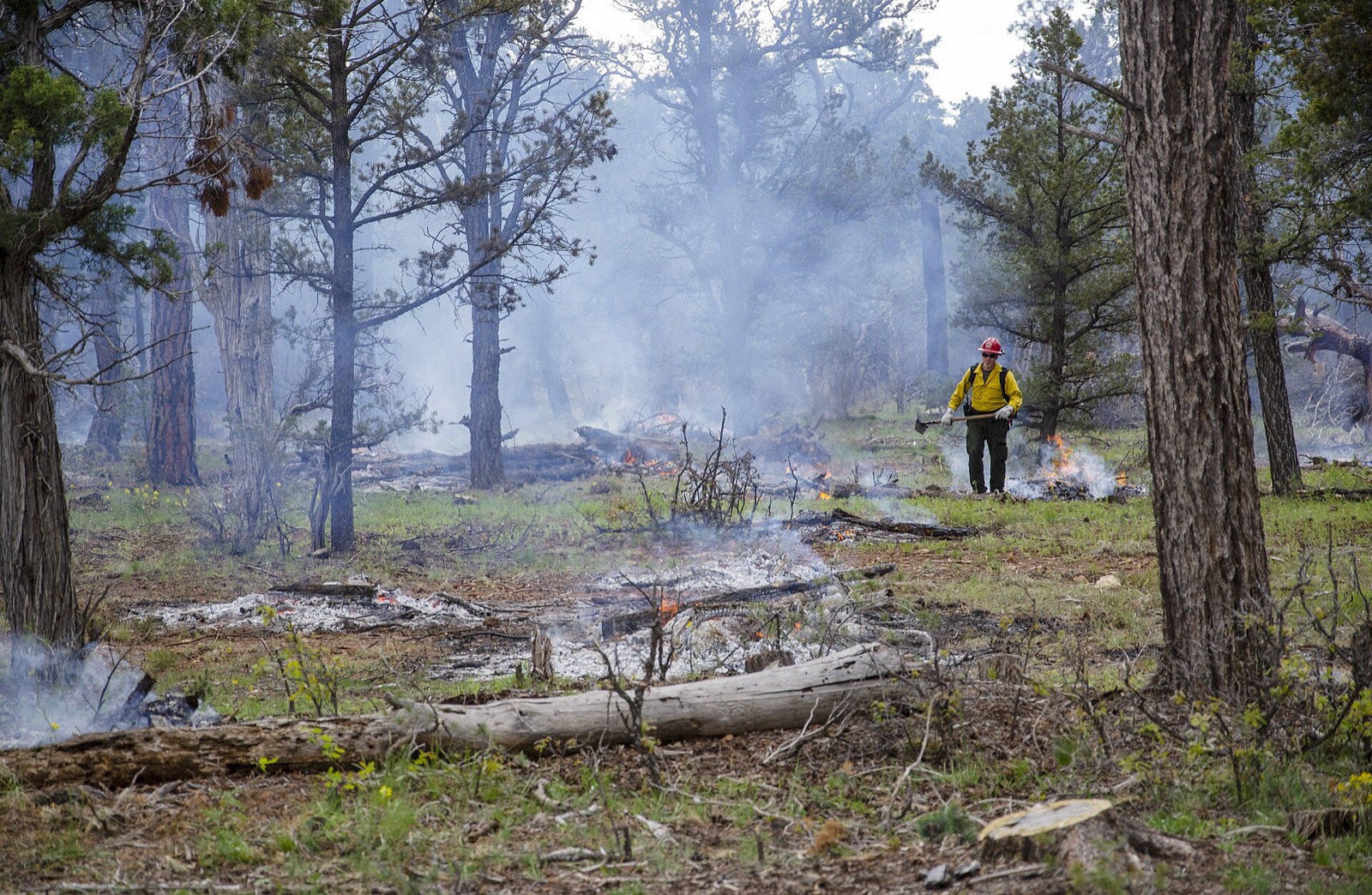
What states agree may never go on the pile
The permitted material list is close to identical from state to state, and so is the prohibited one. Counting across all 50 records, the items below are what the most states name as off the pile.
- tires18 states
- plastics9 states
- furniture7 states
- plastic7 states
- rubber7 states
- garbage6 states
- Asphalt shingles4 states
- heavy oils4 states
- Railroad ties4 states
- asbestos3 states
Leaves are the interesting entry, because they are what most people actually want to burn and several states name them specifically. The reasoning is the same everywhere: a damp, packed pile smoulders rather than burns, and the smoke is the thing the air quality rule is written about.
You may not burn: Leaves Brush, trees, cane or driftwood from commercial or industrial land clearing Grass, hay, leaves, stumps or tires Construction materials or demolition debris Household trashOpen Burning Safety, Department of Fire Services and Massachusetts Department of Environmental Protection. Read it at the source
What a burn permit costs
Most states that issue a burn permit do not charge for it. Of the 24 that issue one, 7 say in so many words that it is free, and 5 name a dollar figure. The states below are the ones that publish a price.
| State | What the permit costs | Who charges it |
|---|---|---|
| Colorado | Free | Colorado Department of Public Health and Environment, Air Pollution Control Division |
| Idaho | Free | Idaho Department of Lands |
| Illinois | Free | Illinois Environmental Protection Agency, Bureau of Air |
| Maine | Free | Maine Forest Service |
| New Jersey | Free | New Jersey Forest Fire Service |
| North Carolina | Free | N.C. Forest Service, North Carolina Department of Agriculture and Consumer Services |
| Wisconsin | Free | Wisconsin Department of Natural Resources |
| Minnesota | $5 | Minnesota Department of Natural Resources, Division of Forestry |
| New Hampshire | $5.50 | New Hampshire Division of Forests and Lands |
| Nebraska | Up to $10, and only if the local fire department chooses to charge | Nebraska State Fire Marshal |
| Washington | $105.50 for a permit covering under 100 tons of consumable debris, rising with tonnage | Washington State Department of Natural Resources, Wildland Fire Management Division |
| West Virginia | $125 each, for commercial, manufacturing, mining, public utility and like activities only | West Virginia Division of Forestry |
Where a state delegates issuing to a town or fire district, the fee is set locally and is not on this list even when one is charged.
The check that matters more than the permit
A permit says you may burn in general. What says you may burn today is a separate thing, and 43 states publish it: a fire danger rating, a county burn ban map, an air quality forecast, a burn day or no burn day call, or a recorded hotline. It changes daily, it is issued on a wind and humidity forecast, and it overrides a permit already in hand.
FFS County-Enacted Burn Ban Map : This map reflects the county-enacted burn bans as reported to the Florida Forest Service. Local burn bans are enacted by county governments.Florida Forest Service. Read it at the source
Every state page below links that state’s own check, so the question the morning of is one page rather than a search.
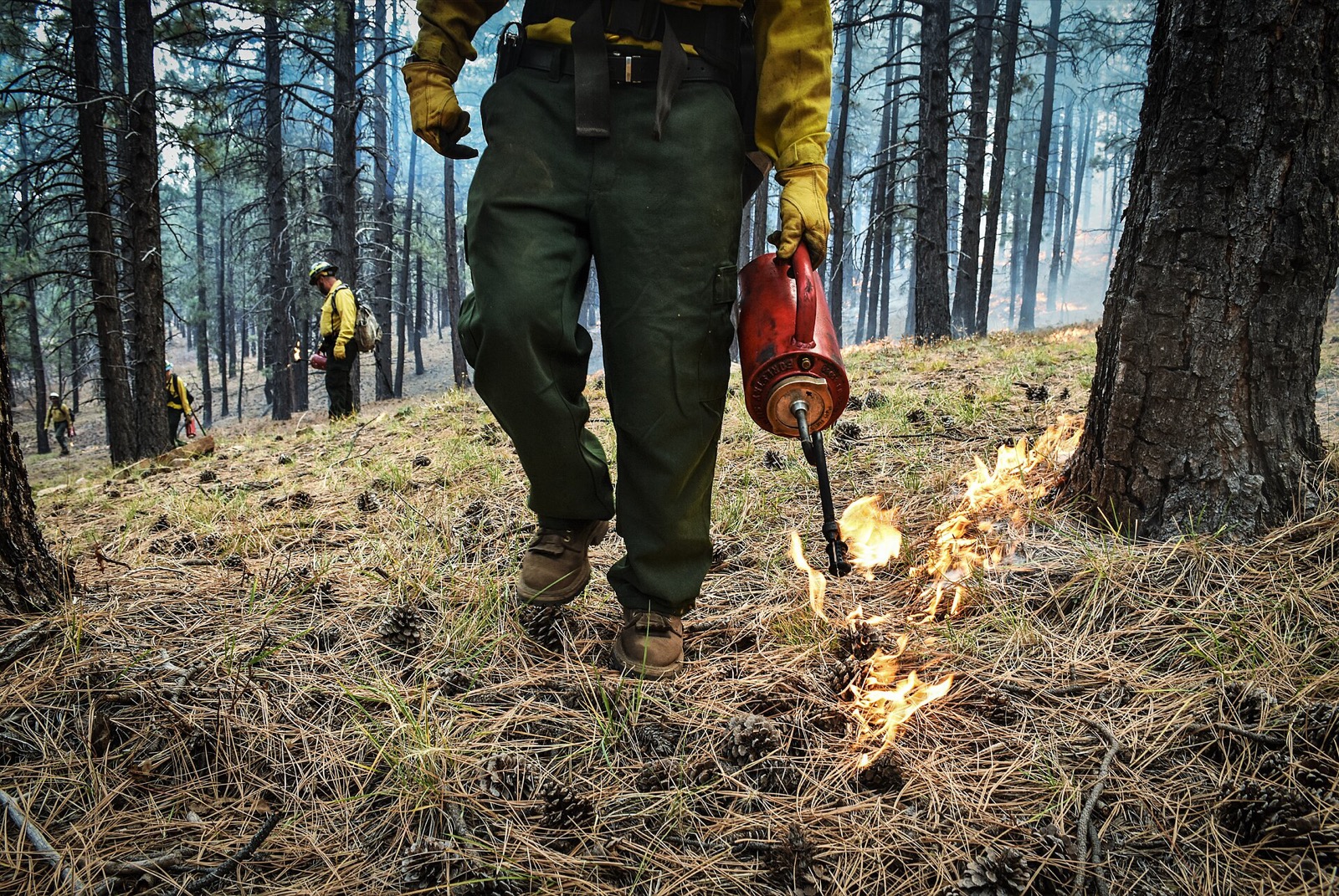
Burn permit rules, state by state
Each state page has the permit answer and the agency that issues it, the season in the state’s own words, the hours, what may and may not be burned, the setbacks and wind limits the state writes, and the daily check to read before you light.
Rules read September 23, 2026 from each state’s own agency, with the page and the date on every state page. Rules change, a county or town may be stricter than the state, and a burn ban issued today overrides a season that is otherwise open. Start with your state in the table above.