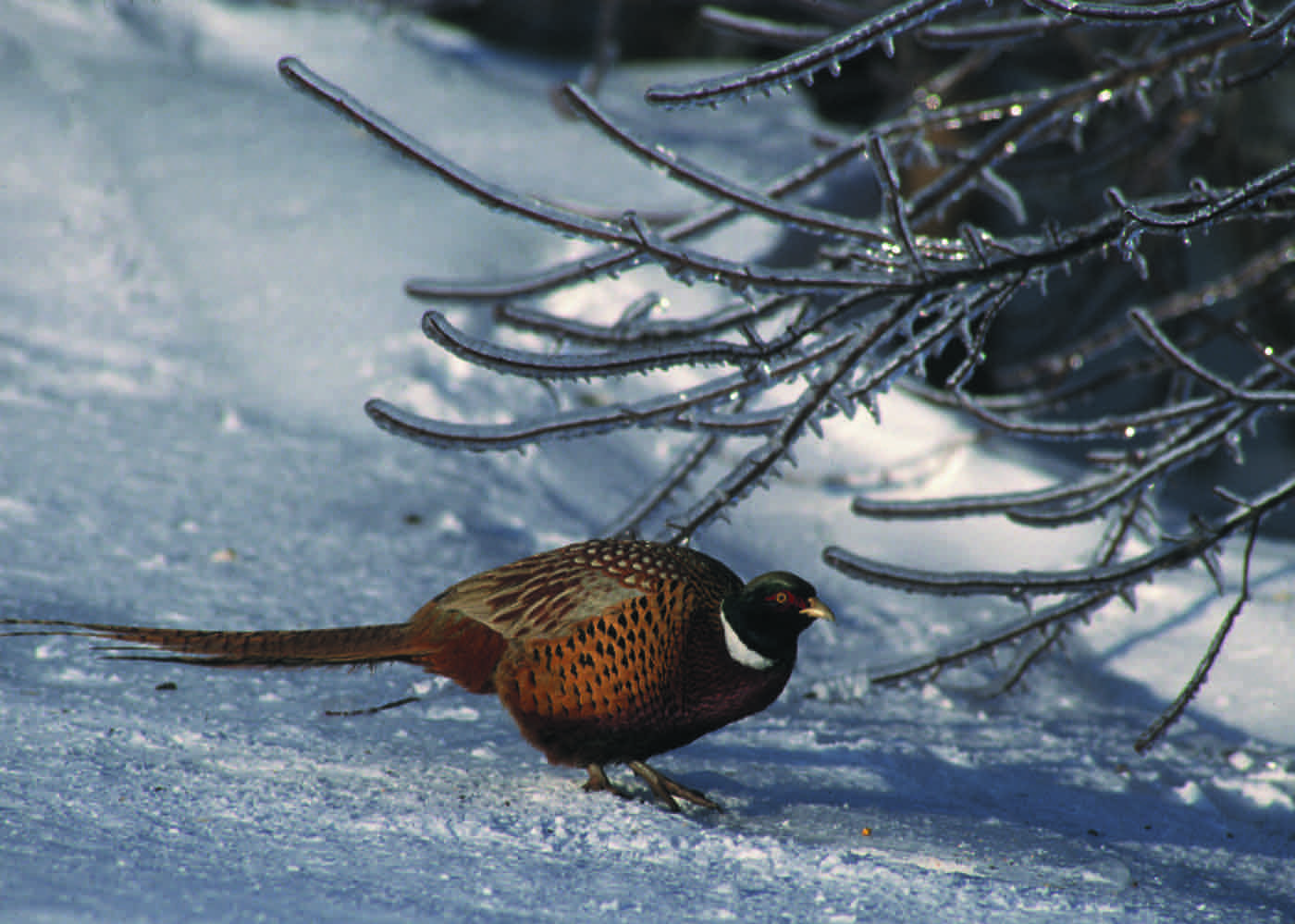
Pheasant Season 2026: Opening Day in Every State
Every state’s pheasant season on one calendar, this fall’s bird outlook in each agency’s own words, and the walk-in land open to anyone with a license. Every date was read from the state agency on October 8, 2026.
Pheasant season opening day by state
Counting each state’s general season, North Carolina opens first, on September 5, and New Mexico opens last, on December 10. 16 states open in October and 17 in November, and half of the 40 states with a general season are open by November 1. Arizona holds only limited pheasant hunts, such as a single unit or a falconry or archery season; its page lists them. 21 states hold a youth season, 20 of them ahead of the general opener, shown here as the lighter marks on each bar.
- North CarolinaSep 5Season across most of the state, Sep 5 to Feb 28; Season on the barrier islands, Nov 21 to Feb 28
- WashingtonSep 19Season in Western Washington, Sep 19 to Nov 30; Season in Eastern Washington, Oct 17 to Jan 18; Youth, Sep 12 to 13
- MaineSep 26Season, Sep 26 to Dec 31
- VermontSep 26Season, Sep 26 to Dec 31
- New HampshireOct 1Season, Oct 1 to Dec 31; Youth, Sep 26 to 27
- New YorkOct 1Season in northern and eastern New York, Oct 1 to Feb 28; Season in western New York, Oct 17 to Feb 28; Season on Long Island, Nov 1 to Dec 31; Youth in northern and eastern New York, Sep 26 to 27; Youth in western New York, Oct 10 to 11; Youth on Long Island, Oct 24 to 25
- MichiganOct 10Season in the Upper Peninsula, Oct 10 to 31; Season in the Lower Peninsula, Oct 20 to Nov 14; Season in the southern Lower Peninsula, Dec 1 to Jan 1
- MinnesotaOct 10Season, Oct 10 to Jan 3
- MontanaOct 10Season for residents, Oct 10 to Jan 1; Season for nonresident 3-day license holders on private land, Oct 17 to Jan 1; Season for nonresidents on public and access program land, Oct 20 to Jan 1; Youth, Sep 19 to 20
- North DakotaOct 10Season, Oct 10 to Jan 3; Youth, Oct 3 to 4
- OregonOct 10Season, Oct 10 to Dec 31; Youth, Sep 12, 13, 19, 20, 26, 27 and Oct 24
- IdahoOct 15Season for residents, Oct 15 to Dec 31; Season for nonresidents, Oct 20 to Dec 31; Youth, Oct 8 to 14
- ConnecticutOct 17Season, Oct 17 to Dec 31; Youth, Oct 10
- MassachusettsOct 17Season, Oct 17 to Dec 31; Youth, Sep 5, 12, 19, Oct 3 and 10
- Rhode IslandOct 17Season, Oct 17 to Feb 28; Youth, Oct 10 to 12
- South DakotaOct 17Season, Oct 17 to Jan 31; Resident only, Oct 10 to 12; Youth, Sep 26 to Oct 4
- WisconsinOct 17Season, Oct 17 to Jan 3
- PennsylvaniaOct 24Season, Oct 24 to Dec 24; Season, Dec 26 to Feb 28; Youth, Oct 10 to 18
- IowaOct 31Season, Oct 31 to Jan 10; Youth, Oct 24 to 25
- NebraskaOct 31Season, Oct 31 to Jan 31; Youth, Oct 24 to 25
- IndianaNov 1Season, Nov 1 to Dec 15
- MissouriNov 1Season, Nov 1 to Jan 15; Youth, Oct 24 to 25
- NevadaNov 1Season, Nov 1 to 30; Youth, Nov 6 to 7
- WyomingNov 1Season, Nov 1 to Dec 31; Youth, Nov 13 to 15; Youth, Nov 14
- OhioNov 6Season, Nov 6 to Jan 10; Youth, Oct 24 to 25; Youth, Oct 31 to Nov 1
- HawaiiNov 7Season, Nov 7 to Jan 31
- IllinoisNov 7Season in the North Zone, Nov 7 to Jan 8; Season in the South Zone, Nov 7 to Jan 15
- MarylandNov 7Season, Nov 7 to Feb 28
- New JerseyNov 7Season, Nov 7 to Feb 15; Youth, Oct 31; Youth, Nov 2 to 6
- UtahNov 7Season, Nov 7 to Dec 6; Youth, Oct 31 to Nov 5
- VirginiaNov 7Season, Nov 7 to Jan 31
- West VirginiaNov 7Season, Nov 7 to Jan 2
- CaliforniaNov 14Season, Nov 14 to Dec 27
- ColoradoNov 14Season east of I-25, Nov 14 to Jan 31; Season west of I-25, Nov 14 to Jan 3
- KansasNov 14Season, Nov 14 to Jan 31; Youth, Nov 7 to 8
- LouisianaNov 21Season, Nov 21 to Feb 28
- DelawareNov 23Season, Nov 23 to Feb 28
- OklahomaDec 1Season, Dec 1 to Jan 31
- TexasDec 5Season, Dec 5 to Jan 3
- New MexicoDec 10Season, Dec 10 to 13; Youth, Oct 17 to Dec 5
- ArizonaLimited hunts onlyUnit 40B shotgun hunt near Yuma, Sep 1 to 15; Falconry season, Sep 7 to Feb 7; Archery season, Oct 16 to Feb 7
The 2026 pheasant outlook, state by state
Each agency runs its own count in summer: an August roadside survey in Iowa and Minnesota, a brood survey in North Dakota, rural mail carriers counting birds along their routes in Nebraska. The change column is the agency’s own figure against its own last year, and the words beside it are the agency’s. For Colorado, Illinois, Ohio and Oklahoma, the latest outlook is from 2025, and the table says so.
| State | Change | The agency’s word |
|---|---|---|
| Arizona | In words2026 outlook | “Hunters may find an occasional pheasant in the far southwestern corner of Arizona, but numbers have not been high for several years with clean farming practices being enforced on agricultural activities in the area.” Source |
| Colorado | Up 51%2025 outlook | “Pheasant populations across the eastern plains of Colorado will range from slightly better to significantly better than 2024, depending on local conditions.” SourceThe change, as the agency gives it: up from 20.6 in 2024, a 51% increase |
| Illinois | Down 6.9%released October 3, 2025 | “During 2025, observers recorded an average of 0.5 pheasants per stop (a 6.9% decrease from 2024).” Source |
| Iowa | Down 17%released September 1, 2026 | “The Iowa Department of Natural Resources annual August statewide pheasant survey averaged 23 birds per route this year, which is the second highest count in more than a decade, behind only the 2025 survey.” SourceThe change, as the agency gives it: significant decrease over last year's estimate of 27.4 birds/route on comparable routes (-17%) |
| Kansas | Down2026 outlook | “Pheasant densities decreased across all regions this year as there was heavy rain during peak hatch across most of the primary range limiting production.” Source |
| Minnesota | Up nearly 20%released September 8, 2026 | “The 2026 survey-wide total pheasant index (89.9 birds/100 mi) was nearly 20% greater than in 2025 (75.2 birds/100 mi).” Source |
| Missouri | Down 8%2026 outlook | “The 2026 statewide count of 0.23 pheasants per 30-mile route was down 8% compared to 2025.” Source |
| Montana | In wordsreleased August 31, 2026 | “This has been a difficult year to put together an outlook for upland bird hunting, but habitat conditions have biologists optimistic that bird numbers will be up from 2025.” Source |
| Nebraska | Up 36%released August 21, 2026 | “Statewide spring pheasant counts increased 11% from 2025 and saw increases in five of six pheasant management regions. Statewide counts also increased 36% during the summer compared to 2025.” Source |
| North Dakota | Up 3.8%released September 8, 2026 | “Total pheasants observed (80 per 100 miles) are up 3.8% from last year.” Source |
| Ohio | Similarreleased October 2025 | “In 2025, there were a total of 88 male pheasants detected at 342 route stops, for an index of 0.26 pheasants/stop. The annual population index was similar to 2024” Source |
| Oklahoma | In wordsreleased November 12, 2025 | “2025 pheasant numbers trending up; yet below long-term averages” Source |
| Oregon | In wordsreleased September 11, 2026 | “Pheasant populations are up in eastern Oregon, which seems to be driven by good returns in the Mid-Columbia, Malheur, and Union districts.” Source |
| South Dakota | Similar2026 outlook | “The 2026 pheasant hunting outlook is expected to be much like last year with good production and favorable habitat conditions.” Source |
| Washington | In words2026 outlook | “Overall, wild pheasant numbers are likely to be below average this coming hunting season, but with continued WDFW pheasant releases supporting a put-and-take hunt of pheasants, we don’t expect to see harvest rates dip much compared to last year.” Source |
| Wisconsin | Downreleased June 24, 2026 | “The DNR reported the 2026 average pheasant observations at 0.73 pheasants per stop, a decrease from 2025 at 0.81 pheasants per stop.” Source |
Walk-in hunting and public access land
22 states lease private land for public hunting or publish an atlas of every acre open to it. The most land, by the acreage each agency prints: Idaho (over three million acres), Oregon (over 2.6 million acres), Kansas (almost 1.7 million acres) and South Dakota (over 1.4 million acres). Each program name links to its atlas where the agency has one. The signs, the dates and the rules for each are on the state page.
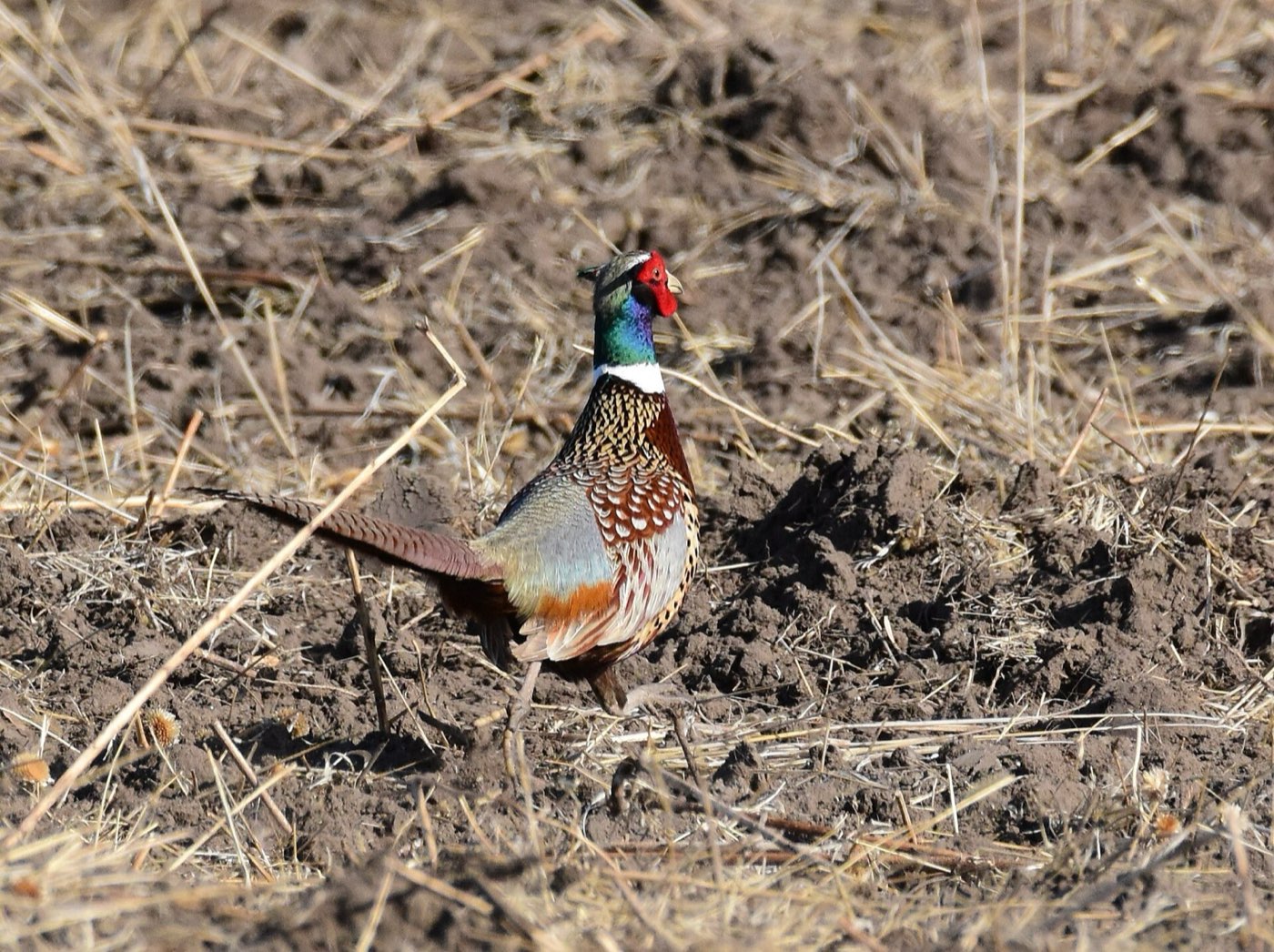
States that stock pheasants on public land
Where wild birds are few, agencies raise pheasants on game farms and release them on public land ahead of the season or through it. 21 states publish a release program. Counts are as each agency prints them; a count from an earlier year carries its year. Maine, Maryland, Massachusetts, North Carolina, Pennsylvania, Rhode Island and Virginia write a bag that counts hens as well as roosters.
| State | Birds released | Where |
|---|---|---|
| California | Release sites and counts on the agency page | |
| Connecticut | Release sites and counts on the agency page | |
| Idaho | nearly 29,000 pheasants (2026) | 24 locations where pheasants are stocked, with 2-5 locations in each region |
| Illinois | Agency page | 11 IDNR controlled pheasant hunting areas listed for 2026-27 (Des Plaines, Eldon Hazlet, Green River, Iroquois County, Jim Edgar Panther Creek, Johnson Sauk Trail, Kankakee River, Moraine View, Sand Ridge, Silver Springs, Wayne Fitzgerrell) |
| Indiana | Agency page | Atterbury, Glendale, J. E. Roush Lake, Pigeon River, Tri-County and Winamac FWAs |
| Maine | about 2000 pheasants | +/- 20 sites in York and Cumberland Counties |
| Maryland | Agency page | public lands across the state |
| Massachusetts | about 40,000 ring-necked pheasants statewide | public and private lands open to hunting |
| Michigan | Agency page | 13 state game/wildlife areas throughout southern Michigan (Cass City, Cornish, Crane Pond, Crow Island, Dansville, Erie, Lapeer, Leidy Lake, Townline 16, Pte. Mouille, Rose Lake, Stanton, St. Johns Marsh) |
| Nebraska | approximately 14,780 (2025) | 19 public areas |
| New Hampshire | approximately 9,500 pheasants | 60+ sites around the state |
| New Jersey | 52,070 | Assunpink, Berkshire Valley, Black River, Clinton, Colliers Mills, Dix, Flatbrook, Glassboro, Greenwood Forest, Howardsville, Heislerville, Mad Horse, Manahawkin, Manasquan River, Medford, Millville (Bevan), Nantuxent, Peaslee, Pequest, Port Republic, Rockport, Stafford Forge, Tuckahoe (MacNamara), Walpack, Whittingham and Winslow |
| New York | approximately 50,000 adult pheasants | over 100 sites open to public pheasant hunting |
| Ohio | Agency page | Charlemont Metro Park (Lorain County) and the following wildlife areas: Appalachian Hills, Berlin, Caesar Creek, Camp Belden, Darke, Delaware, Fallsville, Grand River, Highlandtown, Indian Creek, Oxbow Lake, Resthaven, Rush Run, Spencer, Spring Valley, Tiffin River, Tri-Valley, West Branch, Wyandot, and Zepernick |
| Oregon | Agency page | Western Oregon fee hunts at Denman, E.E. Wilson, Fern Ridge and Sauvie Island WAs; youth hunts at the wildlife areas listed for each date |
| Pennsylvania | 231,980 (2026) | Agency page |
| Rhode Island | Agency page | Arcadia, Black Hut, Big River, Buck Hill, Carolina, Durfee Hill, Eight Rod Farm, Great Swamp, Nicholas Farm, Sapowet Marsh, and Simmons Mill Pond |
| Utah | approximately 12,000 rooster pheasants | WMAs, Walk-in Access properties and other public lands, shown on the pheasant release map; more near larger cities |
| Washington | thousands of pheasants (Western Washington); approximately 3,500 pheasants released in Region 1 | Agency page |
| Wisconsin | 65,000 birds | 82 state-owned properties |
| Wyoming | Agency page | Sand Mesa, Ocean Lake, Yellowtail, Springer/Bump Sullivan, Table Mountain and North Glendo WHMAs, Muddy Bay and Airport Bay Public Access Areas, Bud Love WHMA, Buffalo Run State Land, Fort Phil Kearny HMA, three Johnson and Sheridan County Walk-In Areas, Ulm/Dutch Creek State Land and Welch BLM |
Pheasant season questions
Upland seasons in nine more states
Alabama, Alaska, Arkansas, Florida, Georgia, Kentucky, Mississippi, South Carolina and Tennessee set their upland seasons for native birds and small game. Each one’s quail, grouse, rabbit and squirrel dates are on its small game page.
Pheasant season by state
Every state read October 8, 2026 from its wildlife agency’s regulations, season announcement and outlook, each linked on the state’s page. An agency can move a date or close an area between the printed regulations and opening day, so the agency page linked on each state’s page is the one that governs.