Foraging Calendar 2026: What Is In Season, State by State
Morels are the six weeks everyone knows about. The year has rather more in it than that. These are the windows when each wild edible has actually been recorded in your state, corrected for how many people were outdoors, with the land access rules and the toxic lookalikes named.
What is in season in October
These are the species whose peak month falls in October somewhere in the states covered here. A species can be in season in Alabama and two months away in Minnesota, so treat this as the national shape and go to your own state for dates.
Chanterelle
CantharellusIn season nowBlack trumpet
CraterellusIn season nowHedgehog mushroom
HydnumIn season nowChicken of the woods
LaetiporusIn season nowWild grape
VitisIn season nowBlack walnut
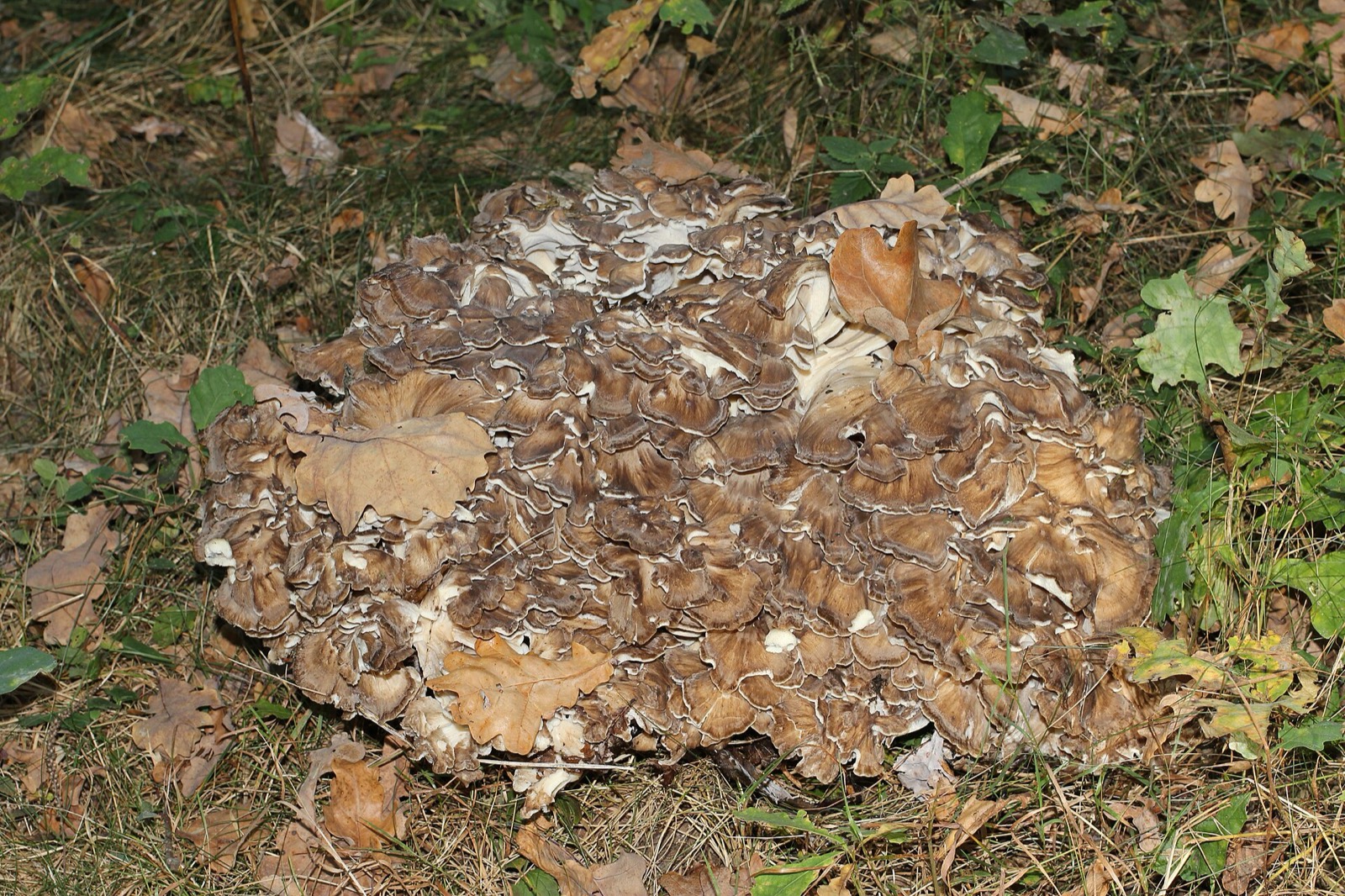
Juglans nigraIn season nowHen of the woods
Grifola frondosaIn season nowAmerican persimmon
Diospyros virginianaIn season nowGiant puffball
Calvatia giganteaIn season nowPorcini
Boletus edulisIn season nowLion's mane
Hericium erinaceusIn season nowOyster mushroom
PleurotusIn season nowMatsutake
Tricholoma section MatsutakeIn season nowThe foraging year, in the order it arrives
This is the case for a calendar rather than a morel page. Each row below is one species, ordered by the month it typically peaks, with the range of peak months it takes across the states covered here. The windows genuinely separate: this is not one season with fourteen names on it.
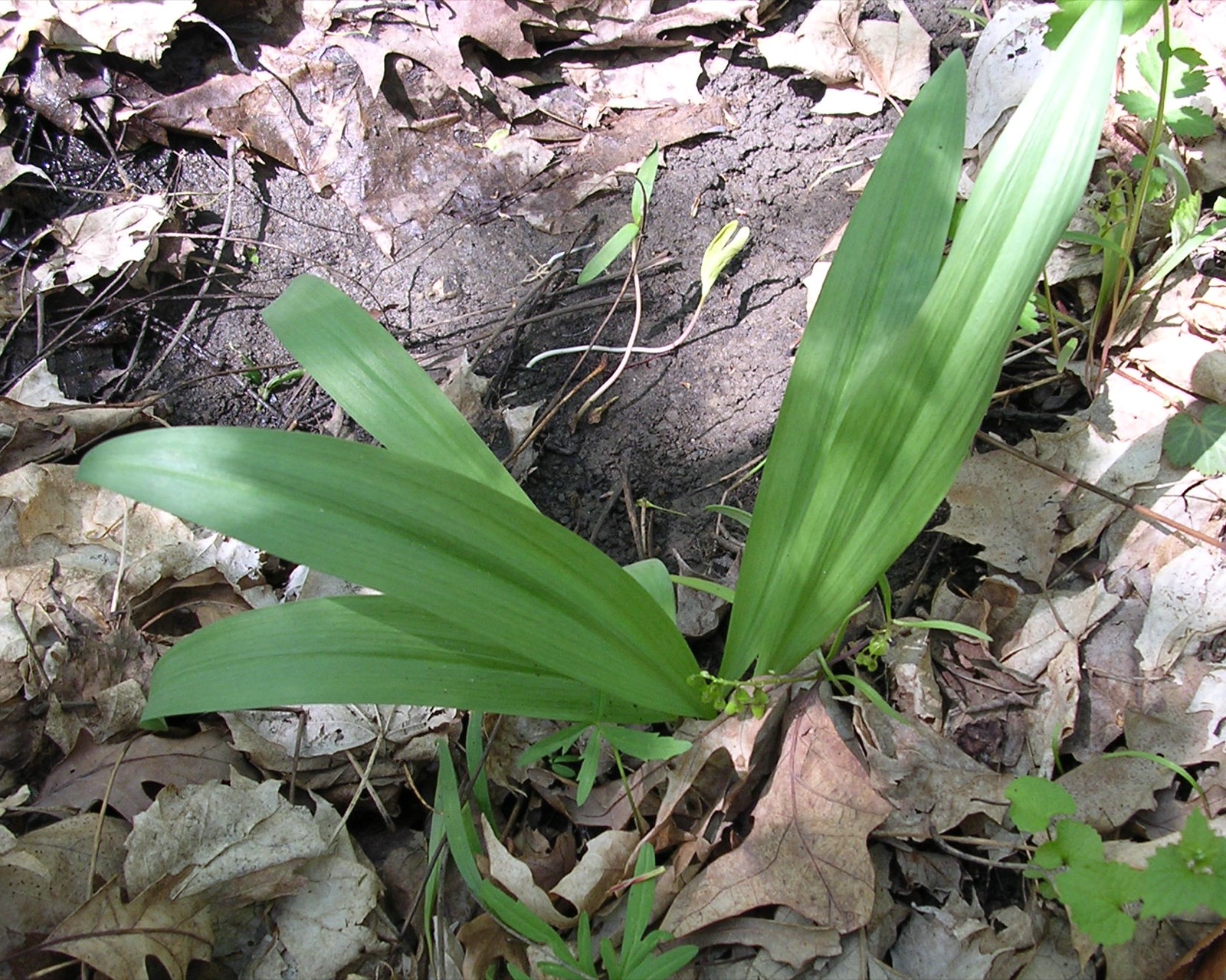
Morel
MorchellaFungusTypically peaks in April
Ramps
Allium tricoccumPlant, leafTypically peaks in April
Black raspberry
Rubus occidentalisPlant, fruitTypically peaks in June
Chanterelle
CantharellusFungusTypically peaks in July
Wild blackberry
Rubus subgenus RubusPlant, fruitTypically peaks in July
Lowbush blueberry
Vaccinium angustifoliumPlant, fruitTypically peaks in July
Black trumpet
CraterellusFungusTypically peaks in August
American elderberry
Sambucus canadensisPlant, fruitTypically peaks in August
Pawpaw
Asimina trilobaPlant, fruitTypically peaks in August
Hedgehog mushroom
HydnumFungusTypically peaks in August
Chicken of the woods
LaetiporusFungusTypically peaks in September
Wild grape
VitisPlant, fruitTypically peaks in September
Black walnut
Juglans nigraPlant, fruitTypically peaks in October
Hen of the woods
Grifola frondosaFungusTypically peaks in October
American persimmon
Diospyros virginianaPlant, fruitTypically peaks in October
Giant puffball
Calvatia giganteaFungusTypically peaks in October
Porcini
Boletus edulisFungusTypically peaks in October
Lion's mane
Hericium erinaceusFungusTypically peaks in November
Oyster mushroom
PleurotusFungusTypically peaks in December
Matsutake
Tricholoma section MatsutakeFungusTypically peaks in December
Before you eat anything
This site publishes timing, not identification. It tells you when a species has historically been recorded in your state. It cannot tell you what you are holding, and nothing on it should be treated as permission to eat a wild mushroom.
CDC reports that approximately 7,500 poisonous mushroom ingestions were reported annually to poison control centers across the United States. Source.
This is not a theoretical caution. During November 2025 to March 2026, the California Poison Control System and California Department of Public Health responded to an outbreak of 39 cases of amatoxin mushroom poisoning in northern California, resulting in three liver transplantations and four deaths. This is the largest reported outbreak of mushroom-associated hepatotoxic poisoning in California history and the largest in the United States in several decades. Amatoxins are not denatured by cooking or other methods of food preparation. CDC, Morbidity and Mortality Weekly Report, May 28, 2026.
- “The public should be aware that poisonous mushrooms might resemble nonpoisonous mushrooms, cooking mushrooms does not remove or inactivate toxins, and that wild mushrooms should never be consumed unless they are identified by an expert.” CDC, Morbidity and Mortality Weekly Report, accidental poisonous mushroom ingestions, United States 2016 to 2018
- “Poisonous mushrooms often resemble and are difficult to distinguish visually from nonpoisonous, edible mushrooms.” CDC, Morbidity and Mortality Weekly Report, Amanita species mushroom poisonings, northern California, November 2025 to March 2026
- “Even people with years of experience picking wild mushrooms can sometimes mistake these toxic mushrooms for safe ones.” California Department of Public Health
- “Only an expert can differentiate between poisonous and edible mushrooms.” Penn State Extension
Where to take a question instead
- North American Mycological Association: Volunteer identification consultants, listed by state. NAMA keeps a state by state list of volunteers who will help identify a mushroom when a poisoning is suspected. It is a free service. This is the single most useful link on this page.
- Report a mushroom poisoning. “It is important to file a report, even if the outcome was only a gastrointestinal upset. NAMA tracks ALL mushroom poisonings.”
- Poison Control, 1-800-222-1222. One number covers the whole United States, around the clock. There is also an online triage tool. Both are free and confidential. poison.org
Where you may legally gather, by who owns the land
The rule is set by the land manager, not by the species and not by the state line. Enforcement actions on record trace to a land manager’s own rule rather than to a rare plant listing. So the question to ask first is not “is this plant protected” but “whose land am I standing on”.
National Park Service land
Prohibited by default, then re-permitted park by park. This includes national monuments, seashores, recreation areas and parkways, not only the parks with "National Park" in the name.
“Except as otherwise provided in this chapter, the following is prohibited: Possessing, destroying, injuring, defacing, removing, digging, or disturbing from its natural state: Plants or the parts or products thereof.”
“The superintendent may designate certain fruits, berries, nuts, or unoccupied seashells which may be gathered by hand for personal use or consumption upon a written determination that the gathering or consumption will not adversely affect park wildlife, the reproductive potential of a plant species, or otherwise adversely affect park resources.”
36 CFR 2.1(c)(1)
The answer is neither "banned everywhere" nor "go ahead". It is: read that specific park unit's Superintendent's Compendium, because the designated list and the quantities differ from park to park. Great Smoky Mountains publishes a list of 17 named fruits and nuts plus edible mushrooms at one pound per person per day. New River Gorge allows one gallon of berries, three gallons of tree fruit and a gallon and a half of mushrooms. Grand Teton allows berries and nuts but no mushrooms at all.
- Great Smoky Mountains National Park: A named list of fruits and nuts, plus edible mushrooms at 1 pound per person per day for all fungal species combined, gathered at least 100 feet from roads and facilities. Ramps are separately prohibited: "The collection of ramps is not allowed under 36 CFR or 54 USC."
- New River Gorge National Park and Preserve: Berries 1 gallon per person per day, tree fruit and nuts 3 gallons, any edible mushroom 1.5 gallons. Ramp harvesting ended January 1, 2022 because the whole plant is taken rather than a fruit.
National forests (USDA Forest Service)
Generally the most permissive federal land, but there is no national number. The threshold below which you need no permit is set regionally, which is exactly why neighbouring forests publish different limits.
“No permit is required for the free use of a special forest product at or below that product's incidental-use harvest level, which shall be determined at the discretion of the regional forester or a subordinate officer. The incidental use harvest level covers small amounts of special forest products, such as cones, mushrooms, berries, acorns, black walnuts, or medicinal roots.”
“Selling or exchanging any timber or other forest product obtained under free use pursuant to sections 223.5 through 223.11.”
36 CFR 261.6(f), listing what is prohibited
Three adjacent Appalachian national forests give three different answers about the same plant. Monongahela in West Virginia asks for no permit at all for "a reasonable amount of edible material (mushrooms, ramps, etc.) for your own consumption". Cherokee in Tennessee requires a permit for ramps and caps personal use at 40 ramps a year. Chattahoochee-Oconee in Georgia requires a permit with a $20 minimum charge. Check the individual forest, every time.
- Monongahela National Forest, West Virginia: No pass or permit needed "when you are gathering a reasonable amount of edible material (mushrooms, ramps, etc.) for your own consumption".
- Cherokee National Forest, Tennessee: Ramps require a permit. Personal use is free but capped: one permit per person per year, 40 ramps per permit, 200 permits per zone per year, valid 15 days.
- Colville National Forest, Washington: No permit or fee to harvest up to 3 gallons of mushrooms per day. Resale is prohibited.
State parks and state forests
The most variable tier, and the one where a single line per state is usually wrong. In several states the parks agency and the forests agency are different agencies with opposite rules.
Tennessee is the clearest illustration. Its state PARKS rule expressly permits gathering reasonable quantities of renewable natural products for personal use. Its state FOREST rule, written by a different department, prohibits collecting plants outright. New York splits the same way in the opposite direction: its state forests except personal consumption, and its state parks regulation contains no edible exception at all. The per-state entries below give the rule for each, separately, where we could verify it.
Private land
Permission first, always. Several states go further than ordinary trespass law and make the taking of plant material a separate offence.
“A person shall not willfully or negligently cut, destroy, mutilate, or remove plant material that is growing upon public land or upon land that is not his or hers without a written permit from the owner of the land, signed by the owner of the land or the owner's authorized agent.”
California Penal Code 384a(a)(2)
“If any person shall take and carry away, or shall aid in taking or carrying away, any ginseng growing upon the lands of another person, with intent to steal the same, he shall be punished as a Class H felon.”
North Carolina General Statutes 14-79
Note that a state which presumes permission to WALK on unposted land is not thereby giving permission to TAKE. Washington presumes a licence to enter unimproved, unposted, unfenced land; that presumption addresses entry only. Oregon has no such presumption at all, and its special-forest-products statute exempts small quantities only on public land, so there is no de minimis allowance on Oregon private ground.
American ginseng is the exception
Ginseng is not on this calendar and nothing here encourages digging it, but the question gets asked constantly and the answer is genuinely regulated. The US Fish and Wildlife Service states: “In all 19 States, ginseng harvest season starts in September.” and separately that “It is illegal to harvest American ginseng roots on most State lands, all National Park Service land, and U.S. Fish and Wildlife Service national wildlife refuges. Harvest of wild ginseng is prohibited in most U.S. Forest Service national forests.” Source. The closing dates are what people get wrong, and they range across two months.
| State | Season | Notes |
|---|---|---|
| illinois | first Saturday in September to Nov 1 | Harvester licence required. Illinois requires 10 year old, four leafed plants, which is stricter than any other state. |
| vermont | Sep 1 to Oct 31 | Collector and dealer permits required. Earliest close in the country. |
| wisconsin | Sep 1 to Nov 1 | Harvest licence required, and harvest is banned on all state land. |
| west virginia | Sep 1 to Nov 30 | Harvest is banned on all West Virginia public land. Seeds must be planted at the time and site of harvest. |
| pennsylvania | Sep 1 to Nov 30 | Banned on state parks, state forests and state game lands. Requires three five leaflet prongs and red berries. |
| new york | Sep 1 to Nov 30 | Requires landowner consent or written permission. Seeds must go into mineral soil within 50 feet immediately. |
| kentucky | Sep 1 to Dec 1 | Five years old and three five leafed prongs. Seeds planted within 50 feet by finger only. |
| virginia | Sep 1 to Dec 31 | Five years old, four stem scars, three prongs. Virginia lists wild ginseng as threatened and still runs a regulated season. |
| north carolina | Sep 1 to Dec 31 | Taking ginseng from another person's land with intent to steal is a Class H felony under G.S. 14-79. The underlying regulation is 02 NCAC 48F .0305, which North Carolina publishes only on an insecure http host, so the link here goes to the federal summary instead. |
| ohio | Sep 1 to Dec 31 | Written landowner permission required. Berries must be ripe and replanted immediately. |
| missouri | Sep 1 to Dec 31 | A harvester permit became required in July 2025. Seeds must be planted within 100 feet. |
| indiana | Sep 1 to Dec 31 | No harvester licence; dealers pay $100. |
| minnesota | Sep 1 to Dec 31 | Three prongs with five leaflets. Seeds planted half an inch deep at the site. |
| georgia | Sep 1 to Dec 31 | Banned on both state and federal land in Georgia. |
| alabama | Sep 1 to Dec 31 | Collector permit required. Alabama treats American ginseng as a threatened species and still licenses a season. |
| tennessee | Sep 1 to Dec 31 | Season corroborated only through the state dealer application deadline rather than from the statute text, so treat the closing date as the least certain in this table. |
How these windows were built
The source. Every window comes from iNaturalist research grade observation records for that species in that state, grouped by the month of observation. 204,886 records across 386 state and species pairs.
Correction one, observer effort. A raw count measures the organism multiplied by how many people were outside with a phone. The late April spike in several southeastern states is the City Nature Challenge, not biology. So each species’ monthly count is divided by the total research grade observations of everything in the same state and month. That moves the peak month in 28 percent of the pairs here. Virginia chicken of the woods reads September raw and October adjusted. Both series are on every chart and you can switch between them.
Correction two, plants are not fungi. A fungus is only visible when it fruits, so its raw curve already is its fruiting curve. A plant is photographable all year, so its raw curve times the wrong thing. Every fruit and nut here is counted only from records annotated as fruiting. Ramps are the single exception, because they are harvested as a leaf and photographed when the leaves are up.
The stabiliser. Total observations in a state can fall by an order of magnitude from July to December, which lets a dozen winter records outscore hundreds of summer ones. A month therefore only counts as a peak if it holds at least five percent of that species’ annual records in that state.
What a window is. A climatology of when a species has been recorded, which answers “when should I start looking”. It is not a forecast, not a population estimate, and not a map of where anything grows.
Pick your state
States without a page
A state is without a page for one of three reasons: its season is a different shape, the species do not grow there, or too few records have been uploaded yet. The three groups are separate because they mean different things.
A different shape of season
Washington, New Hampshire, South Carolina. These states have plenty of records and plenty of wild food, but their season does not separate into a year round calendar. Washington resolves ten species but they peak across only five months, clustered in the autumn rain. New Hampshire and South Carolina are borderline on both halves of the rule rather than clearly one thing or the other, and are the two states most likely to qualify next.
The species are genuinely not there
Nevada, Hawaii, New Mexico, Wyoming, North Dakota, South Dakota, Montana, Colorado, Idaho, Utah, Arizona, Alaska. Arid, alpine, or tropical states where the eastern hardwood forest species this calendar is built around simply do not grow. Nevada and Hawaii return no qualifying species at all. Several of these do have real foraging traditions built on entirely different species, from pinyon nuts to Alaskan berries. Those deserve their own treatment rather than a thin imitation of an Appalachian calendar.
Not enough records yet, which is not the same as not there
Delaware, Iowa, Kansas, Oklahoma, Nebraska, Rhode Island. These states certainly have morels, chanterelles and blackberries. What they lack is the volume of uploaded, research grade observations needed to derive reliable dates: the inclusion rule partly measures how many people use iNaturalist in a state. If you record what you find in these states, you are directly why they will qualify later.
Widely repeated claims, checked against the sources
These claims circulate widely. Checked against government, university and mycological society sources, none of them holds up, and the sources say something different in each case.
- Hen of the woods has toxic lookalikes in Berkeley's polypore and black-staining polypore. Contradicted. Missouri states hen of the woods has no poisonous lookalikes, and lists Berkeley's polypore as edible when young.
- Chicken of the woods growing on conifers or eastern hemlock is toxic. No government, university or mycological society source could be found for this. Widely repeated in the foraging world, traceable to a single contested attribution. Not published.
- False chanterelle (Hygrophoropsis aurantiaca) is a chanterelle lookalike to warn about. Only hobby sites. No authority named it. Not published.
- Omphalotus and Clitocybe dealbata are oyster mushroom lookalikes. Traces to Wikipedia rather than to any extension service or poison centre. Not published as a pairing.
- Children have died from eating Canada moonseed. Blogs only. The toxicity is well sourced; the fatality claim is not. Not published.
- Eating pawpaw causes Parkinsonism or neurodegeneration in humans. Not established. The annonacin research concerns a different genus and cultured cells. Not published.
- American persimmon has caused documented bezoar obstructions. Every clinical report found concerns the Asian persimmon. Published only as a genus level mechanism.
- The pokeweed poisoning outbreak reported by CDC happened in North Carolina. It was New Jersey, 1981. Secondary sources give conflicting case counts, so no numbers are published.
- NAMA, CDC or a poison control body has warned specifically against identifying mushrooms with a phone app or AI. No such statement could be found in that form. We publish the authorities' actual framing instead, which is that a human expert must do the identification. NAMA does disclaim its own photographs as an identification basis.
- Verpa bohemica is definitively toxic, or definitively edible. Michigan and Missouri state agencies directly contradict each other. Published as a disagreement.
- Scleroderma is a giant puffball confusable. Its toxicity is verified and rated high by NC State, but no authority we found paired it with giant puffball. The pairing is not published.
- Foraging is banned in all national parks. Prohibited by default, but 36 CFR 2.1(c)(1) lets each superintendent designate fruits, berries and nuts, and many parks have. New River Gorge allows a gallon and a half of mushrooms a day.
- Pennsylvania allows one gallon per person. No numeric limit exists anywhere in the Pennsylvania rule. Parks say "reasonable amounts" and the forest rule states no quantity at all.
- Great Smoky Mountains allows one gallon of berries per person per day. The compendium says one pound per person per day per species.
- Massachusetts DCR land is permissive about edible collection. Contradicted by 302 CMR 12.04(21), which bars removing any natural resource without written authorization. The claim appears to originate in foraging blogs.
- North Carolina parks foraging is governed by 15A NCAC 12B. Superseded. Parks moved to 07 NCAC 13B effective April 1, 2017, and state forests are 02 NCAC 60B under the Department of Agriculture.
Foraging calendar questions
Timing on this page is climatology derived from iNaturalist research grade observation records, not a forecast. Legal summaries are our reading of the cited regulations as of the dates noted and are not legal advice; regulations change and the land manager’s current rule governs. Nothing here identifies a mushroom or tells you anything is safe to eat. See a person: how to get an identification.