
Northern Lights Forecast: Who Can See the Aurora Tonight
The aurora reaches the lower 48 when the Sun pushes the planetary K-index past each state's threshold. Tonight's NOAA forecast, the oval map, and every state's Kp line — then drill into the best dark-sky spots near you.
Can you see the northern lights tonight where you are?
Enter a ZIP code for a verdict built from NOAA's Kp forecast, your approximate geomagnetic latitude, tonight's cloud cover at that point, the moon, and the hours of full darkness.
Which states can see the aurora tonight
Reading the NOAA 3-day Kp forecast…
The aurora oval right now
NOAA's OVATION model, drawn over the lower 48 and Canada. Cells show the probability of aurora overhead in the next 30–90 minutes; a band across southern Canada is usually visible low on the horizon from the northern US states. Enter a ZIP to zoom to your area.
Loading the NOAA OVATION aurora forecast…
Kp needed and best months, state by state
| State | Kp needed | Geomag. lat. | Best months | Tonight |
|---|---|---|---|---|
| Alabama | Kp 8 | ≈45° | Sep, Oct, Mar, Apr | — |
| Alaska | Kp 2 | ≈65° | Sep, Oct, Feb, Mar | — |
| Arizona | Kp 9 | ≈42° | Sep, Oct, Mar, Apr | — |
| Arkansas | Kp 8 | ≈45° | Sep, Oct, Mar, Apr | — |
| California | Kp 8 | ≈43° | Sep, Oct, Mar, Apr | — |
| Colorado | Kp 7 | ≈48° | Sep, Oct, Mar, Apr | — |
| Connecticut | Kp 7 | ≈51° | Sep, Oct, Mar, Apr | — |
| Delaware | Kp 7 | ≈49° | Sep, Oct, Mar, Apr | — |
| Florida | Kp 9 | ≈41° | Sep, Oct, Mar, Apr | — |
| Georgia | Kp 8 | ≈45° | Sep, Oct, Mar, Apr | — |
| Hawaii | n/a | ≈21° | Sep, Oct, Mar, Apr | — |
| Idaho | Kp 5 | ≈51° | Sep, Oct, Nov, Mar, Apr | — |
| Illinois | Kp 7 | ≈50° | Sep, Oct, Mar, Apr | — |
| Indiana | Kp 7 | ≈50° | Sep, Oct, Mar, Apr | — |
| Iowa | Kp 6 | ≈52° | Sep, Oct, Mar, Apr | — |
| Kansas | Kp 7 | ≈48° | Sep, Oct, Mar, Apr | — |
| Kentucky | Kp 8 | ≈48° | Sep, Oct, Mar, Apr | — |
| Louisiana | Kp 9 | ≈41° | Sep, Oct, Mar, Apr | — |
| Maine | Kp 4 | ≈54° | Sep, Oct, Nov, Mar, Apr | — |
| Maryland | Kp 7 | ≈49° | Sep, Oct, Mar, Apr | — |
| Massachusetts | Kp 7 | ≈52° | Sep, Oct, Mar, Apr | — |
| Michigan | Kp 5 | ≈53° | Sep, Oct, Nov, Mar, Apr | — |
| Minnesota | Kp 4 | ≈55° | Sep, Oct, Nov, Mar, Apr | — |
| Mississippi | Kp 9 | ≈44° | Sep, Oct, Mar, Apr | — |
| Missouri | Kp 7 | ≈48° | Sep, Oct, Mar, Apr | — |
| Montana | Kp 4 | ≈53° | Sep, Oct, Nov, Mar, Apr | — |
| Nebraska | Kp 7 | ≈50° | Sep, Oct, Mar, Apr | — |
| Nevada | Kp 8 | ≈45° | Sep, Oct, Mar, Apr | — |
| New Hampshire | Kp 5 | ≈53° | Sep, Oct, Nov, Mar, Apr | — |
| New Jersey | Kp 7 | ≈50° | Sep, Oct, Mar, Apr | — |
| New Mexico | Kp 9 | ≈43° | Sep, Oct, Mar, Apr | — |
| New York | Kp 6 | ≈52° | Sep, Oct, Mar, Apr | — |
| North Carolina | Kp 8 | ≈47° | Sep, Oct, Mar, Apr | — |
| North Dakota | Kp 4 | ≈56° | Sep, Oct, Nov, Mar, Apr | — |
| Ohio | Kp 6 | ≈51° | Sep, Oct, Mar, Apr | — |
| Oklahoma | Kp 8 | ≈45° | Sep, Oct, Mar, Apr | — |
| Oregon | Kp 6 | ≈49° | Sep, Oct, Mar, Apr | — |
| Pennsylvania | Kp 6 | ≈50° | Sep, Oct, Mar, Apr | — |
| Rhode Island | Kp 7 | ≈51° | Sep, Oct, Mar, Apr | — |
| South Carolina | Kp 8 | ≈46° | Sep, Oct, Mar, Apr | — |
| South Dakota | Kp 6 | ≈52° | Sep, Oct, Mar, Apr | — |
| Tennessee | Kp 8 | ≈47° | Sep, Oct, Mar, Apr | — |
| Texas | Kp 9 | ≈39° | Sep, Oct, Mar, Apr | — |
| Utah | Kp 7 | ≈47° | Sep, Oct, Mar, Apr | — |
| Vermont | Kp 5 | ≈53° | Sep, Oct, Nov, Mar, Apr | — |
| Virginia | Kp 7 | ≈48° | Sep, Oct, Mar, Apr | — |
| Washington | Kp 5 | ≈53° | Sep, Oct, Nov, Mar, Apr | — |
| West Virginia | Kp 7 | ≈49° | Sep, Oct, Mar, Apr | — |
| Wisconsin | Kp 5 | ≈54° | Sep, Oct, Nov, Mar, Apr | — |
| Wyoming | Kp 6 | ≈50° | Sep, Oct, Mar, Apr | — |
Kp needed = minimum planetary K-index for aurora low on the northern horizon from the state's darkest northern areas on a clear, moonless night. "Tonight" compares NOAA's maximum forecast Kp for tonight with that threshold — it does not include cloud cover; open the state page for that.
NOAA's Kp forecast for the next three days
Reading NOAA…
September – November autumn season
The September equinox is the year's most active stretch for geomagnetic storms, and nights lengthen fast. The northern tier sees regular Kp 4–5 displays; mid-latitude states get their best G3 odds of the year.
December – February long nights
Fewer storms, but the most hours of darkness and the driest, clearest air. In Alaska and along the Canadian border this is peak season by sheer opportunity.
March – April spring season
The March equinox brings the second annual peak. Snow cover in the north brightens the landscape under the aurora; by late April short nights begin to bite.
Why your state needs the Kp it needs
The aurora is an oval around the geomagnetic pole, which sits over northern Canada — so the US East Coast is magnetically about 10° further north than its map latitude, the Plains about 9°, and the West Coast about 6°. That is why Maine and Seattle see aurora more often than Denver at a similar latitude. The planetary K-index (Kp, 0–9) summarises how disturbed the magnetic field is; each step pushes the oval roughly 2° toward the equator. Solar cycle 25 peaked in 2024–2025, and the years after a maximum historically bring the biggest single storms.
Northern lights forecast FAQ
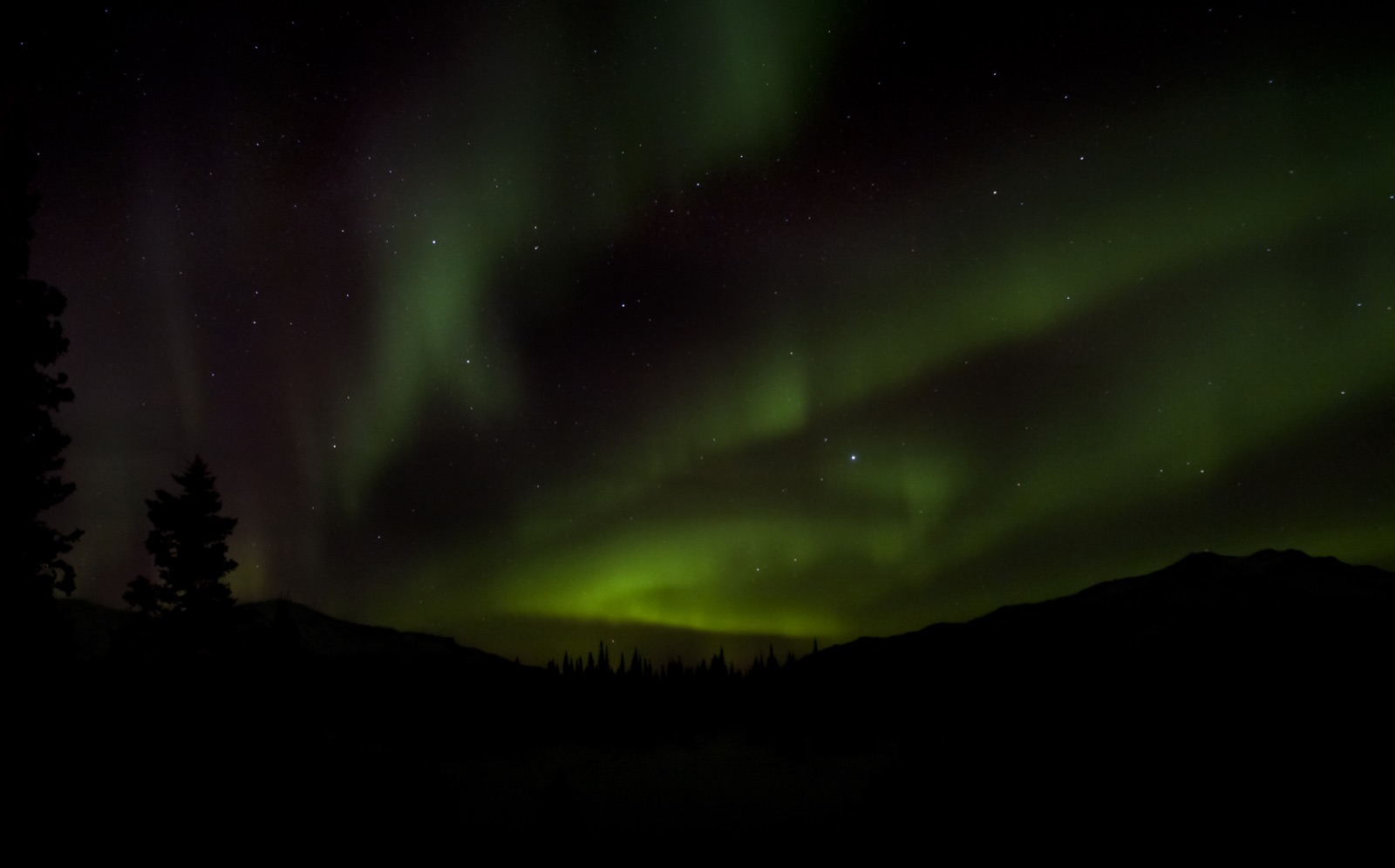
Kp forecast, NOAA scales and OVATION read live from NOAA's Space Weather Prediction Center (services.swpc.noaa.gov); cloud cover from Open-Meteo. Thresholds are rules of thumb for a dark northern horizon. Hero image: “The Aurora over chenasprings, outside of fairbanks” by Analogick, CC BY 2.0. Also on mywild: tonight by ZIP · meteor showers · stargazing forecast.