
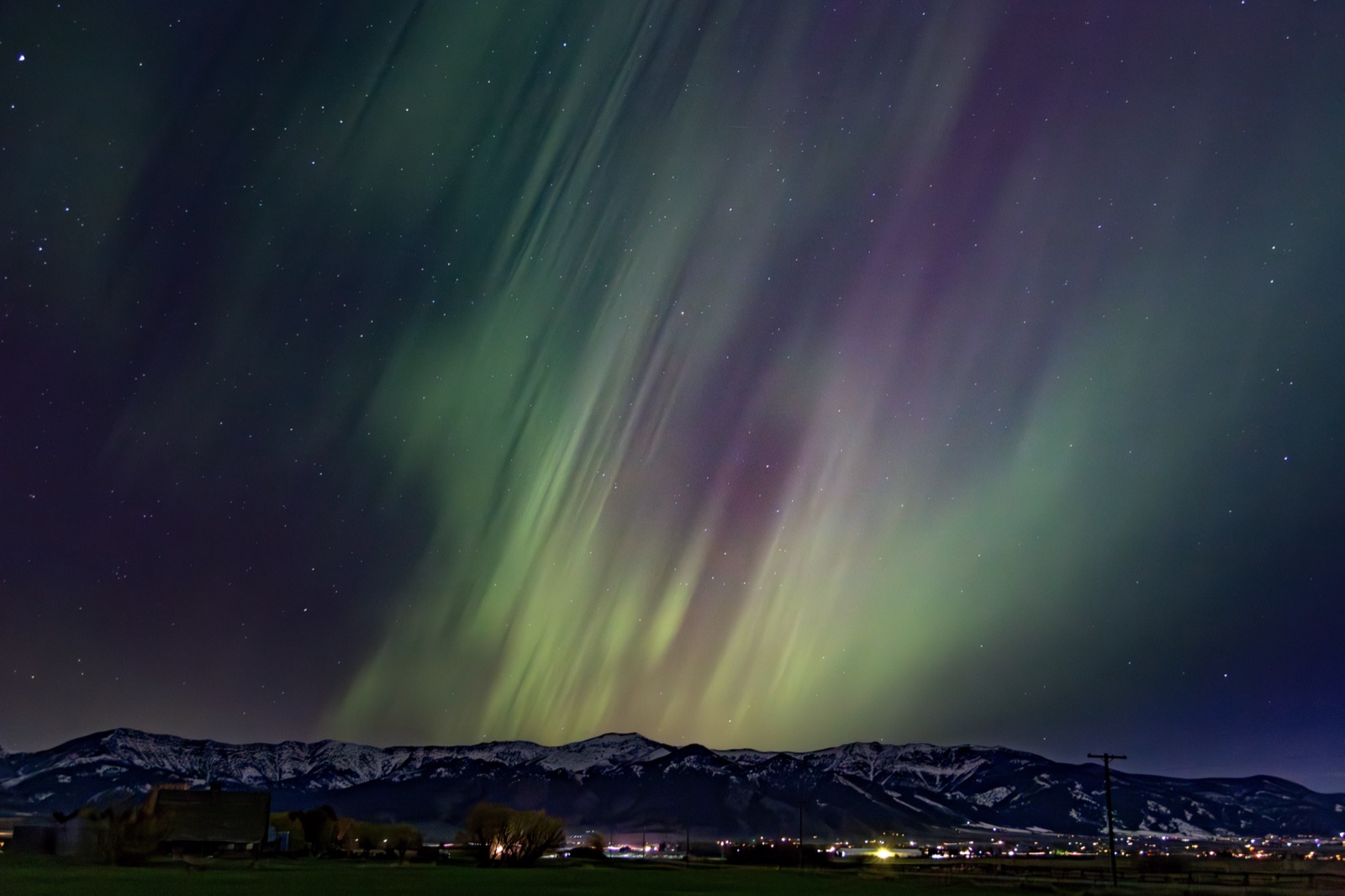
Northern Lights in Montana: Tonight's Aurora Forecast
Montana needs about Kp 4 on the northern horizon. Live NOAA Kp, tonight's cloud cover and moon, the aurora oval map, and the darkest places to watch from.
Aurora season is open — equinox weeks bring the most stormsThe Montana aurora season at a glance
Live · NOAA SWPCGlacier and Waterton Lakes became the first International Dark Sky Park to span a national border in 2017, and the Montana Hi-Line — high geomagnetic latitude, dry air, no towns — is one of the most reliable places to watch in the lower 48.
Can you see the northern lights tonight in Montana?
The verdict below combines NOAA SWPC's planetary Kp forecast with the Kp 4 that Montana's darkest northern spots need, tonight's cloud cover from Open-Meteo at Lake McDonald, the moon, and the hours of full darkness. Then each city and dark-sky site gets its own cloud reading — the sky often clears inland when the lakeshore or coast is socked in.
Reading NOAA SWPC and Open-Meteo for Lake McDonald · Montana tonight…
Tonight, city by city and site by site
| Location | Cloud tonight | Kp tonight | Verdict |
|---|---|---|---|
| Billings, MT city | … | … | … |
| Missoula, MT city | … | … | … |
| Bozeman, MT city | … | … | … |
| Lake McDonald, Glacier National Park DarkSky Park | … | … | … |
| Finley Point, Flathead Lake est. Bortle 3 | … | … | … |
| Fort Peck Lake est. Bortle 1 | … | … | … |
| Medicine Rocks State Park DarkSky Sanctuary | … | … | … |
| Lost Trail National Wildlife Refuge, Marion est. Bortle 2 | … | … | … |
Cloud is the 9 pm–3 am average from Open-Meteo for each point; Kp is NOAA SWPC's maximum forecast for tonight. City rows use a city-center location — drive to a dark northern horizon for the real thing.
The aurora oval over Montana right now
NOAA's OVATION model maps where aurora is likely overhead in the next 30–90 minutes. Green cells mean a small chance, red a strong one. The map opens on Lake McDonald; enter a ZIP to recenter, and widen the span to see the whole oval across Canada.
Loading the NOAA OVATION aurora forecast…
Best places to see the northern lights in Montana
Montana's Hi-Line (US 2 from Glacier to the Dakotas) sees aurora on Kp 4 nights; Glacier's lakes are the photogenic choice; Bozeman and Missoula need Kp 5–6. Summer nights are short — the equinox months and winter are best.
Lake McDonald, Glacier National Park
Part of the first transboundary DarkSky Park (2017); the lake reflects the northern sky.
Finley Point, Flathead Lake
The south shore looks 30 miles north across the largest natural freshwater lake in the western United States.
Fort Peck Lake
Hi-Line prairie reservoir with nothing north but Saskatchewan.
Medicine Rocks State Park
A DarkSky Sanctuary (2020) of sandstone pillars in the southeast corner.
Lost Trail National Wildlife Refuge, Marion
Northwest Montana valley with a clear view toward the Canadian border.
When to see the northern lights in Montana
September – November autumn season
The equinox weeks around September 22 are statistically the most geomagnetically active of the year, and nights are long again. In Montana this is prime time — a Kp 4 night shows an arc on the northern horizon, and clear, dry autumn air helps.
December – February long dark nights
Fewer storms than the equinoxes but 14+ hours of darkness and often the clearest, driest air of the year. Dress for it — the best displays come after midnight.
March – April spring season
The March equinox brings the second annual peak in geomagnetic storms. Nights are still long in March, and Montana's snow cover makes the landscape glow under even a faint display. By late April the late sunsets start to cut into viewing time.
May – August short nights
Short nights and twilight — in the far north there is barely any full darkness in June. Big storms still punch through: NOAA rated the 10–11 May 2024 event G5, the top of its scale, and it was seen across most of the lower 48.
How to see — and photograph — the aurora from Montana
Kp, geomagnetic latitude, and solar cycle 25
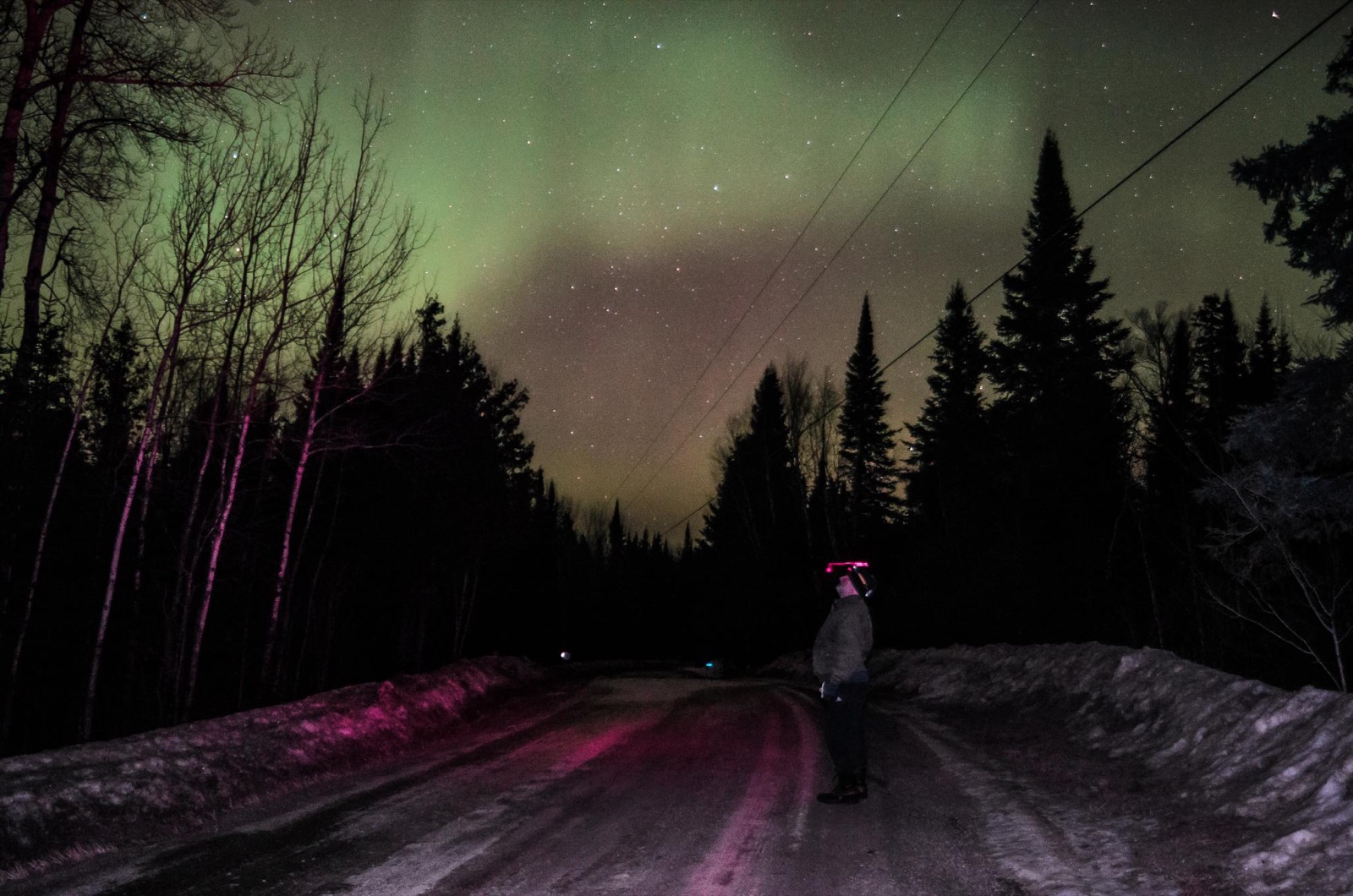
The aurora forms in an oval around the geomagnetic pole, which sits over northern Canada rather than at the geographic pole. That tilt is why the eastern United States is magnetically "further north" than the West: Montana is at about 53° geomagnetic latitude. The planetary K-index (Kp, 0–9) measures how disturbed Earth's magnetic field is; as Kp rises, the oval expands toward the equator by roughly 2° of latitude per step. From Montana's darkest northern areas, Kp 4 brings the oval's edge into view on the horizon; Kp 6 puts it overhead.
NOAA's G-scale is a simpler label on the same thing: G1 (Kp 5) minor, G2 (Kp 6) moderate, G3 (Kp 7) strong, G4 (Kp 8) severe, G5 (Kp 9) extreme. Solar cycle 25 reached its maximum in 2024–2025 — NOAA rated the 10–11 May 2024 storm G5, the top of its scale — and the declining phase of a cycle historically produces the biggest individual storms, so 2026 and 2027 remain good years to watch. Storms also cluster near the equinoxes, which is why September–October and March–April are "aurora season" everywhere in the lower 48.
Montana northern lights FAQ
More Montana nights and seasons
More Rockies northern lights forecasts
Live Kp, NOAA scales and the OVATION aurora model are read in your browser from NOAA's Space Weather Prediction Center (services.swpc.noaa.gov); cloud cover and sunrise/sunset from Open-Meteo. Kp thresholds are climatological rules of thumb for a dark northern horizon, not guarantees, and Bortle classes are estimates. Hero image: “Northern Lights seen from the United States on May 10, 2024 - 1” — USDAgov — Public domain. National picture: which states can see the aurora tonight → · check your ZIP →