
Skip to content
Choose and cut, pre-cut, every state

Christmas Tree Farms Near Me, by ZIP Code

Enter your ZIP for the ten nearest farms, with whether you can cut your own, the trees they grow, when they open and directions.

Photo: “Christmas tree farm IA”, Unknown author, Public domain

Every state, one search

Farms from the USDA and state growers
1,451
Farms listed
in 45 states, from the USDA and state growers
1,299
Choose and cut
farms where you walk the field and cut your own
10
Nearest farms per ZIP
with distance, species, opening dates and directions
7
Tree species compared
needle hold, scent and where each grows

A ZIP within 40 miles of a state line also looks across it. Farms that do not publish their place online can be missing, so check a farm’s page or call before you drive.

At the farm

How to pick a fresh tree

A tree that is fresh when you buy it stays green and holds its needles through the holidays. Four checks take a minute in the field or the lot.

  1. Run a branch through your hand. Pull a branch gently toward you. On a fresh tree few needles come off, and they are flexible and springy. A shower of brown, brittle needles means the tree has been sitting.
  2. Bounce the trunk. Lift the tree a few inches and set the butt down hard. Green needles may drop, but a rain of them says the tree is drying out.
  3. Look at the color and the cut. A fresh tree is deep and even in color, and the trunk base is sticky with sap. On a choose and cut farm you see the tree cut, which is the surest way to know.
  4. Measure before you go. Know the ceiling height and take away the stand and the topper. Trees look smaller in a field than in a living room.
  5. Match the tree to the ornaments. Heavy ornaments need stiff branches such as Fraser, Noble or Scotch pine. Light ones suit the softer Balsam or Douglas fir.
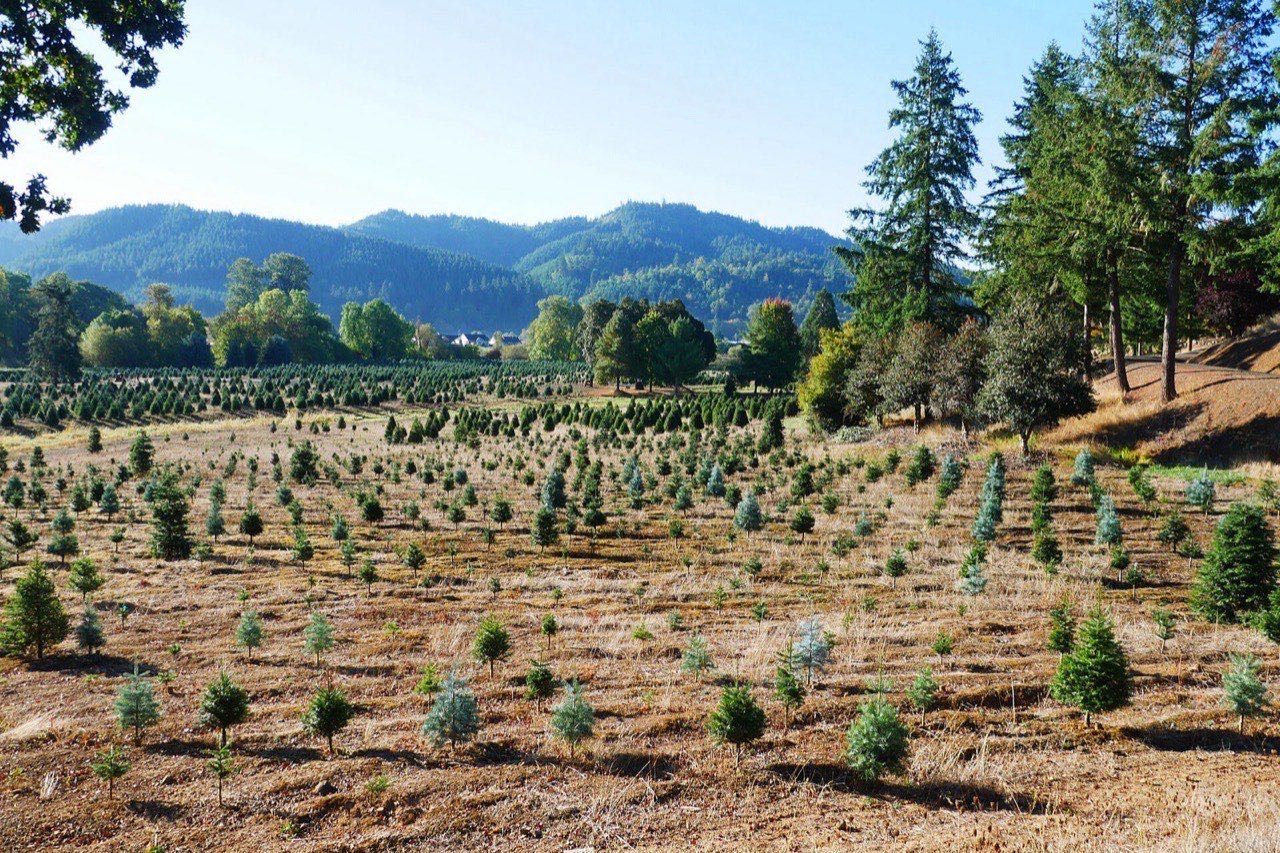
Young fir trees scattered across a golden hillside field in front of forested green hills, with a few tall Douglas firs at the right edge
A Christmas tree farm in Oakland, Douglas County, Oregon. Young trees at this size are years from the saw: a fir takes about seven to ten years to reach the height most families want. “Christmas Tree Farm in Oakland, Douglas County, Oregon” by Rick Obst, CC BY 4.0
The trees

Fraser, Douglas, Balsam and the rest

Seven trees make up most of what farms sell. They differ in how long they hold their needles, how strongly they smell and how much weight the branches carry.

Fraser fir

Needles
Short, soft and flat, dark green on top with a silver underside.
Needle hold
Excellent. It keeps its needles well after the cut and through a long season indoors.
Scent
Mild and sweet.
Branches
Stiff and angled slightly upward, which holds heavy ornaments.
Where it grows
Cool mountain country: the southern Appalachians of North Carolina, Virginia and Tennessee, and the northern states farms can match its needs.
Balsam fir

Needles
Flat, rounded at the tip and dark green, about an inch long.
Needle hold
Very good, with a dense full shape.
Scent
Strong and classic, the smell most people mean by a Christmas tree.
Branches
Flexible and a little lighter, so it suits lighter ornaments.
Where it grows
New England, New York, the Upper Midwest and eastern Canada, where it is the native fir.

Douglas fir

Needles
Soft, about an inch long and radiating around the twig, green to blue green.
Needle hold
Good when the tree is fresh. It dries faster than a Fraser in a warm room.
Scent
Sweet and fruity when the needles are crushed.
Branches
Full and soft, a shape that fills a corner.
Where it grows
The Pacific Northwest, where Oregon grows more Christmas trees than any other state, and farms across the Midwest and the East.

Noble fir

Needles
Short, stiff and blue green, curving upward along the branch.
Needle hold
Excellent, among the best of any tree.
Scent
Light and pleasant.
Branches
Strong and widely spaced, with room to hang ornaments and make a wreath.
Where it grows
The Cascade Range of Oregon and Washington, and some farms on the West Coast.

Concolor fir (white fir)

Needles
Long and soft, silver blue, up to two inches, curving upward.
Needle hold
Very good, and it keeps a fresh look in a heated room.
Scent
Citrus, close to orange peel.
Branches
Open and sturdy, a good fit for strings of lights.
Where it grows
The Rockies and the Southwest by origin, and farms across the Midwest and the Mid-Atlantic.

Scotch pine

Needles
Long, stiff, bundled in twos and dark green to blue green.
Needle hold
Excellent. It is known for holding needles even when it has dried out.
Scent
Strong pine.
Branches
Stiff, with space between whorls that suits heavy ornaments.
Where it grows
Michigan, Pennsylvania, the Midwest and farms across the South and the East, where it handles heat and poor soil.

Blue spruce

Needles
Stiff, sharp and silver blue, about an inch long.
Needle hold
Fair to good. It loses needles sooner than a fir once it dries.
Scent
Strong and spruce-like.
Branches
Stiff and pointed, the classic cone shape.
Where it grows
The Rockies by origin; it is also grown on farms in the Midwest, the Northeast and the Pacific Northwest.
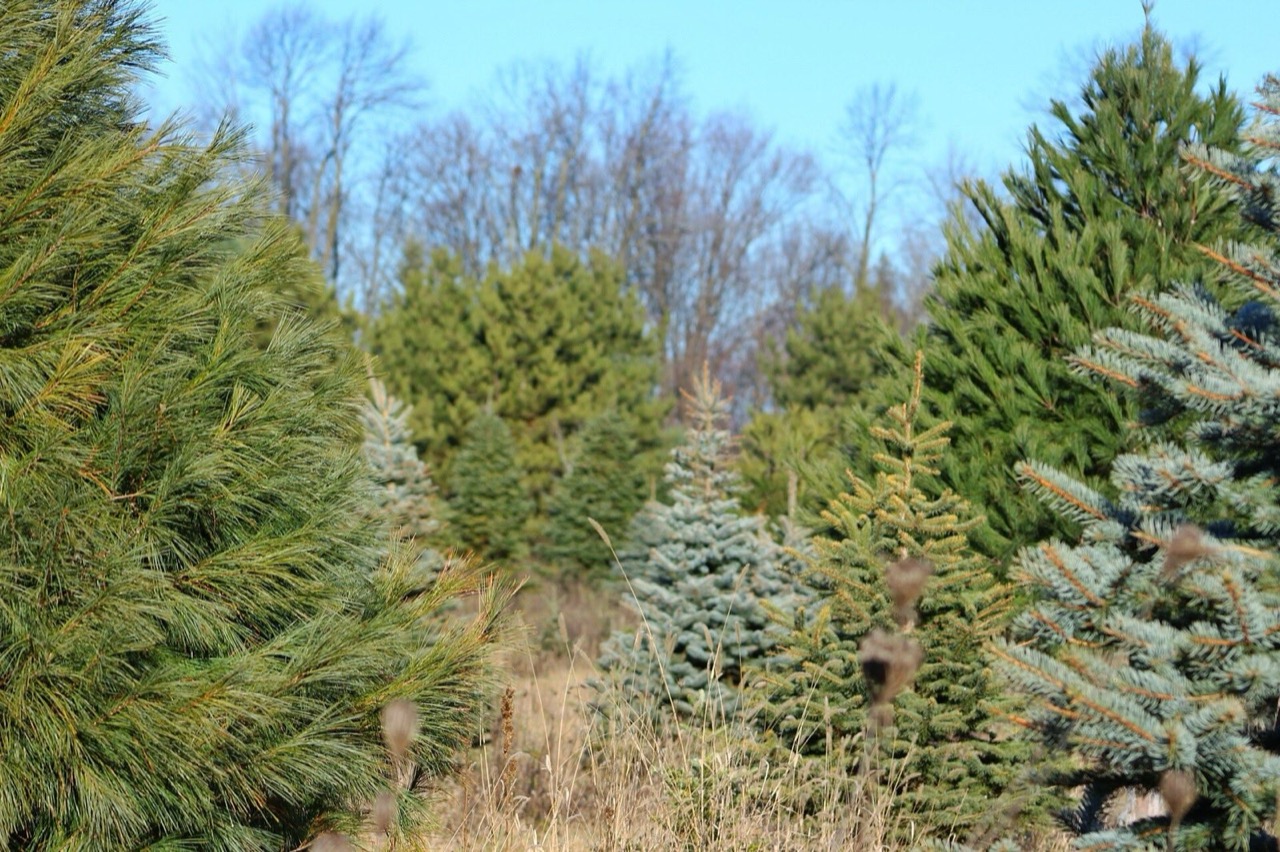
Close view of three kinds of Christmas tree side by side: long soft needles of white pine at the left, a blue green spruce in the middle and a fir at the right
Spruce, pine and fir growing side by side on one farm. The needles tell them apart: pine needles are long and soft, spruce needles are short and stiff, and fir needles are flat and blunt. “Christmas tree farm with spruce, pine, fir (31271625862)”, David Whelan, CC0
Advertisement
At home

Keeping your tree fresh

  1. Make a fresh cut. Saw about a half inch off the base just before the tree goes in the stand. Sap seals the old cut within hours, and a sealed trunk cannot drink.
  2. Water the first day and every day. A tree drinks most in the first days. Plan on about a quart of water a day for each inch of trunk diameter, and never let the water fall below the base of the trunk.
  3. Keep it away from heat. Set the tree away from fireplaces, radiators, vents and direct sun. Use lights that run cool, and unplug them when you leave or go to bed.
  4. Store it cool if you buy early. A tree bought a week ahead keeps in a bucket of water in a cool garage or on a porch out of the wind until you bring it in.
  5. Plain water is enough. Sugar, bleach and aspirin have been tested and do no better than clean water. What matters is that the stand holds enough of it.
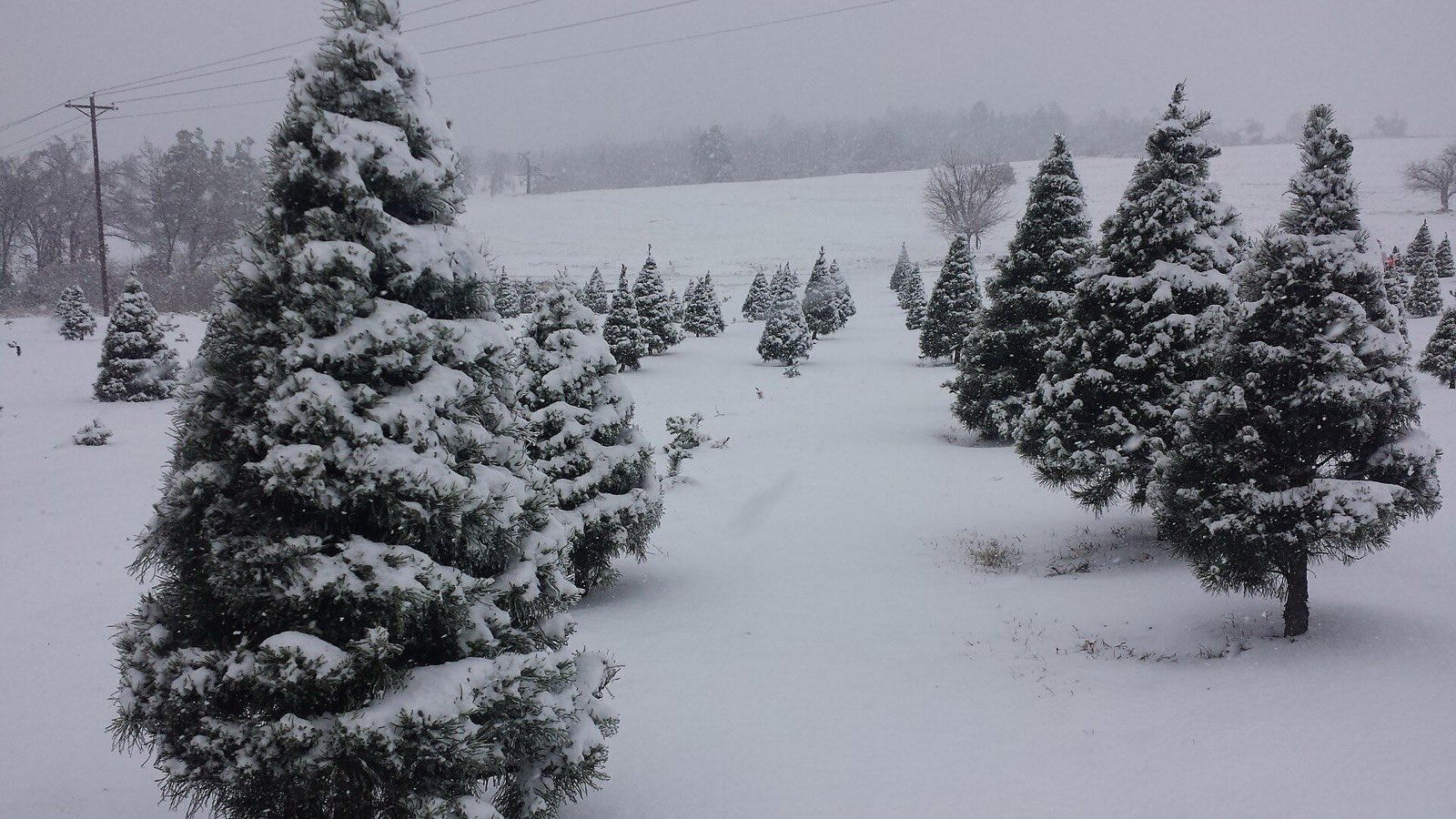
Snow covered pines standing in a white field under a gray sky, a lane of untouched snow running between them to a wooded ridge
A tree farm in the snow. Snow is a good day to cut: trees hold up well in the cold, and a farm that is open in snow will usually say so on its own page or phone line before you drive out. “Christmas Tree Lane 2” by Jimlaneozark, CC BY-SA 3.0

Christmas tree farm questions

Advertisement