
Termite Swarm Season 2026: When Termites Swarm in Every State
Termite swarms march north from the Gulf Coast in February to New England in June, then the West gets its own season on warm fall evenings. Find your state's species, its swarm window, its infestation-probability zone — and whether today is swarm weather.
Is it swarm weather where you live?
Enter a ZIP code for your state's species windows, which ones are open today, and a live swarm-conditions score from today's temperature, humidity, rain, and wind.
Every state, by where it stands today
Swarming nowInside the typical swarm window today
Off-seasonOutside the swarm window (or no termites)
Swarm windows, zones, and species — every state A–Z
| State | TIP zone | Species | Peak swarm window | Status today |
|---|---|---|---|---|
| Alabama | I · Very heavy | Eastern sub., Formosan sub., Drywood | March 1 – May 15 | Off-season |
| Alaska | IV · None to slight | None established | — | No termites |
| Arizona | II · Moderate to heavy | Desert sub., Arid-land sub., Drywood, Western sub. | July 1 – September 15 | Swarming now |
| Arkansas | II · Moderate to heavy | Eastern sub. | March 15 – April 30 | Off-season |
| California | I · Very heavy | Western sub., Drywood, Dampwood, Formosan sub., Desert sub. | September 15 – November 15 | Swarming now |
| Colorado | III · Slight to moderate | Arid-land sub., Eastern sub. | April 20 – June 1 | Off-season |
| Connecticut | III · Slight to moderate | Eastern sub. | April 20 – May 15 | Off-season |
| Delaware | II · Moderate to heavy | Eastern sub. | April 1 – May 5 | Off-season |
| Florida | I · Very heavy | Eastern sub., Formosan sub., Asian sub., Drywood | March 1 – May 31 | Off-season |
| Georgia | I · Very heavy | Eastern sub., Formosan sub., Drywood | March 10 – April 30 | Off-season |
| Hawaii | I · Very heavy | Formosan sub., Drywood, Asian sub. | May 1 – June 30 | Off-season |
| Idaho | III · Slight to moderate | Western sub., Arid-land sub., Dampwood | April 20 – June 1 | Swarming now |
| Illinois | II · Moderate to heavy | Eastern sub. | April 10 – May 15 | Off-season |
| Indiana | II · Moderate to heavy | Eastern sub. | April 10 – May 10 | Off-season |
| Iowa | III · Slight to moderate | Eastern sub. | May 5 – May 30 | Off-season |
| Kansas | II · Moderate to heavy | Eastern sub., Arid-land sub. | April 5 – May 10 | Off-season |
| Kentucky | II · Moderate to heavy | Eastern sub. | March 25 – May 1 | Off-season |
| Louisiana | I · Very heavy | Eastern sub., Formosan sub., Drywood | March 1 – June 10 | Off-season |
| Maine | III · Slight to moderate | Eastern sub. | May 15 – June 5 | Off-season |
| Maryland | II · Moderate to heavy | Eastern sub. | March 25 – May 1 | Off-season |
| Massachusetts | III · Slight to moderate | Eastern sub. | April 25 – May 20 | Off-season |
| Michigan | III · Slight to moderate | Eastern sub. | May 10 – June 1 | Off-season |
| Minnesota | III · Slight to moderate | Eastern sub. | May 20 – June 10 | Off-season |
| Mississippi | I · Very heavy | Eastern sub., Formosan sub., Drywood | March 1 – May 15 | Off-season |
| Missouri | II · Moderate to heavy | Eastern sub. | April 1 – May 5 | Off-season |
| Montana | III · Slight to moderate | Arid-land sub., Dampwood | June 5 – July 15 | Swarming now |
| Nebraska | III · Slight to moderate | Eastern sub., Arid-land sub. | May 1 – May 25 | Off-season |
| Nevada | II · Moderate to heavy | Desert sub., Arid-land sub., Western sub., Drywood | July 1 – September 15 | Swarming now |
| New Hampshire | III · Slight to moderate | Eastern sub. | May 10 – June 1 | Off-season |
| New Jersey | II · Moderate to heavy | Eastern sub. | April 10 – May 10 | Off-season |
| New Mexico | II · Moderate to heavy | Arid-land sub., Drywood | April 15 – June 15 | Swarming now |
| New York | III · Slight to moderate | Eastern sub. | April 20 – May 25 | Off-season |
| North Carolina | I · Very heavy | Eastern sub., Formosan sub., Drywood | March 15 – April 30 | Off-season |
| North Dakota | III · Slight to moderate | Arid-land sub. | June 15 – July 10 | Off-season |
| Ohio | II · Moderate to heavy | Eastern sub. | April 15 – May 15 | Off-season |
| Oklahoma | II · Moderate to heavy | Eastern sub., Arid-land sub. | March 25 – May 5 | Off-season |
| Oregon | III · Slight to moderate | Western sub., Dampwood | August 20 – October 10 | Swarming now |
| Pennsylvania | II · Moderate to heavy | Eastern sub. | April 10 – May 15 | Off-season |
| Rhode Island | III · Slight to moderate | Eastern sub. | April 25 – May 15 | Off-season |
| South Carolina | I · Very heavy | Eastern sub., Formosan sub., Drywood | March 10 – April 30 | Off-season |
| South Dakota | III · Slight to moderate | Eastern sub., Arid-land sub. | May 20 – June 10 | Off-season |
| Tennessee | II · Moderate to heavy | Eastern sub., Formosan sub. | March 20 – May 1 | Off-season |
| Texas | I · Very heavy | Eastern sub., Formosan sub., Drywood, Arid-land sub. | March 1 – May 15 | Swarming now |
| Utah | III · Slight to moderate | Arid-land sub., Western sub. | April 25 – June 5 | Off-season |
| Vermont | III · Slight to moderate | Eastern sub. | May 15 – June 5 | Off-season |
| Virginia | II · Moderate to heavy | Eastern sub. | March 20 – April 30 | Off-season |
| Washington | III · Slight to moderate | Dampwood, Western sub. | August 20 – October 10 | Swarming now |
| West Virginia | II · Moderate to heavy | Eastern sub. | April 10 – May 10 | Off-season |
| Wisconsin | III · Slight to moderate | Eastern sub. | May 15 – June 10 | Off-season |
| Wyoming | III · Slight to moderate | Arid-land sub. | June 1 – July 1 | Off-season |
The termite infestation probability map, zone by zone
The International Residential Code's Termite Infestation Probability Map — drawn from US Forest Service termite survey data — is what jurisdictions, inspectors, and lenders lean on to decide how seriously to take termites in a given place. Four bands, from the Gulf Coast's "very heavy" down to "none to slight." The code figure labels those bands by name; the Roman numerals I–IV below are our shorthand for them, not the code's. The lists put every state in its band (states that straddle a boundary are listed by their populated core), and the figure itself cautions that the lines are approximate — local conditions can be more or less severe than the band implies.
Very heavy
The Gulf and Deep South — Louisiana, Mississippi, Alabama, Georgia, Florida, South Carolina, and eastern and coastal Texas — plus nearly all of California. The band's northern edge runs near the North Carolina line, and we place North Carolina here on the strength of its coastal plain. (We place Hawaii here too; the code figure maps only the lower 48.) Termites reach most structures eventually, and in this band the code also bars below-grade foam plastic on foundation walls and slabs.
Moderate to heavy
The mid-South, the Mid-Atlantic, the lower Midwest, and the interior and desert Southwest — Arizona, Nevada, and New Mexico included. Infestations are common; routine inspection is the norm in home sales. In the low-desert metros the local pressure runs well above what this band suggests.
Slight to moderate
The northern tier, the Rockies, and the Pacific Northwest. Colonies are localized; carpenter ants cause more wood damage than termites do.
No public-domain reproduction of the IRC map is available, so the bands are listed rather than drawn. The official figure is in IRC Chapter 3 — Figure R301.2(7) in the 2021 edition, renumbered in other editions — and most state extension termite guides reproduce it.
The eight termites that swarm in the United States
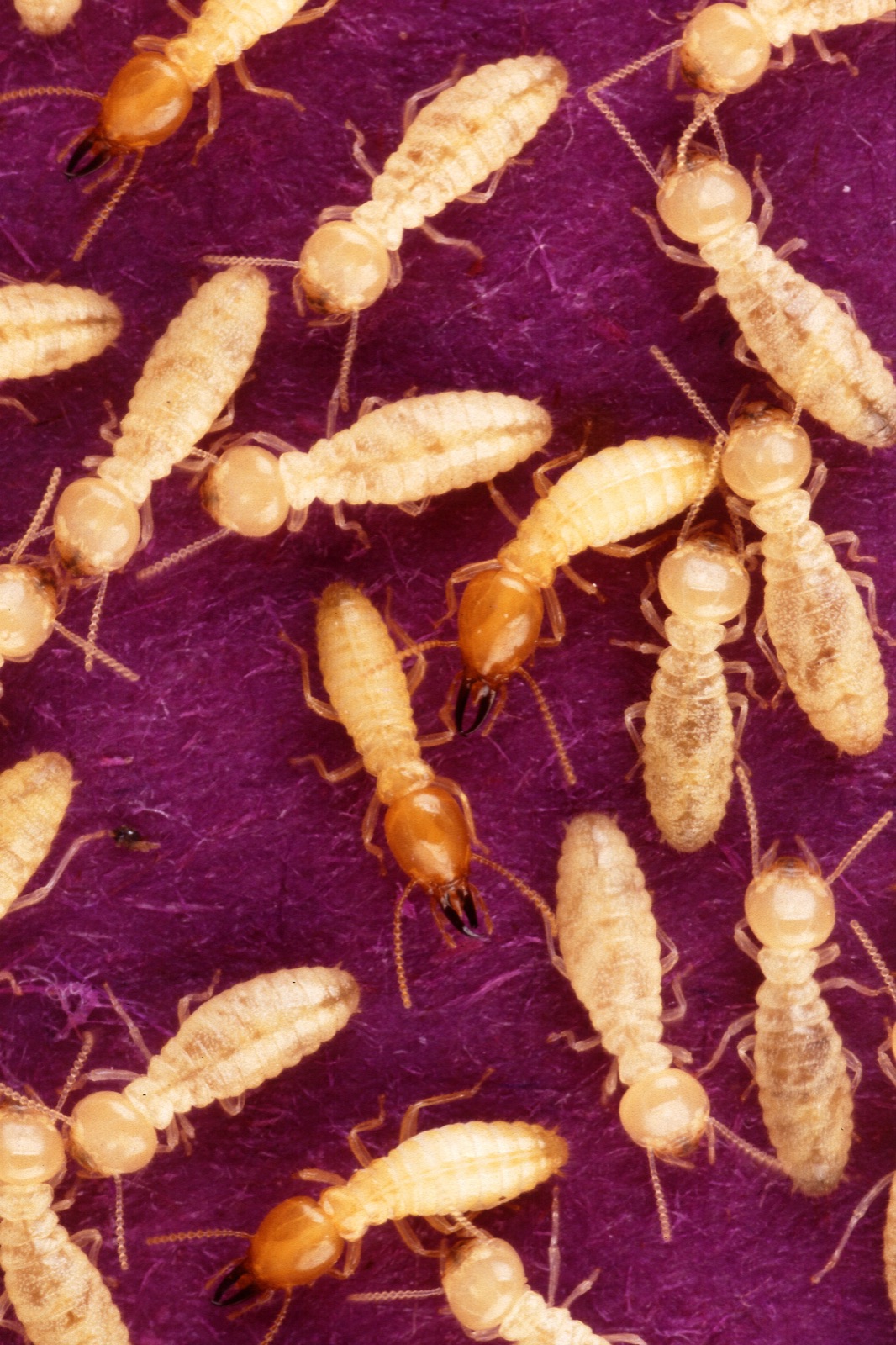
Eastern subterranean termite
Reticulitermes flavipes · 37 states- Where
- Every state east of the Rockies
- When it swarms
- Daytime swarms, late winter in the South to early summer in the North, after warm rain
- Damage pattern
- Slow but relentless; colonies of 60,000–1,000,000 enter through foundation cracks and mud tubes.
Formosan subterranean termite
Coptotermes formosanus · 11 states- Where
- Gulf Coast, Florida, the Carolinas, Hawaii, Memphis, pockets of California
- When it swarms
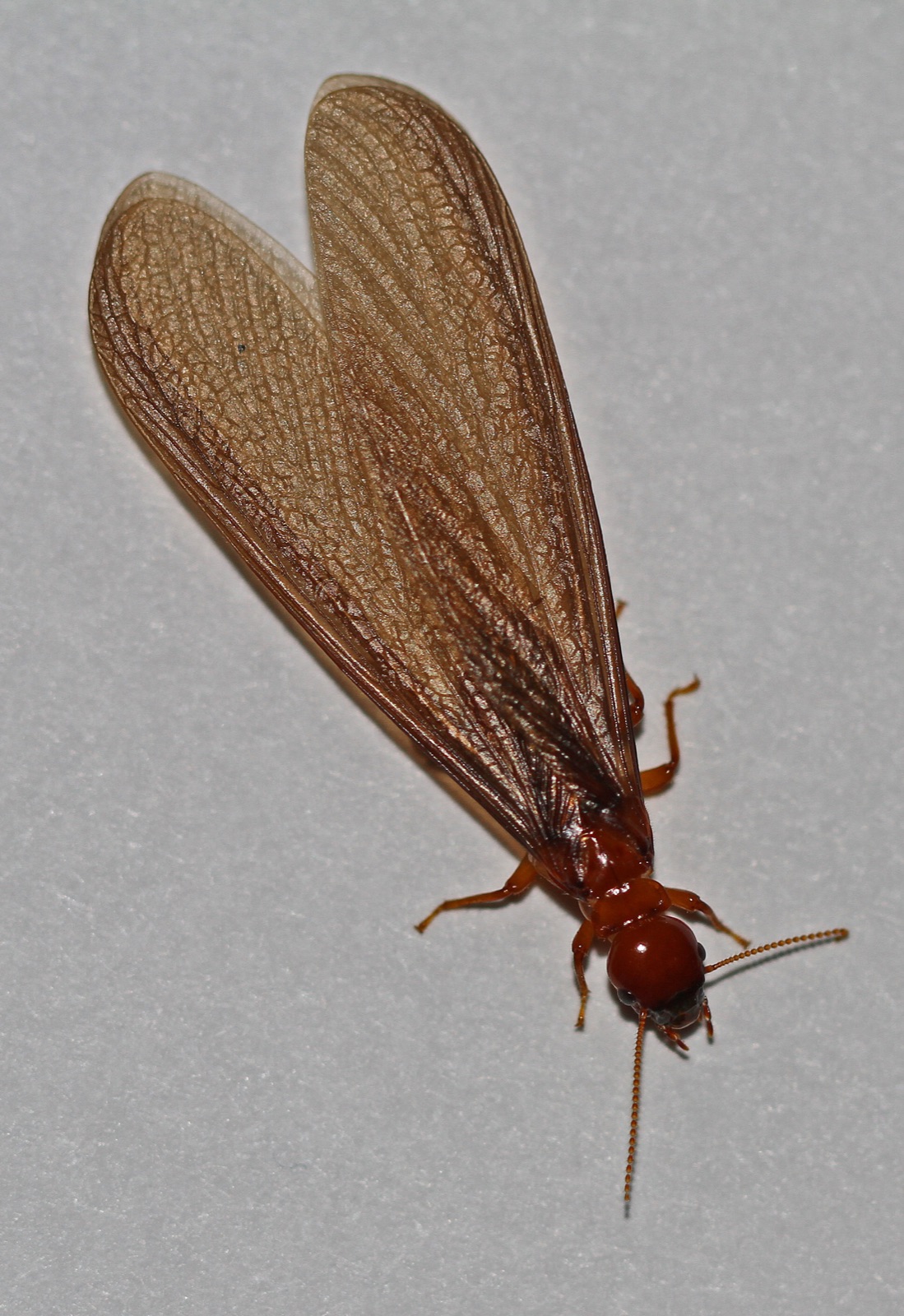
- Dusk and night flights toward lights, late April–June
- Damage pattern
- Colonies of several million that can hollow a joist in months; builds above-ground carton nests in walls.
Asian subterranean termite
Coptotermes gestroi · 2 states- Where
- South Florida, the Keys, Hawaii
- When it swarms
- Night swarms, February–April
- Damage pattern
- As aggressive as Formosan; hybridizes with it in Florida.
Drywood termite
Incisitermes and Cryptotermes species · 13 states- Where
- Florida, Gulf Coast, Texas, Arizona, California, Hawaii
- When it swarms
- Warm late-summer and fall evenings (West); late-spring nights (Southeast)
- Damage pattern
- Lives entirely inside dry wood — attics, furniture, trim — no soil contact; leaves six-sided fecal pellets.
Dampwood termite
Zootermopsis species · 5 states- Where
- Pacific Northwest, California, northern Rockies
- When it swarms
- Dusk flights, August–October
- Damage pattern
- Only attacks wet, decaying wood; a dampwood find is a moisture problem first.
Western subterranean termite
Reticulitermes hesperus · 7 states- Where
- California, Oregon, Washington, Nevada, Idaho, Arizona
- When it swarms
- Daytime swarms after the first fall rains, plus a smaller spring flight
- Damage pattern
- The West Coast's main subterranean species; same mud tubes and foundation entry as its eastern cousin.
Desert subterranean termite
Heterotermes aureus · 3 states- Where
- The Sonoran and Colorado deserts — southern Arizona and southeastern California, reaching the Mojave fringe of southern Nevada
- When it swarms
- Night flights after monsoon storms, July–September
- Damage pattern
- Arizona's number-one structural pest; thin mud tubes that drip from ceilings and hang from joists.
Arid-land subterranean termite
Reticulitermes tibialis · 14 states- Where
- Great Plains, Rockies, and the Southwest
- When it swarms
- Daytime spring swarms (summer in the northern plains)
- Damage pattern
- Mostly fence posts, decks, and outbuildings; structural damage is less common than with eastern subterraneans.
Termite swarm season month by month
January – February Florida and the Gulf
Eastern subterranean swarms begin in Florida on the first warm afternoons of late January, then Louisiana, the Mississippi and Alabama coasts, and Houston through February. Asian subterranean termites fly at night in South Florida. Everywhere else the soil is too cold.
March – April the big sweep
The main subterranean season: the Carolinas, Georgia, Tennessee, Arkansas, Oklahoma, and Texas in March; Virginia, Maryland, Kentucky, Missouri, the Ohio Valley, New Jersey, and Philadelphia in April. The first warm rain of the month is the trigger nearly everywhere.
May – June the North, and Formosan dusk flights
New England, New York, Michigan, Wisconsin, Minnesota, and the northern plains swarm in May and early June. Meanwhile the Gulf Coast's second act: Formosan alates blanket porch lights at dusk from late April through June, peaking around Mother's Day in New Orleans.
July – September the desert and the West
Desert subterranean termites fly at night after monsoon storms in Phoenix and Tucson, and in California’s Coachella and Imperial valleys. Dampwood termites start their dusk flights in the Pacific Northwest in August, and western drywood termites in California from late August.
October – December the West Coast fall
Western subterranean termites swarm on warm days after the first fall rains in California, Oregon, and Washington — often into November. Drywood flights taper by mid-November. East of the Rockies the year is over; colonies keep feeding underground.
Signs of termites, and what a swarm means
Swarmers vs. flying ants
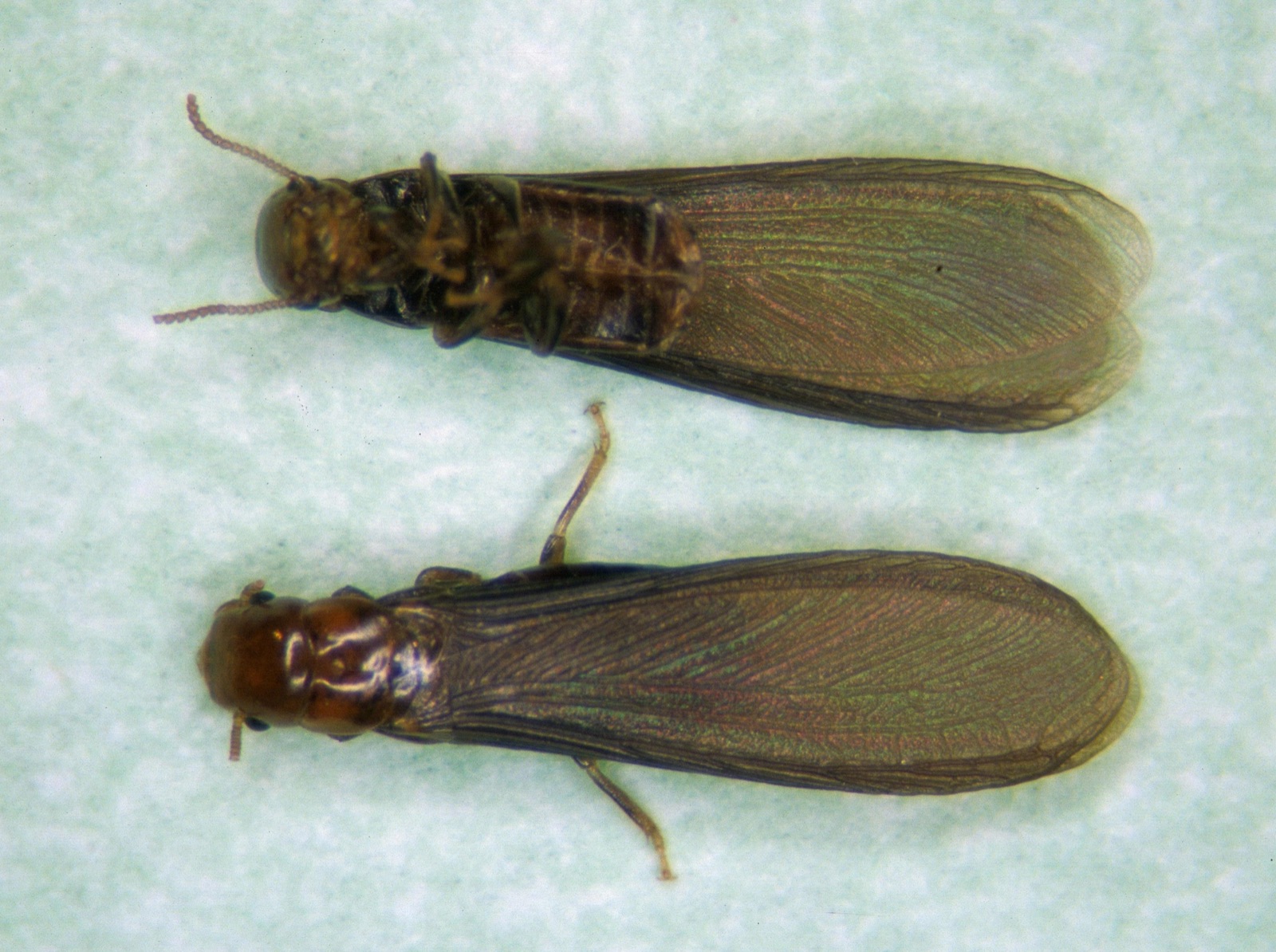
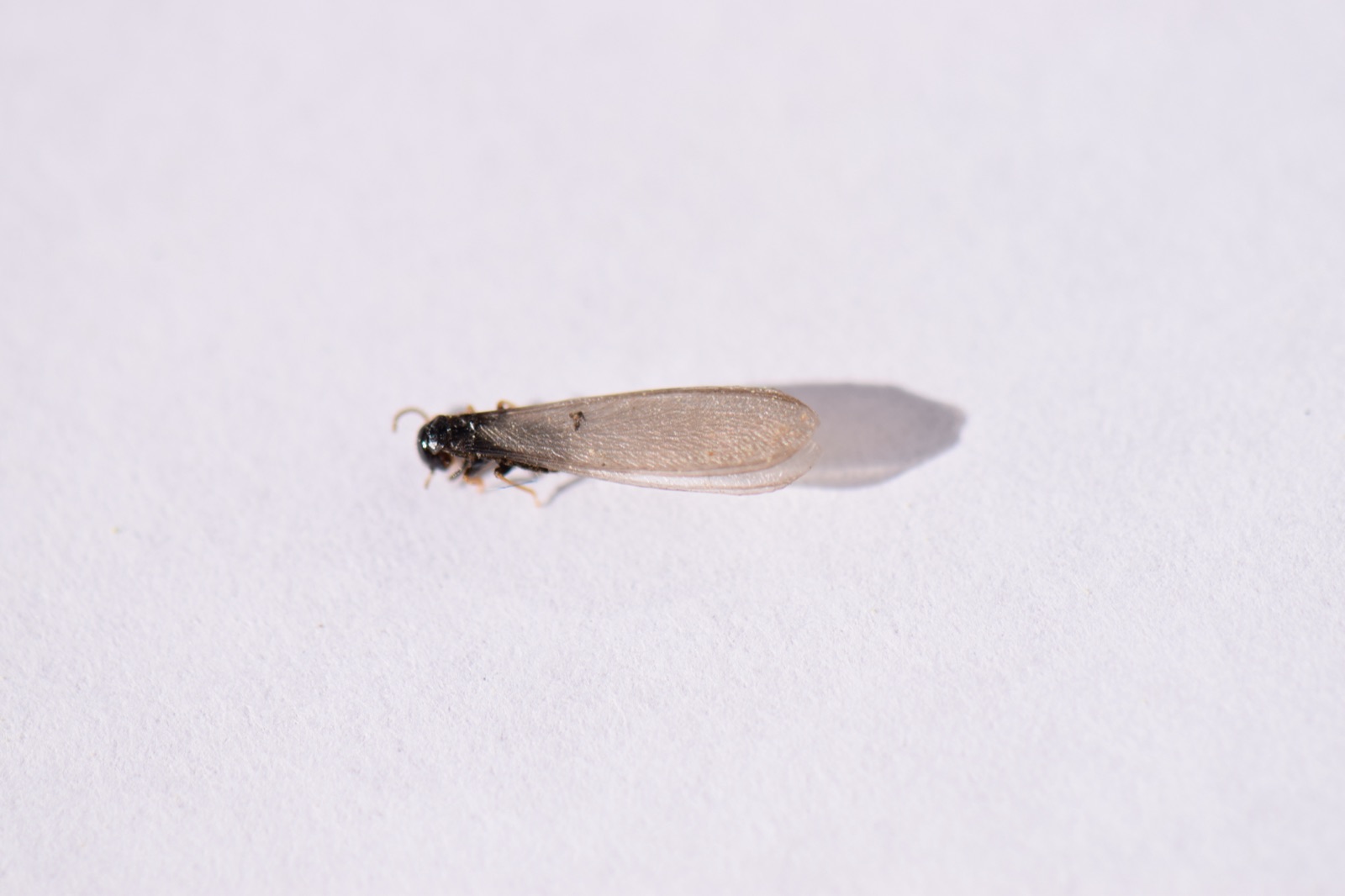
Straight antennae, thick waist, four equal wings: termite. Elbowed antennae, pinched waist, unequal wings: ant. Bag a few — identification decides everything.
Piles of shed wings
Swarmers drop their wings within minutes of landing. Identical translucent wings on a sill, in a tub, or in a web are often the only trace left by morning.
Mud tubes
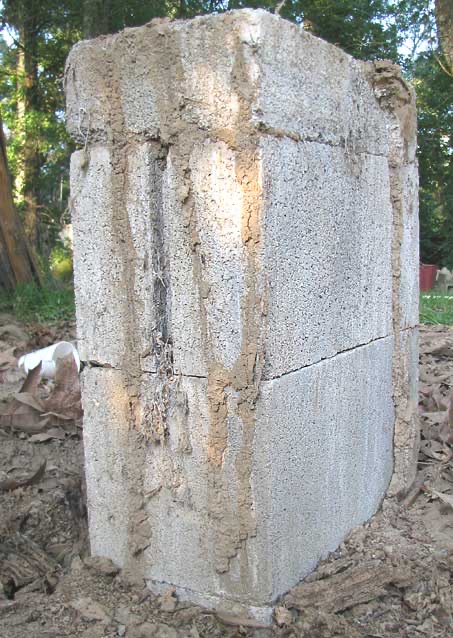
Pencil-width earthen tunnels up a foundation, pier, or pipe. Break one open — live pale workers inside mean an active subterranean colony.
Drywood frass
Six-sided, sand-like pellets in small piles under a rafter, window frame, or piece of furniture — the drywood termite's kick-out holes at work.
What triggers a termite swarm
A colony needs three to five years to raise its first winged reproductives, and then it waits for a very specific day: the ground has been wetted by rain in the last day or two, the air is warm (about 70°F or more) and humid, and the wind is calm. Soil-dwelling species time their flights so that alates from different colonies meet in the air and pair off; that is why an entire neighborhood swarms on the same afternoon. Drywood and dampwood species never touch soil, so rain matters less and late-summer warmth matters more. The "swarm conditions today" score on every state page is built from exactly those variables, read live from Open-Meteo for three cities in the state.
Termite swarm FAQ
Swarm windows are climatological typicals compiled from land-grant extension guidance (UF/IFAS, LSU AgCenter, Texas A&M AgriLife, UC IPM, and the state services linked on each state page) and the USDA/IRC Termite Infestation Probability map; any year runs 1–3 weeks either side. Cost ranges are general industry figures, not quotes. Planning a yard day during swarm season? Check your state's tick forecast and mosquito forecast too.
Hero image: “Formosan termite alates” — USDA Agricultural Research Service (Scott Bauer) — Public domain