
Maple Sap Season 2026: When to Tap, and Is Sap Running Now
Sap runs on freeze and thaw, not on the calendar. Enter a ZIP for a live seven-day freeze-thaw forecast built from National Weather Service data, see when each sugaring state typically taps, and find out why a tree pushes sap out of a hole in the first place.
Is sap running near you this week?
Enter a ZIP and we read the National Weather Service gridpoint forecast for that exact point, pair each overnight low with the following day’s high, and count how many of those couplets clear the freeze-thaw thresholds: night at or below 32°F, day at or above 40°F. That is the cycle sap actually runs on.
Every sugaring state, by where its season stands today
WaitingSeason is more than three weeks out
Tapping season, south to north
Ordered by when each state typically opens, because the season moves south to north. Kentucky taps while Vermont is still under snow; northern Maine and the Upper Peninsula are still running when Kentucky has pulled its taps and bottled up.
| State | Tapping window | Main run | Production | Status today |
|---|---|---|---|---|
| Kentucky small | December 28 to February 28 | January 10 to February 15 | not surveyed | Waiting |
| Tennessee small | January 5 to February 25 | January 15 to February 15 | not surveyed | Waiting |
| Illinois small | January 8 to March 8 | January 20 to February 25 | not surveyed | Waiting |
| New Jersey small | January 10 to March 10 | January 25 to February 28 | not surveyed | Waiting |
| North Carolina small | January 10 to March 5 | January 22 to February 22 | not surveyed | Waiting |
| Missouri small | January 15 to March 10 | January 25 to February 25 | not surveyed | Waiting |
| Virginia small | January 20 to March 12 | February 5 to March 1 | not surveyed | Waiting |
| West Virginia USDA | January 20 to March 22 | February 10 to March 12 | 15,000 gal | Waiting |
| Ohio USDA | January 25 to March 28 | February 10 to March 15 | 103,000 gal | Waiting |
| Pennsylvania USDA | January 25 to April 1 | February 15 to March 20 | 196,000 gal | Waiting |
| Maryland small | February 5 to March 30 | February 20 to March 20 | not surveyed | Waiting |
| New York USDA | February 5 to April 8 | February 25 to March 28 | 829,000 gal | Waiting |
| Connecticut USDA | February 10 to March 31 | February 25 to March 20 | 9,000 gal | Waiting |
| Indiana USDA | February 10 to March 30 | February 20 to March 20 | 24,000 gal | Waiting |
| Rhode Island small | February 10 to March 25 | February 20 to March 15 | not surveyed | Waiting |
| Massachusetts USDA | February 12 to April 10 | February 25 to March 25 | 47,000 gal | Waiting |
| Maine USDA | February 15 to April 25 | March 10 to April 10 | 549,000 gal | Waiting |
| Michigan USDA | February 15 to April 18 | March 5 to April 5 | 203,000 gal | Waiting |
| New Hampshire USDA | February 15 to April 8 | March 1 to March 28 | 152,000 gal | Waiting |
| Vermont USDA | February 15 to April 12 | March 5 to April 1 | 3,064,000 gal | Waiting |
| Iowa small | February 18 to April 5 | March 1 to March 25 | not surveyed | Waiting |
| Minnesota USDA | February 25 to April 22 | March 15 to April 15 | 24,000 gal | Waiting |
| South Dakota small | February 25 to April 8 | March 5 to March 30 | not surveyed | Waiting |
| Wisconsin USDA | February 25 to April 15 | March 10 to April 5 | 556,000 gal | Waiting |
| North Dakota small | March 5 to April 25 | March 20 to April 15 | not surveyed | Waiting |
Production is the USDA National Agricultural Statistics Service 2025 estimate, published in the June Crop Production report. NASS surveys 13 states for maple syrup and added six of them in 2024, so several series are short. “Not surveyed” means no official figure exists, not that nobody makes syrup there.
The sugaring season, month by month
Late December and January the South starts
Kentucky opens first, around the turn of the year. Missouri, southern Illinois, Tennessee and the North Carolina mountains follow through January, and southwestern Virginia producers sometimes tap around Christmas. Everyone north of the Ohio River is still cleaning equipment.
February the belt fills in
Pennsylvania, Ohio, West Virginia, Maryland and New Jersey are running by mid month, New York and southern New England follow, and Vermont, New Hampshire and southern Maine tap in by the end of it. The old Vermont rule is to be tapped out by Town Meeting Day, the first Tuesday in March.
March peak everywhere
The busiest month in the country. New England is in full run, Wisconsin, Minnesota, Iowa and the Dakotas start, and Michigan begins its staggered march from the southern Lower Peninsula northward. Almost every state maple weekend falls in March.
April the far north finishes
Northern Maine, the Upper Peninsula, northern Minnesota and North Dakota are still going while the South has been bottled for two months. Pennsylvania holds its big festival at Meyersdale in April, weeks after its own season ends. By late April buds break everywhere and the year is over.
Why a maple pushes sap out of a hole
Almost everyone, including a lot of the material written about sugaring, says that sap “rises” in spring. It does not, and the truth is more interesting.
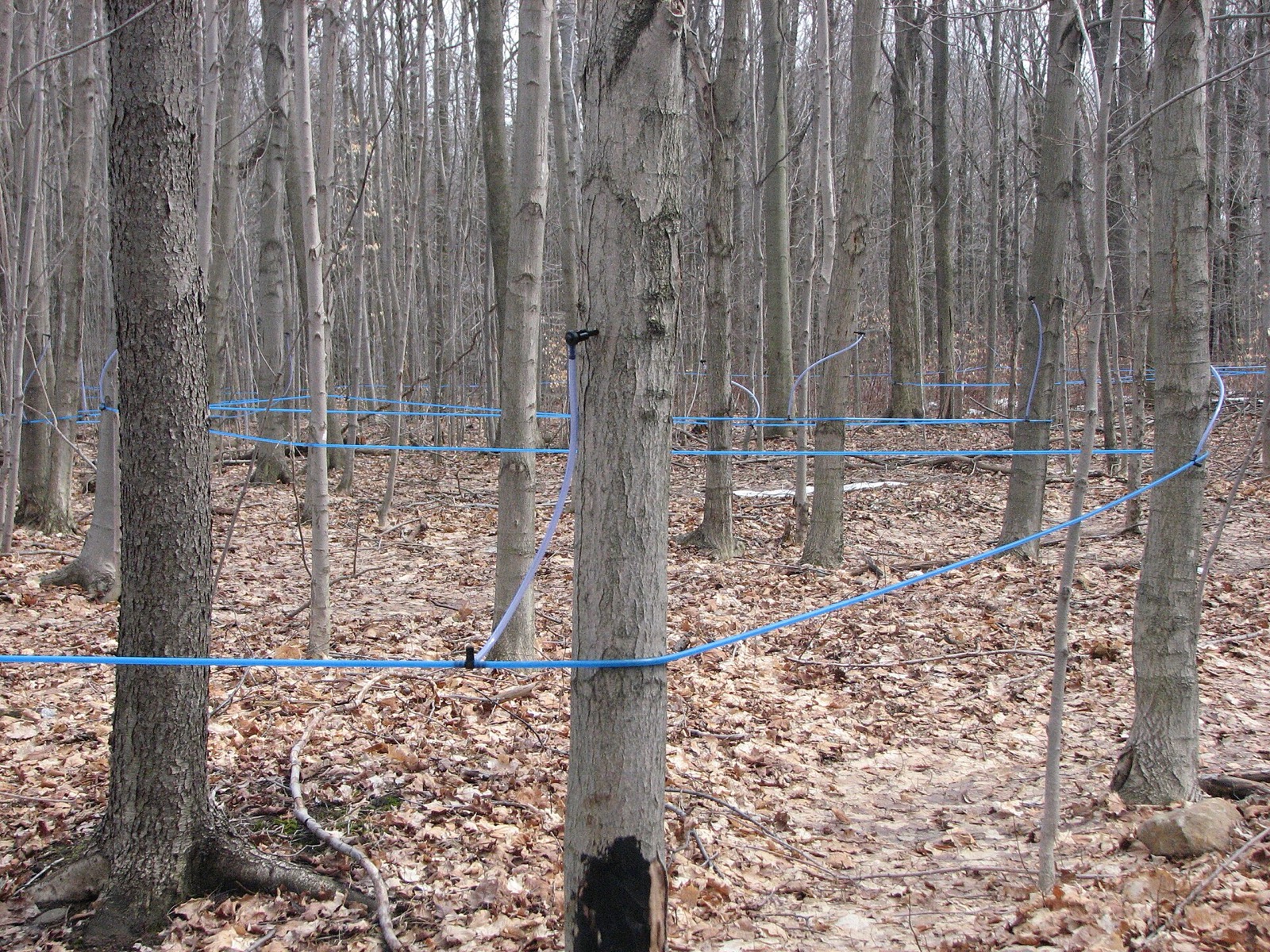
Researchers at the University of Vermont’s Proctor Maple Research Center describe the mechanism as purely physical. A maple stem contains fiber cells that normally hold gas. When the stem freezes, liquid is drawn into those fibers by cryostatic suction, the pull that ice exerts on nearby water, and freezes on the inside of the fiber walls, compressing the gas trapped within. An osmotic gradient across the fiber wall, sugary sap on one side and near-pure water on the other, keeps those compressed bubbles stable. During the freeze the stem also develops negative pressure and draws water up through the roots, recharging itself.
Then it thaws, and all of that stored pressure is released back into the vessels that carry sap. Positive stem pressure builds, and it has to go somewhere. A taphole is simply the easiest way out. This is why the cycle matters more than the temperature: without the freeze there is no recharge and no stored pressure, and without the thaw there is no release.
Maple is unusual in doing this. Cornell’s maple program contrasts it directly with birch, which moves sap by root pressure as it mobilises resources for bud development, and does not start until sustained temperatures pass about 50 degrees. That is why Alaskan birch tapping happens after maple season rather than during it, and why the two crafts, which look identical from the outside, are on different calendars.
How tapping actually works
Find a big enough tree
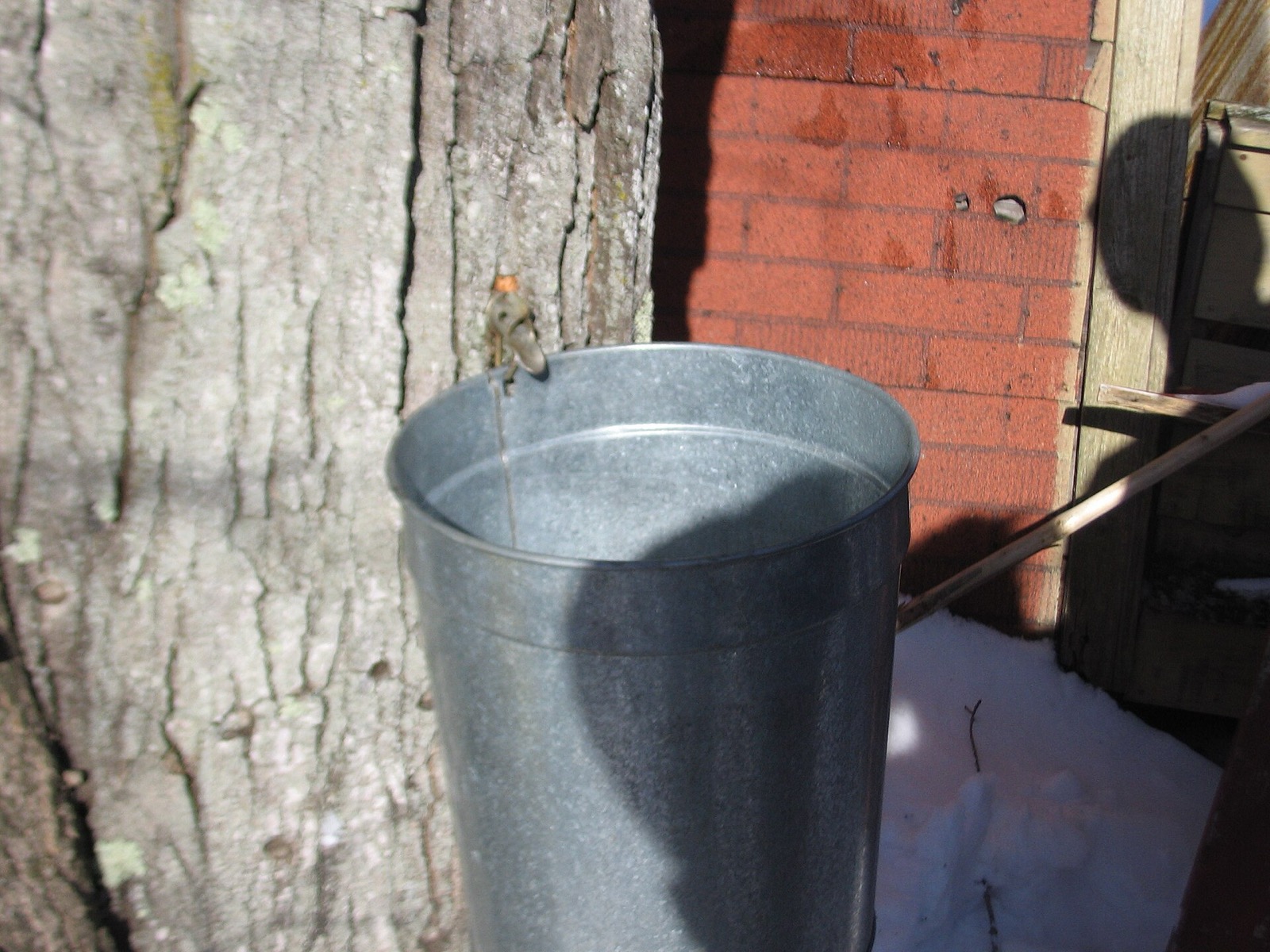
10 to 12 inches across at four and a half feet up. University of Maine Extension says 10; Ohio State and University of Minnesota Extension say 12. A 33 inch tape measure around the trunk is roughly 10 inches through.
One hole, small and shallow
A 5/16 inch bit, about 1.5 inches deep, drilled level. Cornell and Ohio State both give those numbers; Ohio State says never past 2 inches. One tap on a 10 to 18 inch tree, two only on a bigger one.
Clean gear every year
The biggest lever there is. Cornell trials moved yield from about 26 gallons of sap per tap to about 41 with new spouts and drop lines alone: bacteria drawn back into old tubing is what dries a taphole up.
Collect daily, boil outdoors
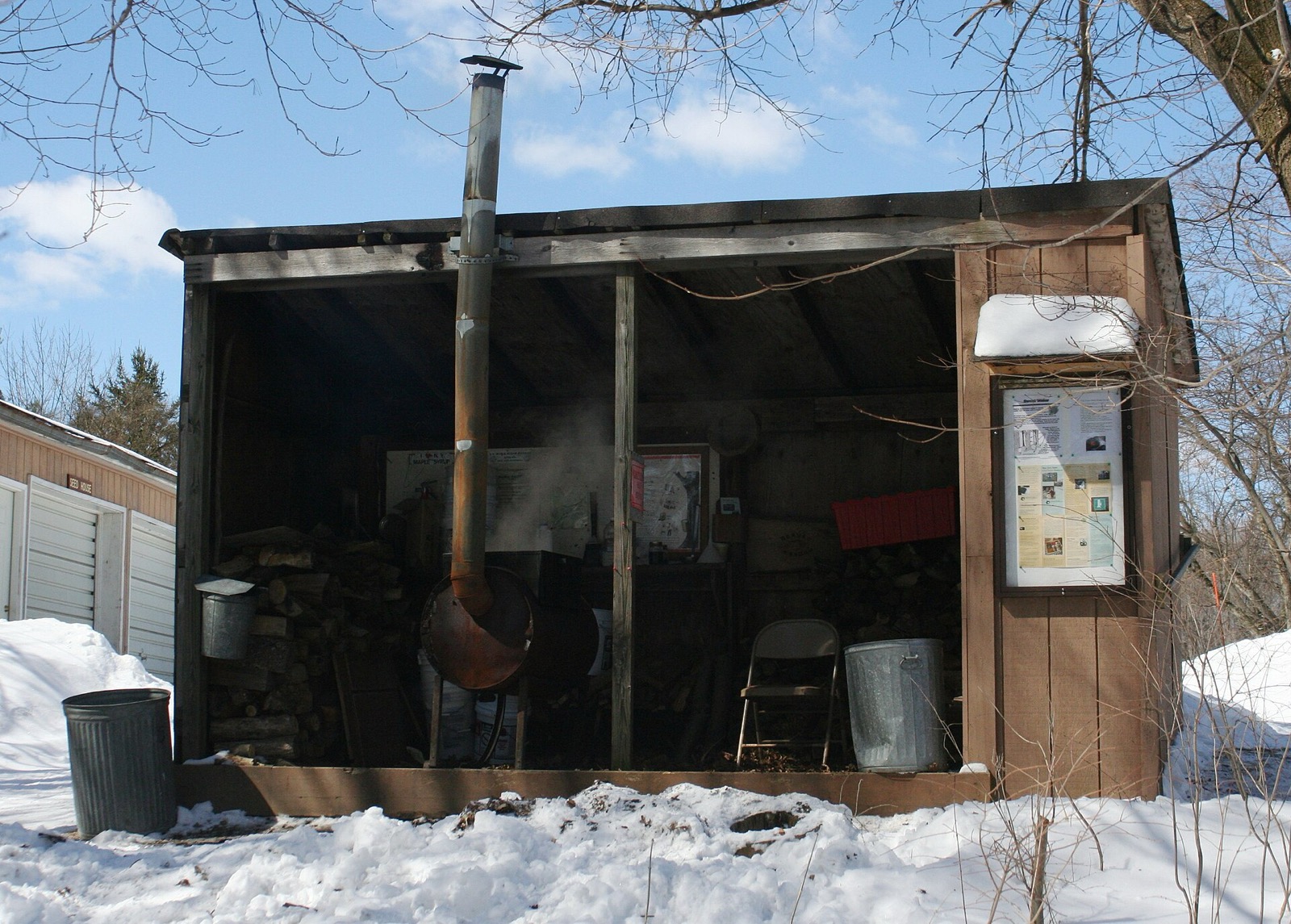
Sap is perishable. Cornell warns it can spoil at 50 degrees and above. Boil outside or in a shed: a gallon of syrup means evaporating roughly 39 gallons of water, and it goes everywhere.
Know when to stop
When buds swell or the syrup starts tasting off. Ohio State distinguishes bud-driven “buddy” sap from microbial “sour” sap, and notes producers usually blame the buds when the plumbing is at fault.
Leave the hole alone
Do not plug it. The tree walls the wound off itself, and Proctor Maple Research Center work notes a small spout on a well-grown tree may close its hole in a single season.
Where sugaring is practised, and where it is not
Maple sugaring needs two things at once: maples with enough sugar in their sap to be worth boiling, and a late-winter climate that swings across freezing and back nearly every day for six to eight weeks. That combination exists across the Northeast, the Great Lakes, the upper Midwest and the Appalachians, and effectively nowhere else in the United States.
There are 25 state pages, one for every state where a land grant extension service, a state agriculture or natural resources agency, a producers association, or USDA NASS documents maple sugaring. 13 of them are surveyed by NASS for production; the rest have real, documented, mostly small-scale traditions. Here is what we left off, and why.
Oregon and Washington
Bigleaf maple sugaring in the Pacific Northwest is real and growing, with Oregon State and Washington State extension both publishing on it. It is left off this map because it does not run on freeze-thaw: the coastal season is driven by different conditions, and scoring it with the thresholds on this page would give you a wrong answer.
Utah
Utah State University Extension has done genuine research on tapping bigtooth (canyon) maple, including taste panels that preferred it to eastern syrup, but concluded it works for individual small-scale production rather than as an industry.
Alaska
Alaska has a real, organised syrup industry, but it is birch, not maple. Birch flows on root pressure once temperatures stay above roughly 50 F, so it runs after maple season rather than during it, and takes something like 110 gallons of sap per gallon of syrup.
Nebraska and Kansas
Named hobby producers tap silver maple and box elder in both states and get written up in the local press. Neither state's extension service publishes tapping guidance and neither has a producers association, so there is nothing solid enough to build a season window on.
Delaware
The Delaware Nature Society runs a public sugaring day at Ashland each year, but no extension service, state agriculture agency, or producers association documents tapping in Delaware.
The southern edge is set by the tree, not the weather. USDA Forest Service range data puts sugar maple’s southern limit in eastern Oklahoma, Arkansas, northern Alabama and northern Georgia, and in the southern Appalachians it survives only at roughly 3,000 to 5,500 feet on cool, moist, north-facing slopes. That is exactly where North Carolina’s and Tennessee’s sugarbushes are, and it is why there is no such thing as lowland southern sugaring.
Maple sugaring FAQ
Tapping windows are climatological typicals compiled from state extension services and producers associations, cited on each state page; where no agency publishes a window we say so rather than invent a citation. Any year runs about two weeks either side. The seven-day sap-run forecast is computed in your browser from National Weather Service gridpoint forecasts using freeze-thaw thresholds published by Ohio State University Extension, University of Minnesota Extension, Cornell and the University of Maine; the 0 to 10 weighting between those thresholds is ours, and it models the weather rather than measuring your trees. Production figures are USDA National Agricultural Statistics Service estimates. Same trees, other seasons: fall foliage, first frost dates.
Hero image: “Maple sap buckets - Beaver Meadow Audubon Center” — Dave Pape — Public domain