
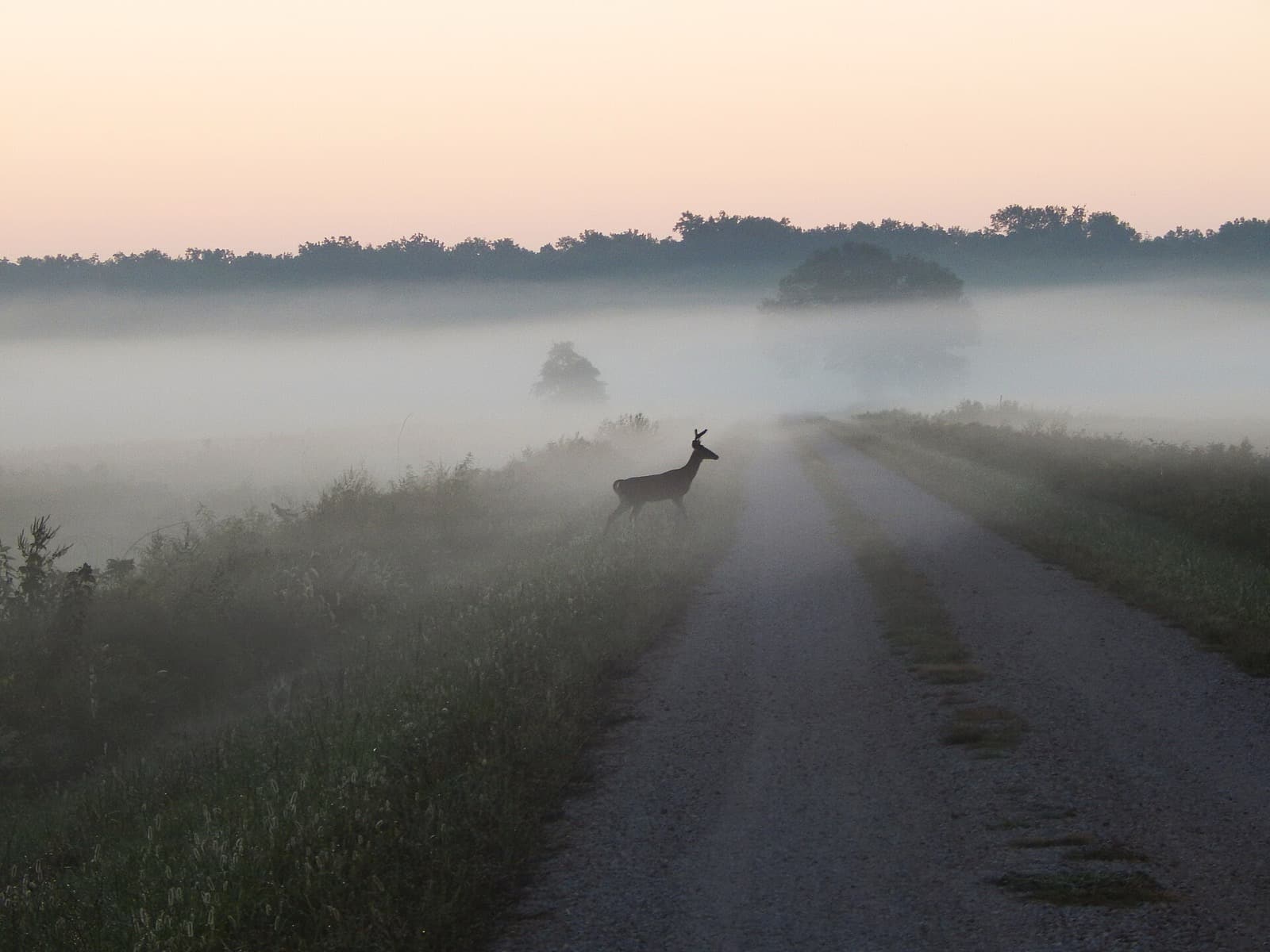
Deer Collision Season
October through December, when deer cross roads most. American drivers face 1 in 145 odds of an animal collision claim in State Farm’s 2025-2026 analysis, and November leads the year.
Fatal animal crashes by month, 2015 to 2024
NHTSA’s Fatality Analysis Reporting System recorded 1,870 fatal crashes from 2015 to 2024 in which the first harmful event was hitting a live animal, with 1,964 deaths. June has the most, 254, and October to December together hold 28 percent. Claims tell a different calendar: State Farm names November, October and December as the months drivers are most likely to hit a large animal, because most strikes damage a car and hurt no one.
Fatal animal crashes peak after dusk
530 of the 1,870 crashes happened between 7 PM and 10 PM, the busiest three hours of the day, and a smaller rise comes before dawn, with 94 between 5 AM and 6 AM. 62 percent happened in the dark and 9.2 percent at dusk or dawn.
Odds of hitting a deer, by state
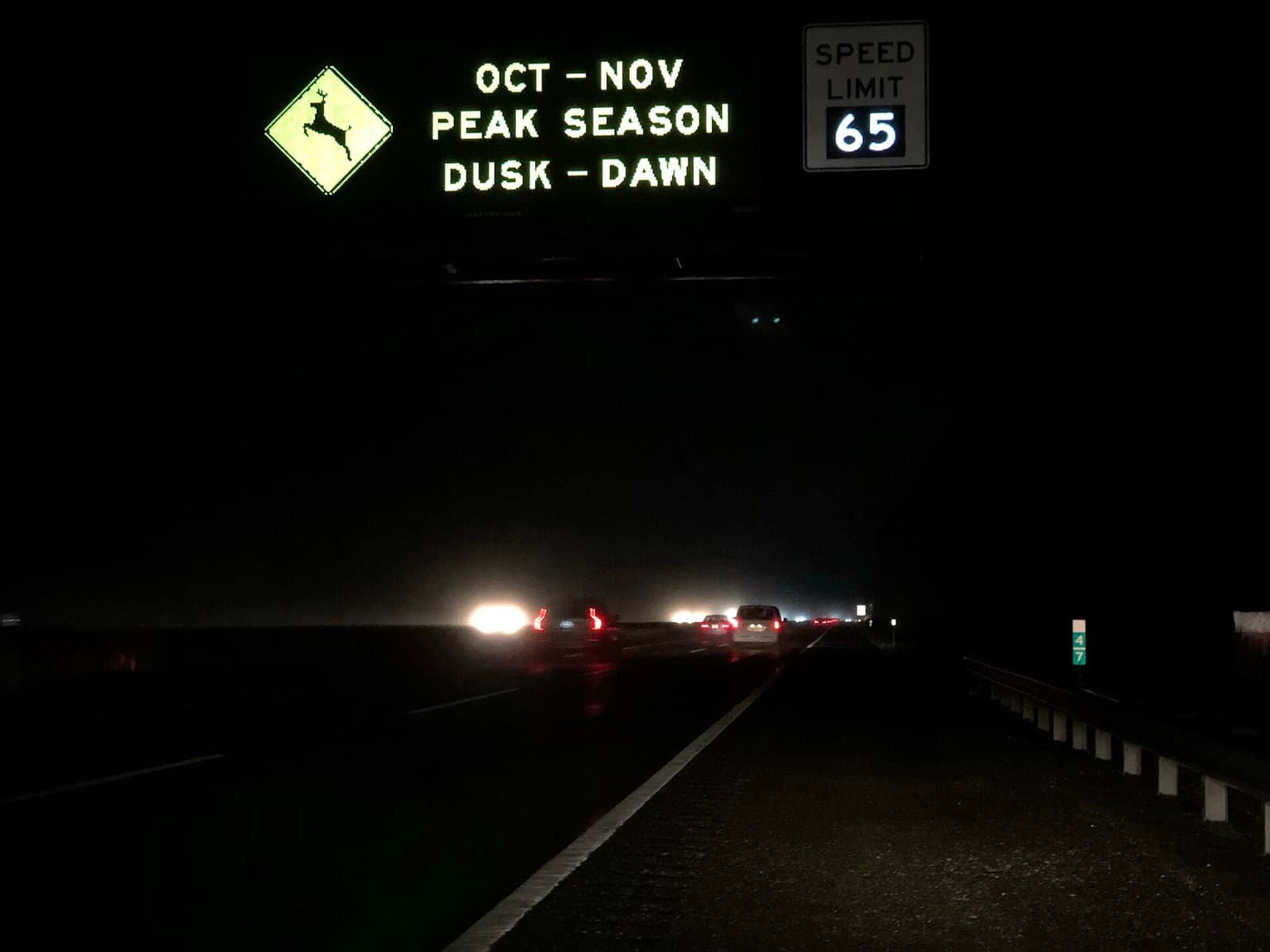
State Farm ranks the 50 states and the District of Columbia by the likelihood of an animal collision claim, from industry claims between July 1, 2025 and June 30, 2026. West Virginia leads at 1 in 46; the national figure is 1 in 145. Beside it, the yearly average of fatal animal crashes in FARS and the month with the most of them, which in many states falls outside the autumn claim peak.
| Rank | State | Odds of an animal collision claim | Fatal animal crashes a year | Month with the most fatal animal crashes |
|---|---|---|---|---|
| 1 | West Virginia | 1 in 46 | 2.2 | Jun and Jul |
| 2 | Montana | 1 in 54 | 4.6 | Aug |
| 3 | Wisconsin | 1 in 62 | 11.1 | Jun |
| 4 | Pennsylvania | 1 in 64 | 12.2 | Oct |
| 5 | Michigan | 1 in 68 | 11.5 | Jun |
| 6 | Iowa | 1 in 81 | 3.6 | Jun |
| 7 | Mississippi | 1 in 81 | 2.5 | Dec |
| 8 | Virginia | 1 in 81 | 3.3 | Nov |
| 9 | Maine | 1 in 85 | 1.4 | Jul |
| 10 | South Dakota | 1 in 86 | 1.8 | Aug |
| 11 | Kansas | 1 in 89 | 4.5 | May |
| 12 | Minnesota | 1 in 91 | 5.8 | Jun |
| 13 | North Carolina | 1 in 95 | 4.2 | Oct |
| 14 | Wyoming | 1 in 96 | 1.3 | Jun |
| 15 | Missouri | 1 in 97 | 5.7 | Sep |
| 16 | Kentucky | 1 in 100 | 5.1 | Nov |
| 17 | North Dakota | 1 in 100 | 1.5 | Aug |
| 18 | South Carolina | 1 in 103 | 5.0 | Oct |
| 19 | Massachusetts | 1 in 106 | 0.3 | 3 in ten years |
| 20 | Ohio | 1 in 108 | 7.0 | Jun and Oct |
| 21 | Alabama | 1 in 109 | 2.5 | Oct |
| 22 | Georgia | 1 in 115 | 5.4 | Oct |
| 23 | Indiana | 1 in 116 | 5.6 | May |
| 24 | Maryland | 1 in 117 | 1.4 | Jan |
| 25 | Oklahoma | 1 in 124 | 5.0 | Jun and Jul |
| 26 | Tennessee | 1 in 129 | 3.9 | Sep |
| 27 | Vermont | 1 in 133 | 0.4 | 4 in ten years |
| 28 | Arkansas | 1 in 135 | 2.7 | Jun and Nov |
| 29 | Delaware | 1 in 152 | 0.3 | 3 in ten years |
| 30 | Idaho | 1 in 159 | 0.9 | 9 in ten years |
| 31 | Nebraska | 1 in 161 | 1.6 | Sep |
| 32 | New Hampshire | 1 in 179 | 0.7 | 7 in ten years |
| 33 | New York | 1 in 185 | 5.5 | Jul and Oct |
| 34 | Rhode Island | 1 in 193 | 0.2 | 2 in ten years |
| 35 | Illinois | 1 in 195 | 6.0 | Jun |
| 36 | Louisiana | 1 in 215 | 1.6 | May and Jul |
| 37 | Oregon | 1 in 223 | 2.3 | Sep |
| 38 | Texas | 1 in 223 | 18.6 | Jul |
| 39 | New Jersey | 1 in 245 | 2.3 | Nov |
| 40 | Utah | 1 in 251 | 1.6 | May |
| 41 | Colorado | 1 in 253 | 3.3 | Sep |
| 42 | Connecticut | 1 in 289 | 0.7 | 7 in ten years |
| 43 | New Mexico | 1 in 292 | 2.4 | Jul |
| 44 | Washington | 1 in 305 | 2.3 | Aug |
| 45 | California | 1 in 430 | 3.9 | Nov |
| 46 | Florida | 1 in 543 | 5.6 | Mar |
| 47 | Alaska | 1 in 580 | 1.4 | Sep |
| 49 | Arizona | 1 in 682 | 3.2 | Apr |
| 50 | Nevada | 1 in 838 | 1.1 | Oct |
| 51 | Hawaii | 1 in 852 | 0.0 | None recorded |
Odds and ranks: State Farm, How likely are you to have an animal collision? (2025-2026), with the State Farm newsroom release. Fatal animal crashes: NHTSA Fatality Analysis Reporting System (FARS), first harmful event Live Animal, 2015 to 2024. Compiled 2026-09-21. Ranks run from 1 to 51 because State Farm ranks the District of Columbia alongside the states, so one number in the sequence belongs to Washington, DC.
The rut and the clock change arrive together
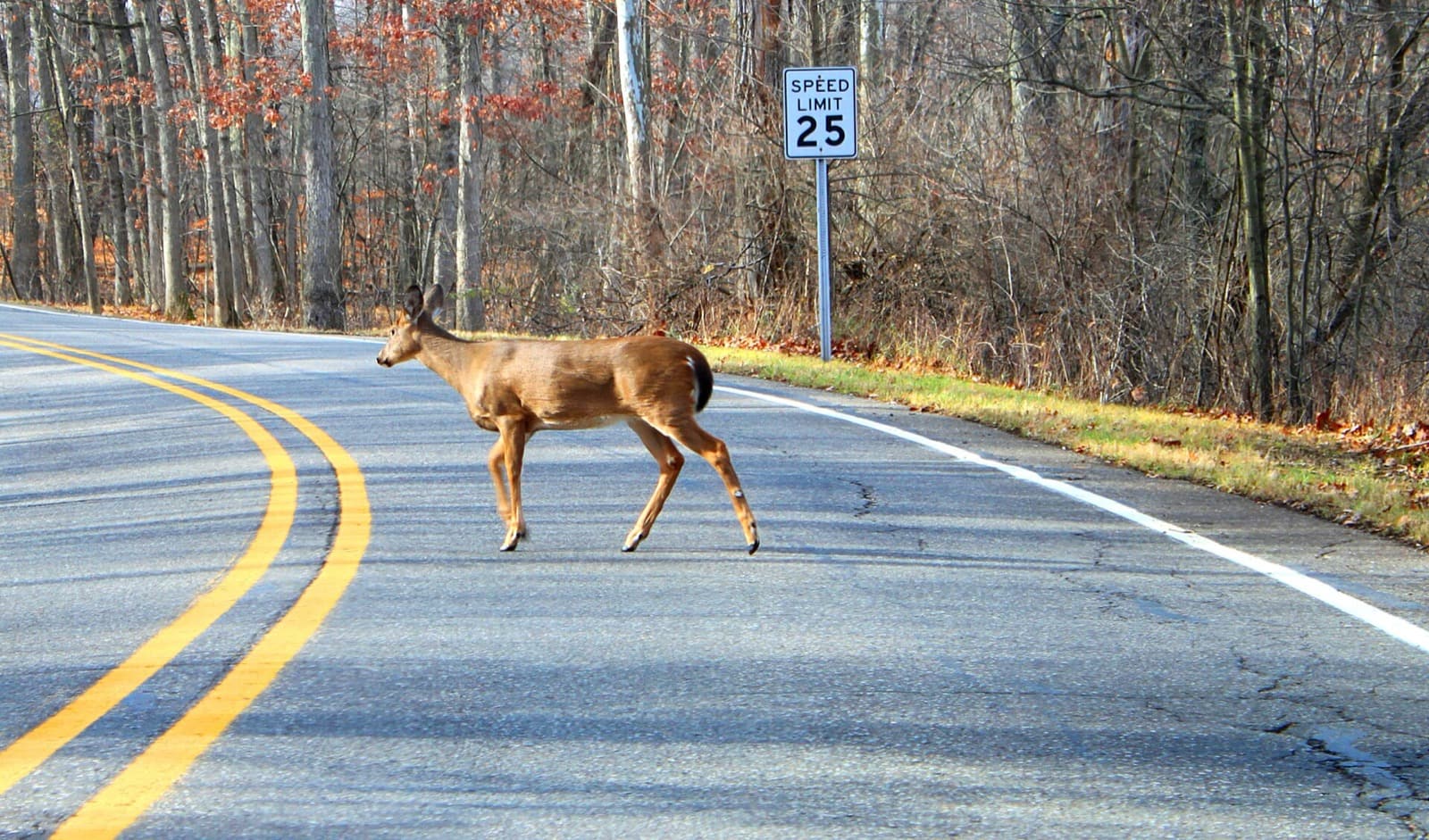
White-tailed deer breed from October into December across most of the country, and the Insurance Institute for Highway Safety ties the November claim peak to that mating season, when deer are most active. Then on November 7, 2027, clocks fall back an hour, and the evening drive home moves into dusk. In Philadelphia, sunset goes from 5:53 PM to 4:52 PM overnight.
Philadelphia, 61 minutes earlier by the clock.
“The months drivers are most likely to collide with a large animal in the U.S. are (in order) November, October and December.”State Farm, quoted exactly.
“Deaths from collisions with animals increased from 89 in 1975 to 210 in 2024. In 2024, the highest number of these deaths occurred during July-September.”IIHS, Fatality Facts 2024: Collisions with fixed objects and animals (posted June 2026), quoted exactly.
“The rate of animal-strike-related insurance claims in November is more than twice the yearly average, according to an analysis of claims from 2013 to 2022 conducted by the Highway Loss Data Institute. The peak coincides with mating season, when deer are most active. The fewest animal strike claims typically occur in August.”IIHS / HLDI news, October 18, 2023, quoted exactly.
“The claims follow a very consistent pattern in line with the mating and hunting season over the years, rising rapidly in October, peaking in November, and then dropping off in December and January”Matt Moore, senior vice president of HLDI, IIHS news, October 22, 2019, quoted exactly.
Clock change: Uniform Time Act, 15 U.S.C. 260a, and 49 CFR part 71. Sunset times calculated for Philadelphia and checked against the U.S. Naval Observatory Astronomical Applications Department. FARS records 210 deaths in 204 fatal animal crashes in 2024.
What state agencies tell drivers
Transportation departments and highway patrols repeat the same few lines every autumn, and the one they stress most is about swerving. Each is quoted exactly, with the agency linked.
“If you cannot avoid hitting a deer with your vehicle, brake firmly and stay in your lane. Avoid sudden swerving, which can result in a loss of control and a more serious crash.”Wisconsin Department of Transportation, quoted exactly.
“If a deer runs in front of you, do not swerve. Brake firmly and stay in your lane.”Tennessee Department of Safety and Homeland Security / Tennessee Highway Patrol, quoted exactly.
“Don’t swerve to avoid hitting a deer. Swerving can cause motorists to lose control and travel off the road or into oncoming traffic.”Missouri Department of Transportation, quoted exactly.
“While the urge to swerve is instinctual, do not veer for deer. Swerving aggressively could cause you to lose control of your vehicle and increase the severity of a crash.”Virginia Department of Transportation, quoted exactly.
“Simple tips to avoid an animal collision are: scan the road ahead, use high-beam headlights when able, be extra cautious at dawn and dusk and if a collision is unavoidable, brake – don’t swerve to stay in your lane.”Ohio State Highway Patrol, quoted exactly.
“Use high beams when it’s safe to do so to help spot deer near the roadway.”Tennessee Department of Safety and Homeland Security / Tennessee Highway Patrol, quoted exactly.
“If you see a deer cross the road, decrease speed. Deer often travel in groups, so expect other deer to follow”New York State Department of Motor Vehicles, quoted exactly.
“Don’t Swerve: Trying to avoid a deer can result in a more serious crash with an oncoming vehicle or roadside object.”Kentucky Transportation Cabinet, quoted exactly.
Deer collision season in every state
Questions people ask about deer collision season
Fatal animal crash counts compiled 2026-09-21 from the NHTSA Fatality Analysis Reporting System (FARS) (2015 to 2024, first harmful event Live Animal, any species). State Farm odds and agency quotes compiled 2026-09-21 from the pages linked throughout, quoted exactly.