
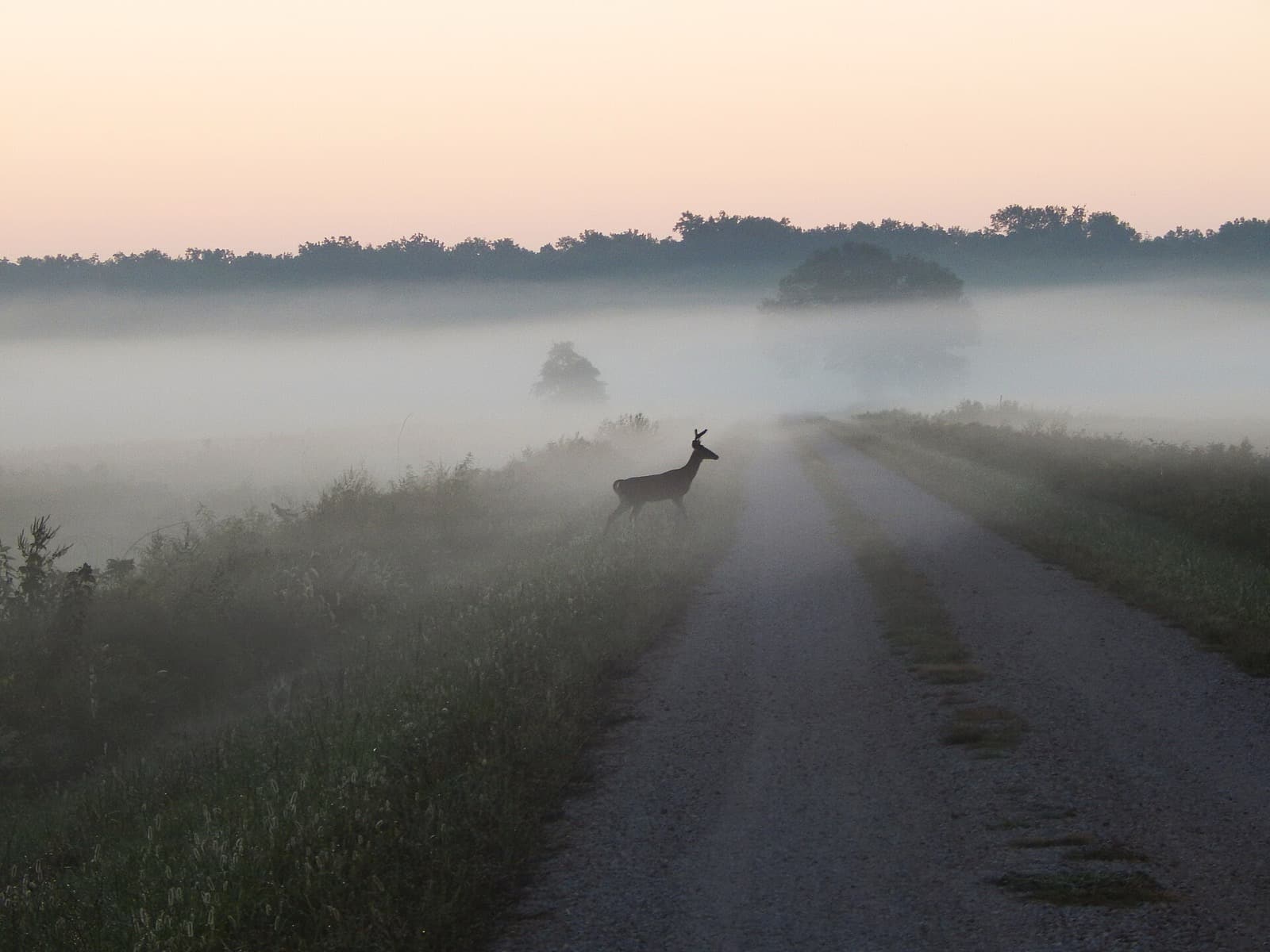
Deer Collision Season in Kentucky
1 in 100 odds of an animal collision claim, 16th of 51 in State Farm’s 2025-2026 ranking. Kentucky deer range from the Appalachian counties in the east through the Bluegrass horse country to the farm and river land of the west.
Odds of hitting a deer in Kentucky
1 in 100, from State Farm’s analysis of industry animal collision claims between July 1, 2025 and June 30, 2026. That ranks Kentucky 16th of 51 (the 50 states and the District of Columbia), in the high likelihood category, against a national figure of 1 in 145. That is a higher likelihood than 1 in 105 in the 2024-2025 edition.
Source: State Farm, How likely are you to have an animal collision? (2025-2026). Compiled 2026-09-21.
Fatal animal crashes in Kentucky by month
NHTSA’s Fatality Analysis Reporting System recorded 51 fatal animal crashes in Kentucky from 2015 to 2024, about 5.1 a year, with 52 deaths. That is 0.7 percent of all fatal crashes in the state and 13th among the states by count. November is the month with the most fatal animal crashes in Kentucky, 10 of 51 across the ten years. FARS counts crashes with any animal; the insurance claim season, October to December, is shaded.
Source: NHTSA Fatality Analysis Reporting System (FARS), first harmful event Live Animal, 2015 to 2024. Compiled 2026-09-21.
Deer crashes Kentucky reports
State counts include crashes that injured no one, so they run far higher than FARS, and each state defines and counts them its own way.
3,4062024 in Kentucky: highway crashes that reported a vehicle striking a deer
6 deaths in the same count.
“In Kentucky, there were 3,406 highway crashes in 2024 that reported a vehicle striking a deer, up nearly 180 over the previous year and the highest recorded in the last five years. As a result of those collisions, six people were killed – three more than the previous year – and 22 were seriously injured”Kentucky Transportation Cabinet (KYTC), quoted exactly.
Compiled 2026-09-21.
When the deer rut runs in Kentucky
The deer rut in Kentucky runs October 25 to December 31. Peak, as the agency describes it: mid-November.
“Increased deer activity and collisions typically occur during October, November, December”Kentucky Transportation Cabinet, news release: Transportation Officials Issue Antler Alert to Encourage Motorists To Do Their Part To Stay Safe On Roadways This Fall (release subheading; the release adds that last November saw more than 700 wildlife collisions, the highest of any month), 2025-10-13, quoted exactly.
Sunset in Louisville when the clocks fall back
On November 7, 2027, clocks fall back an hour and sunset in Louisville moves from 6:38 PM to 5:37 PM, putting the evening drive home in dusk and darkness.
Louisville, 61 minutes earlier by the clock.
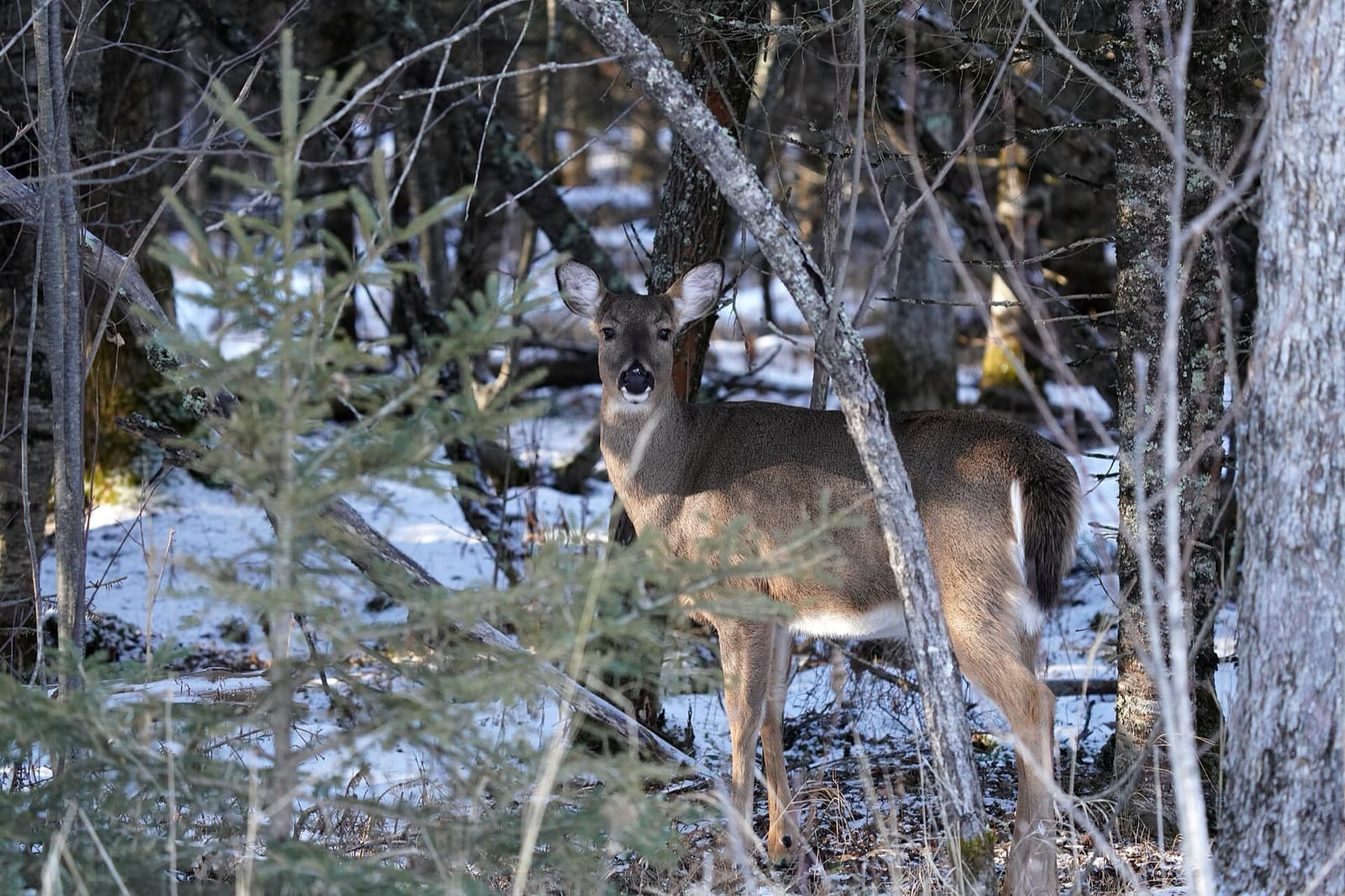
Clock change: Uniform Time Act, 15 U.S.C. 260a, and 49 CFR part 71. Sunset calculated for Louisville and checked against the U.S. Naval Observatory Astronomical Applications Department.
What state agencies tell drivers
“Don’t Swerve: Trying to avoid a deer can result in a more serious crash with an oncoming vehicle or roadside object.”Kentucky Transportation Cabinet, quoted exactly.
“If you cannot avoid hitting a deer with your vehicle, brake firmly and stay in your lane. Avoid sudden swerving, which can result in a loss of control and a more serious crash.”Wisconsin Department of Transportation, quoted exactly.
“If a deer runs in front of you, do not swerve. Brake firmly and stay in your lane.”Tennessee Department of Safety and Homeland Security / Tennessee Highway Patrol, quoted exactly.
Questions people ask about deer collisions in Kentucky
Fatal animal crash counts compiled 2026-09-21 from the NHTSA Fatality Analysis Reporting System (FARS). State Farm odds, agency counts and quotes compiled 2026-09-21 from the pages linked above, quoted exactly.