
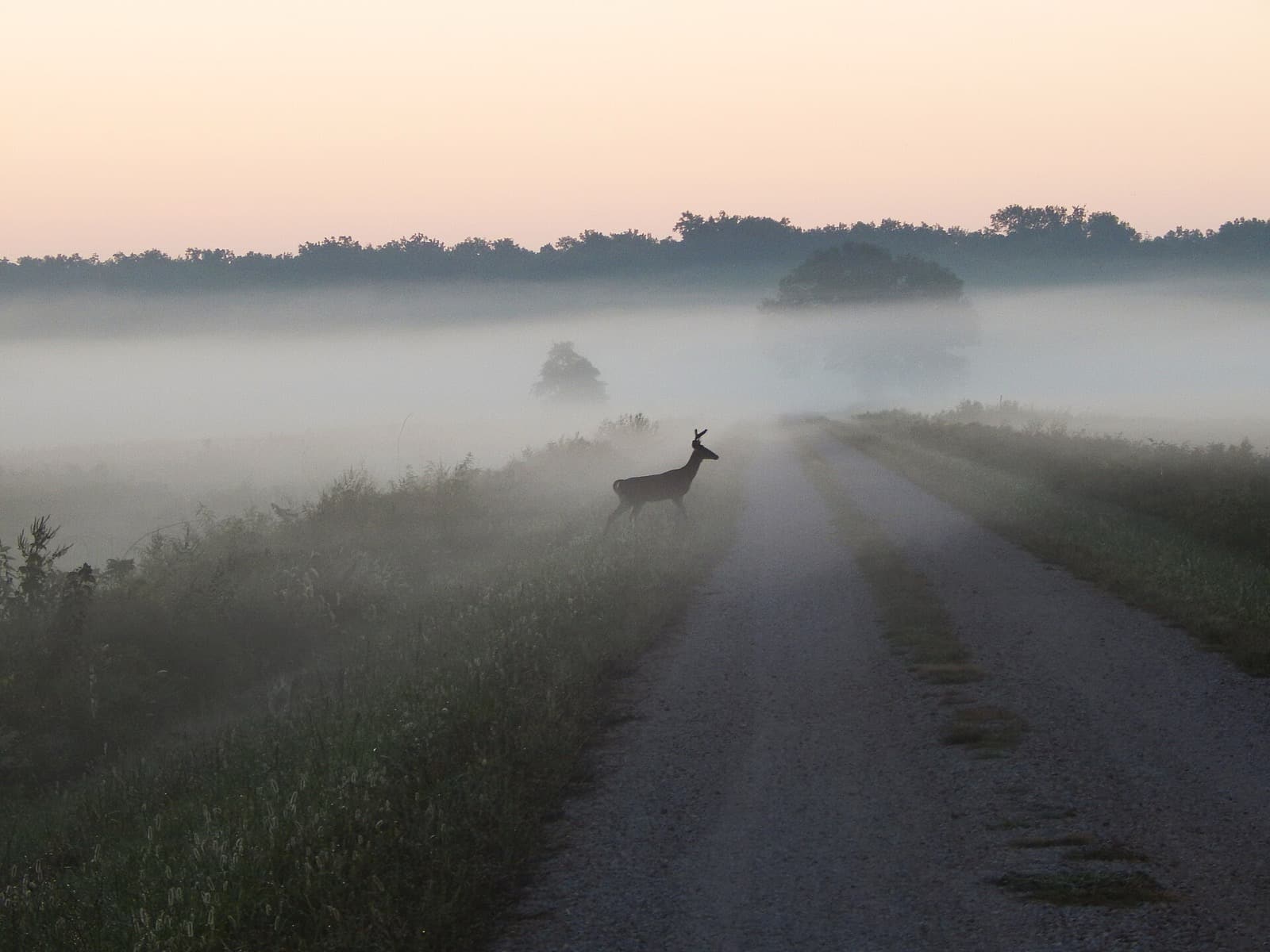
Deer Collision Season in Alaska
1 in 580 odds of an animal collision claim, 47th of 51 in State Farm’s 2025-2026 ranking. Moose are the large animal on Alaska roads, especially around Anchorage and the Mat-Su Valley, with Sitka black-tailed deer in the southeast.
Odds of hitting a deer in Alaska
1 in 580, from State Farm’s analysis of industry animal collision claims between July 1, 2025 and June 30, 2026. That ranks Alaska 47th of 51 (the 50 states and the District of Columbia), in the low likelihood category, against a national figure of 1 in 145. That is a higher likelihood than 1 in 661 in the 2024-2025 edition.
Source: State Farm, How likely are you to have an animal collision? (2025-2026). Compiled 2026-09-21.
Fatal animal crashes in Alaska by month
NHTSA’s Fatality Analysis Reporting System recorded 14 fatal animal crashes in Alaska from 2015 to 2024, about 1.4 a year, with 15 deaths. That is 2.1 percent of all fatal crashes in the state and 38th among the states by count. September is the month with the most fatal animal crashes in Alaska, 3 of 14 across the ten years. FARS counts crashes with any animal; the insurance claim season, October to December, is shaded.
Source: NHTSA Fatality Analysis Reporting System (FARS), first harmful event Live Animal, 2015 to 2024. Compiled 2026-09-21.
When the deer rut runs in Alaska
The deer rut in Alaska peaks late November.
Source: Alaska Department of Fish and Game, Sitka black-tailed deer species profile.
Sunset in Anchorage when the clocks fall back
On November 7, 2027, clocks fall back an hour and sunset in Anchorage moves from 5:44 PM to 4:42 PM, putting the evening drive home in dusk and darkness.
Anchorage, 63 minutes earlier by the clock.
Clock change: Uniform Time Act, 15 U.S.C. 260a, and 49 CFR part 71. Sunset calculated for Anchorage and checked against the U.S. Naval Observatory Astronomical Applications Department.
What state agencies tell drivers
“If you cannot avoid hitting a deer with your vehicle, brake firmly and stay in your lane. Avoid sudden swerving, which can result in a loss of control and a more serious crash.”Wisconsin Department of Transportation, quoted exactly.
“If a deer runs in front of you, do not swerve. Brake firmly and stay in your lane.”Tennessee Department of Safety and Homeland Security / Tennessee Highway Patrol, quoted exactly.
“Don’t swerve to avoid hitting a deer. Swerving can cause motorists to lose control and travel off the road or into oncoming traffic.”Missouri Department of Transportation, quoted exactly.
Questions people ask about deer collisions in Alaska
Fatal animal crash counts compiled 2026-09-21 from the NHTSA Fatality Analysis Reporting System (FARS). State Farm odds, agency counts and quotes compiled 2026-09-21 from the pages linked above, quoted exactly.