
Hummingbird Migration 2026: Where the Birds Are Right Now
Hummingbird migration is a three-month wave — Alaska empties in July while Gulf Coast feeders stay busy into November. Every state below is grouped by today’s phase of the migration, so you know whether to fill the feeder or wash it and store it.
Hummingbird timing for your ZIP code
When they arrive, when they leave, and when your feeders can come down — for your exact area.
Every state, by today’s migration phase
Departing nowsouthbound migration underway
Winter hummingbird stateskeep feeders up year-round
Season completebirds have moved south
Arrival & departure timing, every state A–Z
| State | First arrivals | Peak departure | Last stragglers | Feeders down |
|---|---|---|---|---|
| Alabama | March 12 | October 1 | November 5 | Keep up all year |
| Alaska | April 15 | August 5 | September 5 | September 20 |
| Arizona | February 15 | October 10 | November 15 | Keep up all year |
| Arkansas | March 25 | September 25 | October 25 | November 8 |
| California | January 15 | September 1 | October 15 | Keep up all year |
| Colorado | April 15 | September 5 | September 28 | October 12 |
| Connecticut | April 20 | September 15 | October 8 | October 22 |
| Delaware | April 10 | September 18 | October 15 | November 1 |
| Florida | March 1 | October 10 | November 20 | Keep up all year |
| Georgia | March 15 | October 1 | November 5 | Keep up all year |
| Idaho | April 20 | August 28 | September 20 | October 5 |
| Illinois | April 12 | September 15 | October 8 | October 22 |
| Indiana | April 12 | September 15 | October 8 | October 22 |
| Iowa | April 22 | September 12 | October 2 | October 16 |
| Kansas | April 15 | September 15 | October 10 | October 24 |
| Kentucky | April 5 | September 18 | October 15 | November 1 |
| Louisiana | March 1 | October 5 | November 15 | Keep up all year |
| Maine | May 1 | September 5 | September 25 | October 10 |
| Maryland | April 8 | September 18 | October 15 | November 1 |
| Massachusetts | April 22 | September 12 | October 5 | October 20 |
| Michigan | April 25 | September 8 | September 30 | October 15 |
| Minnesota | May 1 | September 5 | September 25 | October 10 |
| Mississippi | March 10 | October 1 | November 10 | Keep up all year |
| Missouri | April 8 | September 18 | October 12 | October 26 |
| Montana | April 25 | August 25 | September 18 | October 2 |
| Nebraska | April 25 | September 10 | October 1 | October 15 |
| Nevada | April 1 | September 10 | October 5 | Keep up all year |
| New Hampshire | April 28 | September 8 | September 28 | October 12 |
| New Jersey | April 15 | September 15 | October 12 | October 26 |
| New Mexico | March 25 | September 25 | October 20 | November 5 |
| New York | April 20 | September 12 | October 5 | October 20 |
| North Carolina | March 25 | September 25 | October 25 | Keep up all year |
| North Dakota | May 10 | August 25 | September 15 | September 30 |
| Ohio | April 15 | September 15 | October 10 | October 25 |
| Oklahoma | April 1 | September 22 | October 18 | November 1 |
| Oregon | February 20 | August 20 | September 25 | Keep up all year |
| Pennsylvania | April 15 | September 15 | October 10 | October 24 |
| Rhode Island | April 22 | September 14 | October 6 | October 20 |
| South Carolina | March 20 | September 28 | November 1 | Keep up all year |
| South Dakota | May 1 | September 5 | September 22 | October 6 |
| Tennessee | March 28 | September 22 | October 20 | November 5 |
| Texas | March 5 | September 25 | November 10 | Keep up all year |
| Utah | April 12 | September 5 | September 30 | October 14 |
| Vermont | April 28 | September 8 | September 28 | October 12 |
| Virginia | April 5 | September 22 | October 20 | November 5 |
| Washington | February 25 | August 20 | September 25 | Keep up all year |
| West Virginia | April 12 | September 15 | October 10 | October 25 |
| Wisconsin | April 28 | September 8 | September 30 | October 15 |
| Wyoming | May 1 | August 28 | September 20 | October 5 |
Hawaii is the one state with no hummingbirds at all — here’s why.
The spring return: when to hang feeders in 2027
The northbound wave is the fall migration in reverse, three months compressed into a sprint. Ruby-throats make landfall on the Gulf Coast in late February, reach the mid-South by the last week of March, cross the Ohio Valley and the mid-Atlantic through April, and hit the Canadian border by mid-May. Out west, rufous hummingbirds ride the blooming Pacific Coast north starting in February — the earliest long-distance migration in North America.
The practical rule: hang feeders one to two weeks before your state’s typical first arrival (each state page lists it). The first males arrive depleted from a flight that burned half their body weight — a ready feeder can anchor a territorial male to your yard for the whole season. And the recipe never changes: 1 part white sugar, 4 parts water, no dye, no honey, refreshed every few days.
How the migration actually works
The East: one bird, one epic
Everything east of the Great Plains runs on the ruby-throated hummingbird. Many cross the Gulf of Mexico nonstop — 500 miles in 18–22 hours — after doubling their body weight on the coast.
The West: a species relay
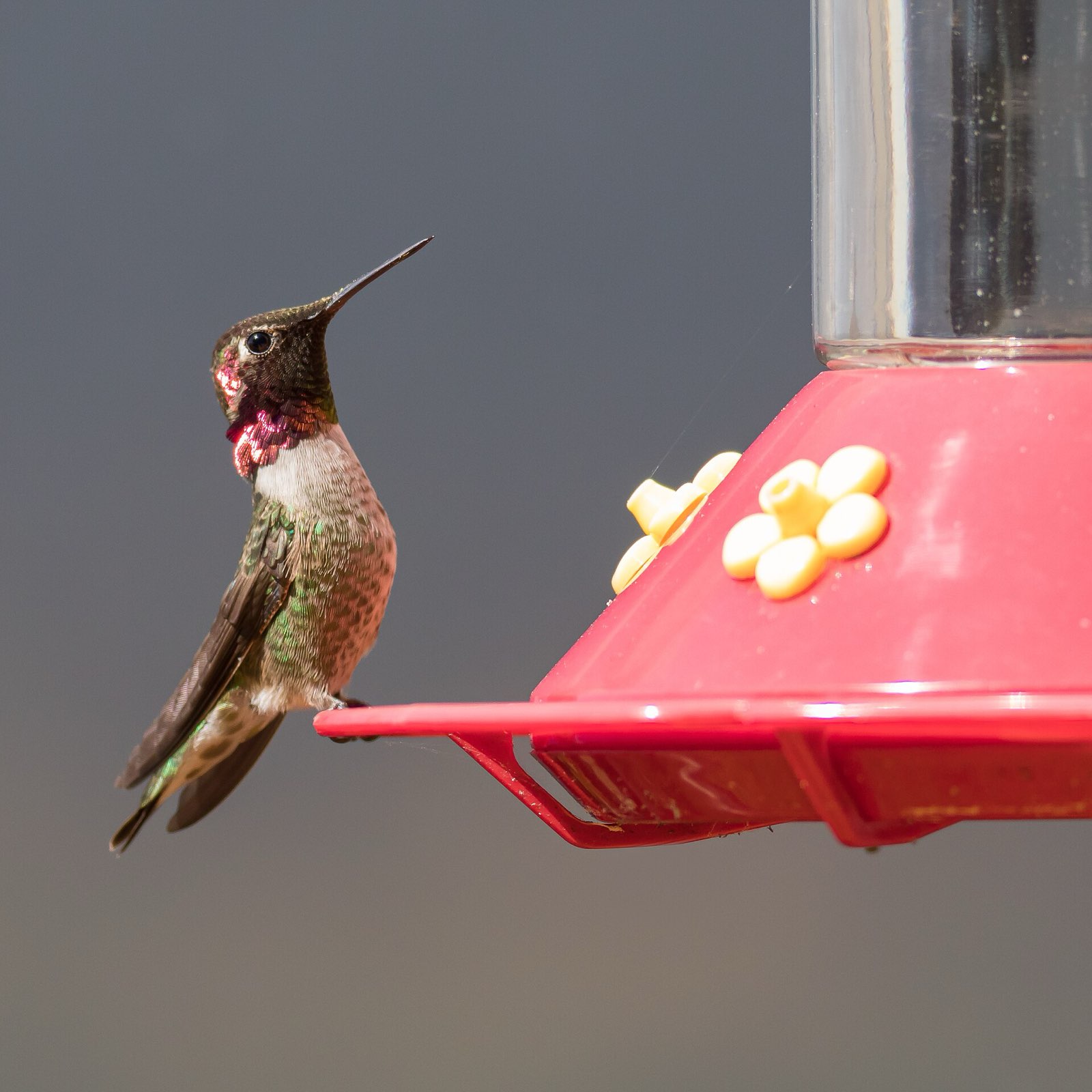
Rufous, calliope, black-chinned, and broad-tailed trade places along the Rockies all summer, while Anna’s hummingbird holds the Pacific Coast year-round — even through Seattle ice storms.
The fuel math
Birds nearly double their weight before departure. That’s why late-summer feeders and jewelweed patches matter — every backyard is a gas station on a transcontinental route.
Hummingbird migration FAQ
Timing compiled from Journey North records, eBird seasonal abundance, and Audubon/USFWS range data. Same-season planning: fall foliage forecast, first frost dates, and the mosquito forecast for what else is flying while the feeders are still up.