
Real-Time Mosquito Forecast & West Nile Risk
Check your local mosquito risk with our real-time forecast. Get science-driven predictions for mosquito activity, West Nile and Zika risk, and prevention tips for your ZIP code.
The Science of Prediction
Mosquitoes follow weather. Our Multi-Timescale Mosquito Risk Model decodes the conditions that turn a quiet evening into peak biting season.
Micro-Climate
Real-time temperature, dew point, and wind. Mosquitoes barely fly above 10 mph wind or in dry air below 55°F dew point.
Breeding Water
Trailing 7-day rainfall maps standing water. The egg-to-adult mosquito lifecycle takes about a week in summer heat.
Activity Windows
Culex species peak at dusk and dawn. Aedes day-biters stay active sun-up to sun-down. Your state's dominant species shapes your risk hours.
ArboNET Surveillance
Calibrated against CDC ArboNET regional incidence data for West Nile, EEE, and dengue.
Don't Panic. Be Prepared.
A mosquito bite is rarely the start of a medical story. The basics work, and most cases never get past itchy.
West Nile Is Rare in Healthy Adults
About 80% of people infected with West Nile virus have no symptoms at all. Less than 1% develop serious neuroinvasive disease, and most of those cases occur in adults over 60.
DEET and Picaridin Work
EPA-registered repellents like DEET, picaridin, and IR3535 are highly effective. A 20% to 30% DEET application protects for four to six hours and is safe for healthy adults and kids over two months.
Eliminate Standing Water
Mosquitoes complete their lifecycle in about a week. Empty buckets, planter saucers, gutters, kiddie pools, and bird baths weekly and you break the cycle in your own yard.
Know Your Enemy
Six US species worth recognizing. Identification matters because activity timing and disease risk differ between Culex and Aedes far more than between any two ticks.
(Click a card for more info)
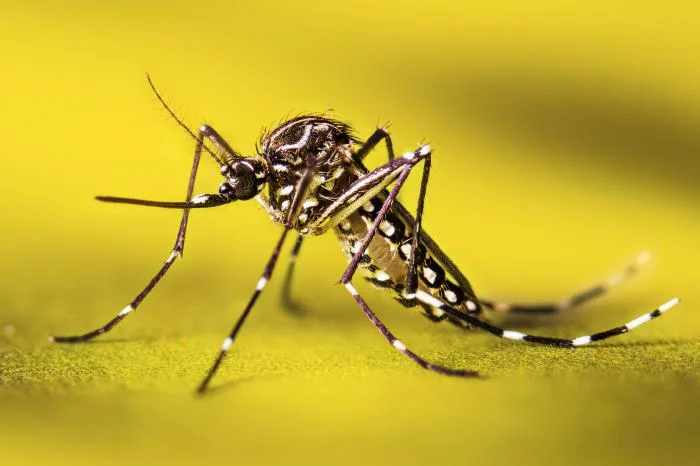
Yellow Fever Mosquito
Aedes aegyptiRegion: Gulf Coast, Southeast, Southwest
Risk: Zika, dengue, yellow fever, chikungunya.
Key Feature: Black body with white lyre-shaped markings on the thorax.
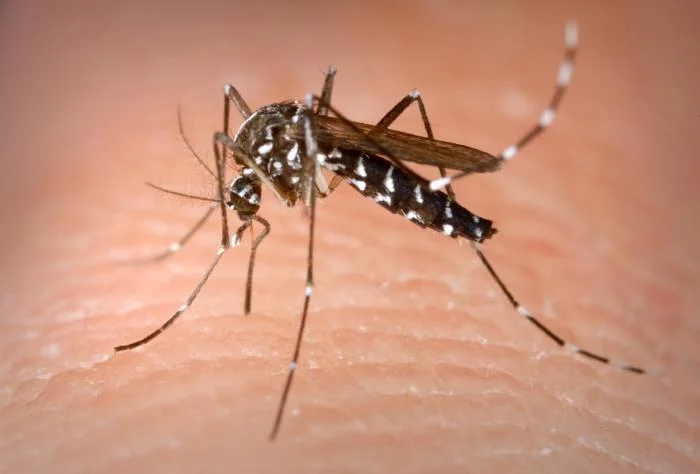
Asian Tiger Mosquito
Aedes albopictusRegion: Eastern US, Mid-Atlantic, Southeast, lower Midwest
Risk: Eastern Equine Encephalitis, dengue, chikungunya, Zika, dog heartworm.
Key Feature: A single bright white stripe down the center of the back.
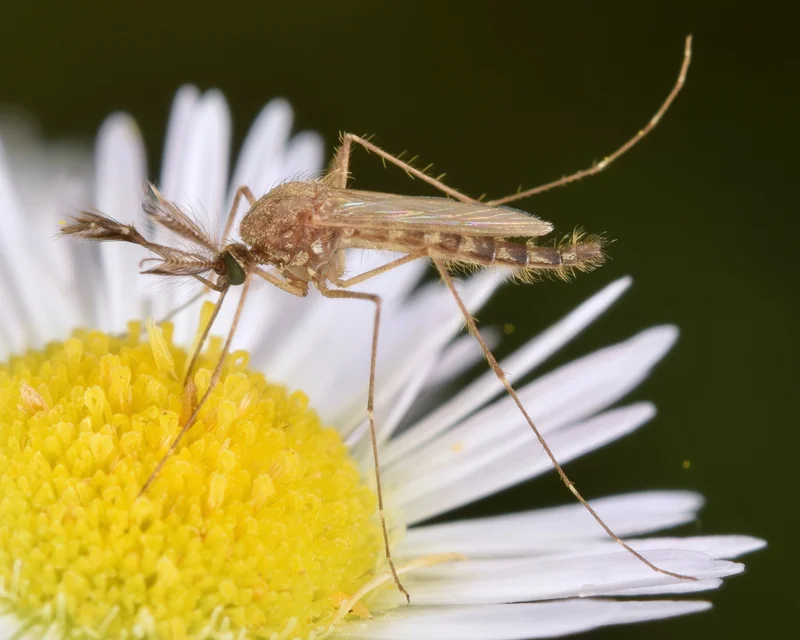
Inland Floodwater Mosquito
Aedes vexansRegion: Nationwide; especially prairies, river floodplains, and farmland
Risk: Aggressive nuisance biter. Weak vector for West Nile, dog heartworm.
Key Feature: Brown body with pale bands on the legs and a tapered abdomen.
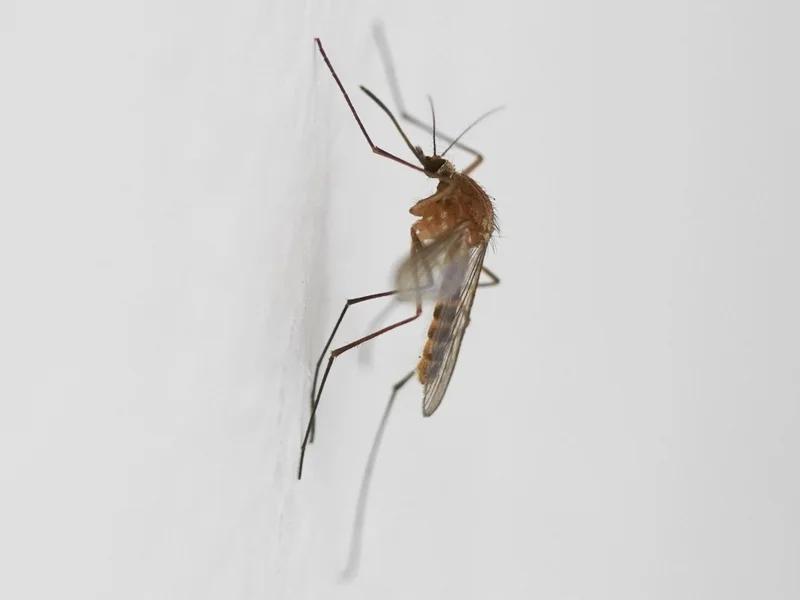
Northern House Mosquito
Culex pipiensRegion: Northeast, Mid-Atlantic, Midwest, Pacific Northwest
Risk: West Nile virus, St. Louis encephalitis, dog heartworm.
Key Feature: Medium brown body with banded abdomen. Looks nearly identical to Cx. quinquefasciatus.
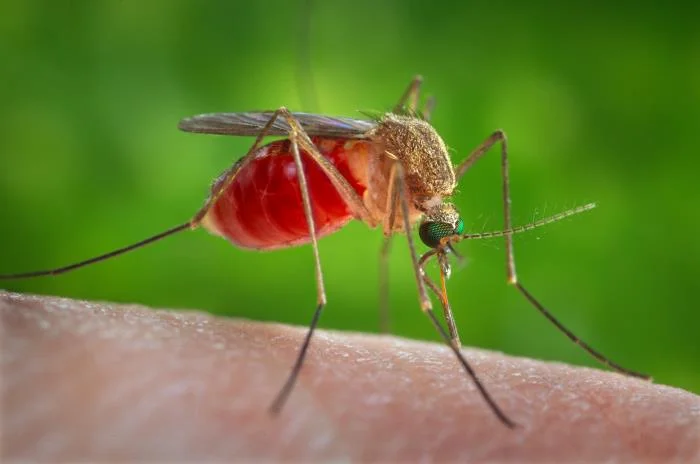
Southern House Mosquito
Culex quinquefasciatusRegion: Southern US, Mid-Atlantic, Southwest, Hawaii
Risk: West Nile virus, St. Louis encephalitis, dog heartworm.
Key Feature: Medium brown body with banded abdominal segments and no leg stripes.
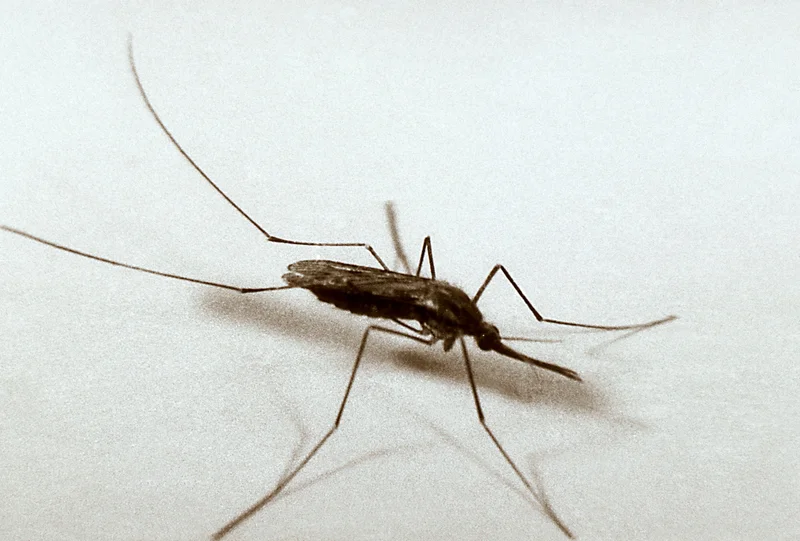
Common Malaria Mosquito
Anopheles quadrimaculatusRegion: Eastern US (range from East Coast to the Texas Panhandle)
Risk: Historical malaria vector; rare local cases.
Key Feature: Four dark spots clustered near the wing tips. Rests with body angled away from the surface.
Breaking the Cycle
The mosquito lifecycle takes about a week. Three habits cut local biting pressure faster than any spray ever will.
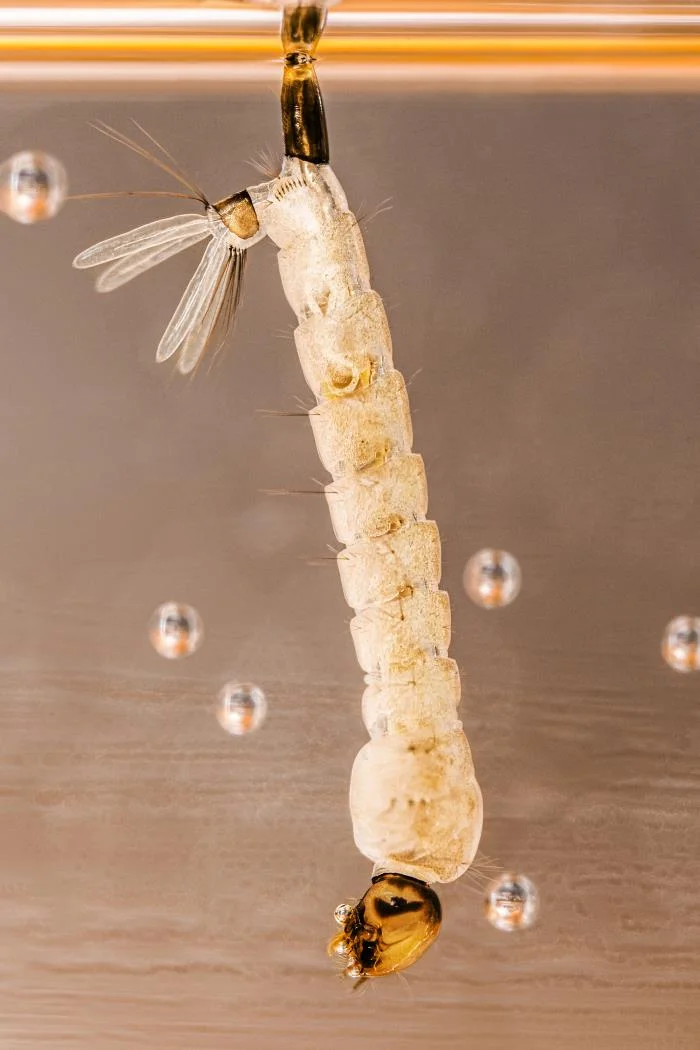
Aedes aegypti larva at the surface of standing water. Empty containers weekly and the cycle never finishes.
Drain the Yard Weekly
Walk your yard once a week and tip out anything holding water: buckets, planter saucers, kiddie pools, tarp folds, clogged gutters, even bottle caps. A week of standing water is one mosquito generation. Drain it before day seven and the eggs never become biters.
Repel Before You Go Out
EPA-registered repellents containing DEET, picaridin, IR3535, or oil of lemon eucalyptus actually work. Apply 20% to 30% DEET to exposed skin before going outside, especially at dusk and dawn when Culex is most active.
Seal the House
Window and door screens with no tears. Air conditioning over open windows where you can. A simple box fan on the porch makes mosquitoes work too hard to fly upwind. If symptoms ever do show up after a bite, fever and severe headache 2 to 15 days later mean see a doctor.
Protecting Your Furry Friends
Mosquito bites are how dogs get heartworm, and the disease is far easier to prevent than to treat. Cats are less commonly affected but not immune.
- Year-Round Prevention: Vet-prescribed monthly preventative blocks heartworm before it lodges in the heart and lungs. Skipping cold months is a common mistake in southern states where mosquitoes never really stop.
- Limit Dusk and Dawn Walks: Mosquito activity peaks at low-light hours in most of the country. In high-risk regions, shifting walks toward midday cuts exposure significantly.
- Annual Heartworm Test: Most preventatives require a clean test before refilling. A missed dose can mean a missed infection, and early detection makes treatment far cheaper and safer.
- Watch for Heartworm Signs: Chronic cough, exercise intolerance, weight loss, or unusual lethargy can all signal heartworm disease. If your dog shows any of these, see your vet.
Mosquito Forecasts by Region
Select your state for daily mosquito activity, West Nile and Zika risk, and prevention tips.
Mid-Atlantic
West Coast
Southwest
Mosquito Forecasts by State
Select your state for daily mosquito activity, West Nile and Zika risk, and prevention tips.
All 50 states. Built from CDC and NOAA data.