
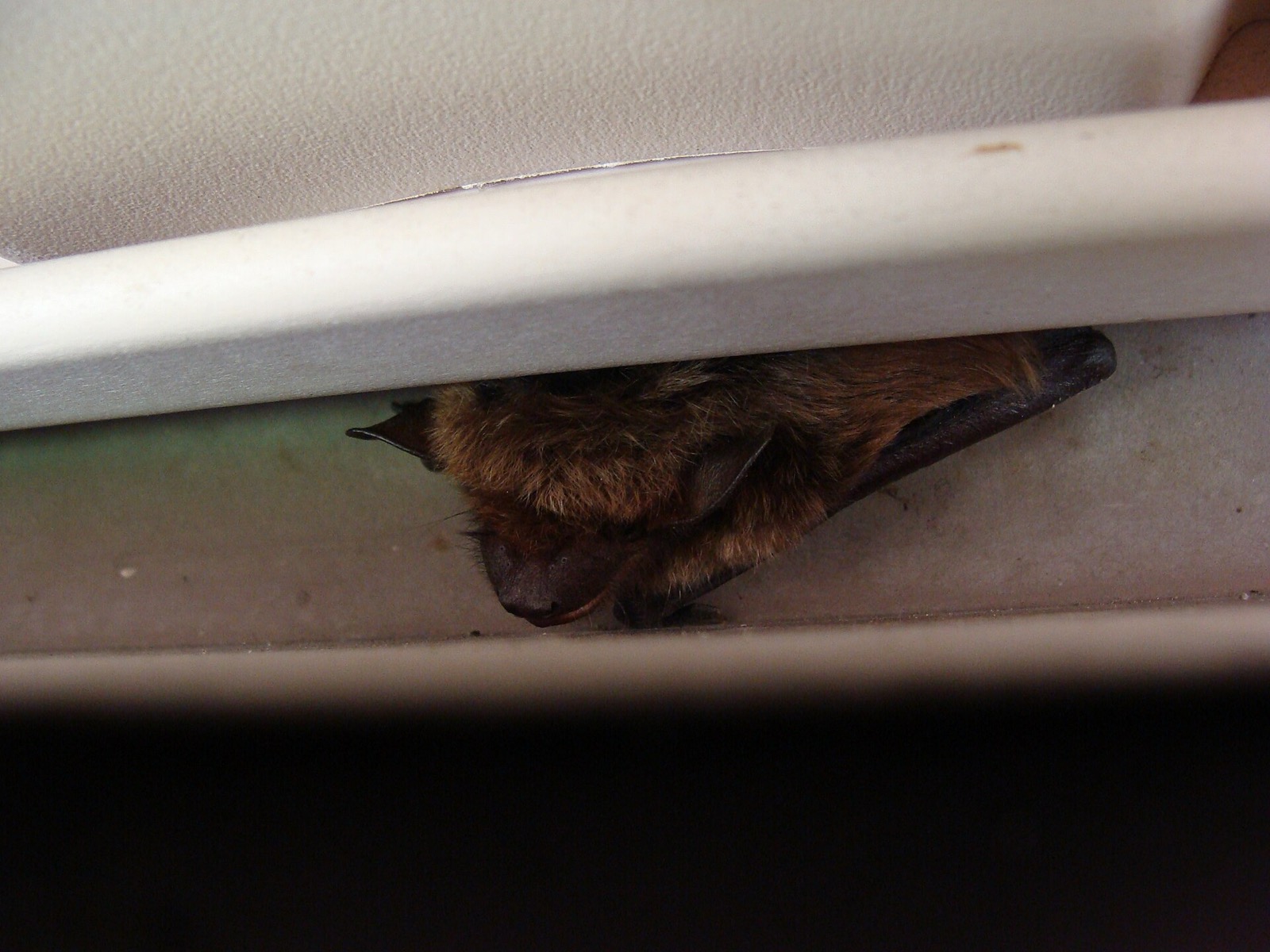
Attic Wildlife: When Eviction Is Restricted
Most states restrict bat exclusion while the pups are still flightless, and the dates are different in every one of them. This is what each state wildlife agency publishes, quoted and linked.
31 states publish dates, 11 describe the timing without them, 7 publish no exclusion timingBat exclusion timing, state by state
Read 28 August 2026The answers in the table below mean different things and the differences matter. “Dates published, as when not to” means the agency printed the period during which exclusion should be avoided. “Dates published, as when to do it” means the agency instead printed the months it wants the work done in, and the table reproduces that as the agency printed it. “Timing described” means a real statement with no date range. “Nothing found” means the agency publishes no timing page, which is not the same as there being no rule.
| State | Period named | What the agency publishes | Source |
|---|---|---|---|
| Alabama | April to August | Dates published, as when not to | ADCNR |
| Alaska | None given | Timing described, no dates | ADF&G |
| Arizona | November to January | Dates published, as when to do it | AZGFD |
| Arkansas | May to July | Dates published, as when not to | AGFC |
| California | None given | Timing described, no dates | CDFW |
| Colorado | June to August | Dates published, as when not to | CPW |
| Connecticut | June to mid-August | Dates published, as when not to | CT DEEP |
| Delaware | May 15 to August 31 | Dates published, as when not to | DNREC |
| Florida | April 16 to August 14 | Dates published, as when not to | FWC |
| Georgia | April 1 to July 31 | Dates published, as when not to | Georgia DNR WRD |
| Idaho | None given | Timing described, no dates | IDFG |
| Illinois | None given | Timing described, no dates | IDNR |
| Indiana | June 1 to August 15 | Dates published, as when not to | Indiana DNR |
| Iowa | None given | Timing described, no dates | Iowa DNR |
| Kansas | None given | Timing described, no dates | KDWP |
| Kentucky | mid-May to mid-August | Dates published, as when not to | KDFWR |
| Louisiana | May to August | Dates published, as when not to | LDWF |
| Maine | May 15 to August 15 | Dates published, as when not to | MDIFW |
| Maryland | September 1 to March 1 | Dates published, as when to do it | MD DNR |
| Massachusetts | June to July | Dates published, as when not to | MassWildlife |
| Michigan | May to mid-August | Dates published, as when not to | Michigan DNR |
| Minnesota | May 15 to August 1 | Dates published, as when not to | Minnesota DNR |
| Mississippi | None given | Timing described, no dates | MDWFP |
| Missouri | mid-May to mid-August | Dates published, as when not to | MDC |
| Montana | May to August | Dates published, as when not to | Montana FWP |
| Nebraska | June to July | Dates published, as when not to | NGPC |
| Nevada | May to August | Dates published, as when not to | NDOW |
| New Hampshire | Not found | Nothing found | NHFG |
| New Jersey | May 15 to July 31 | Dates published, as when not to | NJDEP Fish & Wildlife |
| New Mexico | Not found | Nothing found | NMDOW |
| New York | late May to mid-August | Dates published, as when not to | DEC |
| North Carolina | May 1 to July 31 | Dates published, as when not to | NCWRC |
| North Dakota | Not found | Nothing found | NDGF |
| Ohio | May 16 to July 31 | Dates published, as when not to | ODNR Division of Wildlife |
| Oklahoma | Not found | Nothing found | ODWC |
| Oregon | None given | Timing described, no dates | ODFW |
| Pennsylvania | None given | Timing described, no dates | PGC |
| Rhode Island | None given | Timing described, no dates | RIDEM |
| South Carolina | May to mid July | Dates published, as when not to | SCDNR |
| South Dakota | May to August | Dates published, as when not to | SDGFP |
| Tennessee | Not found | Nothing found | TWRA |
| Texas | Not found | Nothing found | TPWD |
| Utah | May to August | Dates published, as when not to | DWR |
| Vermont | mid-May to mid-August | Dates published, as when not to | VFWD |
| Virginia | May to August | Dates published, as when not to | DWR |
| Washington | mid-August to mid-October | Dates published, as when to do it | WDFW |
| West Virginia | Not found | Nothing found | WVDNR |
| Wisconsin | June 1 to July 31 | Dates published, as when not to | Wisconsin DNR |
| Wyoming | None given | Timing described, no dates | WGFD |
Every row links to that state’s page, where the agency’s sentence is reproduced in full rather than summarised into a column. The summary column is ours; the dates are the agency’s. Rules change between seasons, so the agency named in each row is the one to confirm with.
Why agencies publish these dates
The humane method that wildlife agencies describe is not a trap and not a poison. It is a one-way door: a sleeve or a sheet fitted over the gap the animals already use, which lets an animal out and does not let it back in. Once the roost is empty the gap is sealed. That is why the calendar matters so much. A one-way door fitted over a maternity roost lets the mothers out and shuts the flightless pups in.
“Bats can be safely evicted from homes via the use of one-way doors that allow bats to leave but not return.”
“Loosely hang plastic sheeting or bird netting over the exit hole(s) to prevent bats from returning and allow the remaining bats to exit.”
What a badly timed job does
“Exclusions occurring during this period will separate mothers from their flightless pups, leaving the pups to die of starvation and potentially exacerbating the homeowners’ bat problem as frantic bat mothers search for an opening to reach their pups.”
The CDC arrives at the same place from the public health side rather than the conservation side, which is worth noticing, because the two do not always agree about wildlife and here they do.
“Most bats leave in the fall or winter to migrate, so these are the best times to bat-proof your home. If you’re bat proofing between May and August, be careful not to trap young bats inside your home. Always be mindful of local rules or laws about removing bats. Some bats are endangered and may need special care if they are found in your home.”
Federal protection sits on top, not instead
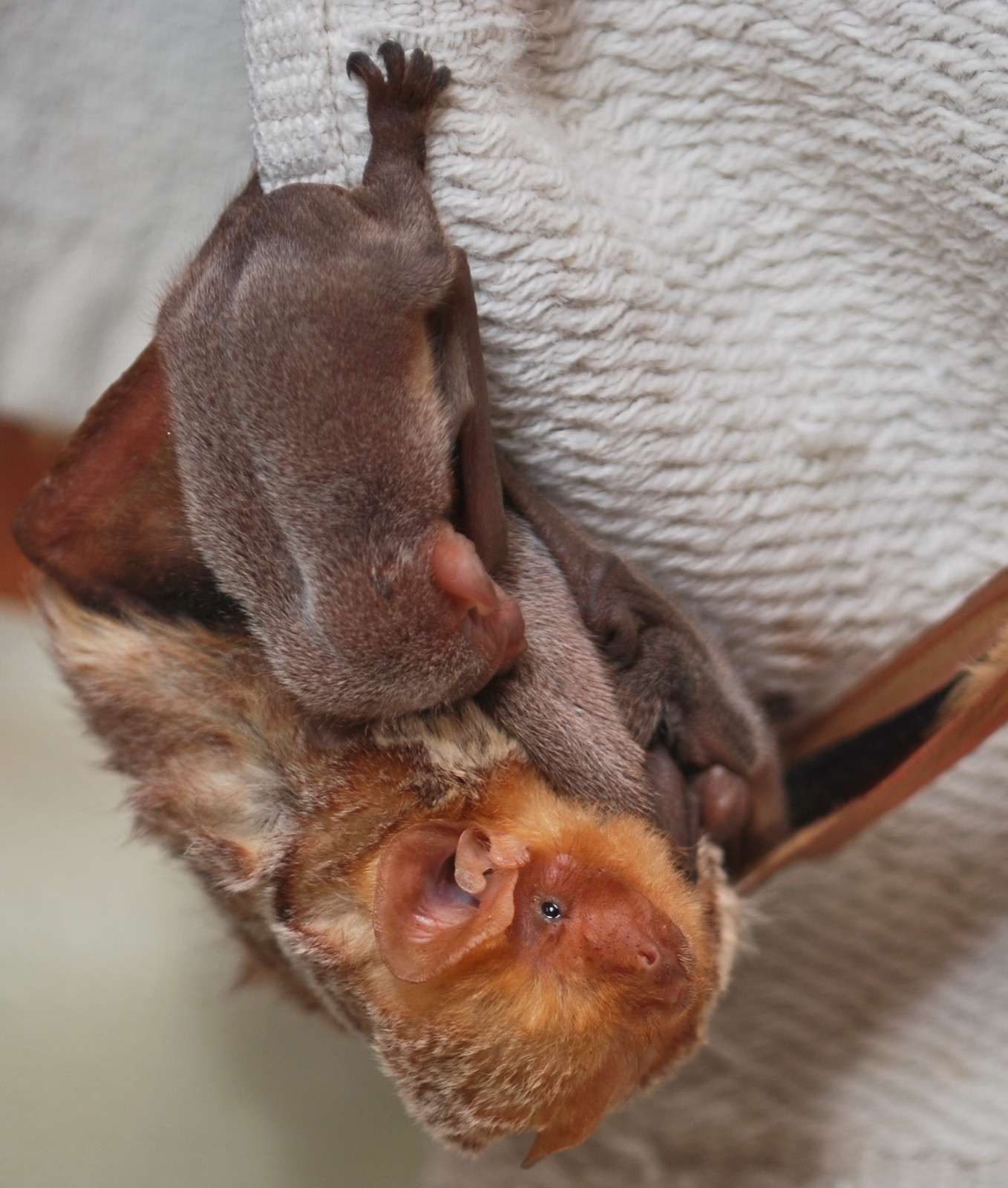
Some bats that roost in American buildings are protected under the federal Endangered Species Act as well as by state law. Federal status is set by the U.S. Fish and Wildlife Service, it has changed more than once in the last few years, and it changes independently of anything a state does.
Northern long-eared bat (Myotis septentrionalis): Endangered
“on November 29, 2022, the U.S. Fish and Wildlife Service found that the species now meets the definition of an endangered species and published a final rule to reclassify the northern long-eared bat as endangered under the Endangered Species Act.”
USFWS describes maternity colonies giving birth over this period. USFWS gives the period as “from late May or early June to late July, depending on where the colony is located within the species’ range”.
Indiana bat (Myotis sodalis): Endangered
“The species was originally listed as in danger of extinction under the Endangered Species Preservation Act of 1966 and is currently listed as endangered under the Endangered Species Act of 1973, as amended.”
The same profile describes maternity colonies forming under loose bark of living or dead trees, and only less often in artificial roost structures, so this is a species you are far more likely to affect by felling a tree than by sealing a soffit.
Tricolored bat (Perimyotis subflavus): Proposed for listing, not listed
“On September 13, 2022 the U.S. Fish and Wildlife Service announced a proposal to list the tricolored bat as endangered under the Endangered Species Act.”
As of the date read, the USFWS profile still described a proposal and still framed its guidance documents as prepared in the event that the species is listed. That status can change without warning, so the USFWS profile is the place to confirm it.
ʻŌpeʻapeʻa, the Hawaiian hoary bat (Lasiurus cinereus semotus): Endangered
“ʻŌpeʻapeʻa roost alone or with dependent young in native and nonnative trees, typically more than 4.6 meters (15 feet) tall.”
USFWS calls it an endangered endemic mammal. It roosts in foliage, not in roofs, which is why Hawaii has no page here.
Which of the three is in the roof?
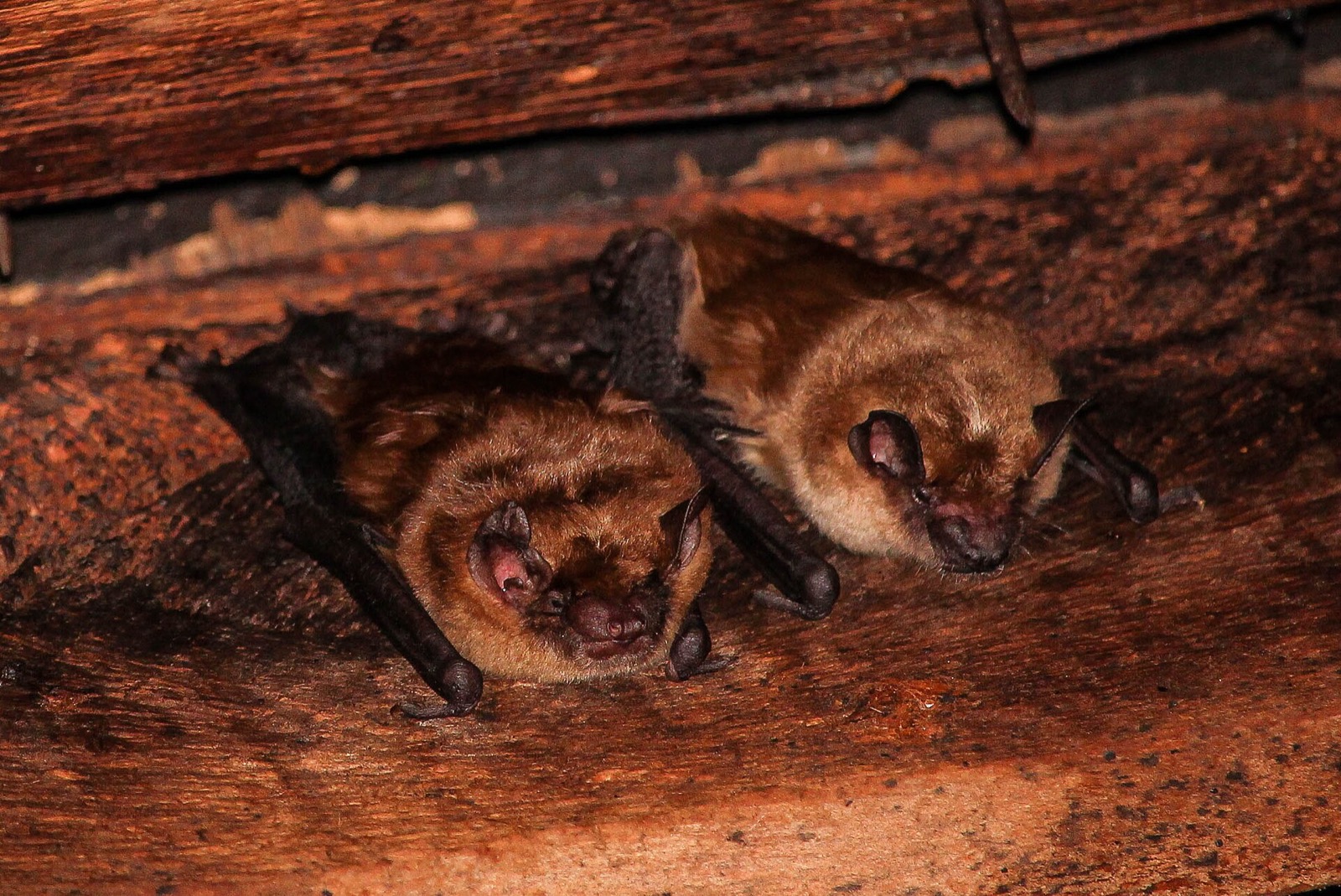
The three animals have different legal positions and different calendars, so this is the first question rather than a detail. The most diagnostic thing is not the noise but the hour it happens at.
Bats dusk and dawn
ChiropteraSound. Faint scratching and high chittering at dusk and again before dawn, from a wall cavity or the gable end rather than from the middle of the ceiling. Almost nothing during the day.
Sign. Small dark droppings that crumble to a glitter of insect wing scales, piled directly below one entry point, and a greasy dark stain where fur has rubbed the gap for years.
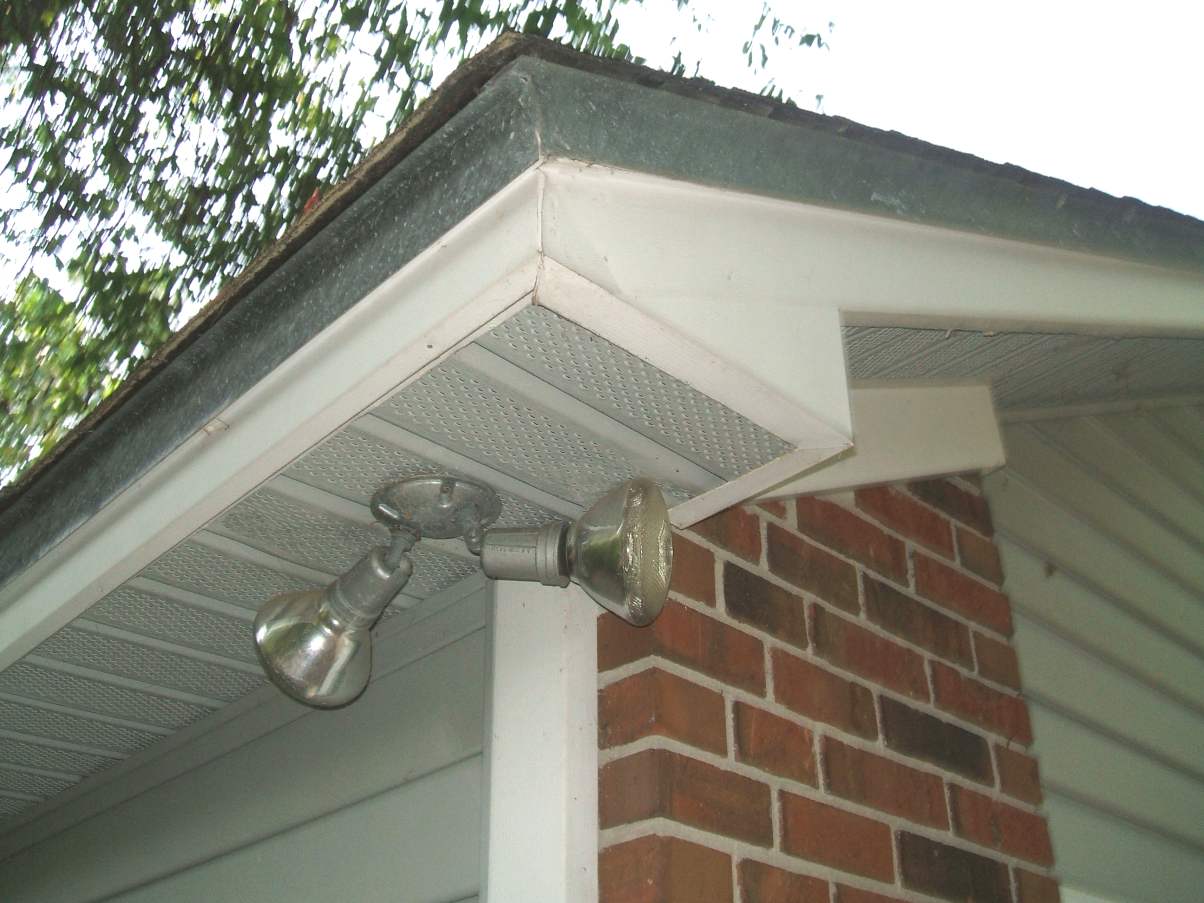
Way in. A gap around a quarter of an inch across. That figure is CDC’s, on its Preventing Rabies from Bats page.
Why your roof. A hot attic in June is a very good place to raise a pup, which is the entire reason the calendar on this page exists.
Squirrels daytime
Sciurus spp.Sound. Heavy, confident daytime running, usually just after first light and again in the late afternoon. Rolling and gnawing. Silent at night, which is the single most useful thing to notice.
Sign. A chewed hole with bright torn edges, often at a corner where two roof planes meet, and shredded insulation or leaf litter drawn into a heap.
Way in. A hole they made themselves. They are rodents and they will enlarge a gap that was already there.
Why your roof. A dry, defensible cavity that nothing can climb into, in the two seasons of the year when they have young. It is a better tree hollow than any tree hollow.
Raccoons after dark
Procyon lotorSound. Loud. Thumping and dragging at night, and in spring a chirring, churring, almost bird-like noise from the young that people frequently mistake for birds.
Sign. A torn soffit or a lifted shingle rather than a neat hole, and a latrine: a single place used repeatedly, which is the reason the health section on this page exists.
Way in. Nebraska Extension puts the size of opening a raccoon needs at four to six inches across, and notes that smaller ones get enlarged.
Why your roof. A chimney or an attic is a hollow tree that does not blow down, and it is where a spring litter gets raised.
Squirrels twice a year, raccoons once
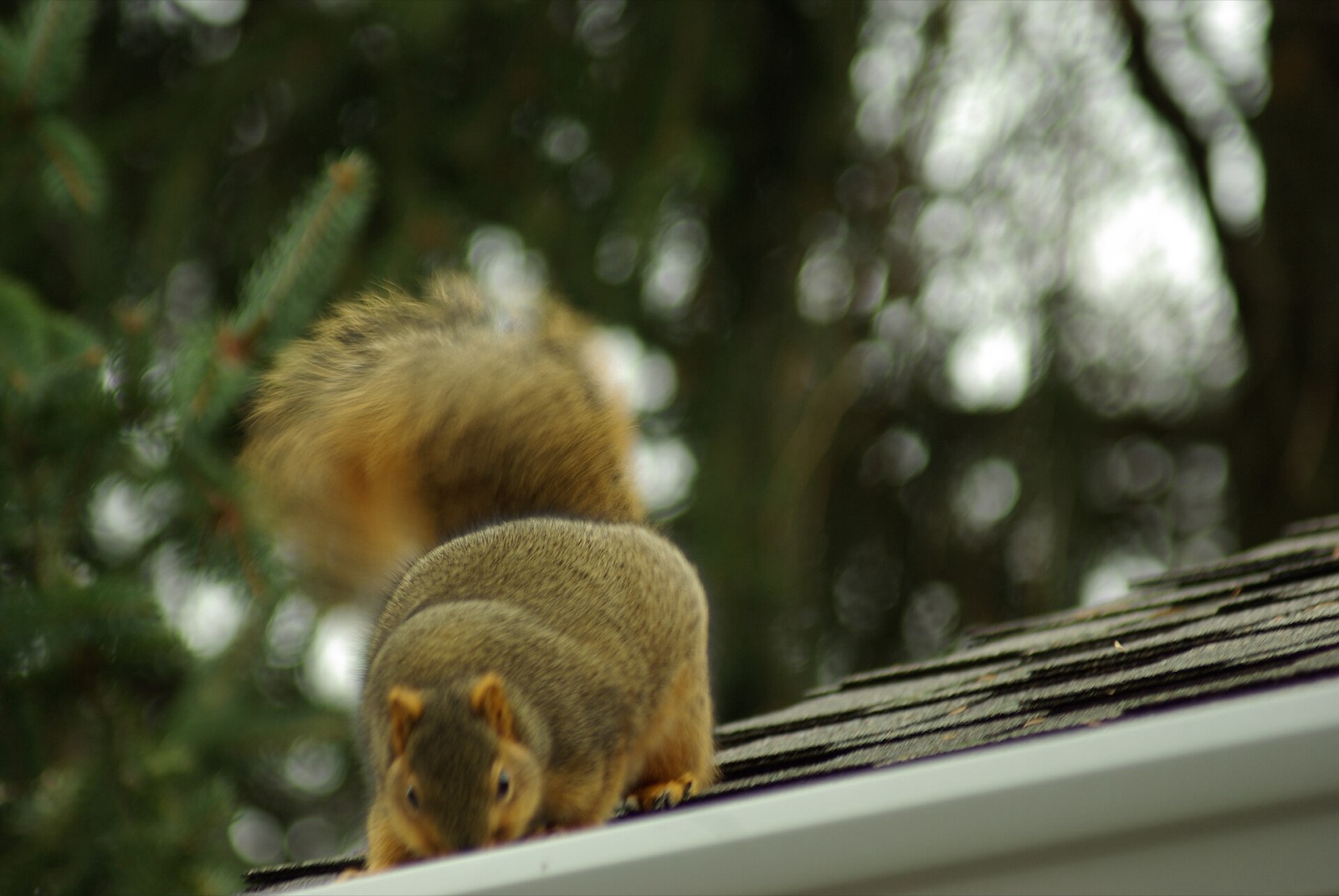
Gray and fox squirrels raise two litters a year in most of their range, one in late winter and one in late summer. That is why a squirrel problem in a roof has two seasons rather than one, and why the quiet months between them are the ones people actually get the work done in.
“Most litters are born in February or March, and July or August.”
Penn State Extension gives the gray squirrel breeding periods as mid December or early January and again in June, and puts weaning at about two months of age. Fox squirrels are described as following a similar pattern. Its terms ask for written permission before text is reused commercially, so the page is linked rather than quoted. Penn State Extension
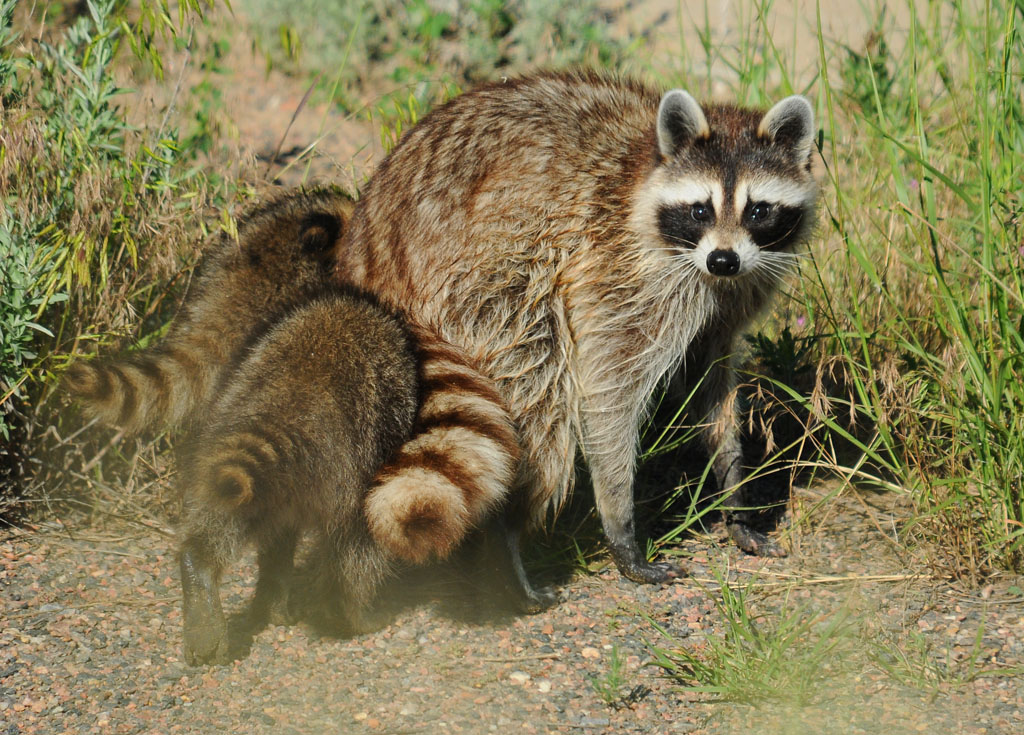
Raccoons raise one litter a year. Breeding is in late winter, the kits arrive in spring, and they are not moving under their own steam for a long time afterwards. A raccoon in a roof in May is a mother with young in the roof until proven otherwise.
“Most breeding occurs in February, and most litters are born in April or early May, though some litters are born as late as August.”
“The young are usually weaned by August but stay with their mothers until the next spring.”
Nebraska Extension puts raccoon breeding at January through March, with females giving birth about nine weeks later to litters of two to five, and notes that a raccoon usually needs only a four to six inch opening to get into a building. Nebraska Extension, publication G1688
| Animal | Litters a year | Born | Source |
|---|---|---|---|
| Gray and fox squirrel | Two | February to March, and July to August | Missouri Department of Conservation |
| Raccoon | One | April or early May, some as late as August | Missouri Department of Conservation |
| Bats in buildings | One, usually one pup | Varies by state and species, see the table above | State wildlife agencies |
Rabies and raccoon roundworm: who to contact
Bats and raccoons are the two rabies reservoirs most likely to be in an American roof. Exposure is assessed by your health department and a clinician. Below is what CDC publishes, with the page and the date it carries.
“In the United States, bats are the most reported animals with rabies.”
“Most people in the U.S. who die of rabies were exposed to a rabid bat.”
“If people wake up with a bat in the room, CDC recommends that they assume they may have been exposed to rabies and see a healthcare provider right away”
Where to take a contact question
To your own state health department, and to a healthcare provider. Every state page in this vertical names its state’s health department and links it. CDC: “If you think you have been in contact with a bat, talk to your health department.”
On raccoon droppings in an attic, which is a separate hazard with a separate route: “Baylisascaris procyonis is thought to pose the greatest risk to people because of the often-close association of raccoons to human dwellings.” And: “Raccoon feces can also be found on woodpiles, decks, rooftops, and in attics, garages, and haylofts.”
Read Preventing Raccoon Roundworm in full, page dated November 5, 2024. If there has been contact with droppings, a healthcare provider is the one to see.
Attic wildlife FAQ
Pick a state
Related calendars
Two other things arrive in a roof void on a schedule, and both have their own pages here. Rodent season covers what moves in when the nights turn, and fall home invaders covers the insects that come through the same gaps in autumn, with the sealing deadline that runs before them.
States without a page
Hawaii. Hawaii has one native land mammal, the endangered ʻōpeʻapeʻa or Hawaiian hoary bat, which USFWS describes roosting in trees rather than in buildings, and it has no native tree squirrels and no established raccoons. U.S. Fish and Wildlife Service species profile
Every date and every restriction in the table is quoted from the body named beside it and linked to the page it was read on, on 28 August 2026. Where a state publishes no timing, the table names the agency to ask. Wildlife rules change, some are municipal rather than state, and several bat species carry federal protection on top of state protection, so confirm with the state agency before any work starts. Federal listing status is from the U.S. Fish and Wildlife Service species profiles. Rabies and raccoon roundworm material is from the Centers for Disease Control and Prevention pages named above. Squirrel and raccoon breeding timing is from state conservation department field guides and land grant extension publications.
Hero image: “Bat in Eave” — Bearerofthecup — Public domain