
Studded tire laws by state
30 states set a dated studded tire window in law; the most common opening date is November 1 and the most common last day April 30. Each state’s rule is below, quoted from its statute on the state page and linked, with this season’s dates and the chain law beside it.
Studded tire season by state
Each square is one state, coloured by what its statute says about studded tires. Select a state for its rule, quoted and linked, and this season’s dates.
Allowed in seasonNo seasonal datesRestrictedBarredChain lawState vehicle code
The dashed line marks today.
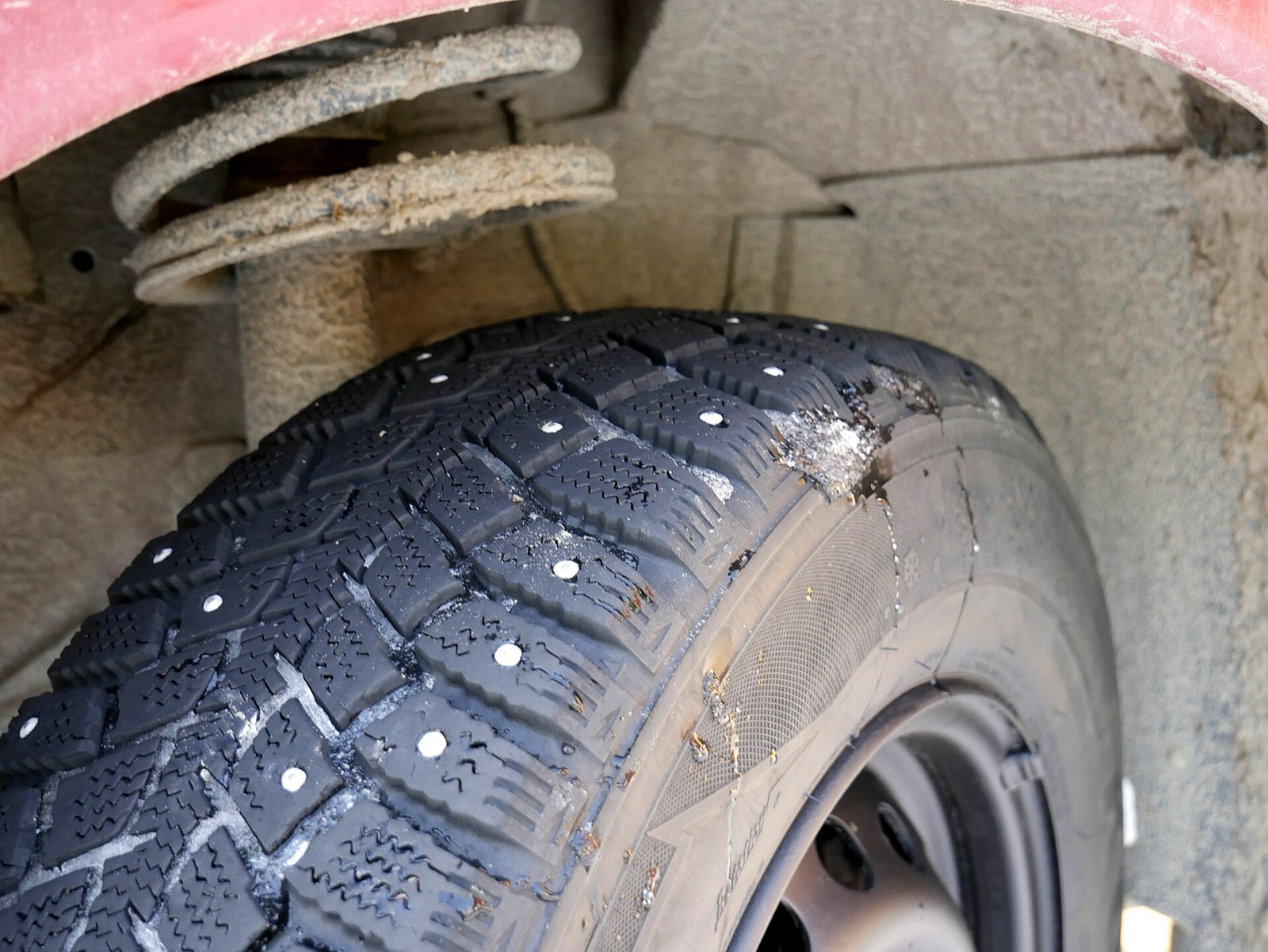
Every state’s studded tire rule
The window is the one set in each statute; the season column gives the 2026-27 calendar dates. Each state page quotes the statute in full, with its exceptions.
| State | Rule | Window | This season | Source |
|---|---|---|---|---|
| Alabama | Restricted | Conditions apply | Ala. Code § 32-5-210 | |
| Alaska | Allowed in season | Sep 16 to Apr 30 | Sep 16, 2026 to Apr 30, 2027 | AS 28.35.155 |
| Arizona | Allowed in season | Oct 1 to May 1 | Oct 1, 2026 to May 1, 2027 | A.R.S. 28-958 |
| Arkansas | Allowed in season | Nov 15 to Apr 15 | Nov 15, 2026 to Apr 15, 2027 | Ark. Code Ann. 27-37-402 |
| California | Allowed in season | Nov 1 to Apr 30 | Nov 1, 2026 to Apr 30, 2027 | Cal. Vehicle Code 27454 |
| Colorado | No seasonal dates | No seasonal dates | C.R.S. 42-4-228(3) | |
| Connecticut | Allowed in season | Nov 15 to Apr 30 | Nov 15, 2026 to Apr 30, 2027 | Conn. Gen. Stat. § 14-98 |
| Delaware | Allowed in season | Oct 15 to Apr 15 | Oct 15, 2026 to Apr 15, 2027 | 21 Del. C. § 4302 |
| Florida | No seasonal dates | No seasonal dates | Fla. Stat. § 316.299 | |
| Georgia | Restricted | Conditions apply | O.C.G.A. 40-8-74(c)(2) | |
| Hawaii | Barred | Barred | Haw. Rev. Stat. § 291-33 | |
| Idaho | Allowed in season | Oct 1 to Apr 30 | Oct 1, 2026 to Apr 30, 2027 | Idaho Code 49-948 |
| Illinois | Barred | Barred | 625 ILCS 5/12-401 | |
| Indiana | Allowed in season | Oct 1 to May 1 | Oct 1, 2026 to May 1, 2027 | IC 9-19-18-3 |
| Iowa | Allowed in season | Nov 1 to Apr 1 | Nov 1, 2026 to Apr 1, 2027 | Iowa Code 321.442(3) |
| Kansas | Allowed in season | Nov 1 to Apr 1 | Nov 1, 2026 to Apr 1, 2027 | K.S.A. 8-1742(c); dates in K.A.R. 36-7-2 |
| Kentucky | Chain law | Chain law | Statute | |
| Louisiana | Barred | Barred | La. R.S. 32:362 | |
| Maine | Allowed in season | Oct 2 to Apr 30 | Oct 2, 2026 to Apr 30, 2027 | 29-A M.R.S. §1919 |
| Maryland | Restricted | Nov 1 to Mar 31 | Nov 1, 2026 to Mar 31, 2027 | Md. Code, Transp. § 22-405.2; COMAR 11.13.02.10 |
| Massachusetts | Allowed in season | Nov 2 to Apr 30 | Nov 2, 2026 to Apr 30, 2027 | 540 CMR 21.03 |
| Michigan | Barred | Barred | MCL 257.710; Mich. Admin. Code R 247.171 to R 247.175 | |
| Minnesota | Barred | Barred | Minn. Stat. 169.72 | |
| Mississippi | Barred | Barred | Miss. Code Ann. 63-7-67 | |
| Missouri | Allowed in season | Nov 1 to Mar 31 | Nov 1, 2026 to Mar 31, 2027 | RSMo 307.171 |
| Montana | Allowed in season | Oct 1 to May 31 | Oct 1, 2026 to May 31, 2027 | MCA 61-9-406 |
| Nebraska | Allowed in season | Nov 1 to Apr 1 | Nov 1, 2026 to Apr 1, 2027 | Neb. Rev. Stat. 60-6,250(2)(a) |
| Nevada | Allowed in season | Oct 1 to Apr 30 | Oct 1, 2026 to Apr 30, 2027 | NRS 484D.510 |
| New Hampshire | State vehicle code | State vehicle code | Statute | |
| New Jersey | Allowed in season | Nov 15 to Apr 1 | Nov 15, 2026 to Apr 1, 2027 | Statute |
| New Mexico | No seasonal dates | No seasonal dates | NMSA 1978 66-3-847(B) | |
| New York | Allowed in season | Oct 16 to Apr 30 | Oct 16, 2026 to Apr 30, 2027 | N.Y. Veh. & Traf. Law 375(35-a) |
| North Carolina | No seasonal dates | No seasonal dates | N.C. Gen. Stat. § 20-122(b) | |
| North Dakota | Allowed in season | Oct 15 to Apr 15 | Oct 15, 2026 to Apr 15, 2027 | NDCC 39-21-40(3) |
| Ohio | Allowed in season | Nov 1 to Apr 15 | Nov 1, 2026 to Apr 15, 2027 | Ohio Rev. Code 5589.081 |
| Oklahoma | Allowed in season | Nov 1 to Apr 1 | Nov 1, 2026 to Apr 1, 2027 | 47 O.S. § 12-405 |
| Oregon | Allowed in season | Nov 1 to Mar 31 | Nov 1, 2026 to Mar 31, 2027 | ORS 815.160, ORS 815.165 |
| Pennsylvania | Allowed in season | Nov 1 to Apr 15 | Nov 1, 2026 to Apr 15, 2027 | 75 Pa.C.S. 4525(c) |
| Rhode Island | Allowed in season | Nov 15 to Apr 1 | Nov 15, 2026 to Apr 1, 2027 | R.I. Gen. Laws § 31-23-20 |
| South Carolina | No seasonal dates | No seasonal dates | S.C. Code Ann. § 56-5-5040 | |
| South Dakota | Allowed in season | Oct 1 to Apr 30 | Oct 1, 2026 to Apr 30, 2027 | SDCL 32-19-3 |
| Tennessee | Allowed in season | Oct 1 to Apr 15 | Oct 1, 2026 to Apr 15, 2027 | Tenn. Code Ann. 55-9-106 |
| Texas | No seasonal dates | No seasonal dates | Tex. Transp. Code § 547.612 | |
| Utah | Allowed in season | Oct 15 to Mar 31 | Oct 15, 2026 to Mar 31, 2027 | Utah Code 41-6a-1636 |
| Vermont | No seasonal dates | No seasonal dates | 23 V.S.A. § 1092 | |
| Virginia | Allowed in season | Oct 15 to Apr 15 | Oct 15, 2026 to Apr 15, 2027 | Va. Code § 46.2-1044 |
| Washington | Allowed in season | Nov 1 to Mar 31 | Nov 1, 2026 to Mar 31, 2027 | RCW 46.37.420 |
| West Virginia | Allowed in season | Nov 1 to Apr 15 | Nov 1, 2026 to Apr 15, 2027 | W. Va. Code § 17C-15-37 |
| Wisconsin | Barred | Barred | Wis. Stat. 347.45(2); Wis. Admin. Code Trans 306.01 | |
| Wyoming | No seasonal dates | No seasonal dates | W.S. 31-5-956(c)(iii) |
Chain and traction laws
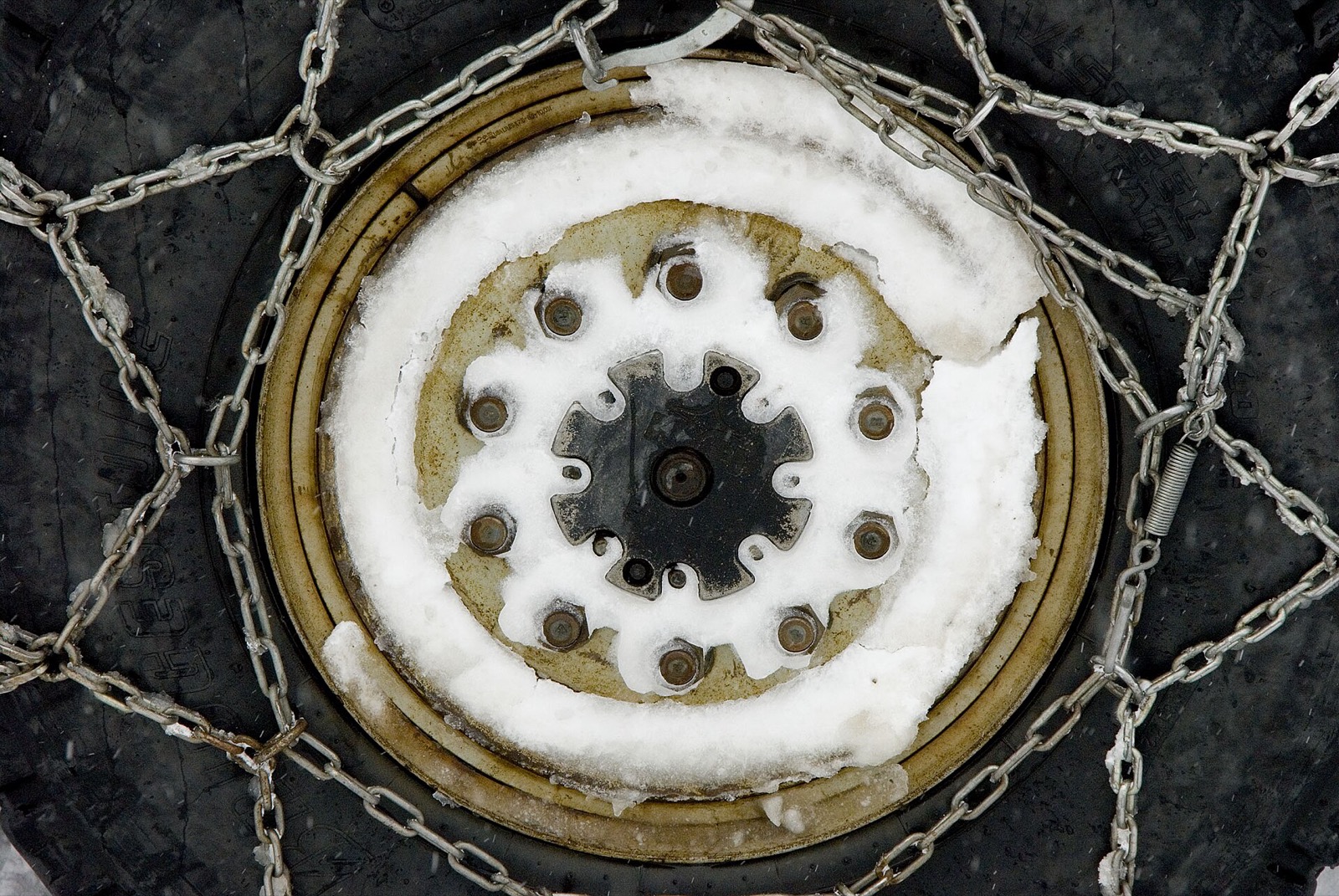
Chain rules sit in their own sections of each state code, apart from the studded tire window. 41 states’ chain or traction rules are quoted on their state pages.
- AlabamaTire chains of reasonable size are allowed on any vehicle when snow, rain or other conditions make sliding or skidding likely.Tire chains permitted
- AlaskaAlaska has no chain requirement law; the same statute bans chains on paved roads during the summer dates that apply to studs.Seasonal chain restriction
- ArizonaADOT tells drivers to use snow tires, chains or studded tires when they are recommended or required on snowy, icy roads. The statute allows tire chains of reasonable proportions when needed for safety. No named statewide chain law was found on ADOT's page.Chains or snow tires as recommended or required
- CaliforniaCaltrans posts three chain control levels. R-1 lets light passenger vehicles with snow tires on two drive wheels skip chains but carry them; R-2 exempts four wheel or all wheel drive vehicles with snow tread tires on all four wheels, which must still carry traction devices; R-3 requires chains or traction devices on every vehicle.Chain controls R-1, R-2, R-3 (Vehicle Code 27459)
- ColoradoCDOT can put the Traction Law in effect on any state highway during winter storms; vehicles then need qualifying tires with at least 3/16 inch tread or chains or an approved alternative device. Under the Chain Law, the last step before closing a highway, every vehicle needs chains or an approved alternative traction device.Passenger Vehicle Traction Law and Passenger Vehicle Chain Law (C.R.S. 42-4-106)
- DelawareTire chains of reasonable size may be used on any vehicle when snow, ice or other slippery conditions make them necessary for safety.Tire chains permitted
- GeorgiaChains of reasonable size are allowed under the same clause, when snow or ice makes them necessary.Tire chains permitted
- HawaiiOrdinary detachable tire chains are allowed.Tire chains permitted
- IdahoThe statute's chain rule covers commercial vehicles on Interstate 90 over Lookout Pass and Fourth of July Pass and on State Highway 12 over Lolo Pass, when ITD finds conditions unsafe. It names no general chain law for passenger cars.Commercial vehicle chain requirement (Idaho Code 49-948(5))
- IllinoisIllinois has no chain requirement law; chains of reasonable size are permitted when snow or ice makes skidding likely.Tire chains permitted
- IndianaIndiana has no chain requirement law; ISP says chains are legal when needed for safety.Tire chains permitted
- IowaIowa has no chain requirement law; chains of reasonable size are permitted when snow or ice makes skidding likely.Tire chains permitted
- KansasKansas has no chain requirement law; chains of reasonable size are permitted when snow or ice makes skidding likely.Tire chains permitted
- KentuckyKentucky law says a vehicle with chained wheels may not be driven on a highway that is not covered with ice unless the wheel rests on an ice shoe at least six inches wide, and it limits cross chains on rubber tires to three quarters of an inch thick spaced no more than ten inches apart.Chains only on ice covered highways
- LouisianaTire chains of reasonable size may be used on any vehicle when conditions make it likely to slide or skid.Tire chains permitted
- MarylandTire chains of reasonable size may be used on any vehicle when snow, ice or other conditions make skidding likely.Tire chains permitted
- MichiganMichigan has no chain requirement law; chains of reasonable size are permitted when snow or ice makes skidding likely.Tire chains permitted
- MinnesotaMinnesota has no chain requirement law; chains of reasonable size are permitted when snow or ice makes skidding likely.Tire chains permitted
- MississippiTire chains of reasonable size are allowed when snow or ice makes them necessary for safety.Tire chains permitted
- MontanaMDT can require tire chains in designated areas at any time of year. When it does, vehicles towing a trailer must chain the driver wheels of one axle, and heavy towing units must carry chains or an approved device from October 1 through April 30 in chain areas.Montana Tire and Chain Laws (MCA 61-9-406, 61-9-436)
- NebraskaNebraska has no chain requirement law; chains of reasonable size are permitted when snow or ice makes sliding likely.Tire chains permitted
- NevadaWhen a highway is posted under icy or snowy conditions, vehicles of 10,000 pounds or less need traction devices, chains or snow tires, and heavier vehicles need chains. Where signs require devices on all vehicles except four wheel drive with snow tires on all wheels, every other vehicle must use traction devices or chains.Traction devices, tire chains or snow tires where posted (NRS 484D.515, 484D.520)
- New MexicoChains of reasonable size are allowed when snow or ice makes them necessary for safety.Tire chains permitted
- North CarolinaTire chains of reasonable size may be used on any vehicle when snow, ice or other conditions make sliding or skidding likely.Tire chains permitted
- North DakotaNorth Dakota has no chain requirement law; the equipment statute simply permits tire chains of reasonable proportions.Tire chains permitted
- OhioOhio has no chain requirement law; the stud rule does not restrict chains when there is snow or ice on the road.Tire chains permitted
- OklahomaTire chains of reasonable size may be used when snow, ice or other conditions make skidding likely. The same subsection limits the use of such tires or tire chains to vehicles rated up to two tons.Tire chains permitted
- OregonOregon's chain law applies on all highways. When signs are posted you must carry or use chains or traction tires; traction tires can stand in for chains on vehicles rated 10,000 pounds GVW or less that are not towing or being towed.Oregon Chain Law (ORS 815.140, 815.142)
- PennsylvaniaPennsylvania lets drivers use tire chains temporarily during snow and ice emergencies under PennDOT regulations.Tire chains permitted
- Rhode IslandTire chains of reasonable size may be used on any vehicle when snow, ice or other conditions make skidding likely.Tire chains permitted
- South CarolinaTire chains of reasonable size may be used on any vehicle when snow, ice or other conditions make skidding likely.Tire chains permitted
- South DakotaSouth Dakota has no chain requirement law; chains of reasonable size are permitted when snow or ice makes sliding likely.Tire chains permitted
- TennesseeTire chains of reasonable size may be used on any vehicle when snow or ice makes them necessary for safety.Tire chains permitted
- TexasTire chains of reasonable size are allowed when needed for safety because of a condition that might make the vehicle skid.Tire chains permitted
- UtahDuring severe winter weather UDOT can require traction equipment in set locations, sometimes up to 24 hours before a storm. Four wheel and all wheel drive vehicles need M+S or three peak mountain snowflake tires or devices on two drive tires; two wheel drive cars need three peak mountain snowflake tires or devices on all drive tires. The Cottonwood Canyons are a stricter Class 3 area requiring 5/32 inch tread.Traction Law
- VermontState officials may require chains on posted stretches of state highway in winter weather for vehicles over 26,000 pounds; the DMV says the only mandatory chain up area is Route 9 between the Wilmington and Bennington chain up sites.Chain Up Law
- VirginiaTire chains of reasonable size are allowed when snow, ice or other conditions make sliding or skidding likely.Tire chains permitted
- WashingtonWSDOT can post a traction advisory, chains required for vehicles over 10,000 GVW, or chains required on all vehicles except all wheel drive. When chains are required and nothing else will do, the requirement applies to studded tires too. Vehicles over 10,000 pounds must carry chains on listed routes from November 1 to April 1.Traction advisory and chains required signs (RCW 47.36.250)
- West VirginiaTire chains of reasonable size are allowed on any vehicle when snow, ice or other conditions make skidding likely.Tire chains permitted
- WisconsinWisconsin has no chain requirement law; chains of reasonable size are permitted when snow or ice makes skidding likely.Tire chains permitted
- WyomingWYDOT can impose two levels on specific highway sections. Level 1 limits travel to vehicles with chains, adequate snow tires, or all wheel drive. Level 2 limits travel to vehicles with chains or all wheel drive vehicles with adequate mud and snow or all weather rated tires, and commercial vehicles must chain two drive wheels on the same axle.Wyoming Chain Law, Level 1 and Level 2 (W.S. 31-5-956(e))
Studded tire questions
Compiled September 22, 2026 from each state’s statute and department of transportation pages, linked beside every quote on the state pages. Statutes change between winters, and a transportation department can extend a window where its statute allows, so the linked source is the one to check before a trip.