
Spider Season: Why They Are Indoors Now, and Which Ones Matter
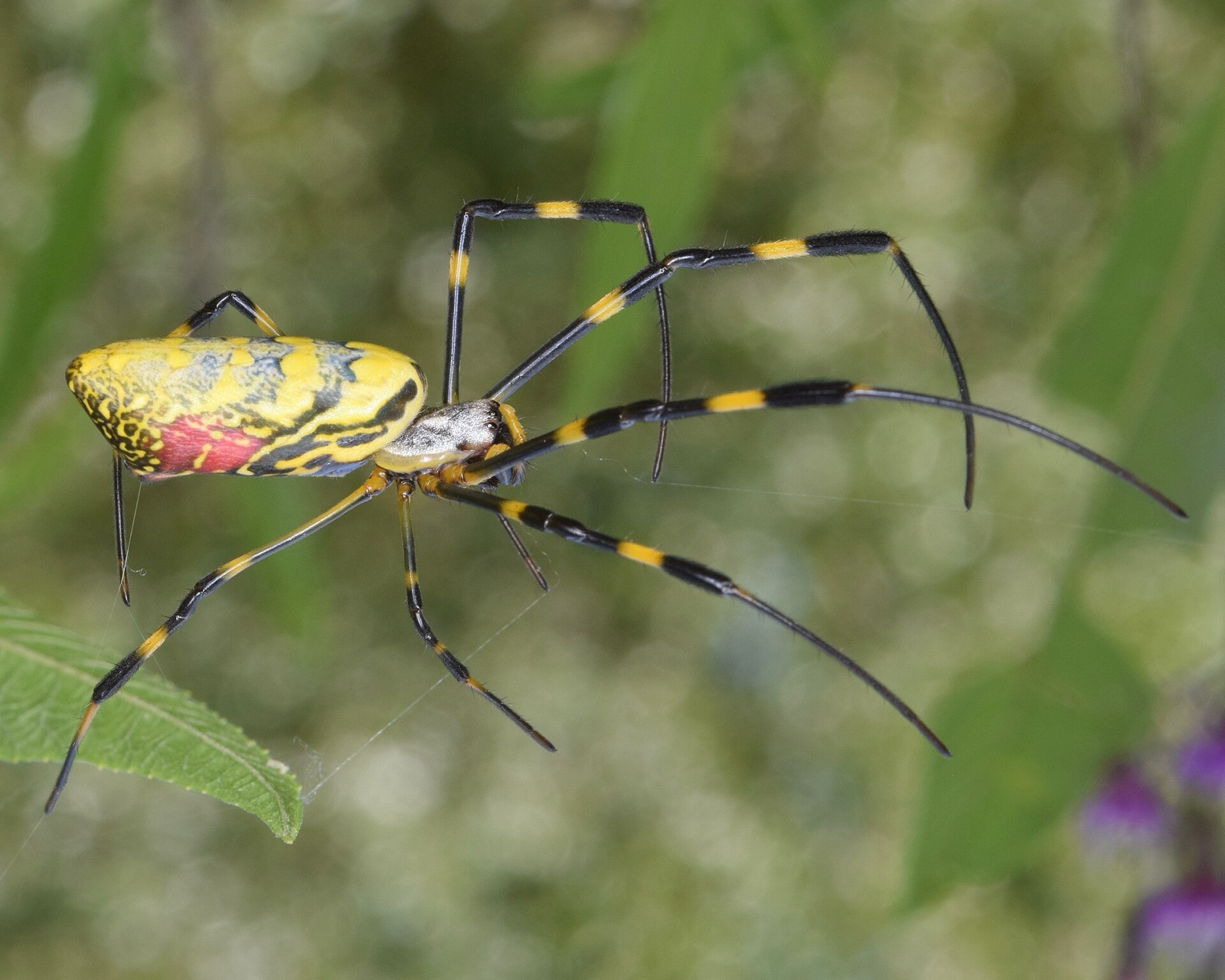
The spiders on the wall in September were in the house all summer; they have just grown large enough to notice, and the males are wandering for mates. The joro spider’s year peaks in the same two months. Pick a state for its widow and recluse record, the indoor season, and the lookalikes.
Where the joro spider is, year by year
The joro spider was first confirmed in North America in 2014, from specimens collected around houses in Barrow, Jackson and Madison counties, northeast Georgia (Hoebeke, Huffmaster and Freeman (2015), PeerJ 3:e763). It now has verified records in 15 states. Coloured cells on the map are places where somebody photographed one and the identification was confirmed; the chart below is the number of those records each year, and the list is the year of the first iNaturalist record in each state, which in Georgia is 2016, a little after the collections above. A first record is a photographed spider, never a population, and several states below have fewer than ten.
Coloured cells are verified Trichonephila clavata records on iNaturalist, brighter where more have been logged. This is where people have found and photographed the species, so it thins out over roadless country and thickens around parks and towns. It is a record map, not a drawn range boundary. See the underlying records.
First verified joro record, by state
Why there are spiders in the house in September
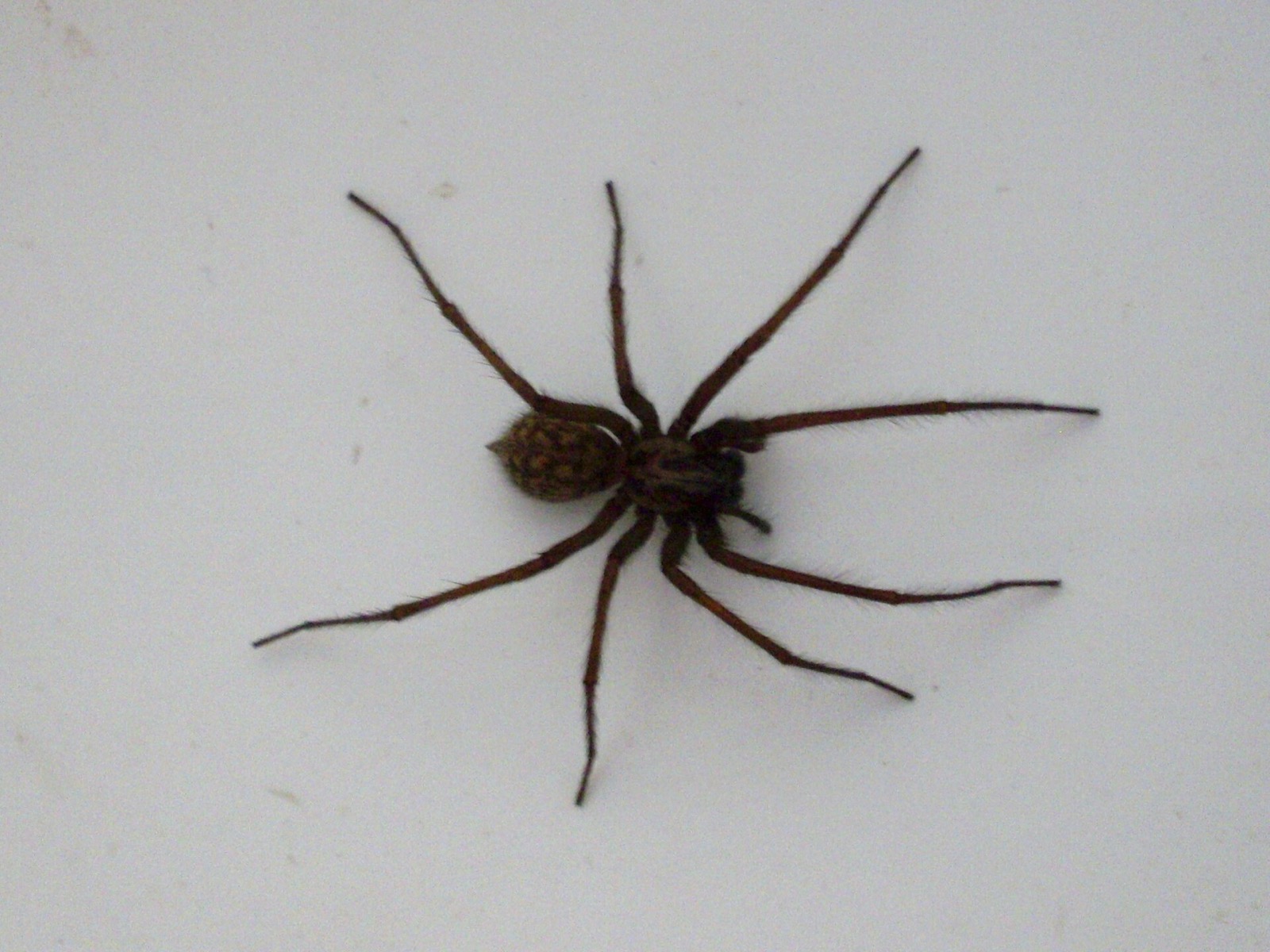
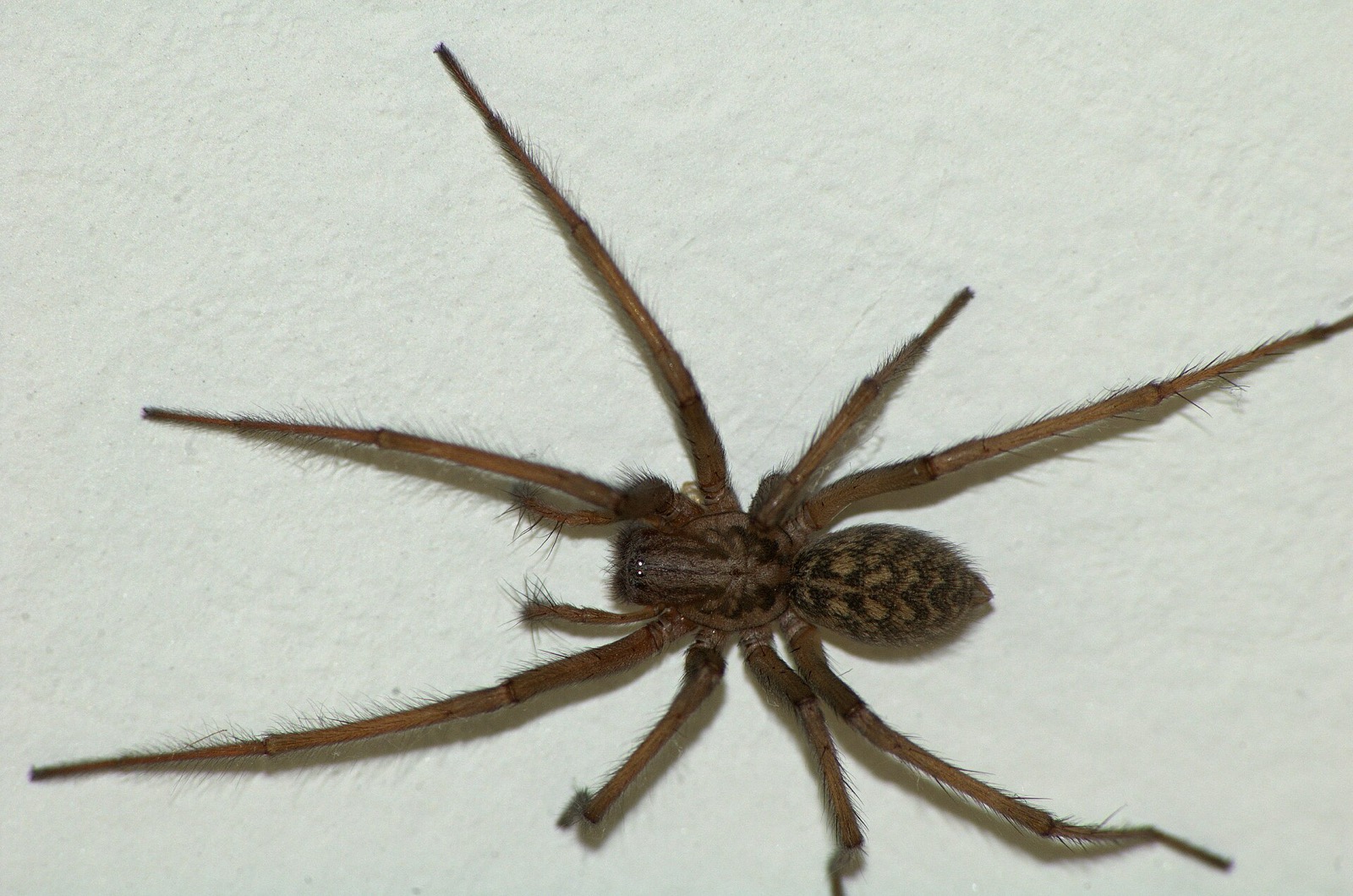
Spiders that hatched in spring reach adult size by late summer, so the same animals that were pinhead sized in June are now visible on the wall. Mature male house spiders and funnel weavers leave their webs to search for females, and that wandering takes them across floors, into bathtubs and through the gaps under doors. Most were in the walls and crawl spaces all along. In the north the first hard frost ends the wandering by late October; in the South it tails off through November and on the Gulf Coast it barely stops.
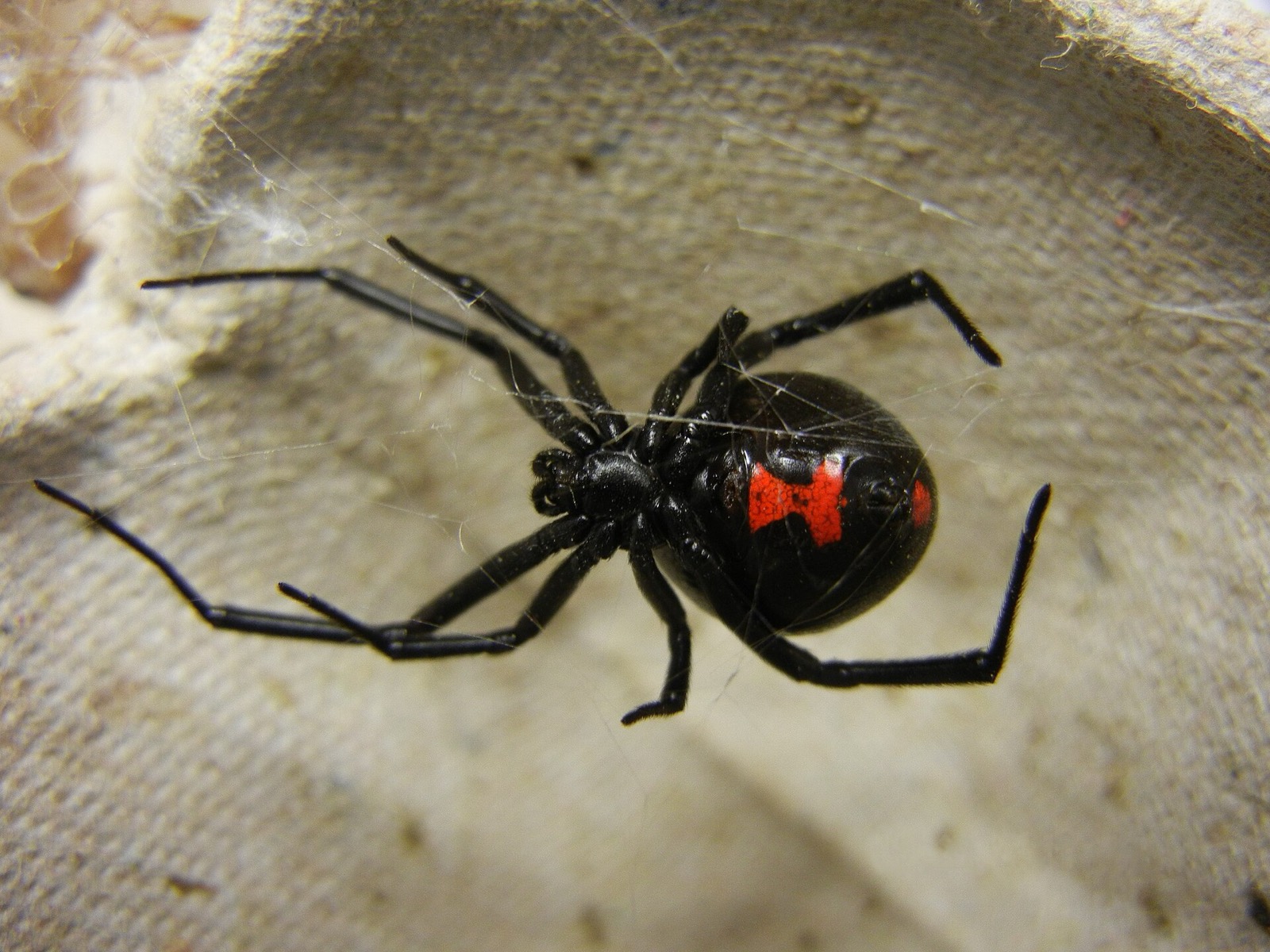
The widow record follows the same calendar for the same reason: females are at full size. Nationally, widow records peak in September, with October and August close behind.
August grown up
Spring hatched spiders reach adult size. Orbweavers build their biggest webs of the year across porches and garden paths, and the first wandering males turn up indoors in the northern states.
September the peak
The busiest month for indoor sightings almost everywhere, and the peak of the widow and joro records nationally. Males wander, females are at full size, and joro webs stretch across walkways in the Southeast.
October frost ends it in the north
The first hard frost stops the wandering across the northern tier and the Rockies. Further south the season is still at its height, and joro females lay their egg sacs before the cold.
November and December the South winds down
Indoor sightings fade through November in the Southeast and Texas. Florida, the Gulf Coast and Hawaii never really stop: the widow record there runs every month of the year.
Widow and recluse species by state, A to Z
Species with verified records in each state, at 20 research grade records or more, or fewer where a state extension service documents the species. The joro column shows the year of the state’s first record. Counts measure how often people find and photograph a species, never how many there are.
| State | Species | Which ones | Joro |
|---|---|---|---|
| Alabama | 4 | Southern black widow, Brown recluse, Brown widow, Northern black widow | since 2024 |
| Alaska | None | No widow or recluse at the record threshold | no record |
| Arizona | 2 | Western black widow, Desert recluse | no record |
| Arkansas | 3 | Brown recluse, Southern black widow, Northern black widow | no record |
| California | 3 | Western black widow, Brown widow, Desert recluse | first records 2025 |
| Colorado | 1 | Western black widow | no record |
| Connecticut | 1 | Northern black widow | no record |
| Delaware | 2 | Southern black widow, Northern black widow | no record |
| Florida | 3 | Brown widow, Southern black widow, Northern black widow | first records 2023 |
| Georgia | 4 | Brown widow, Southern black widow, Brown recluse, Northern black widow | since 2016 |
| Hawaii | 2 | Brown widow, Western black widow | no record |
| Idaho | 1 | Western black widow | no record |
| Illinois | 2 | Brown recluse, Northern black widow | first records 2025 |
| Indiana | 2 | Northern black widow, Brown recluse | no record |
| Iowa | 1 | Brown recluse | no record |
| Kansas | 4 | Brown recluse, Western black widow, Southern black widow, Northern black widow | no record |
| Kentucky | 3 | Brown recluse, Northern black widow, Southern black widow | no record |
| Louisiana | 4 | Brown widow, Southern black widow, Brown recluse, Northern black widow | no record |
| Maine | None | No widow or recluse at the record threshold | no record |
| Maryland | 2 | Northern black widow, Southern black widow | since 2022 |
| Massachusetts | 1 | Northern black widow | first records 2024 |
| Michigan | 1 | Northern black widow | no record |
| Minnesota | None | No widow or recluse at the record threshold | no record |
| Mississippi | 4 | Southern black widow, Brown recluse, Brown widow, Northern black widow | no record |
| Missouri | 3 | Brown recluse, Northern black widow, Southern black widow | no record |
| Montana | 1 | Western black widow | no record |
| Nebraska | 2 | Brown recluse, Western black widow | no record |
| Nevada | 2 | Western black widow, Desert recluse | no record |
| New Hampshire | None | No widow or recluse at the record threshold | no record |
| New Jersey | 2 | Southern black widow, Northern black widow | no record |
| New Mexico | 1 | Western black widow | no record |
| New York | 1 | Northern black widow | no record |
| North Carolina | 4 | Southern black widow, Northern black widow, Brown widow, Brown recluse | since 2021 |
| North Dakota | 1 | Western black widow | no record |
| Ohio | 3 | Northern black widow, Brown recluse, Southern black widow | first records 2026 |
| Oklahoma | 4 | Brown recluse, Southern black widow, Western black widow, Northern black widow | first records 2021 |
| Oregon | 1 | Western black widow | no record |
| Pennsylvania | 2 | Northern black widow, Southern black widow | first records 2024 |
| Rhode Island | 1 | Northern black widow | no record |
| South Carolina | 3 | Brown widow, Southern black widow, Northern black widow | since 2018 |
| South Dakota | 1 | Western black widow | no record |
| Tennessee | 3 | Brown recluse, Southern black widow, Northern black widow | since 2021 |
| Texas | 5 | Southern black widow, Western black widow, Brown recluse, Brown widow, Northern black widow | no record |
| Utah | 1 | Western black widow | no record |
| Vermont | None | No widow or recluse at the record threshold | no record |
| Virginia | 3 | Southern black widow, Northern black widow, Brown widow | first records 2024 |
| Washington | 1 | Western black widow | no record |
| West Virginia | 2 | Northern black widow, Southern black widow | first records 2022 |
| Wisconsin | 1 | Northern black widow | no record |
| Wyoming | 1 | Western black widow | no record |
The spiders people photograph as widows, recluses and joros
Most spiders reported as a widow or a recluse are one of the species below. Learning the three or four that share a house with people removes most of the alarm, and the tells are visible from a comfortable distance.
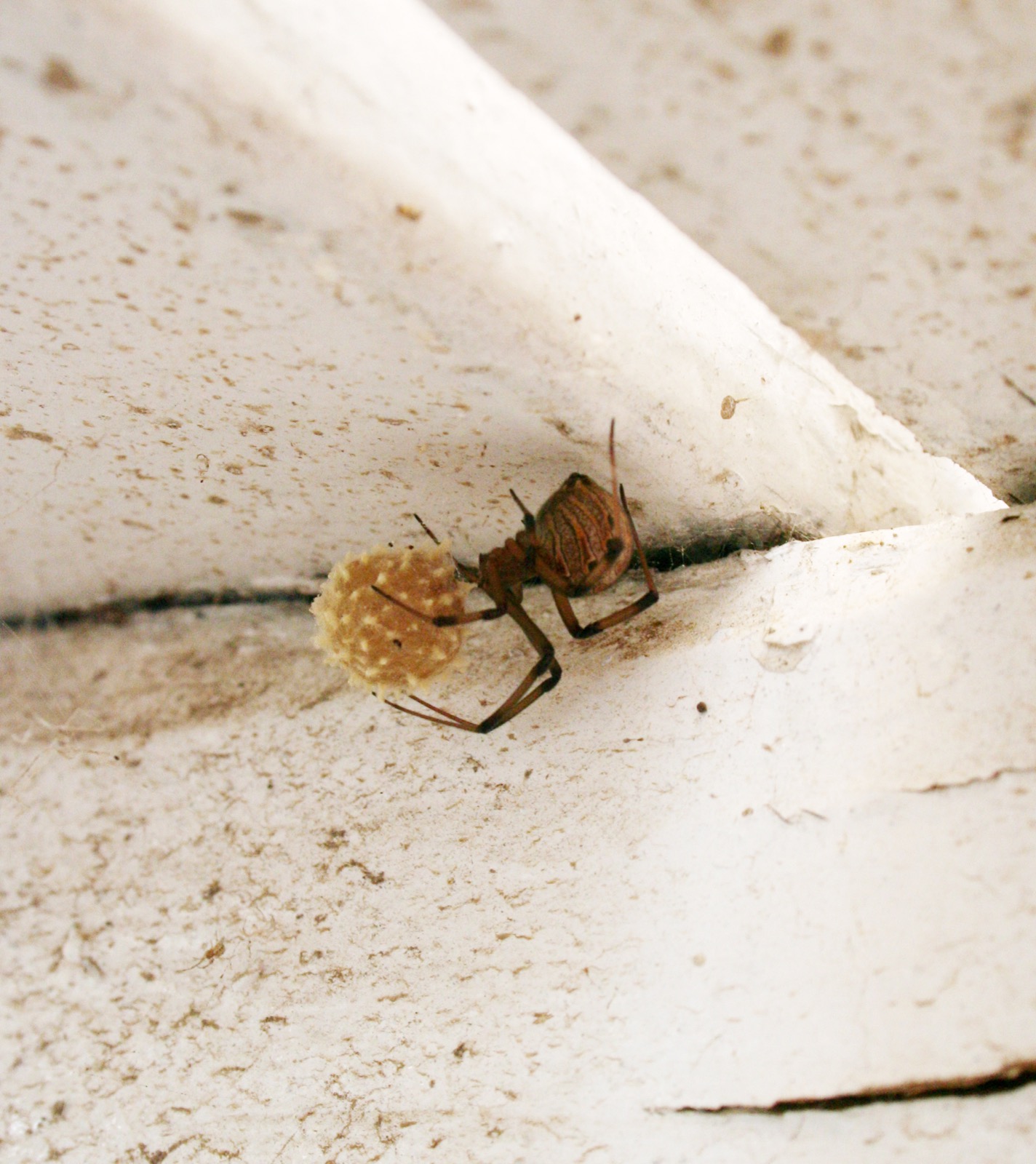
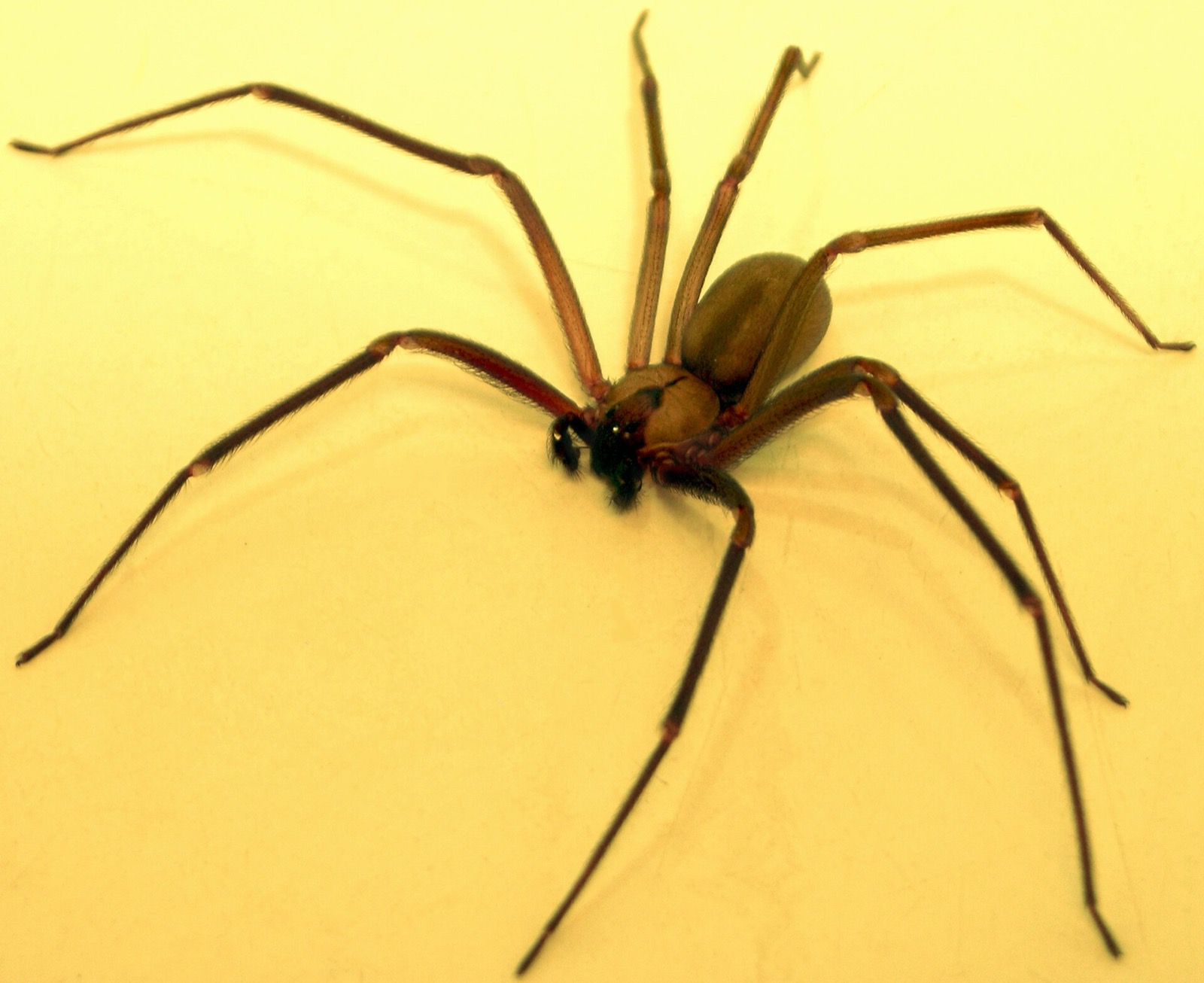
A widow is glossy, round bodied, and hangs upside down in a low tangle web with a red or orange hourglass underneath. A recluse is plain tan with six eyes in three pairs, a darker violin on the front segment, and legs with no bands and no spines. A violin shaped mark on its own is not a recluse: many harmless brown spiders carry one, and it is faint on many real recluses. A bite is never an identification. Skin reactions have dozens of causes, and Poison Control on 1-800-222-1222 will ask about symptoms, never for a species name.
Mistaken for a black widow
False widow
Steatoda grossa
Purplish brown rather than glossy black, with pale markings on top of the abdomen and nothing underneath. The same tangle web in the same corners, which is why it is photographed as a widow more than any other spider.
Triangulate cobweb spider
Steatoda triangulosa
Small, brown, with a row of pale triangles down the abdomen. Lives in the same low corners and window frames a widow would, and turns up indoors far more often.
Common house spider
Parasteatoda tepidariorum
Mottled tan and brown with a rounded abdomen, in messy cobwebs in ceiling corners, under eaves and behind furniture. The most photographed spider in American houses, and an autumn indoor regular.
Mistaken for a brown recluse
Grass spider or funnel weaver
Agelenopsis
Brown with two dark stripes down the front body segment, long spinnerets at the back, and a flat sheet web with a funnel retreat. A recluse has one violin mark, no stripes, no sheet web, and spins almost nothing.
Woodlouse spider
Dysdera crocata
Red orange front half, cream abdomen, and huge forward pointing jaws. Six eyes like a recluse, which causes the confusion, but the two tone colour is unmistakable and it lives under stones and logs.
Cellar spider
Pholcidae
Thread thin legs many times the body length, hanging in a loose web in basement corners and shaking when disturbed. Tan like a recluse, and nothing else about it is.
Southern house spider
Kukulcania hibernalis
The male is a long legged brown spider that wanders across floors and walls in the South and gets called a recluse constantly. Eight eyes in a tight cluster, a much larger body, and it lives in cracks in outside walls.
Mistaken for a joro spider
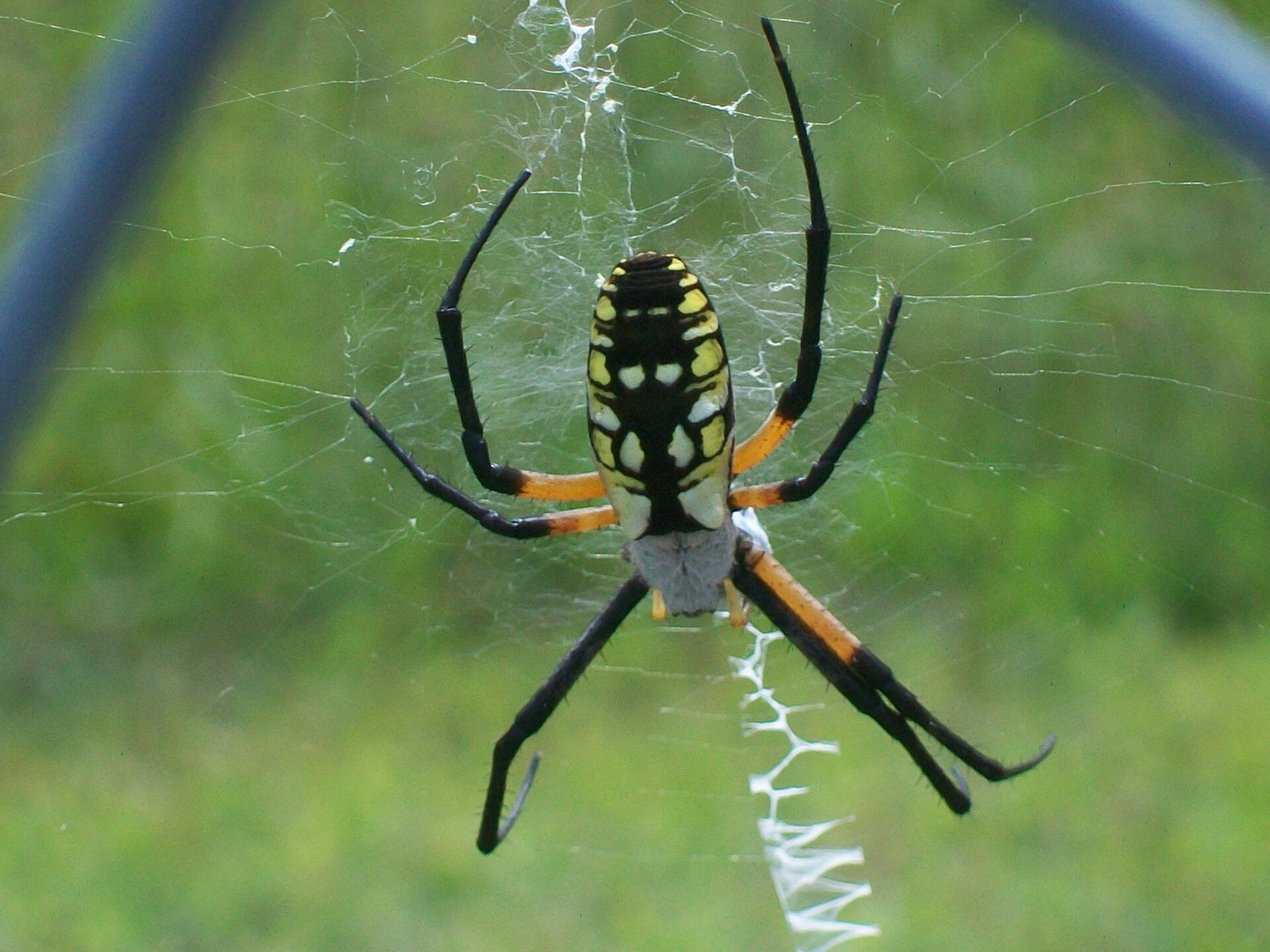
Yellow garden spider
Argiope aurantia
Black and yellow, but the abdomen is egg shaped with a bold black and yellow pattern rather than banded, the legs are black with a yellow base instead of banded along their length, and the web has a thick zigzag of white silk down the middle. Native, and in every state.
Banded garden spider
Argiope trifasciata
Silvery white with thin black and yellow bands across the abdomen, on a wheel shaped web in tall grass and gardens in late summer. Smaller than a joro, with shorter legs and no red underneath.
Golden silk orbweaver
Trichonephila clavipes
The joro's native cousin across the Deep South. Orange brown rather than yellow and black, with tufts of dark hair on the leg joints and no red patch. It has been in the Southeast for as long as there are records.
Spider season FAQ
Species lists, record counts, first record years and the month and year curves are research grade observations from the iNaturalist API, aggregate counts only, snapshot 2026-09-19 with the joro curve read live in your browser. They measure how often people find and photograph a species, never how many exist, and a species with no record in a state may still live there. Range maps are aggregated observation grid tiles from the same source. For any bite, wash with soap and water and call Poison Control on 1-800-222-1222; go to a hospital for cramping, sweating, spreading pain or a worsening wound. Also on the move indoors this month: your state’s fall invaders and rodent season.
Hero image: “Joro Spider - Trichonephila clavata (50564813031)” by Christina Butler from Georgia, United States, CC BY 2.0