
Spider Season in Maine: What Lives Here and When It Comes Indoors
Maine has no widow or recluse spider at the record threshold. The spiders that turn up indoors in autumn, what they look like, and who to call about a bite.
No widow or recluse at the record threshold in MaineSpiders in Maine, by the numbers
Verified records, snapshot 2026-09-19 no recordMaine has no widow or recluse record at all in the verified set. The spiders that come indoors in September from Kittery to Caribou are house spiders, funnel weavers and the pale yellow sac spider, and the first hard frost of early October ends the wandering.
The spiders that live in Maine
No widow or recluse species reaches 20 verified records in Maine, and no widow has a verified record here at all, and the brown recluse has none.
Maine has no widow or recluse record at all in the verified set. The spiders that come indoors in September from Kittery to Caribou are house spiders, funnel weavers and the pale yellow sac spider, and the first hard frost of early October ends the wandering.
The spiders Maine does have indoors are house spiders in ceiling corners, funnel weavers in basements and window wells. All of them are of no medical concern. Sealing door sweeps, vacuuming webs and moving the woodpile off the wall reduce the autumn traffic more than any spray does.
When spiders come indoors in Maine
Indoor sightings in Maine pick up around August 15, peak between September 1 and October 10, and fade by November 5. The wanderers are mature male house spiders and funnel weavers searching for females, plus spring hatched spiders that have finally grown large enough to see. The first hard frost ends the wandering.
The spiders people photograph as widows and recluses
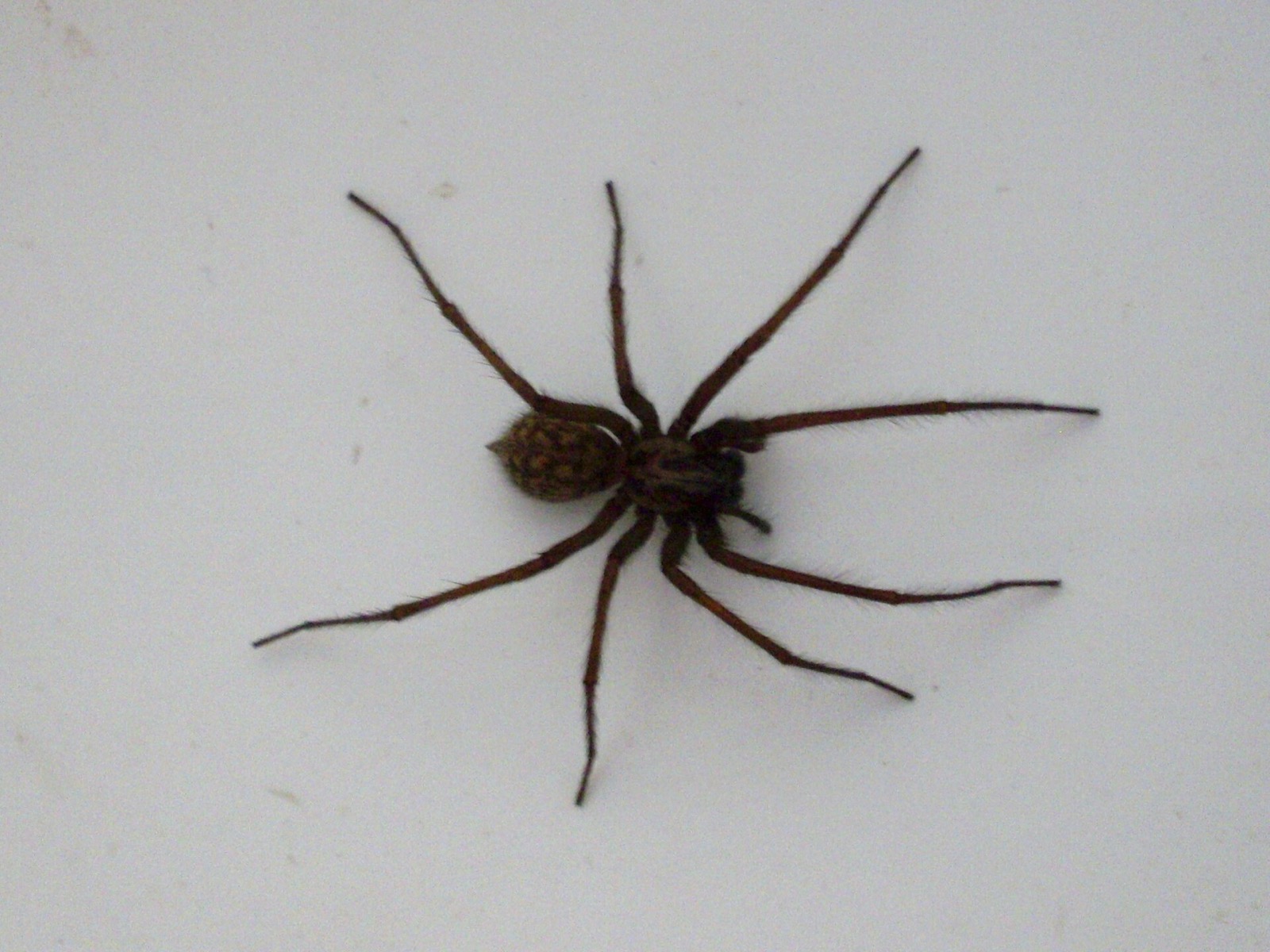
None of the species people fear lives in Maine at any real density, and that is the point of knowing the lookalikes: the glossy dark spider in a low web here is a false widow or a common house spider, and the brown one in the basement is a funnel weaver or a cellar spider.
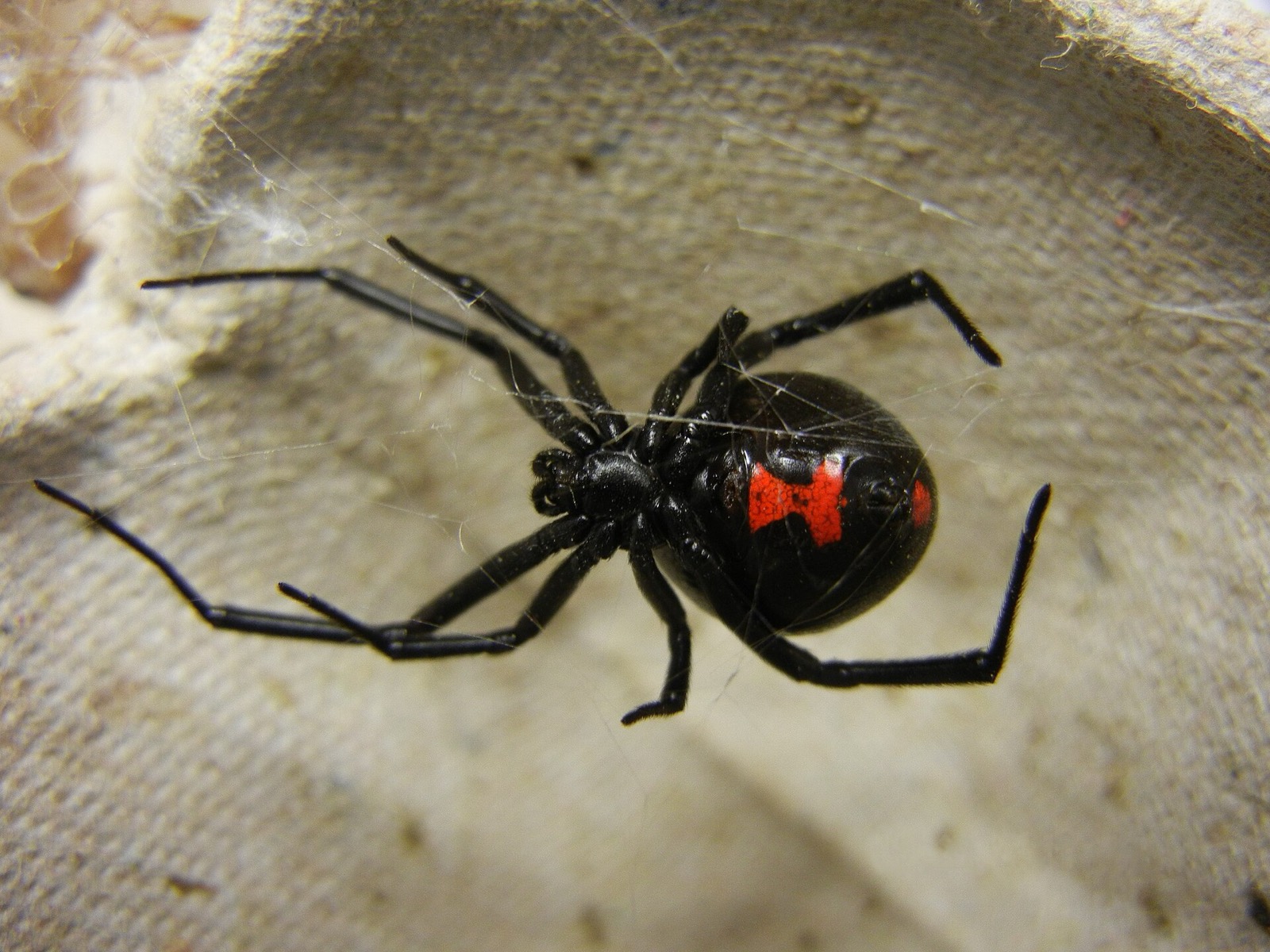
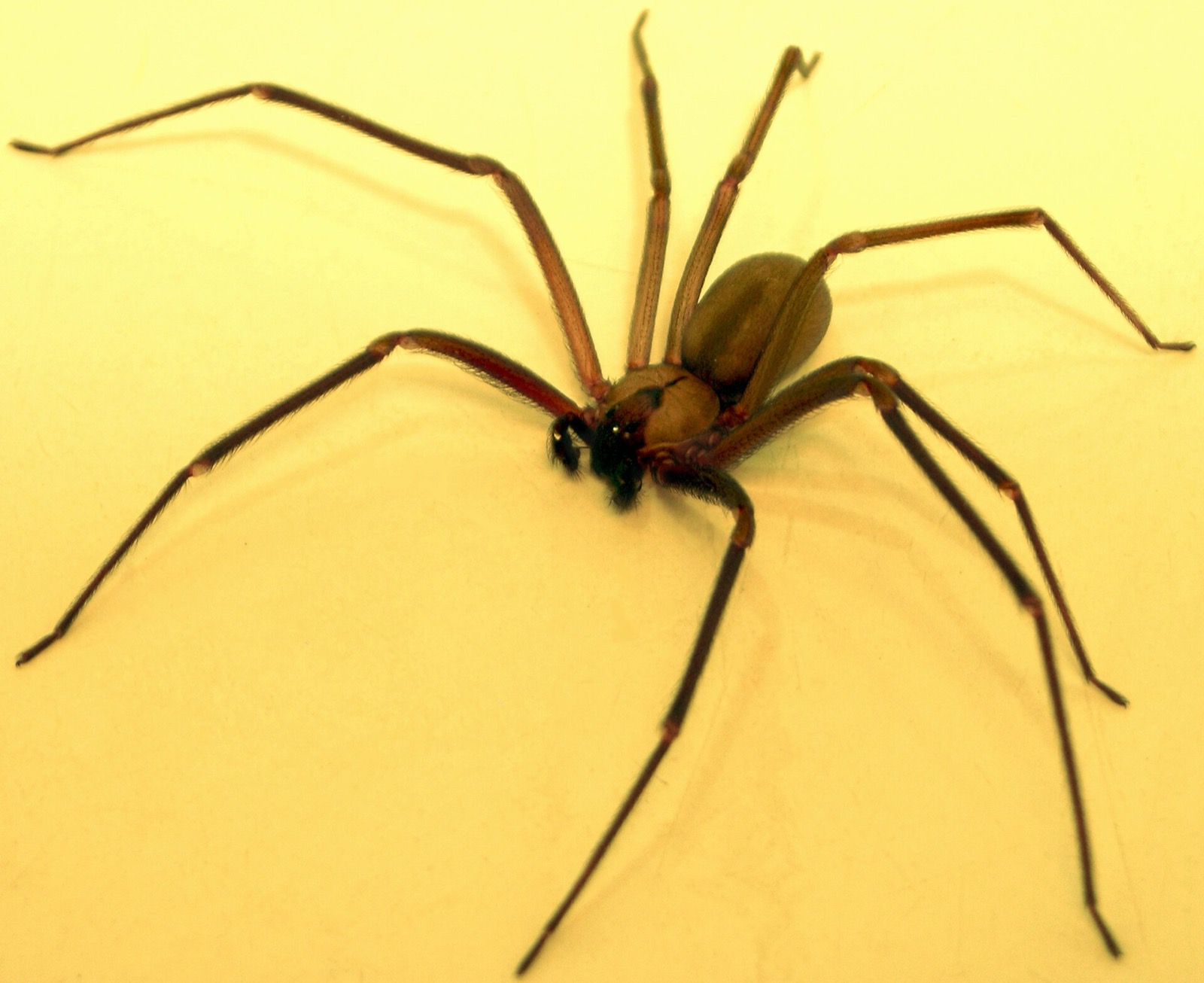
A widow is glossy, round bodied, and hangs upside down in a low tangle web with a red or orange hourglass underneath. A recluse is plain tan with six eyes in three pairs, a darker violin on the front segment, and legs with no bands and no spines. A violin shaped mark on its own is not a recluse: many harmless brown spiders carry one, and it is faint on many real recluses. A bite is never an identification. Skin reactions have dozens of causes, and Poison Control on 1-800-222-1222 will ask about symptoms, never for a species name.
Mistaken for a black widow
False widow
Steatoda grossa
Purplish brown rather than glossy black, with pale markings on top of the abdomen and nothing underneath. The same tangle web in the same corners, which is why it is photographed as a widow more than any other spider.
Triangulate cobweb spider
Steatoda triangulosa
Small, brown, with a row of pale triangles down the abdomen. Lives in the same low corners and window frames a widow would, and turns up indoors far more often.
Common house spider
Parasteatoda tepidariorum
Mottled tan and brown with a rounded abdomen, in messy cobwebs in ceiling corners, under eaves and behind furniture. The most photographed spider in American houses, and an autumn indoor regular.
Mistaken for a brown recluse
Grass spider or funnel weaver
Agelenopsis
Brown with two dark stripes down the front body segment, long spinnerets at the back, and a flat sheet web with a funnel retreat. A recluse has one violin mark, no stripes, no sheet web, and spins almost nothing.
Woodlouse spider
Dysdera crocata
Red orange front half, cream abdomen, and huge forward pointing jaws. Six eyes like a recluse, which causes the confusion, but the two tone colour is unmistakable and it lives under stones and logs.
Cellar spider
Pholcidae
Thread thin legs many times the body length, hanging in a loose web in basement corners and shaking when disturbed. Tan like a recluse, and nothing else about it is.
Southern house spider
Kukulcania hibernalis
The male is a long legged brown spider that wanders across floors and walls in the South and gets called a recluse constantly. Eight eyes in a tight cluster, a much larger body, and it lives in cracks in outside walls.
What to do about a spider bite in Maine
Poison Control: 1-800-222-1222, any time, any state.
Maine spider season FAQ
The rest of your Maine autumn
More Northeast spider season pages
Species lists, record counts and monthly curves are research grade observations from the iNaturalist API, aggregate counts only, snapshot 2026-09-19 with the curves read live in your browser. They measure how often people find and photograph a species, never how many there are, and a species with no record here may still live here. Season windows are drawn from those curves and are climatological typicals. For any bite, wash with soap and water and call Poison Control on 1-800-222-1222. National picture: spider season by state.
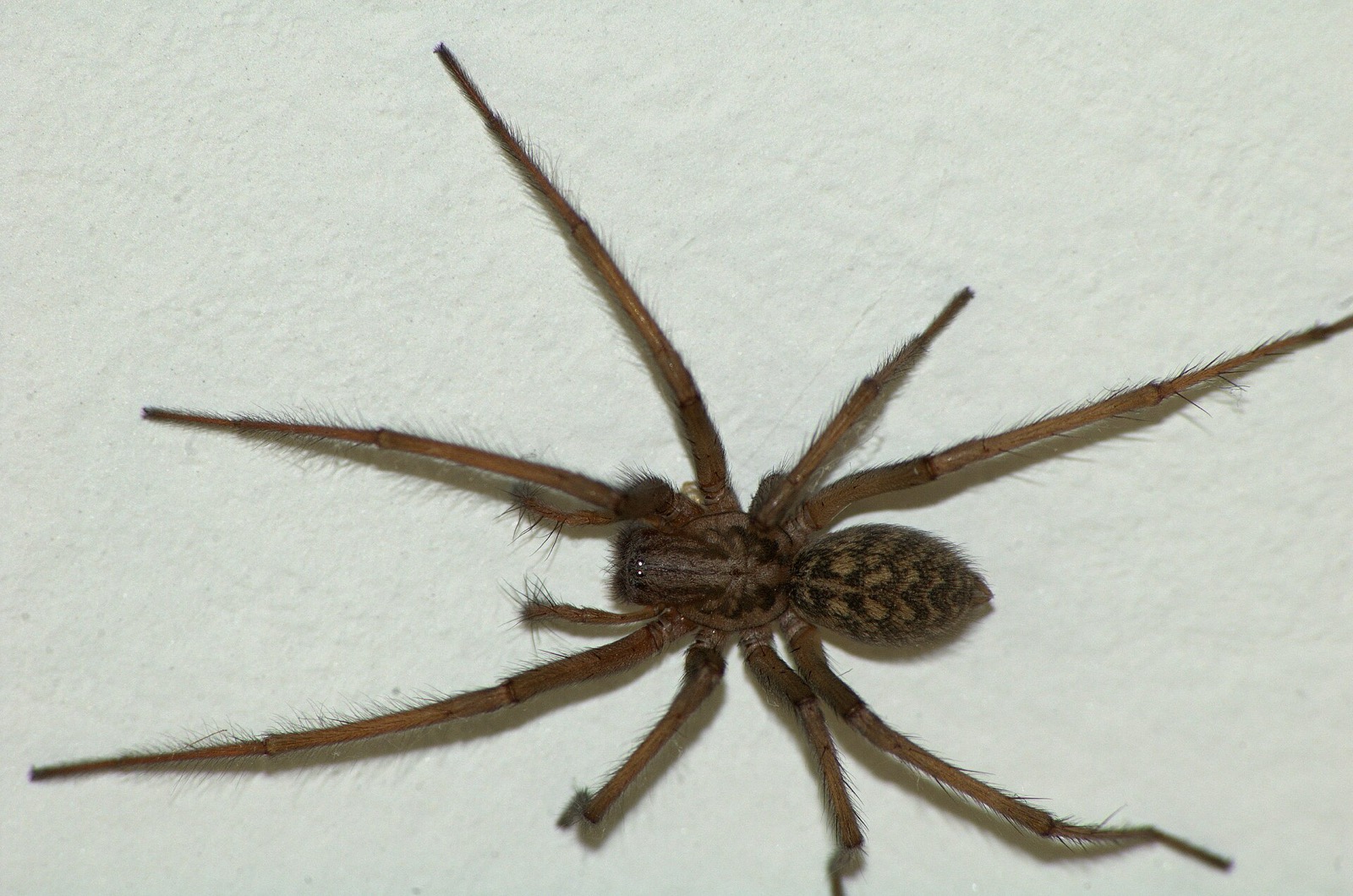
Hero image: “Tegenaria-domestica-chb” by Chb, CC BY 3.0