
Shed Antler Season 2027: Rules and Closures by State
Deer, elk and moose drop their antlers between November and April, and each state wildlife agency sets its own rules for picking them up. The dated winter range closures, the required courses and every state’s rule are below, each quoted from the agency and linked.
Deer, elk and moose shed on different calendars
Moose and mule deer cast their antlers first, in early winter. White-tailed deer follow from January, and elk hold theirs longest, into April. Each bar below is one agency’s own statement for its state; a northern or a southern herd can run a few weeks either side.
Months the agency names for the drop
White-tailed deer
Whitetail deer have about a two-month shedding period in Iowa, beginning mid-Jan. and ending mid-March.Iowa Department of Natural Resources, Iowa. Read it at the source
Mule deer
For mule deer, that means around December and January, and for bull elk, March and into April.Idaho Department of Fish and Game, Idaho. Read it at the source
Elk
Deer in Colorado are known to shed their antlers from mid-January through March. Elk may start in February, running through April, and moose typically drop their palmate antlers November through January.Colorado Parks and Wildlife, Colorado. Read it at the source
Moose
Deer in Colorado are known to shed their antlers from mid-January through March. Elk may start in February, running through April, and moose typically drop their palmate antlers November through January.Colorado Parks and Wildlife, Colorado. Read it at the source
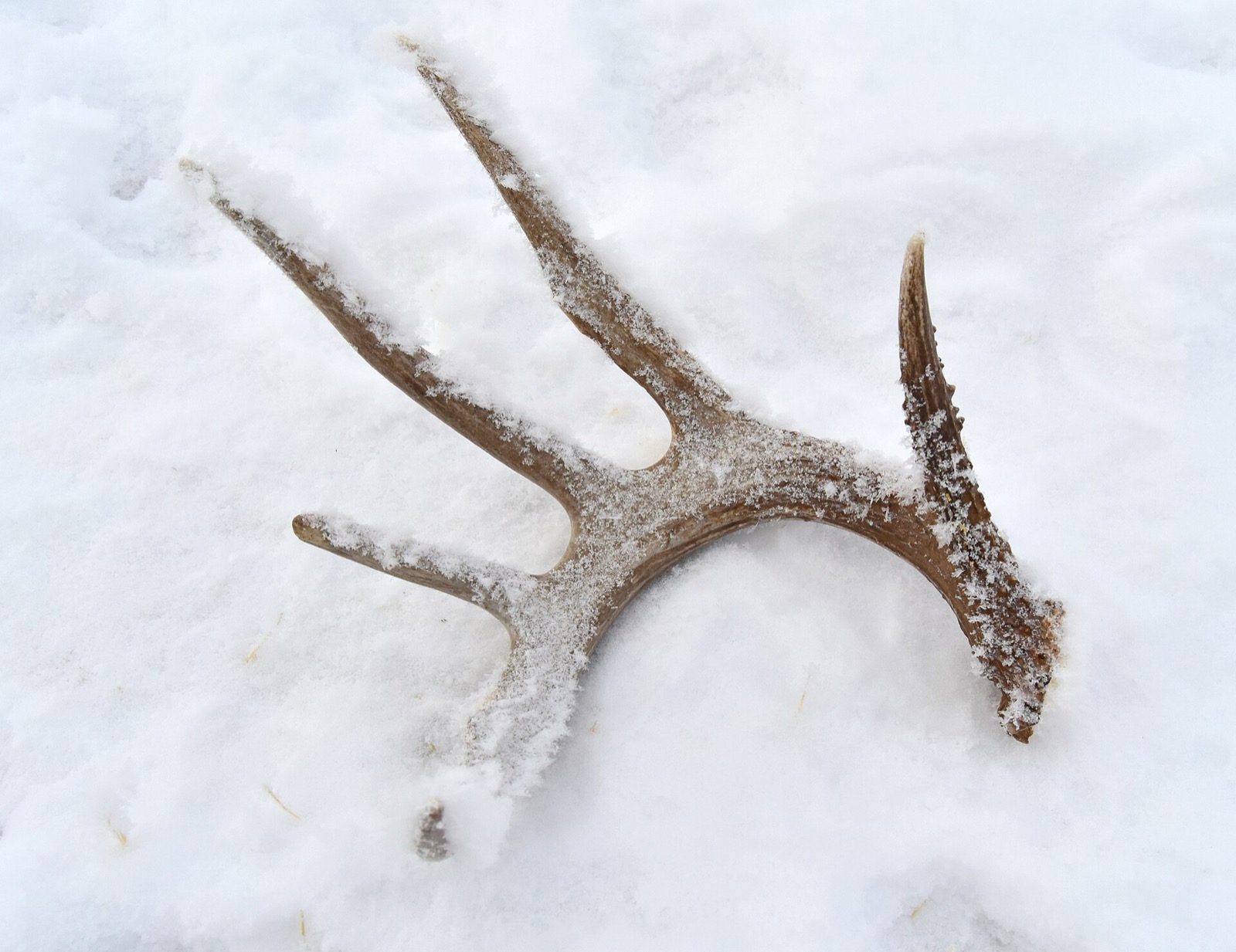
Winter range closures and when they lift
Montana, Oregon, Washington, Colorado, Nevada and Wyoming close parts of their public land to shed collecting over winter. The agencies give the same reason: the closures keep people off winter range while deer and elk are wintering there. Rows are sorted by the next date each closure lifts, and the highlighted row is the next to begin. Opening hours and later nonresident dates are on each state page.
| State | Area | Closed from | Closed until | Today | Source |
|---|---|---|---|---|---|
| Montana | Wildlife management areas with game animal winter range | Winter, start as posted | May 15 | Open | Montana Fish |
| Oregon | White River Wildlife Area | December 1 | March 31 | Open | Oregon Department of Fish and Wildlife |
| Washington | Oak Creek Wildlife Area Unit | Winter, start as posted | May 1 | Open | Washington Department of Fish and Wildlife |
| Washington | L.T. Murray Wildlife Area Unit | Winter, start as posted | May 1 | Open | Washington Department of Fish and Wildlife |
| Colorado | Public lands west of I-25 | January 1 | April 30 | Open | Colorado Parks and Wildlife |
| Nevada | Public land in Elko, Eureka, Lander, Lincoln, Nye and White Pine Counties | January 1 | April 30 | Open | Nevada Department of Wildlife |
| Wyoming | Collection Area 1 | January 1 | May 1 | Open | Wyoming Game and Fish Department |
| Oregon | Ladd Marsh Wildlife Area | February 1 | March 31 | Open | Oregon Department of Fish and Wildlife |
| Colorado | Public lands west of I-25 in GMUs 54, 55, 66, 67 and 551 | May 1 | May 15 | Open | Colorado Parks and Wildlife |
Shed antler rules, A to Z
One line per state, from the agency’s own rule. The chip says what kind of rule the state publishes: dated closures, a permit or course, a plain agency statement, or rules on possession and sale. Each state page quotes the agency’s wording in full with the link.
- AlabamaImport and possession
Alabama exempts unattached bare antlers and sheds from its ban on bringing in parts of deer family animals from other states.
- AlaskaAgency statement
Alaska Department of Fish and Game says naturally shed antlers, and the bones and skulls of land animals, may be kept, except in national parks.
- ArizonaAgency statement
Arizona lets naturally shed antlers be picked up without a permit or inspection, with National Park Service land the exception the state digest names.
- ArkansasAgency statement
Arkansas allows shed hunting on AGFC wildlife management areas and on private land with the owner's permission.
- CaliforniaSale and possession
California lets shed antlers be bought and sold at any time under Fish and Game Code section 3039.
- ColoradoDated closures
Colorado closes public land west of I-25 to shed collecting from January 1 through April 30 every year.
- DelawareAntler trap rule
Delaware makes it unlawful to use antler traps, or any device meant to pull or collect shed antlers from deer.
- IdahoPermit or course
Idaho residents gather sheds without a permit, while nonresidents need an Idaho hunting license for big game first.
- IllinoisAgency statement
Illinois splits its public land: sheds may be kept from State Fish and Wildlife Areas but stay put in state parks and nature preserves.
- IndianaAgency statement
Indiana DNR properties are open to shed collecting without a permit, apart from dedicated Nature Preserves.
- IowaAgency statement
Iowa DNR allows naturally shed deer antlers to be collected and kept in any month, with no license.
- KansasAgency statement
Kansas department managed lands are open to shed hunting, while Walk In Hunting Access land and national wildlife refuges are not.
- KentuckyAgency statement
Kentucky's deer hunting regulation lists a naturally cast deer antler among the things a person may possess.
- MaineSale and possession
Maine lets anyone buy or sell naturally shed deer or moose antlers without a hide dealer's license.
- MassachusettsAgency statement
Since the 2025 season, MassWildlife lets anyone collect naturally shed deer and moose antlers with no permit, tag or license.
- MichiganSale and possession
Michigan's Wildlife Conservation Order covers owning, buying and selling antlers naturally shed by deer, elk and moose.
- MinnesotaAgency statement
Minnesota wildlife management areas allow shed antlers to be collected for personal use.
- MissouriAgency statement
Missouri allows shed antler hunting on MDC conservation areas and needs no permit to find or keep a shed.
- MontanaDated closures
Winter range WMAs close after hunting season until noon on May 15, nonresidents wait seven more days, and state parks are closed to shed collecting.
- NebraskaAgency statement
Nebraska Game and Parks says anyone may pick up, keep, buy, sell or barter shed deer and elk antlers.
- NevadaDated closures
Six eastern Nevada counties close public land to shed collecting from January 1 through April 30.
- New JerseySale and possession
New Jersey names shed antlers as the exception to its rule that deer parts in hand must come from lawfully harvested deer.
- New MexicoPermit or course
New Mexico allows obviously shed antlers to be picked up, and nonresidents need a Shed Hunting License to keep more than two.
- North DakotaAgency statement
North Dakota wildlife management areas are open to shed hunting, and sheds need no permit to possess.
- OhioAgency statement
Ohio allows naturally shed deer antlers to be picked up on Division of Wildlife lands during daylight hours.
- OklahomaAgency statement
Oklahoma allows shed antlers to be collected and removed from Department managed areas when they came off the skull plate naturally.
- OregonDated closures
Oregon needs no license to pick up deer and elk sheds, and seven ODFW wildlife areas close to entry over winter.
- South CarolinaSale and possession
South Carolina allows shed antlers, and antlers removed from the pedicel, to be bought and sold.
- South DakotaAgency statement
South Dakota allows shed hunting on land GFP owns, including state parks, recreation areas and Game Production Areas.
- TexasSale and WMA rules
Texas wildlife management area rules bar taking shed deer antlers, and TPWD lets lawfully possessed antlers be bought and sold.
- UtahPermit or course
Utah requires the free Antler Gathering Ethics Course for anyone gathering sheds from January 1 to May 31.
- VermontAgency statement
Vermont Fish and Wildlife lists collecting shed antlers among the walking activities allowed on the lands it manages.
- VirginiaPermit or course
Virginia DWR allows shed collecting on its lands for anyone carrying a hunting or fishing license or a DWR Access Permit.
- WashingtonDated closures
Washington sets no shed season or permit, and parts of the Oak Creek and L.T. Murray wildlife areas close to all entry until May 1.
- WisconsinAgency statement
Wisconsin DNR allows shed antlers to be collected on department lands from animals with an established open season.
- WyomingDated closures
Wyoming closes Collection Area 1 to shed collecting from January 1 until 6 a.m. May 1, and until 6 a.m. May 8 for nonresidents.
Shed antler questions in the other 14 states
Antler and possession questions in these states go to the state wildlife agency, whose hunting regulation guide covers deer parts and the rules for its own lands.
- Connecticut: Connecticut Department of Energy and Environmental Protection, Wildlife Division
- Florida: Florida Fish and Wildlife Conservation Commission
- Georgia: Georgia Department of Natural Resources, Wildlife Resources Division
- Hawaii: Hawaii Department of Land and Natural Resources, Division of Forestry and Wildlife
- Louisiana: Louisiana Department of Wildlife and Fisheries
- Maryland: Maryland Department of Natural Resources, Wildlife and Heritage Service
- Mississippi: Mississippi Department of Wildlife, Fisheries, and Parks
- New Hampshire: New Hampshire Fish and Game Department
- New York: New York State Department of Environmental Conservation
- North Carolina: North Carolina Wildlife Resources Commission
- Pennsylvania: Pennsylvania Game Commission
- Rhode Island: Rhode Island Department of Environmental Management, Division of Fish and Wildlife
- Tennessee: Tennessee Wildlife Resources Agency
- West Virginia: West Virginia Division of Natural Resources
Shed hunting rules, state by state
Shed antler questions
Compiled September 21, 2026 from each state wildlife agency’s own pages, regulations and news releases, with the page and the date it was read on every state page. Rules change between winters, and emergency closures can be added in a hard one, so the agency page is the one to check before a trip. Start with your state in the list above.