
2026 Mosquito Forecast
The 2026 US mosquito risk outlook: West Nile, EEE, and dengue projections, monthly biting timeline, and regional risk breakdown. Sourced from CDC ArboNET and NOAA climate data.
Built from CDC and NOAA data

Are Mosquitoes Worse This Year?
Yes. The 2026 US mosquito outlook projects a +10 to 15% increase in mosquito activity compared to the recent baseline, driven by warmer winters allowing larger overwintering populations, the continued northward range expansion of Aedes albopictus and Aedes aegypti, and elevated 2025 surveillance trends across the Plains and California. Peak West Nile Virus transmission is forecast for July 1 - September 30. 8 States (LA, MS, TX, FL, AR, CA, ND, SD carry the highest combined burden by absolute count or per-capita rate) carry the highest combined disease and biting burden.
Sourced from CDC ArboNET surveillance and NOAA climate outlooks. The regional breakdown below shows where in the country the increase concentrates.
2026 Mosquito Forecast: National Overview
The 2026 mosquito activity forecast projects continued elevated WNV transmission across the Plains and California, sustained Gulf South Aedes pressure, and expanded local dengue risk in southern Florida and the Rio Grande Valley. Based on CDC ArboNET surveillance and NOAA climate outlooks.
Projected Activity Increase
Forecast mosquito populations based on warming winter temperatures, expanded Aedes aegypti range, and 2025 surveillance trends
Peak WNV Window
Cx. tarsalis and Cx. pipiens transmission peaks in late summer across most of the country
Tier 1 and Tier 2 Pressure
LA, MS, TX, FL, AR, CA, ND, SD carry the highest combined burden by absolute count or per-capita rate
What to Expect in 2026
The 2026 mosquito season is projected to bring continued elevated activity across most of the country, with the highest pressure on the Gulf South, the Plains, California, and Florida. Climate trends continue to favor expanded Aedes aegypti range, longer biting seasons in the Mid-Atlantic and Southeast, and steady WNV transmission across the Plains and West Coast irrigated agricultural belts. The 2026 mosquito season builds on the post-2013 Aedes aegypti expansion across California and the post-2019 EEE outbreak benchmark in the Northeast.
Climate Factors
- Atlantic hurricane landfall years drive post-storm Psorophora and Aedes vexans blooms across the Gulf Coast
- Warmer winters extending Aedes albopictus active season 1 to 2 weeks per decade
- Western drought variability shifts Cx. tarsalis hot spots year to year in CA, NV, AZ
- NOAA climate outlook suggests above-average summer temperatures in the Plains and Upper Midwest
Vector Range Expansion
- Aedes aegypti continued northward expansion in CA Central Valley and into the Bay Area
- Aedes albopictus expansion north into ME, VT, and NH along the I-95 corridor
- Aedes japonicus established across the Northeast and Mid-Atlantic; container-breeding nuisance vector
- Recent Caribbean dengue activity keeps local transmission risk elevated in southern FL and the Rio Grande Valley
Geographic Trends
- Plains states: continued highest per-capita WNV burden in the country
- Florida: year-round Aedes aegypti pressure plus EEE focus areas plus dengue risk
- California: heaviest absolute WNV count plus expanding Aedes aegypti urban presence
- Hawaii: avian malaria conservation crisis; Wolbachia mosquito suppression program ongoing
Regional Risk Breakdown for 2026
Select your region to see detailed mosquito activity forecasts and recommendations
Northeast
Low to Moderate Risk2026 Outlook:
Cool maritime climate compresses the season. Cx. pipiens drives WNV transmission across Boston, Hartford, and Providence metros each August. EEE risk concentrated in southeastern Massachusetts (Bristol, Plymouth) Pine Barrens and southern New Hampshire coastal swamps. The 2019-2020 EEE outbreak years remain the regional benchmark; 2026 trends will hinge on Culiseta melanura amplification cycles in cedar swamps.
Primary Vector
Northern House Mosquito (Culex pipiens)
Primary Disease
West Nile Virus and Eastern Equine Encephalitis
Check Your Local 2026 Mosquito Risk
Ready to see current mosquito activity in your area? Get today's forecast and personalized risk assessment for your ZIP code.
2026 Monthly Activity Timeline
Click through each month to see activity levels and prevention actions
August 2026
Peak WNV Window
WNV human transmission peaks across most of the country in August. Cx. pipiens and Cx. tarsalis populations at maximum. EEE transmission risk peaks in the focus areas. Aedes albopictus daytime biting at maximum intensity across the East. Hurricane-driven floodwater Psorophora outbreaks possible across the Gulf Coast.
Recommended Actions:
- Watch for symptoms 2 to 15 days after a bite: fever, headache, body aches
- Severe headache, neck stiffness, confusion: ER immediately (neuroinvasive WNV or EEE)
- EEE focus areas: avoid dusk and dawn outdoor activity through October
- Pregnant individuals in southern FL, TX: watch for sporadic dengue advisories
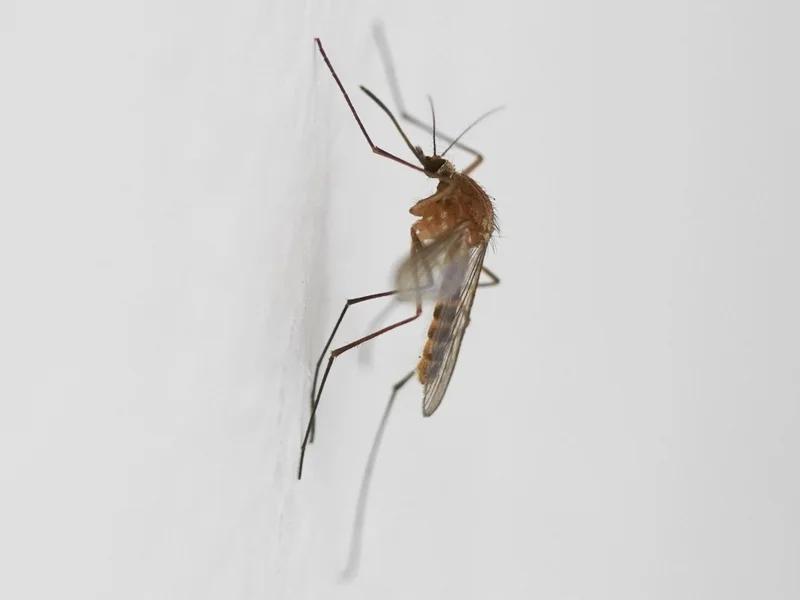
West Nile Virus
2024 cases: ~2,500
West Nile Virus
2026 Projection
Stable to slight increase in Plains and CA Central Valley
WNV transmission is climate-sensitive. Warmer summers favor faster Cx. pipiens and Cx. tarsalis development. The Plains states (especially ND, SD, NE) consistently lead per-capita rates. California Central Valley irrigated agriculture sustains the heaviest absolute counts year over year.
Symptoms
About 80% of infections are asymptomatic. Symptomatic cases: fever, headache, body aches, occasional rash. Severe (less than 1%): neuroinvasive disease with meningitis, encephalitis, or paralysis.
Peak Risk Window
July through September across most of the country; year-round risk in southern California and the Gulf Coast.
Prevention
Eliminate standing water around the home weekly. EPA-registered DEET, picaridin, IR3535, or oil of lemon eucalyptus before going outside. Window and door screens with no tears.
Explore Mosquito Forecasts by State
Select your state for a detailed local mosquito forecast and risk assessment.
Alabama
View 2026 Forecast
MinimalAlaska
View 2026 Forecast
High RiskArizona
View 2026 Forecast
ModerateArkansas
View 2026 Forecast
Very HighCalifornia
View 2026 Forecast
ModerateColorado
View 2026 Forecast
Lower RiskConnecticut
View 2026 Forecast
Lower RiskDelaware
View 2026 Forecast
Very HighFlorida
View 2026 Forecast
ModerateGeorgia
View 2026 Forecast
MinimalHawaii
View 2026 Forecast
Lower RiskIdaho
View 2026 Forecast
High RiskIllinois
View 2026 Forecast
ModerateIndiana
View 2026 Forecast
ModerateIowa
View 2026 Forecast
ModerateKansas
View 2026 Forecast
Lower RiskKentucky
View 2026 Forecast
High RiskLouisiana
View 2026 Forecast
MinimalMaine
View 2026 Forecast
ModerateMaryland
View 2026 Forecast
Lower RiskMassachusetts
View 2026 Forecast
ModerateMichigan
View 2026 Forecast
ModerateMinnesota
View 2026 Forecast
High RiskMississippi
View 2026 Forecast
ModerateMissouri
View 2026 Forecast
Lower RiskMontana
View 2026 Forecast
ModerateNebraska
View 2026 Forecast
Lower RiskNevada
View 2026 Forecast
MinimalNew Hampshire
View 2026 Forecast
ModerateNew Jersey
View 2026 Forecast
Lower RiskNew Mexico
View 2026 Forecast
ModerateNew York
View 2026 Forecast
ModerateNorth Carolina
View 2026 Forecast
ModerateNorth Dakota
View 2026 Forecast
ModerateOhio
View 2026 Forecast
ModerateOklahoma
View 2026 Forecast
Lower RiskOregon
View 2026 Forecast
ModeratePennsylvania
View 2026 Forecast
MinimalRhode Island
View 2026 Forecast
ModerateSouth Carolina
View 2026 Forecast
ModerateSouth Dakota
View 2026 Forecast
ModerateTennessee
View 2026 Forecast
Very HighTexas
View 2026 Forecast
Lower RiskUtah
View 2026 Forecast
MinimalVermont
View 2026 Forecast
ModerateVirginia
View 2026 Forecast
Lower RiskWashington
View 2026 Forecast
Lower RiskWest Virginia
View 2026 Forecast
Lower RiskWisconsin
View 2026 Forecast
Lower RiskWyoming
View 2026 Forecast
Know Your Mosquitoes: 6 US Species Guide
The mosquitoes most active in 2026: identification, habitat, biting behavior, and disease-vectoring relevance.
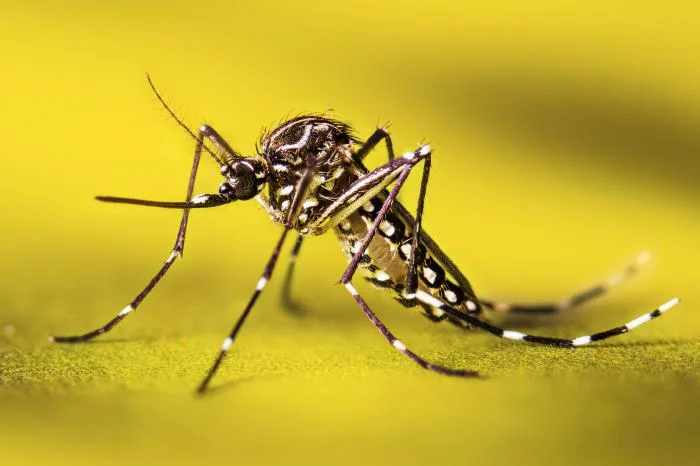
Yellow Fever Mosquito
Aedes aegypti
Region: Gulf Coast, Southeast, Southwest
Risk: Zika, dengue, yellow fever, chikungunya.
Active: Year-round in southern Florida and the Gulf; summer-only further north.
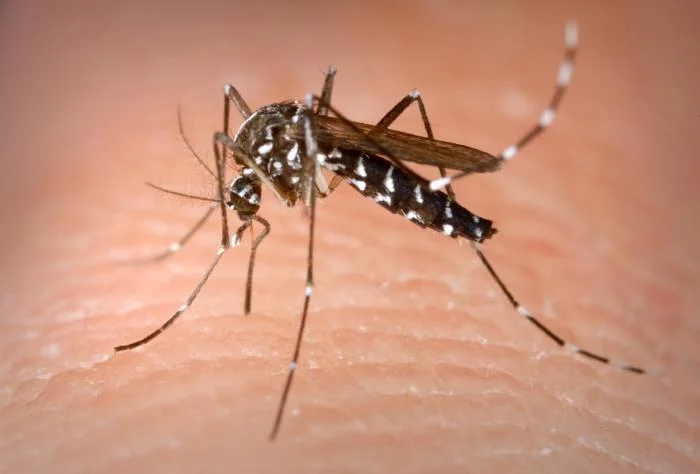
Asian Tiger Mosquito
Aedes albopictus
Region: Eastern US, Mid-Atlantic, Southeast, lower Midwest
Risk: Eastern Equine Encephalitis, dengue, chikungunya, Zika, dog heartworm.
Active: Spring through first hard frost. Eggs overwinter in cold climates and hatch when flooded by spring rain.
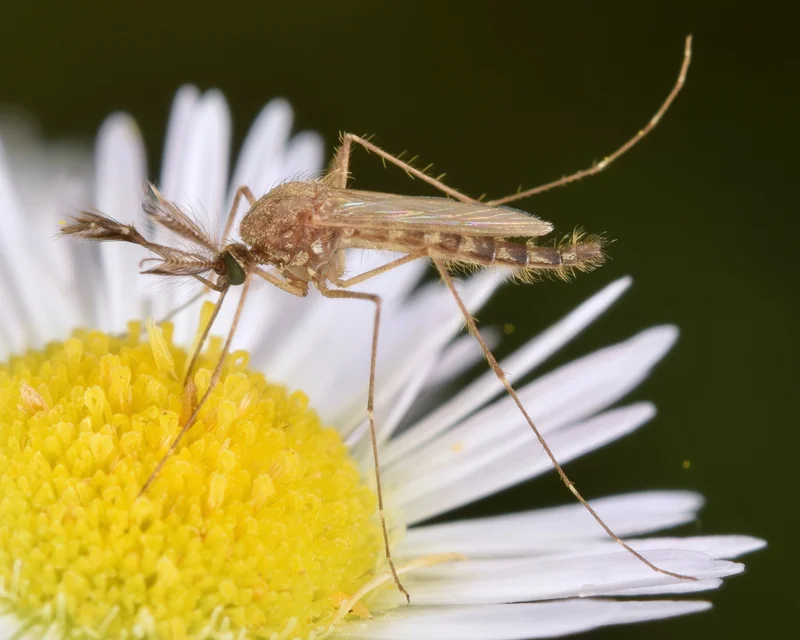
Inland Floodwater Mosquito
Aedes vexans
Region: Nationwide; especially prairies, river floodplains, and farmland
Risk: Aggressive nuisance biter. Weak vector for West Nile, dog heartworm.
Active: Spring through fall. Population spikes a week or two after major rain events.
Northern House Mosquito
Culex pipiens
Region: Northeast, Mid-Atlantic, Midwest, Pacific Northwest
Risk: West Nile virus, St. Louis encephalitis, dog heartworm.
Active: Late spring through early fall in the north. Adult females overwinter in basements, garages, and storm drains.
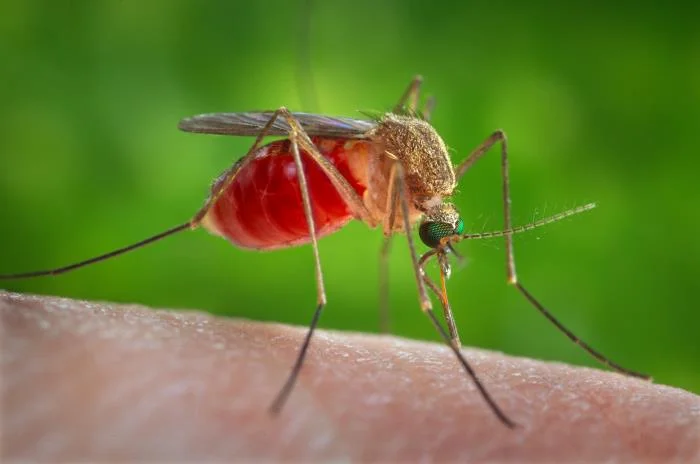
Southern House Mosquito
Culex quinquefasciatus
Region: Southern US, Mid-Atlantic, Southwest, Hawaii
Risk: West Nile virus, St. Louis encephalitis, dog heartworm.
Active: Year-round in the deep South; summer peak elsewhere. Most active from dusk through the first few hours after sunset.
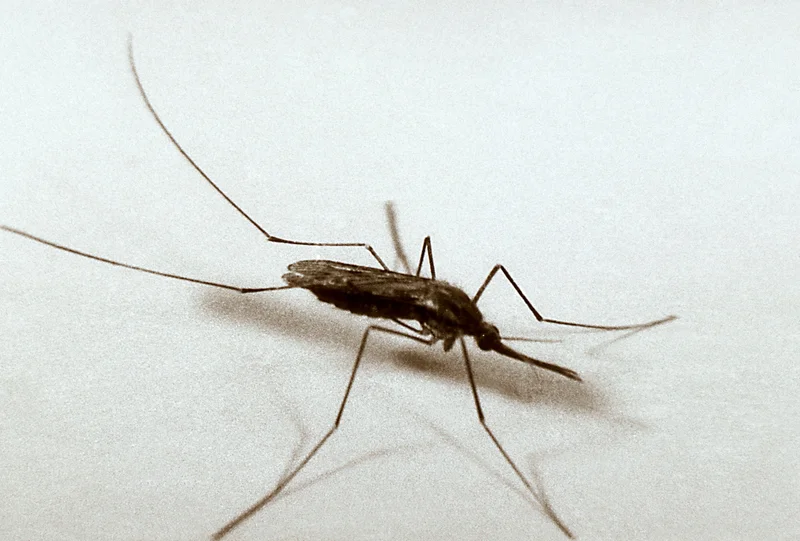
Common Malaria Mosquito
Anopheles quadrimaculatus
Region: Eastern US (range from East Coast to the Texas Panhandle)
Risk: Historical malaria vector; rare local cases.
Active: Late spring through early fall. Most active at dusk and through the night.
If You Develop Symptoms
Most mosquito bites are harmless. A small fraction can transmit illness, and knowing the timeline matters more than panicking at every itch.Five things to know.
Watch for fever
Fever, body aches, headache, or fatigue 2 to 15 days after a bite. WNV often feels like flu, and most infections never get diagnosed.
Note where and when
A rough record of where and when you got bitten helps your doctor decide what to test for. Date, location, mosquito-heavy areas you visited.
Get help fast for neuro signs
Severe headache, neck stiffness, confusion, vision changes, or sudden muscle weakness can mean neuroinvasive WNV or EEE. Both are medical emergencies.
Pregnant exposure?
If pregnant and bitten in an area with documented Zika or local dengue transmission, mention to your OB. Same goes for travel exposure.
Children and seniors
Higher risk of severe disease from WNV, EEE, and dengue in adults over 60 and children under 5. Early call to the pediatrician or PCP if symptoms appear.
Stay Ahead of 2026 Mosquito Risk
Get personalized mosquito forecasts, WNV alerts, and prevention tips for your ZIP code.