
Ice Fishing Season Dates and Shelter Deadlines
Shelter and shanty removal deadlines, season openers and closers, licence costs and line and hole limits for 25 states, each read from the agency’s own page with the source and the date it was read.
The shelter deadline is the only date most people need
Almost every ice fishing question people ask a search engine in February and March is the same question, and it is not about fish. It is: when does my house have to be off. In most northern states leaving a shelter out past the date is a citation, and in several of them a conservation officer may remove, store or destroy the structure and bill the owner for it. Minnesota says so on its own shelter page. Michigan writes the same power into its fisheries order for Lake St Clair. Wisconsin asks the public to phone in the shanties that get left behind.
Three things make these dates harder than they look. The first is that many states split the deadline geographically, and not along county lines: Minnesota draws a line across the middle of the state along US Highway 10 and Highway 2, Wisconsin uses Highway 64, Michigan lists thirty two counties by name, and border waters shared with a neighbour usually have their own earlier date agreed between the two states. The second is that a date can be set three completely different ways, and each table labels which. The third is that the deadline almost never ends the season: in most of these states a portable that comes off the ice at the end of every day is still legal after the date, which is a distinction worth reading carefully before you leave the house behind.
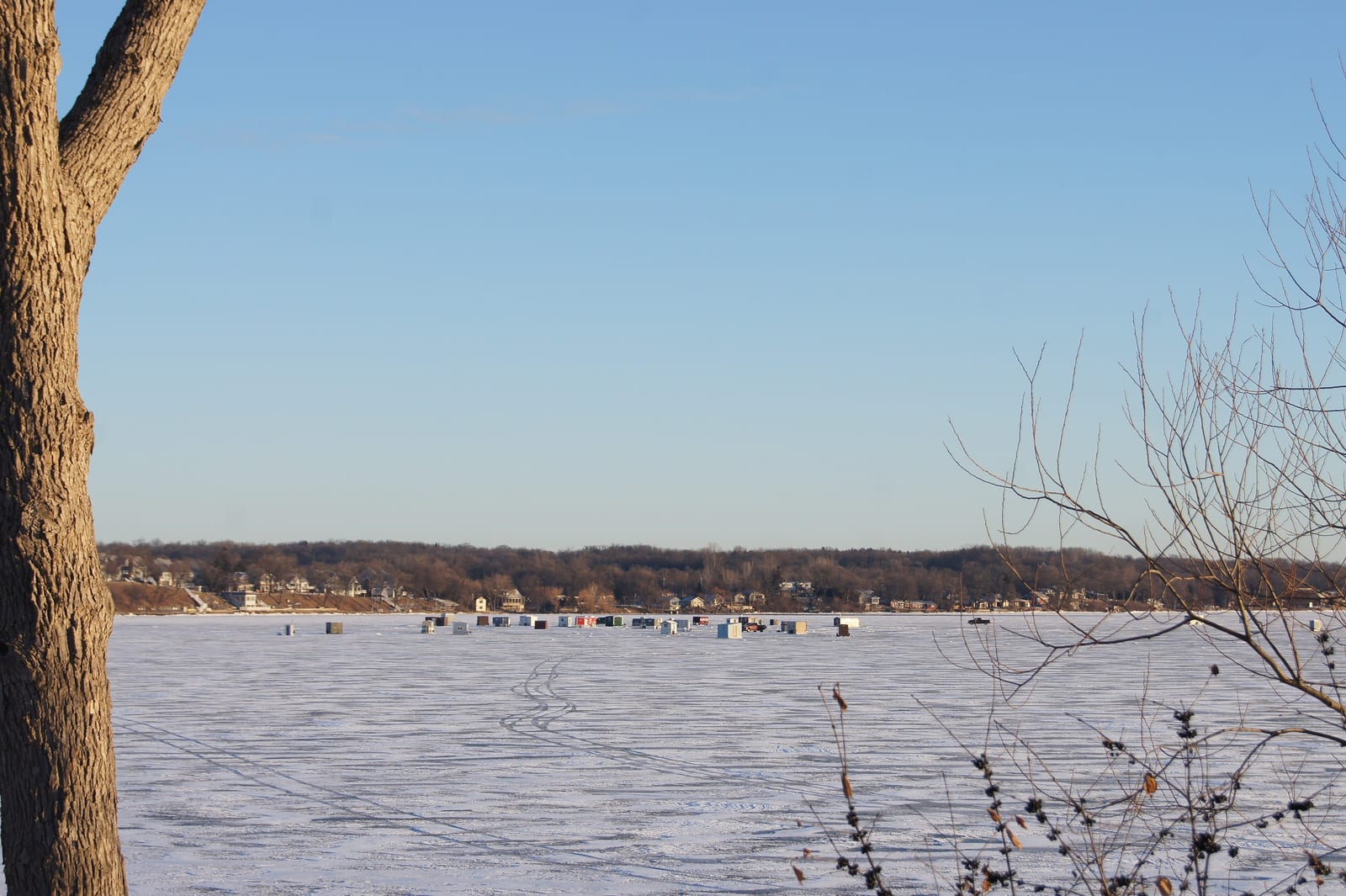
Every dated deadline in this vertical, in order
Placed on the winter that starts in 2026. Where an agency publishes a fixed date in an order or a rule, the date recurs and it sits on this calendar directly. Where an agency states a rule instead of a date, such as the first Sunday after February 20, the date is worked out from the rule. Where the agency had published only the previous season’s date when this page was built, that date is shown on the state page tagged with the season it belongs to. The spread from Feb 20 to Apr 1 is the useful part: a shelter that is perfectly legal on one side of a boundary water can be a violation on the other, on the same afternoon.
| Date | State | Where it applies |
|---|---|---|
| Feb 20 | Iowa | All state owned land and water, statewide |
| Feb 20 | Minnesota | Minnesota and Iowa border waters |
| Feb 21 | Michigan | Lake St Clair |
| Mar 1 | Illinois | Statewide, the date the rule changes |
| Mar 1 | Michigan | Counties not in the northern Lower Peninsula list, and the adjacent Great Lakes |
| Mar 1 | Minnesota | Minnesota and Wisconsin border waters |
| Mar 1 | Wisconsin | Wisconsin and Minnesota boundary waters |
| Mar 5 | Minnesota | Minnesota, North Dakota and South Dakota border waters |
| Mar 15 | Michigan | Thirty two named northern Lower Peninsula counties |
| Mar 15 | Michigan | Michigan and Wisconsin boundary waters |
| Mar 15 | New York | All waters, statewide |
| Mar 15 | North Dakota | All waters, statewide |
| Mar 28 | Vermont | Statewide |
| Mar 31 | Michigan | Upper Peninsula and the adjacent Great Lakes |
| Mar 31 | Minnesota | Minnesota and Canada border waters |
| Apr 1 | New Hampshire | Public waters, public property and private property |
Each row links the state page, where the deadline appears with the exact agency source it was read from and the date of that reading.
The two rules that change most across a state line
Ice fishing is one of the few activities where the gear rules are looser than the open water ones, and the spread between states is enormous. 9 of the states here publish a line or device limit. Vermont is the outlier at the top: eight lines on most waters, up to fifteen on Lake Champlain, six on the Connecticut River. New Hampshire changes the number four separate times depending on which water you are standing on. Idaho allows five poles with five hooks on each and says in as many words that a two pole validation does not raise the limit. Minnesota doubles the open water allowance from one line to two, and drops it back to one on a designated trout lake.
Hole width is the rule people are most often surprised by, and 6 states here publish one. It is not about the fish. A hole left open is a hazard for everyone who walks across it afterwards, which is why North Dakota does not cap the width at all but requires anything over ten inches to be marked when it is abandoned, with a natural object or a brightly painted lath, visible from at least 150 feet, and requires the marker to be in the angler’s possession the moment the hole is made. Utah is the most precise anywhere: twelve inches at the widest point, with named waters where a different limit or no limit applies.
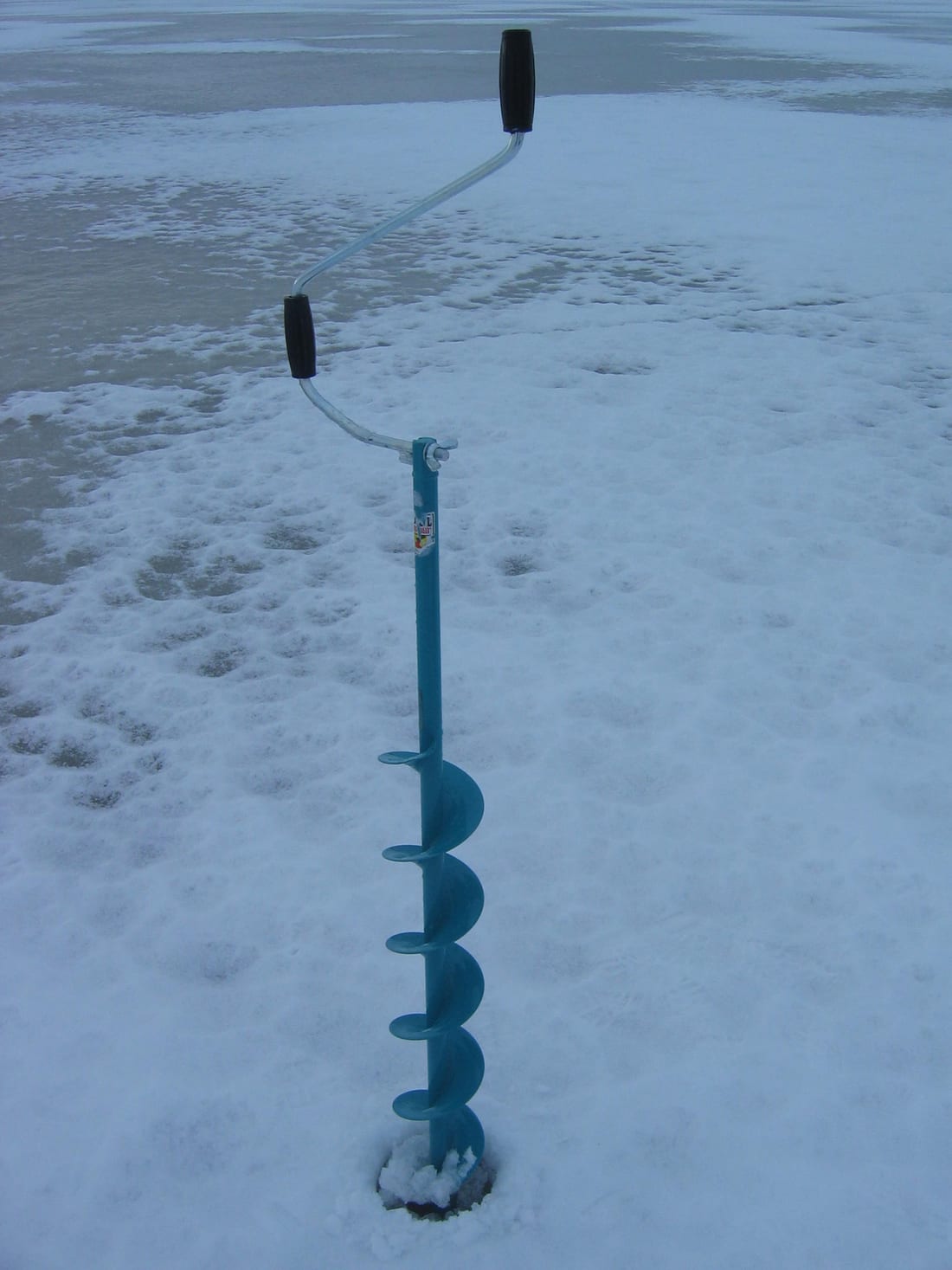
The marking rule is the one nobody reads and everybody breaks
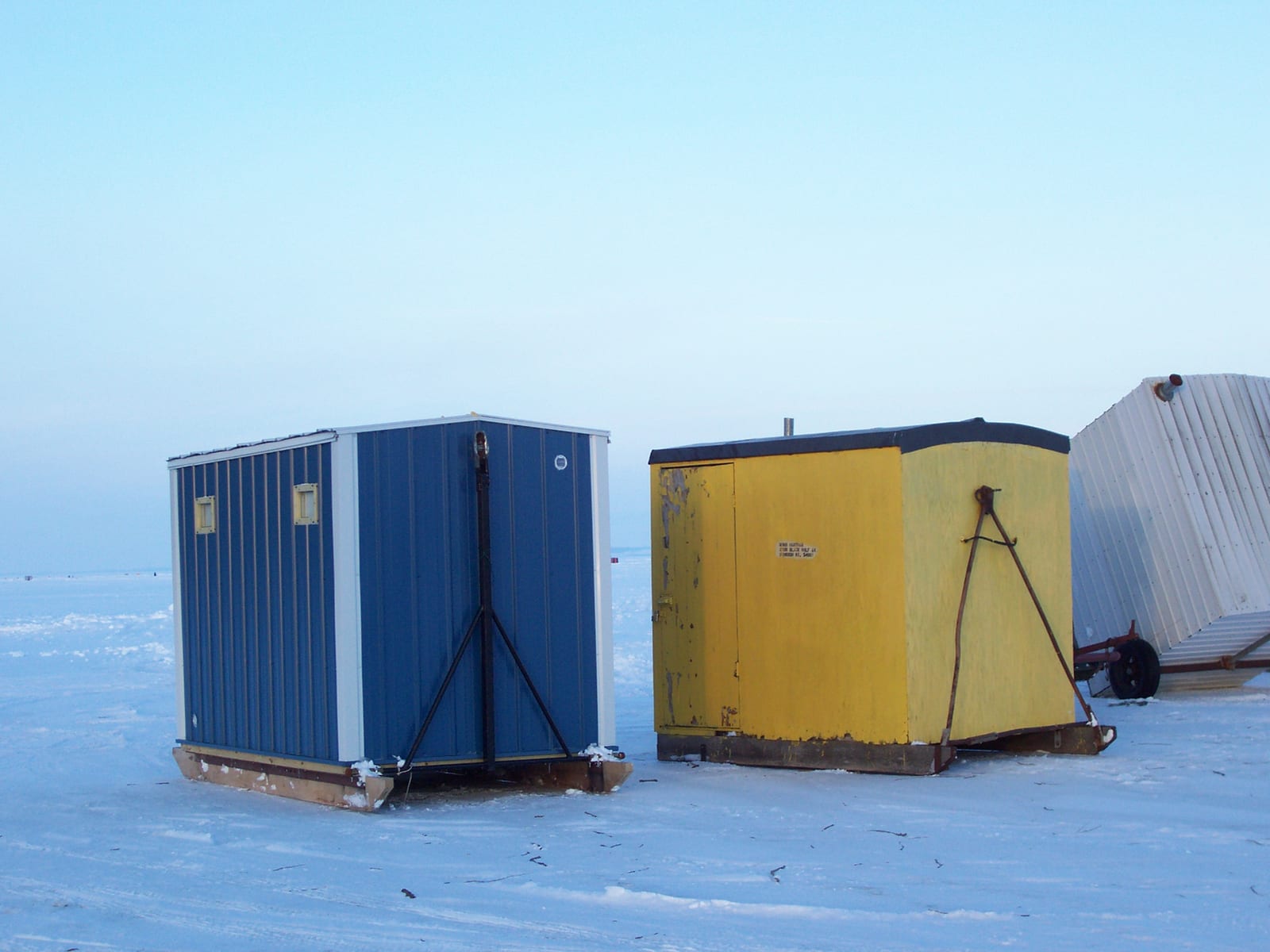
Nearly every state that regulates shelters at all requires identification on the outside of one, and the specification differs down to the letter height between states that share a border. Iowa wants four inch block letters in a contrasting colour on all sides. New York wants three inches. Minnesota, Michigan and South Dakota want two. Wisconsin wants lettering at least one inch square. Michigan’s fisheries order goes further and settles the loophole everyone tries: writing the details on a separate piece of wood or plastic and screwing that to the shanty does not satisfy the requirement.
What has to be written also varies. Minnesota and Michigan accept the owner’s name and address, or a driver licence number, or the state agency’s own customer identification number. Idaho wants a telephone number as well, on two opposing sides. New Hampshire wants twelve square inches of reflective material half way up each side on top of the name. Minnesota wants two square inches of reflective material per side on any shelter left out overnight. Ohio puts the requirement in the administrative code and applies it not only to the shelter but to every tip up, set line and trap as well.
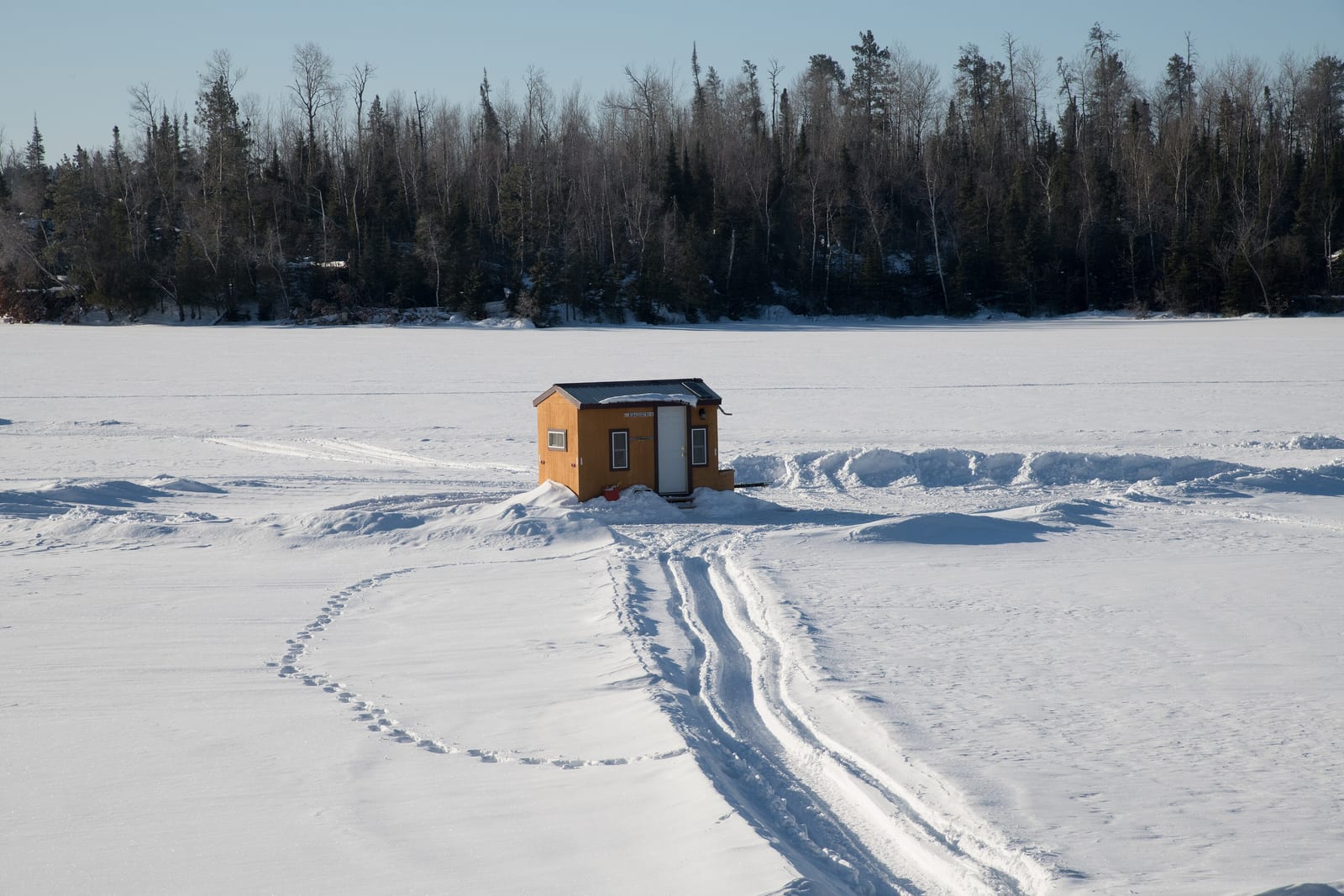
Ice fishing rules state by state
10 states have both a sourced shelter deadline and a sourced season structure. 7 more have some rules with at least one gap named on the page. 8 name the agency and link its regulations, which live in a regulations document, a document viewer or an interactive lookup. Minnesota, Wisconsin and Michigan publish their season dates water by water, and the Minnesota page carries a county by county lake finder built on that record.
Upper Midwest
Northern Plains
- North Dakota Deadline and season sourced
- South Dakota Some rules sourced
- Nebraska Some rules sourced
Mountain West
Northeast
- New York Deadline and season sourced
- New Hampshire Deadline and season sourced
- Vermont Deadline and season sourced
- Connecticut Some rules sourced
- Maine Some rules sourced
- Massachusetts Nothing verifiable yet
- Rhode Island Nothing verifiable yet
- Pennsylvania Nothing verifiable yet
Alaska
- Alaska Nothing verifiable yet
The pages that carry these rules often carry something else as well
4 of the agency pages behind this vertical carry both regulations and ice safety guidance, and Colorado’s and Washington’s carry only safety guidance. Safety advice belongs with the agency that wrote it, and the list below links to each of those pages.
States without a page
A state gets a page where its agency publishes a shelter deadline or a dated ice season. The rest are listed here with what their winters and their agencies actually publish.
- Washington
- Washington has genuine ice fishing on more than forty eastern and north central lakes, and its agency page for the subject is, in full, safety guidance with a stated minimum thickness. That page carries no shelter rule, no pole limit, no hole size and no season dates. The per water rules live in the agency’s interactive lookup, which is the source to check.
- Kansas, Missouri, Maryland, West Virginia, New Jersey and Oregon
- Each has some ice fishing in some winters and none was researched in this pass. They are a deliberate second tier rather than a claim that the activity does not happen there. A page for a state whose rules nobody has read would be a page about nothing.
- Delaware, Virginia, Kentucky, Tennessee, North Carolina and everywhere further south
- No reliable annual ice season on public water, so there is no shelter deadline, no dark house window and no ice specific rule set for an agency to publish or for this site to carry.
- California
- A handful of high Sierra and far northeastern lakes freeze in some winters, and the state publishes no ice specific regulation set. What governs is the ordinary per water season in the sport fishing regulations, which is not what somebody searching for ice fishing rules is looking for.
- Hawaii
- Named here for completeness, because a coverage list that quietly stops at 49 states is a list somebody has to go and check. No Hawaiian water body freezes, there is no shelter rule, no removal deadline and no ice specific season for the Division of Aquatic Resources to publish, and there never will be.
Ice fishing season questions
The rest of the ice season on this site
This page covers the 2026-27 season year with data as of September 4, 2026. Every rule here was restated in our own words from a state agency page, an administrative rule or a fisheries order, with the agency named and its page linked; state agency text is not in the public domain and none of it is copied. Where a date belongs to a season the agency has already published, the season is shown beside it. Your state agency is the authority on the surface itself, and it is the one to ask before you go out. See also the lake ice in record and the trout stocking guide.