

Beach Water Quality by State
What your state tests for at its beaches, how much of its coast is actually covered, and the one link that carries today's advisory status.
EPA verified 2025 season: 3,417 of 8,827 US beaches were monitored for bacteriaEPA’s verified 2025 swimming season
Last season, not todayEvery figure on this page is EPA’s, from its 2025 swimming season report as the database stood on September 02, 2026. It describes last season’s monitoring rather than today’s status.
Today’s closures are published by your state beach program
A beach advisory is typically issued on one exceedance and lifted as soon as a follow up sample comes back clear, often within 48 hours, so the current answer for any beach is the state or county page that posts it, linked from every state page here.
EPA says the same about its own national database:
US EPA, Find Information about a Particular U.S. Beach“States, territories and Tribes receiving beach grants submit information on beach monitoring and closures and advisories to the EPA, but they are only required to submit that information once a year, although some report more frequently. Therefore, BEACON has information about the previous year and earlier, but it does not have current information about advisories or closings.”
These pages carry the half that stays true: what your state monitors, how much of its coast is covered, what the thresholds and the wording mean, and a link to the exact page where that state publishes today’s status. Every one of those 30 links was verified on 2026-09-02.
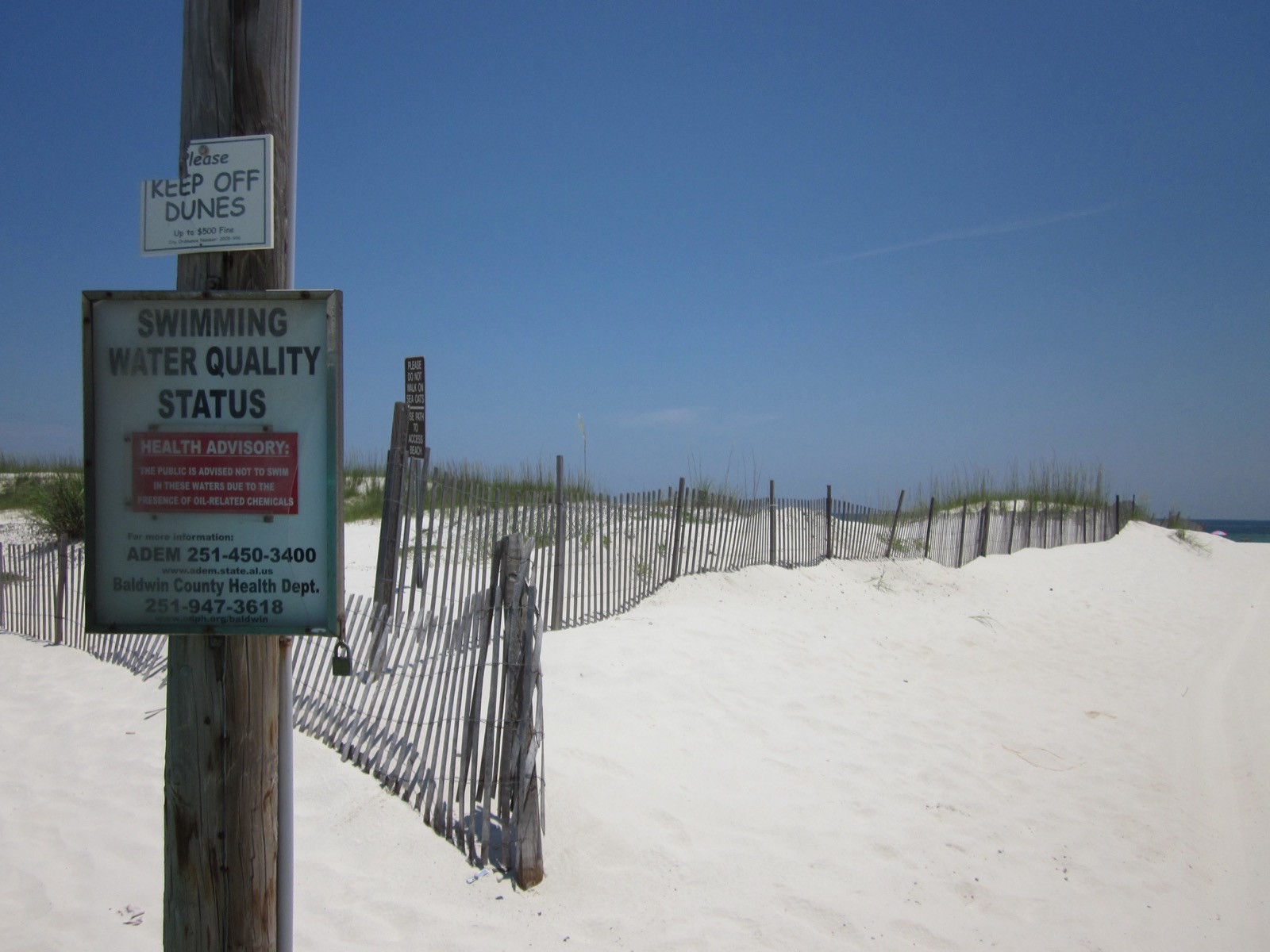
Fecal indicator bacteria, and what they do and do not tell you
Beach monitoring under the BEACH Act does not look for the organisms that make people ill. It counts two indicator bacteria that are cheap and fast to measure and that come out of the guts of warm blooded animals in enormous numbers: enterococci in marine water, and Escherichia coli in the Great Lakes and most fresh water. A high count means sewage or animal waste has recently reached the water, and therefore that the things that do cause illness are probably there too. EPA puts it this way:
US EPA, What Affects Human Health at the Beach“In the event that beaches are closed or advisories are posted, it is most often because water samples for certain bacteria indicate that harmful bacteria, viruses, protozoa, or parasites are likely present in the waters.”
Three consequences follow, and all three are the reason this page exists in the shape it does. First, a bacteria result says nothing at all about chemicals, algal toxins, jellyfish or rip currents. Those are separate programmes with separate thresholds, and a beach can be perfectly clear on bacteria while a red tide is running or a rip current is pulling. Second, results take about a day to come back from the lab, so even a same-day posting is describing yesterday’s water. Third, the state threshold is a number, not a cliff: 104 colony forming units per 100 mL in South Carolina, 235 in Illinois and Indiana, 70 in Georgia. A sample at 69 in Georgia and a sample at 234 in Indiana are both unposted, and they are not the same water.
CDC describes what illness looks like:
US CDC, Swimming and Your Health“You can get swimming-related illnesses if you swallow, have contact with, or breathe in mists of water contaminated with germs. The most common swimming-related illnesses are diarrhea, skin rashes, swimmer’s ear, pneumonia or flu-like illness, and irritation of the eyes or respiratory tract.”
EPA names the exposure route that matters most, and it is not your skin:
US EPA, What Affects Human Health at the Beach“When waterborne pathogens are present, most swimmers are exposed when they swallow the water. You will be less likely to get sick if you wade or swim without putting your head under water.”
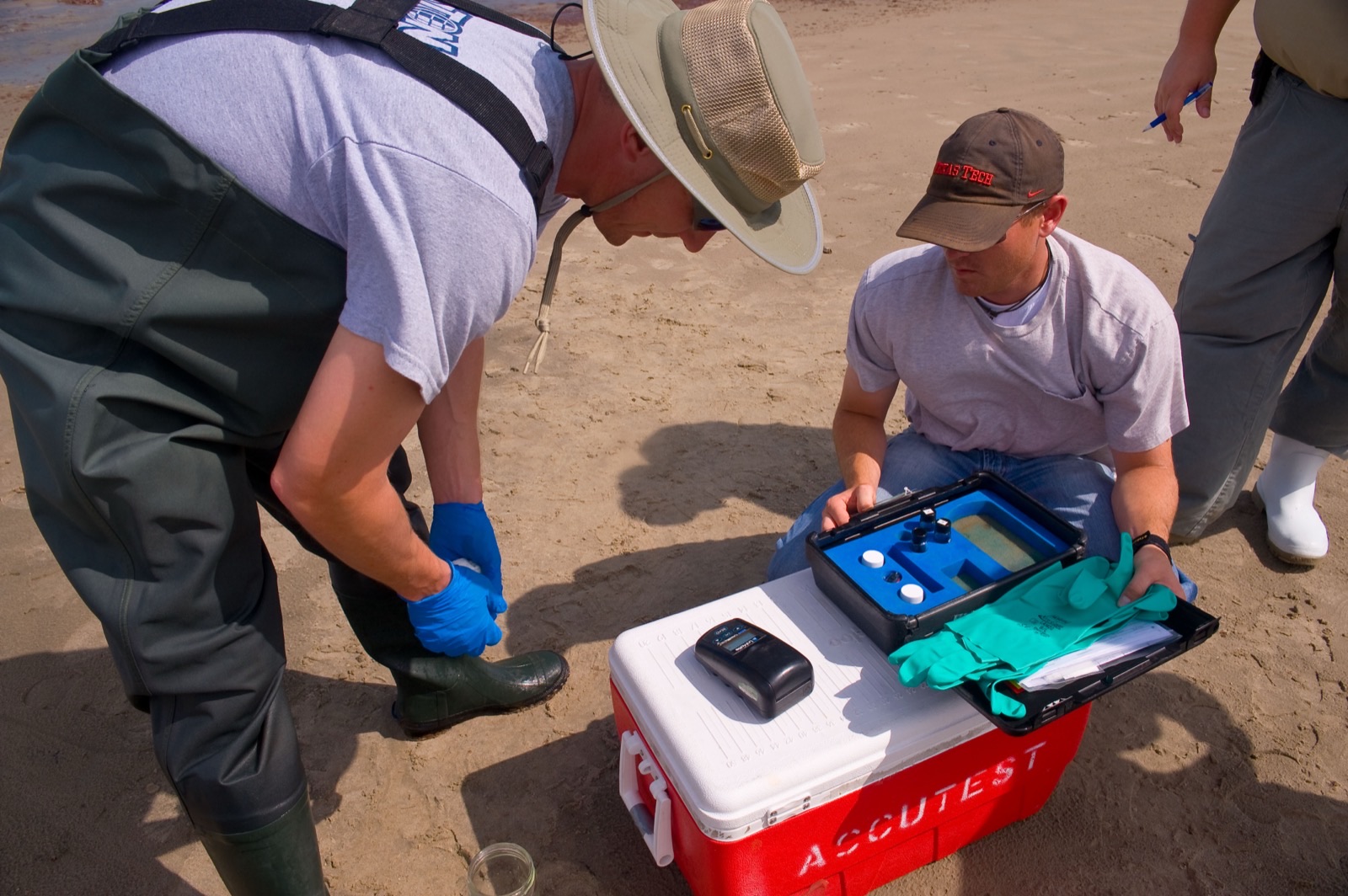
Under half the beaches EPA counts are in the program at all
EPA counts 8,827 coastal and Great Lakes beaches in the United States. 4,191 of them, 47 percent, are program beaches, meaning a programme reports notification actions to EPA at least once a year. Of those, 3,417 (82 percent) were sampled for bacteria at least once during the season, across roughly 3,315 miles of program beach.
EPA publishes two beach totals, and both appear in the table below. EPA’s narrative gives 8,827 beaches, while the per jurisdiction table on the same page sums its BEACH Act beach column to 6,397. The difference is a definition: that column excludes beaches EPA marks Historic and the narrative total does not. The program and monitored figures reconcile exactly between the two.
So roughly four in ten of the beaches on EPA’s national list are actually sampled. The rest are either outside the program entirely, which EPA marks Tier 4, or inside it on a notification-only basis: they can be posted if something is known, but nobody is routinely testing the water there.
US EPA, Find Information about a Particular U.S. Beach“This National List of Beaches provides information whether a beach that is included in a water quality monitoring and public notification program is monitored or not, or if it is not part of the program (those are shown as “Tier 4” in the list).”
Which of those three situations a state is in is the thing that decides the shape of its page here, and the split is not subtle. 16 states both enrol and sample nearly every beach EPA counts. 3 states enrol nearly every beach and then sample only a minority of them: Michigan, Hawaii, Texas, at 36, 42 and 36 percent of their own program beaches respectively. And 11 states leave most of the beaches EPA counts outside the program altogether, which in Washington and Alaska is a statement about the length of the shoreline rather than about effort.
The cuts used here are 90 percent of BEACH Act beaches enrolled and 60 percent of program beaches sampled. The second one sits where the data has an actual gap: among states with a near complete program the sampled share is either 36 to 42 percent or 86 percent and up, with nothing in between. Michigan has the largest absolute gap in the country, 370 program beaches that nobody sampled.
| State | BEACH Act beaches | Program beaches | Sampled | Program miles | Shape |
|---|---|---|---|---|---|
| Washington | 1,228 | 84 | 61 | 51.22 | Most beaches outside the program |
| Michigan | 594 | 580 | 210 | 134.79 | Enrolled, mostly not sampled |
| Massachusetts | 574 | 573 | 572 | 237.46 | Enrolled and sampled |
| Florida | 560 | 232 | 232 | 485.65 | Most beaches outside the program |
| New Jersey | 454 | 211 | 211 | 14.36 | Most beaches outside the program |
| Hawaii | 408 | 408 | 173 | 114.47 | Enrolled, mostly not sampled |
| New York | 354 | 353 | 328 | 134.71 | Enrolled and sampled |
| California | 252 | 248 | 248 | 701.42 | Enrolled and sampled |
| North Carolina | 227 | 225 | 225 | 421.61 | Enrolled and sampled |
| Alaska | 214 | 11 | 11 | 17.69 | Most beaches outside the program |
| Wisconsin | 195 | 117 | 117 | 41.16 | Most beaches outside the program |
| Texas | 168 | 168 | 61 | 153.98 | Enrolled, mostly not sampled |
| Maine | 106 | 66 | 66 | 31.51 | Most beaches outside the program |
| Oregon | 89 | 24 | 24 | 28.51 | Most beaches outside the program |
| Rhode Island | 82 | 67 | 67 | 24.21 | Most beaches outside the program |
| Minnesota | 80 | 38 | 37 | 31.94 | Most beaches outside the program |
| Ohio | 76 | 76 | 76 | 49.44 | Enrolled and sampled |
| Connecticut | 72 | 72 | 71 | 19.02 | Enrolled and sampled |
| Maryland | 59 | 59 | 59 | 31.7 | Enrolled and sampled |
| Illinois | 57 | 56 | 48 | 15.61 | Enrolled and sampled |
| Virginia | 47 | 47 | 47 | 58.15 | Enrolled and sampled |
| Georgia | 38 | 28 | 28 | 37.45 | Most beaches outside the program |
| Alabama | 24 | 24 | 24 | 31.74 | Enrolled and sampled |
| Louisiana | 24 | 23 | 23 | 20.57 | Enrolled and sampled |
| Indiana | 24 | 24 | 24 | 33.14 | Enrolled and sampled |
| Delaware | 22 | 22 | 22 | 29.02 | Enrolled and sampled |
| South Carolina | 21 | 21 | 21 | 105.3 | Enrolled and sampled |
| Mississippi | 21 | 21 | 21 | 46.2 | Enrolled and sampled |
| New Hampshire | 16 | 16 | 16 | 8.76 | Enrolled and sampled |
| Pennsylvania | 13 | 10 | 9 | 2.19 | Most beaches outside the program |
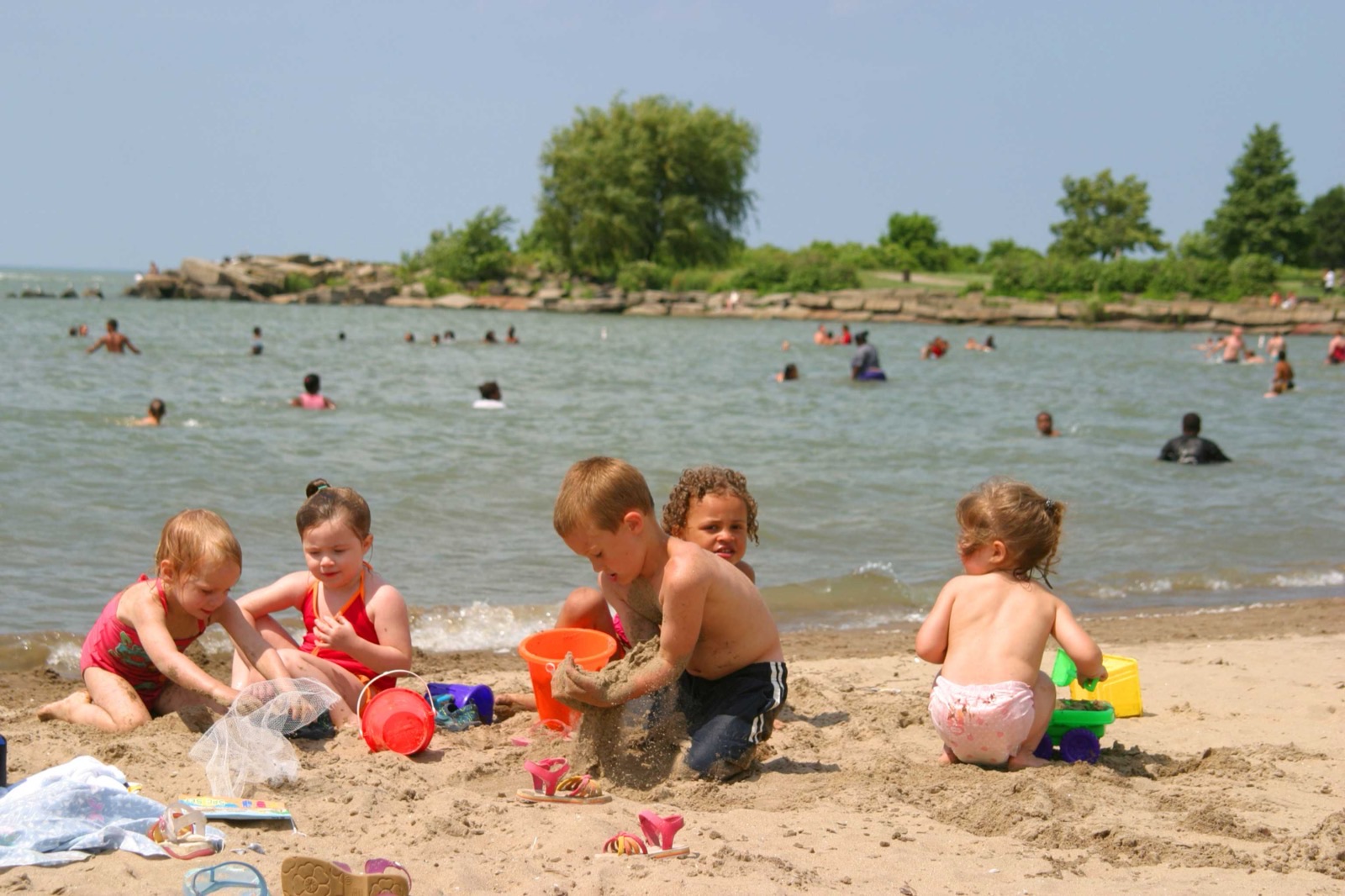
It is nearly always rain
The single most useful thing to know about beach bacteria is that it follows the weather rather than the season. Rain washes what is on the land into the water, and in older cities it does something worse than that.
US EPA, What Affects Human Health at the Beach“Polluted runoff (water that drains after rainfall) and untreated sewage released into the water can expose swimmers to harmful microorganisms called “pathogens.” These pathogens can be present at or near the site where polluted discharges enter the water.”
US EPA, What Affects Beach Health“Combined sewers are designed to collect rainwater runoff, domestic sewage, and industrial wastewater in the same pipe. Most of the time, combined sewer systems transport all of their wastewater to a sewage treatment plant, where it is treated and then discharged to a water body. During periods of heavy rainfall or snowmelt, however, the wastewater volume in a combined sewer system can exceed the capacity of the sewer system or treatment plant. For this reason, combined sewer systems are designed to overflow occasionally and discharge excess wastewater directly to nearby streams, rivers, or other water bodies.”
That is why almost every state programme repeats the same practical advice, and why EPA does too: avoid the water for a day or two after heavy rain, and avoid the stretch of sand next to a visible discharge pipe or a creek mouth at any time. South Carolina formalises the second half of that, maintaining standing long term advisories at places where a stormwater pipe crosses the beach, separate from the short term advisories that come and go with a sample result.
US EPA, What Affects Human Health at the Beach“Be aware of any signs indicating the beach is closed or the water is not safe because of bacteria, riptides or other hazards. In areas that are not monitored regularly, choose swimming sites in less developed areas with good water circulation, such as beaches at the ocean. Avoid swimming at beaches where you can see discharge pipes or at urban beaches after a heavy rainfall.”
One more number worth sitting with. EPA reports that 42 percent of the pollution sources behind last season’s notification actions were reported as unknown. Most of the time nobody establishes where it came from.
The 30 BEACH Act states
Each state page carries that state’s own numbers from EPA, the monitoring season where the programme publishes one, the agency’s own wording where its authorship could be confirmed, and the link to where it publishes advisories.
The 20 states outside the BEACH Act
The BEACH Act covers the 30 states with coastal recreation waters, which EPA defines as:
US EPA, About the BEACH Act“The BEACH Act defines coastal recreation waters as the Great Lakes and marine coastal waters (including coastal estuaries) that states, territories, and Tribes designate in their water quality standards for use for swimming, bathing, surfing, or similar water contact activities.”
US EPA, Beach Grants“To be eligible for BEACH Act grants, states, territories and Tribes must have coastal recreational waters (including the Great Lakes) adjacent to beaches or similar points of access used by the public. They also need to have EPA-approved numeric recreational water quality standards for pathogens or pathogen indicators for the coastal waters, and they need to meet 11 performance criteria for implementing the monitoring, assessment, and notification parts of the beach program. There are currently 30 states, five territories and five Tribes that are eligible to apply for beach grant funds.”
Those 30 eligible states are exactly the 30 with an ocean or Great Lakes shoreline. The remaining 20 are landlocked: their lake and reservoir beaches are monitored under state and local programmes rather than the BEACH Act, and each is listed below with the agency that holds the answer there.
- Vermont. Vermont has no ocean or Great Lakes shoreline, so it has no coastal recreation waters as the BEACH Act defines them and no BEACH Act beach program. Lake Champlain is the obvious near miss and it is genuinely large, but it is not one of the Great Lakes, so its beaches are monitored by the Vermont Department of Health and local towns rather than under the BEACH Act.
- West Virginia. West Virginia has no ocean or Great Lakes shoreline, so it has no coastal recreation waters as the BEACH Act defines them and no BEACH Act beach program. Its swimming is in rivers, reservoirs and state park lakes, overseen by the state park system and county health departments.
- Tennessee. Tennessee has no ocean or Great Lakes shoreline, so it has no coastal recreation waters as the BEACH Act defines them and no BEACH Act beach program. Its major swimming waters are TVA reservoirs, where recreation advice comes from TVA and the Tennessee Department of Environment and Conservation rather than from a beach monitoring programme.
- Kentucky. Kentucky has no ocean or Great Lakes shoreline, so it has no coastal recreation waters as the BEACH Act defines them and no BEACH Act beach program. Kentucky and Barkley lakes and the state park beaches on them are run by the US Army Corps of Engineers and Kentucky State Parks.
- Arkansas. Arkansas has no ocean or Great Lakes shoreline, so it has no coastal recreation waters as the BEACH Act defines them and no BEACH Act beach program. Beaver, Ouachita and Greers Ferry are Corps of Engineers lakes, and swimming area postings there come from the Corps and from the Arkansas Department of Health.
- Oklahoma. Oklahoma has no ocean or Great Lakes shoreline, so it has no coastal recreation waters as the BEACH Act defines them and no BEACH Act beach program. Its lake beaches are state park and Corps of Engineers waters, and the Oklahoma Department of Environmental Quality publishes blue green algae advisories for them separately.
- Missouri. Missouri has no ocean or Great Lakes shoreline, so it has no coastal recreation waters as the BEACH Act defines them and no BEACH Act beach program. The Lake of the Ozarks and the Corps reservoirs are its swimming water, monitored by the Missouri Department of Natural Resources and local health departments.
- Iowa. Iowa has no ocean or Great Lakes shoreline, so it has no coastal recreation waters as the BEACH Act defines them and no BEACH Act beach program. Iowa runs a state beach monitoring programme at its state park lakes through the Department of Natural Resources; it is a state programme rather than a BEACH Act one and does not report to BEACON.
- Kansas. Kansas has no ocean or Great Lakes shoreline, so it has no coastal recreation waters as the BEACH Act defines them and no BEACH Act beach program. The Kansas Department of Health and Environment publishes harmful algal bloom advisories for its reservoirs on its own schedule, which is a different hazard from the fecal indicator bacteria on these pages.
- Nebraska. Nebraska has no ocean or Great Lakes shoreline, so it has no coastal recreation waters as the BEACH Act defines them and no BEACH Act beach program. Its lake beaches are state recreation areas, where the Nebraska Department of Environment and Energy samples for bacteria and toxins under a state programme rather than a federal one.
- South Dakota. South Dakota has no ocean or Great Lakes shoreline, so it has no coastal recreation waters as the BEACH Act defines them and no BEACH Act beach program. The Missouri River reservoirs are its swimming water and they are managed by the Corps of Engineers with the state Department of Agriculture and Natural Resources.
- North Dakota. North Dakota has no ocean or Great Lakes shoreline, so it has no coastal recreation waters as the BEACH Act defines them and no BEACH Act beach program. Lake Sakakawea and Devils Lake are state and Corps waters, outside any national beach notification database.
- Montana. Montana has no ocean or Great Lakes shoreline, so it has no coastal recreation waters as the BEACH Act defines them and no BEACH Act beach program. Flathead Lake is the largest freshwater lake west of the Mississippi and still not a Great Lake, so its beaches sit with county health departments and the Montana Department of Environmental Quality.
- Wyoming. Wyoming has no ocean or Great Lakes shoreline, so it has no coastal recreation waters as the BEACH Act defines them and no BEACH Act beach program. Its swimming waters are reservoirs and park lakes, and Wyoming is also the one state that never took primacy under the Safe Drinking Water Act, so federal water programmes reach it differently across the board.
- Colorado. Colorado has no ocean or Great Lakes shoreline, so it has no coastal recreation waters as the BEACH Act defines them and no BEACH Act beach program. Its reservoir beaches are state park waters, and Colorado publishes harmful algal bloom advisories through the Department of Public Health and Environment rather than a beach monitoring programme.
- New Mexico. New Mexico has no ocean or Great Lakes shoreline, so it has no coastal recreation waters as the BEACH Act defines them and no BEACH Act beach program. Elephant Butte and the other reservoir beaches are state park waters monitored by the New Mexico Environment Department.
- Idaho. Idaho has no ocean or Great Lakes shoreline, so it has no coastal recreation waters as the BEACH Act defines them and no BEACH Act beach program. Coeur d’Alene and Payette lakes are its swimming water, and the Idaho Department of Environmental Quality posts advisories for them under a state programme.
- Utah. Utah has no ocean or Great Lakes shoreline, so it has no coastal recreation waters as the BEACH Act defines them and no BEACH Act beach program. The Great Salt Lake and Utah Lake are inland waters, and Utah’s recreational advisories are issued by local health departments under a Department of Environmental Quality monitoring programme.
- Nevada. Nevada has no ocean or Great Lakes shoreline, so it has no coastal recreation waters as the BEACH Act defines them and no BEACH Act beach program. Lake Tahoe and Lake Mead are its swimming water, split between state, National Park Service and California jurisdiction, and none of it is BEACH Act coastal recreation water.
- Arizona. Arizona has no ocean or Great Lakes shoreline, so it has no coastal recreation waters as the BEACH Act defines them and no BEACH Act beach program. Its swimming is in Colorado River reservoirs and desert lakes, where advisories come from the Arizona Department of Environmental Quality and the reservoir managers.
Territories, Tribal nations and individual beaches
Territories and Tribal nations. EPA’s 2025 report covers 5 territories and 4 Tribal nations, and their programmes are substantial: Puerto Rico monitored all 35 of its beaches and American Samoa all 48 of its. Their detail is in EPA’s report, and the figures above include them where a national total is stated. EPA says five Tribes are eligible for beach grants, so one eligible Tribe does not appear in this season’s report at all.
Individual beaches. The beach by beach inventory lives on EPA’s BEACON jurisdiction page for each state, linked from every state page here.
Who to contact
Beach advisories are not a federal decision, and knowing that saves time. EPA funds and audits the programmes and holds the database; the state runs the sampling; and in many states the posting decision belongs to a county health officer.
US EPA, Beach Grants“The EPA awards grants under authority of the BEACH Act to eligible states, territories and Tribes with beaches on ocean and Great Lakes coasts to develop and implement programs to monitor their beaches and notify the public when it is not safe to swim. During each swimming season, state and local health and environmental protection agencies monitor the quality of water at the nation’s beaches. When bacteria levels in the water are too high, these agencies notify the public by posting warnings or closing the beach.”
US Environmental Protection Agency, Beaches program
Writes the performance criteria that BEACH Act programmes must meet, awards the grants that fund them, and runs BEACON, the national database states report into. EPA does not issue beach advisories and does not open or close beaches.
Your state beach program
Runs the sampling, sets the state threshold, and publishes advisories and closures. This is the only body with a current answer about a specific beach. Every state page here links its page directly.
Your county or city health department
In many states, including Michigan, Maryland, Connecticut and California, the posting decision is made here rather than at state level, and the local office knows things the state map does not.
US Centers for Disease Control and Prevention, Healthy Swimming
Publishes what swimming-related illness actually is, how exposure happens and what reduces it. Quoted verbatim on every page here.
Beach water quality FAQ
Beach water quality by state
More from the coast
All counts on this page are reproduced from the EPA BEACON 2.0 Dynamic National Report for the 2025 swimming season, as the database stood on September 02, 2026, a US Government work in the public domain. Quoted passages are verbatim from EPA and CDC. Current advisory status is published by each state’s own programme, which issues and lifts the advisories. Rip currents and surf hazard for the same beaches: live NWS beach conditions. Harmful algal blooms: red tide and algal bloom status.
Hero image: “Coney Island beach on Memorial Day” by David Reilly, CC BY 2.0