
California Beach Water Quality
What California State Water Resources Control Board monitors at California beaches, how much of the coast that covers, and where it publishes today's advisory status.
EPA's 2025 record: 248 of 252 California beaches were sampled for bacteriaCalifornia in EPA’s 2025 swimming season report
Last verified season, not todayCalifornia enrols and samples nearly every beach EPA counts. Every figure here is EPA’s, from the 2025 season as its database stood on September 02, 2026. It describes last season’s monitoring rather than today’s status, and none of it says any water is safe.
Where California publishes current advisories
California has by far the longest program beach mileage in the country, 701.42 miles, more than the next two states combined, across 248 monitored beaches. Only four of its 252 BEACH Act beaches sit outside the program. Day to day posting is done by county health departments under state standards, and the California Safe to Swim map is the state level place all of that surfaces. California is also the state where beach monitoring is most often reported in the news, which makes the difference between a posted advisory and a news story worth keeping straight.
For the record, EPA’s BEACON jurisdiction page lists California State Water Resources Control Board as the California beach program agency, with its own stored link. EPA’s stored links are not always current; the advisory link above is the verified one. EPA BEACON jurisdiction detail for California
EPA’s three counts for California Enrolled and sampled
EPA keeps a national list of beaches and sorts them three ways: every BEACH Act beach it counts, the subset in a reporting programme, and the subset of those that a monitoring programme actually sampled at least once during the season. The distance between the first and the last is the useful number, and in California it is 4 beaches.
- 252 BEACH Act beaches
- 248 program beaches (98%)
- 248 sampled at least once (100% of program)
EPA BEACON, 2025 swimming season, as the database stood on September 02, 2026. EPA’s counts and EPA’s definitions.
California is one of 16 states that both enrol and sample nearly every beach EPA counts, which is the strongest position on this measure. It still says nothing about any particular day: sampling frequency varies from twice a week to once a fortnight depending on the site, and a beach sampled on Monday is unsampled on Thursday.
US EPA, Find Information about a Particular U.S. Beach“This National List of Beaches provides information whether a beach that is included in a water quality monitoring and public notification program is monitored or not, or if it is not part of the program (those are shown as “Tier 4” in the list).”
The California monitoring season
California State Water Resources Control Board does not publish a single statewide monitoring season: in several states sampling frequency is set per site by a risk ranking, or delegated to county programmes that each run their own calendar, so there is no one window to give.
Sampling everywhere concentrates in the swimming months and thins out or stops outside them, so the absence of a posting off season is usually the absence of a sample. California Safe to Swim shows what is currently being sampled.
How California runs beach monitoring
California State Water Resources Control Board runs the California beach programme and publishes its results and postings at the link above. It is described here in our own words: the page sits on a programme-branded site that does not state its authorship, so it is linked rather than quoted.
Summarised from California Safe to Swim in our own words.
The division of labour is the same everywhere and it is worth knowing before you make a phone call. EPA writes the performance criteria and funds the programme, the state runs the sampling and sets the threshold, and in many states the actual posting decision belongs to a county health officer.
US EPA, Beach Grants“The EPA awards grants under authority of the BEACH Act to eligible states, territories and Tribes with beaches on ocean and Great Lakes coasts to develop and implement programs to monitor their beaches and notify the public when it is not safe to swim. During each swimming season, state and local health and environmental protection agencies monitor the quality of water at the nation’s beaches. When bacteria levels in the water are too high, these agencies notify the public by posting warnings or closing the beach.”
US EPA, Find Information about a Particular U.S. Beach“States, Tribes, territories and local governments decide whether to open or close a beach.”
What a California advisory does and does not mean
A posting is triggered by a count of fecal indicator bacteria: enterococci in marine water, Escherichia coli in the Great Lakes and most fresh water. Neither organism is usually the thing that makes people ill. They are counted because sewage and animal waste carry them in enormous numbers, so a high count is evidence that the pathogens that do cause illness are probably present.
US EPA, What Affects Human Health at the Beach“In the event that beaches are closed or advisories are posted, it is most often because water samples for certain bacteria indicate that harmful bacteria, viruses, protozoa, or parasites are likely present in the waters.”
Four things follow. A bacteria posting says nothing about algal toxins, chemicals or rip currents, which are separate programmes. The result is a laboratory result, so it describes water that was in front of somebody about a day earlier. The threshold is a number rather than a cliff, and thresholds differ by state. And the cause is almost always rain, which is why the practical advice is about timing rather than about any particular beach.
US EPA, What Affects Human Health at the Beach“Polluted runoff (water that drains after rainfall) and untreated sewage released into the water can expose swimmers to harmful microorganisms called “pathogens.” These pathogens can be present at or near the site where polluted discharges enter the water.”
US EPA, What Affects Human Health at the Beach“Be aware of any signs indicating the beach is closed or the water is not safe because of bacteria, riptides or other hazards. In areas that are not monitored regularly, choose swimming sites in less developed areas with good water circulation, such as beaches at the ocean. Avoid swimming at beaches where you can see discharge pipes or at urban beaches after a heavy rainfall.”
If you want the shortest useful rule for California or anywhere else: check the state page before you leave, read the sign at the access point when you arrive, stay out for a day or two after heavy rain, keep away from the sand next to a visible outfall or creek mouth, and try not to swallow the water.
US EPA, What Affects Human Health at the Beach“When waterborne pathogens are present, most swimmers are exposed when they swallow the water. You will be less likely to get sick if you wade or swim without putting your head under water.”
US EPA, What Affects Human Health at the Beach“Children, the elderly and people with weakened immune systems are the most likely populations to develop illnesses or infections after coming into contact with polluted water, usually while swimming.”
California against the other 29 BEACH Act states
Ordered by the number of beaches EPA counts. A state with more monitored beaches is not a cleaner state, and a state with a lot of unmonitored beaches may simply have a very long shoreline.
| State | BEACH Act beaches | Program beaches | Sampled | Program miles | Shape |
|---|---|---|---|---|---|
| Washington | 1,228 | 84 | 61 | 51.22 | Most beaches outside the program |
| Michigan | 594 | 580 | 210 | 134.79 | Enrolled, mostly not sampled |
| Massachusetts | 574 | 573 | 572 | 237.46 | Enrolled and sampled |
| Florida | 560 | 232 | 232 | 485.65 | Most beaches outside the program |
| New Jersey | 454 | 211 | 211 | 14.36 | Most beaches outside the program |
| Hawaii | 408 | 408 | 173 | 114.47 | Enrolled, mostly not sampled |
| New York | 354 | 353 | 328 | 134.71 | Enrolled and sampled |
| California | 252 | 248 | 248 | 701.42 | Enrolled and sampled |
| North Carolina | 227 | 225 | 225 | 421.61 | Enrolled and sampled |
| Alaska | 214 | 11 | 11 | 17.69 | Most beaches outside the program |
| Wisconsin | 195 | 117 | 117 | 41.16 | Most beaches outside the program |
| Texas | 168 | 168 | 61 | 153.98 | Enrolled, mostly not sampled |
| Maine | 106 | 66 | 66 | 31.51 | Most beaches outside the program |
| Oregon | 89 | 24 | 24 | 28.51 | Most beaches outside the program |
| Rhode Island | 82 | 67 | 67 | 24.21 | Most beaches outside the program |
| Minnesota | 80 | 38 | 37 | 31.94 | Most beaches outside the program |
| Ohio | 76 | 76 | 76 | 49.44 | Enrolled and sampled |
| Connecticut | 72 | 72 | 71 | 19.02 | Enrolled and sampled |
| Maryland | 59 | 59 | 59 | 31.7 | Enrolled and sampled |
| Illinois | 57 | 56 | 48 | 15.61 | Enrolled and sampled |
| Virginia | 47 | 47 | 47 | 58.15 | Enrolled and sampled |
| Georgia | 38 | 28 | 28 | 37.45 | Most beaches outside the program |
| Alabama | 24 | 24 | 24 | 31.74 | Enrolled and sampled |
| Louisiana | 24 | 23 | 23 | 20.57 | Enrolled and sampled |
| Indiana | 24 | 24 | 24 | 33.14 | Enrolled and sampled |
| Delaware | 22 | 22 | 22 | 29.02 | Enrolled and sampled |
| South Carolina | 21 | 21 | 21 | 105.3 | Enrolled and sampled |
| Mississippi | 21 | 21 | 21 | 46.2 | Enrolled and sampled |
| New Hampshire | 16 | 16 | 16 | 8.76 | Enrolled and sampled |
| Pennsylvania | 13 | 10 | 9 | 2.19 | Most beaches outside the program |
California beach water quality FAQ
More from the California coast
Beach water quality by state
Beach water quality across the country, including the 20 states with no BEACH Act programme and the reason for each.
All counts on this page are reproduced from the EPA BEACON 2.0 Dynamic National Report for the 2025 swimming season as the database stood on September 02, 2026, a US Government work in the public domain. Federal quotations are verbatim from EPA and CDC; state quotations are verbatim from agency public records with the authorship check shown. Current advisory status is published by California State Water Resources Control Board, which issues and lifts the advisories for California.
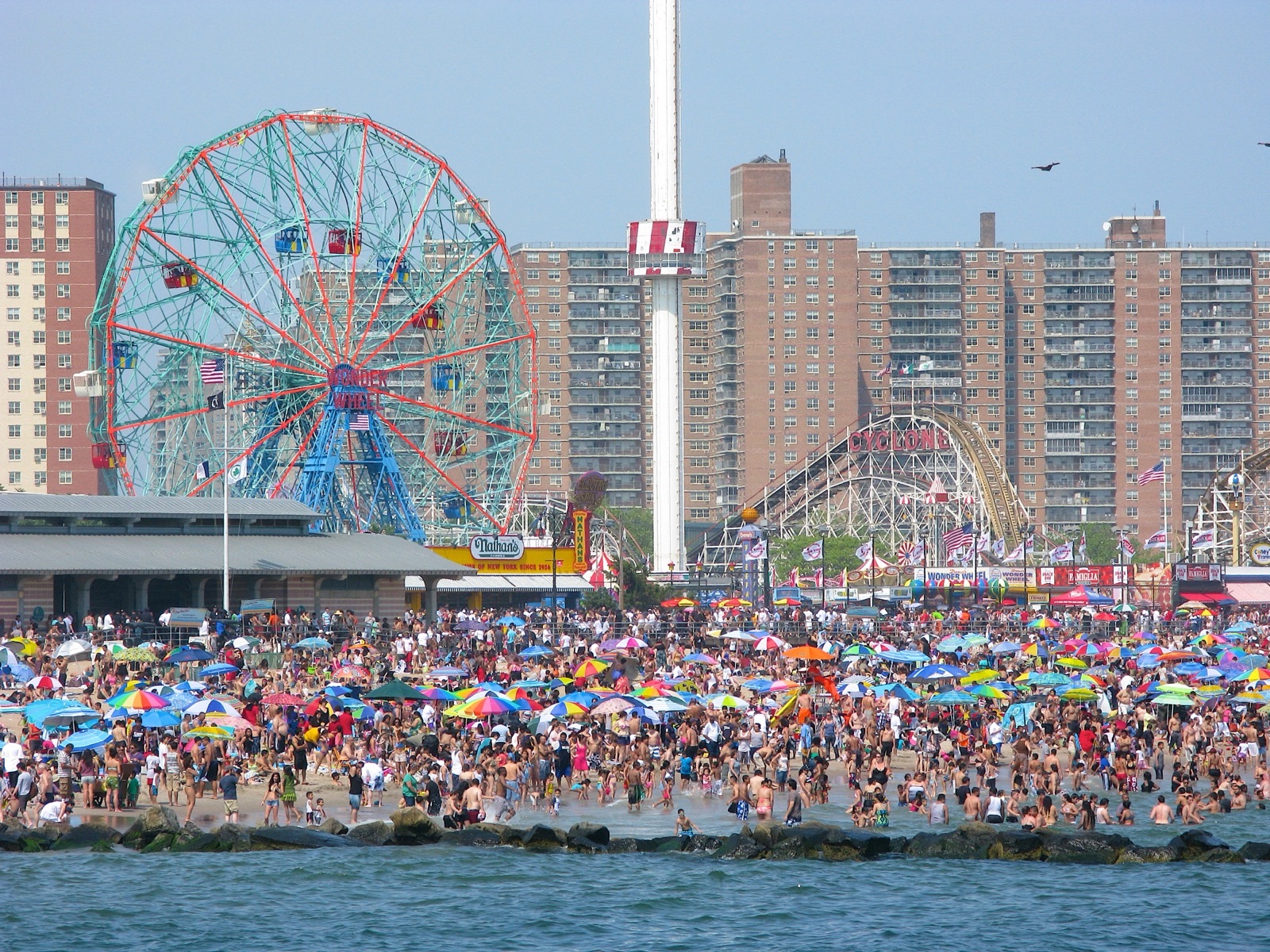
Hero image: “Coney Island beach on Memorial Day” by David Reilly, CC BY 2.0