
Maple Sap Season in Pennsylvania: When to Tap in 2026
Taps usually go in around January 25, with the main run February 15 to March 20. Below: whether sap is actually running this week.
Pennsylvania taps typically go in around January 25.The Pennsylvania sugaring season at a glance
Live · scored dailyPenn State puts the Pennsylvania window at late January through early April, with the good conditions usually arriving mid February. The Meyersdale festival in Somerset County has run since the 1940s and is held in April, weeks after most states have pulled their taps.
Is sap running in Pennsylvania right now?
Sap does not run because it is warm. It runs because the tree keeps crossing the freezing line. Each card below pairs an overnight low with the following day’s high, which is the couplet that actually builds and releases stem pressure. A day counts as a full freeze-thaw day when the night reaches 32°F or below and the day reaches 40°F or above, the thresholds Ohio State Extension and University of Minnesota Extension both publish.
Coudersport
Reading the National Weather Service forecast…
Somerset
Reading the National Weather Service forecast…
Wellsboro
Reading the National Weather Service forecast…
What this is and is not. The thresholds are published extension guidance and are cited above. The 0 to 10 weighting between them is ours: no extension service publishes a sap-run index, so we built one from their numbers. It is a model of the weather, not a measurement of your trees. Aspect, elevation, species, and how long your taps have been in will all move the real answer.
When to tap in Pennsylvania
The window on this page, January 25 to April 1, follows guidance from Penn State. Treat it as the shape of a normal year rather than a set of dates to obey. The single most common mistake first-time tappers make is starting late, because the good weather arrives before it feels like sugaring weather.
Before you tap, to January 25 get ready
Clean or replace spouts and drop lines now. Cornell trials at the Arnot Forest found new spouts and drops lifted sap yield from about 26 gallons per tap to about 41, which is the single largest return on effort in the whole operation. Scout your trees while there are no leaves and the trunks are easy to measure.
Tap in around January 25 drill
The right day is set by the forecast, not the calendar: tap when the pattern ahead shows freezing nights and days climbing past 40 degrees. Most first-time tappers in Pennsylvania tap too late and lose the front half of the season. Tapping a couple of weeks early costs you very little.
Main run, February 15 to March 20 the run
This is where most of the year's sap arrives, and it comes in bursts rather than steadily. Collect every day the sap runs. Above 50 degrees microbial growth in sap gets rapid, so warm afternoons mean same-day collection and boiling, not leaving buckets overnight.
Pull taps around April 1 stop
Two things end the season and they are not the same thing. Buds swelling change the sap chemistry and give you "buddy" syrup, which Ohio State describes as tasting nothing like the good stuff. Separately, microbial colonies build up in the tubing and simply shut the flow down. Stop when either shows up.
Pennsylvania Maple Festival, Meyersdale falls April, later than most states, when Pennsylvania sugarhouses open their doors to visitors. It is the easiest way to see an evaporator running without owning one. Details from the organisers.
Why freezing nights make sap run
The folk explanation, that sap “rises” in spring, is wrong, and the real one is better. Researchers at the University of Vermont’s Proctor Maple Research Center describe a purely physical freeze-thaw mechanism. A maple stem is full of fiber cells that normally hold gas. When the stem freezes, liquid is pulled into those fibers by cryostatic suction, freezes against their inner walls, and compresses the gas trapped inside. An osmotic gradient across the fiber wall, sugary sap on one side and near-pure water on the other, holds the compressed bubbles in place.
Then the thaw comes, and all of that stored pressure is released back into the sap-carrying vessels. Positive stem pressure builds, and if you have put a hole in the tree, sap comes out of it. Meanwhile the freeze itself does the other half of the job: as the stem contracts it develops negative pressure, drawing water up through the roots and recharging the system for the next cycle.
That is why the cycle matters more than the temperature. A week of 55 degree days with no freezing nights gives you nothing, because nothing recharges. A week that never gets above freezing gives you nothing either, because nothing releases. You need both, in that order, over and over. Maple is genuinely unusual in generating this stem pressure by itself; birch, by comparison, runs on root pressure and does not start until temperatures hold above about 50 degrees, which puts birch season after maple season rather than during it.
Which maples to tap in Pennsylvania
Pennsylvania sugars mostly on sugar maple, with red maple and black maple also worth tapping. Every maple can be tapped and every one of them makes syrup. What changes between species is how much sap you have to boil and how long your season lasts, because the earlier a tree buds, the sooner its sap goes off.
| Species | Sap sugar | Sap per gallon of syrup | Notes |
|---|---|---|---|
| Sugar maple Acer saccharum | 2% or higher | about 40 to 1 | The benchmark. Highest sugar, latest bud break, longest season. |
| Red maple Acer rubrum | 1.5% to 2% | roughly 45 to 55 to 1 | Perfectly good syrup, but it buds and flowers very early, so the season is short. |
| Black maple Acer nigrum | similar to sugar maple | about 40 to 1 | Sugar maple's close cousin, and the only other species used in commercial production. |
Sugar percentages from Ohio State University Extension’s Ohioline fact sheet F-36; the box elder figure from University of Minnesota Extension. Ratios follow the Rule of 86.
How to tap a maple, without hurting it
How much sap makes a gallon of syrup?
In Pennsylvania, about 40 gallons of sap per gallon of syrup, because the sugarbush here leans on sugar maple. The arithmetic behind that is the Rule of 86, worked out in 1946 by C.H. Jones at the University of Vermont: divide 86 by the sap’s sugar percentage and you get the gallons of sap per gallon of syrup. Sugar maple sap at 2 percent gives 43 to 1, which is where the famous 40 to 1 comes from. At 3 percent it is 29 to 1, and you would be the envy of the county.
For scale: University of Maine Extension puts a season’s yield at roughly a quarter gallon, one quart, of finished syrup per taphole, from something in the range of 10 to 20 gallons of sap depending on collection method. Ohio State puts the average tap at 6 to 10 gallons of sap. So a backyard operation with a dozen taps is looking at perhaps three quarts of syrup and a very long evening.
Boil outdoors or in a shed, never in a kitchen: a gallon of syrup means evaporating roughly 39 gallons of water, and it will find every surface in the house. And handle sap like the perishable food it is. Cornell warns it can spoil at 50 degrees and above, and Ohio State puts rapid microbial growth at the same threshold, which is exactly why the warm end of the season is where seasons go wrong.
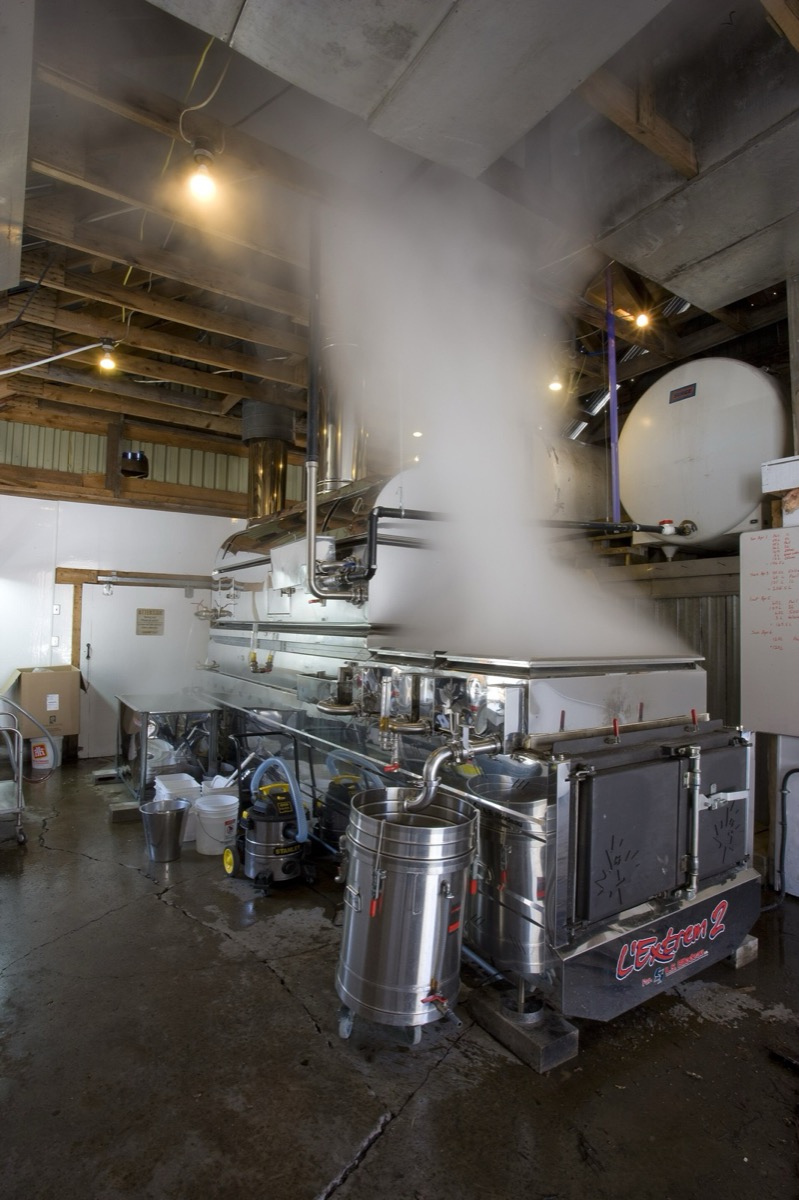
What Pennsylvania actually produces
Figures from USDA National Agricultural Statistics Service annual maple syrup estimates, published in the June Crop Production report. NASS surveys 13 states for maple; Connecticut, Indiana, Massachusetts, Minnesota, Ohio and West Virginia were added in 2024, so their series are short.
Pennsylvania maple sugaring FAQ
Plan the rest of your Pennsylvania year
More Northeast sugaring states
Tapping windows are climatological typicals, built from guidance published by Penn State. Any year runs about two weeks either side. The seven-day sap-run forecast is computed in your browser from National Weather Service gridpoint forecasts using freeze-thaw thresholds published by Ohio State University Extension, University of Minnesota Extension, Cornell and the University of Maine; the 0 to 10 weighting between those thresholds is ours, and it models the weather rather than measuring your trees. Production figures are USDA National Agricultural Statistics Service estimates. National picture: where sap is running right now →
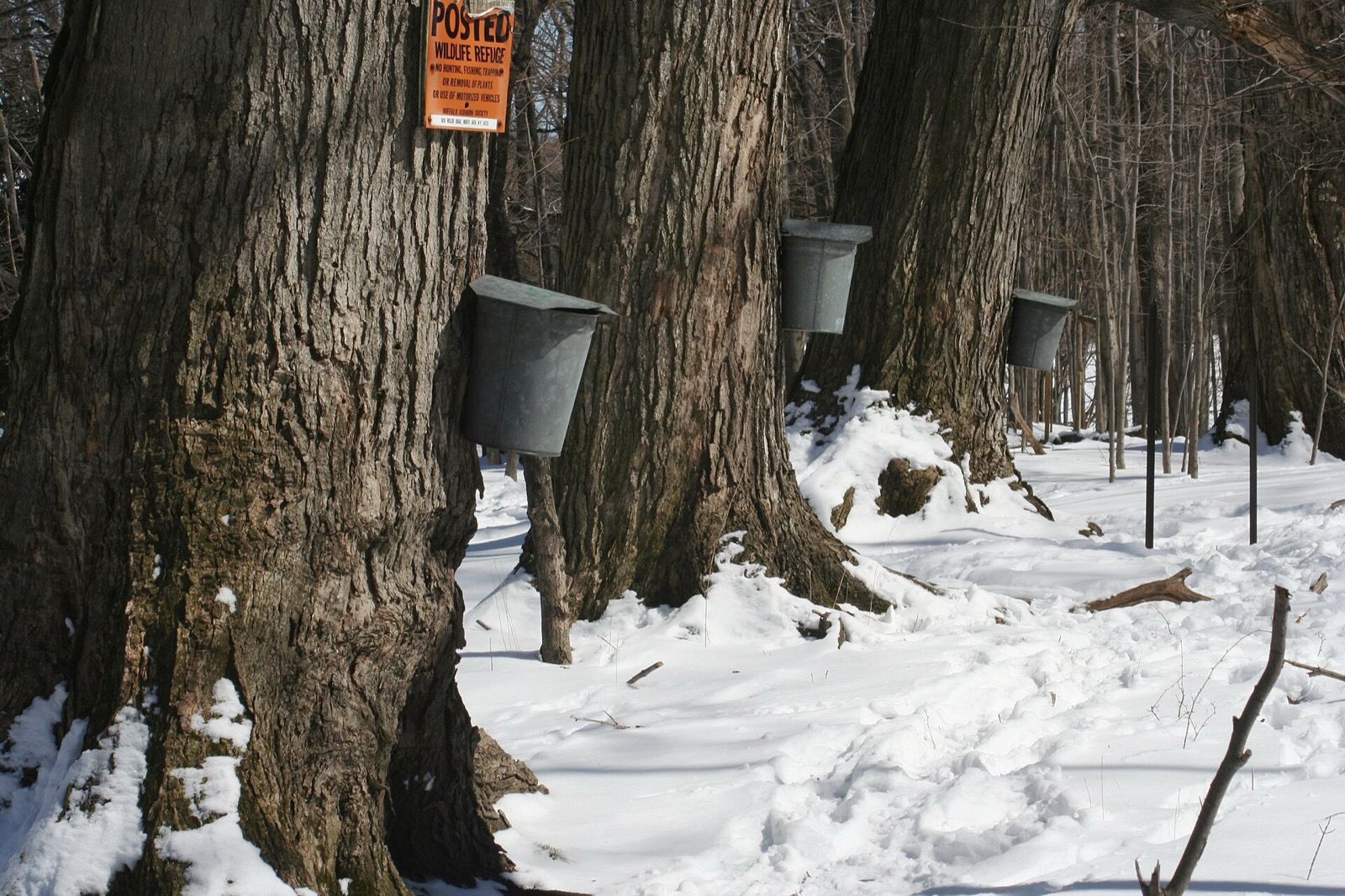
Hero image: “Maple sap buckets - Beaver Meadow Audubon Center” — Dave Pape — Public domain