
Skip to content
Historical record · New Hampshire

Lake Ice Out and Ice In Dates in New Hampshire

New Hampshire has no state ice-out dataset. What it has instead is one of the most closely watched single dates in New England: ice-out on Lake Winnipesaukee, called from an aircraft, in an unbroken line since 1887.

4
Lakes with a record
40 or more recorded years each
492
Observations
individual dates written down
1869
Oldest observation
Sunapee Lake
3
Century long records
spanning 100 years or more

Dates from past winters. For today’s ice, ask the agency that manages the water.

Where this year’s dates come from

The Winnipesaukee ice-out call is made by a pilot flying the lake, and the running list of dates is published by the community site winnipesaukee.com. It is not a government dataset. For 1887 through 2008 the same dates appear in the public domain USGS report this page is built on.

Winnipesaukee ice-out record

Today against the record

How this date has usually played out

Where today sits in the record for Sunapee Lake

40 of 40 of the most recent recorded years had already seen ice out on Sunapee Lake by this date.

The median across the whole record is April 24, which is 168 days ago on this year’s calendar. The record itself runs to 2019, so this is a comparison against history and not a statement about the current season.

This counts recorded years, not this year; the current season comes from the agency linked above.

Lake by lake

The deepest New Hampshire records

Ordered by how much record there is behind them. The median is across every recorded year; the second figure is across the most recent 30 recorded years, which is the fairer thing to compare against a lake you know today.

Names are reproduced exactly as the source database records them, which is often a shortened form: a lake filed as “Detroit” or “George” is Detroit Lake or Lake George to everyone who lives on it. The names stay as recorded, because United States lakes split unpredictably between “Lake X” and “X Lake”.

Sunapee Lake

Lake in New Hampshire · 151 recorded years, 1869 to 2019

Apr 24
median ice out
Apr 20
last 30 recorded years
Mar 19
earliest, 2016
May 15
latest, 1888

Across the whole record, ice out has moved 9 days earlier per century across the record.

1870sMay 31880sMay 11890sApr 271900sApr 241910sApr 241920sApr 211930sApr 241940sApr 181950sApr 221960sApr 261970sApr 271980sApr 181990sApr 182000sApr 212010sApr 14

Mean date per decade. Only decades with four or more observations are shown, and the scale starts near the shortest bar rather than at January 1, so small differences stay visible.
Lake Winnipesaukee

Lake in New Hampshire · 133 recorded years, 1887 to 2019

Apr 20
median ice out
Apr 20
last 30 recorded years
Mar 19
earliest, 2016
May 13
latest, 1888

Across the whole record, ice out has moved 5 days earlier per century across the record.

1890sApr 241900sApr 201910sApr 201920sApr 181930sApr 191940sApr 191950sApr 171960sApr 221970sApr 251980sApr 171990sApr 172000sApr 182010sApr 12

Mean date per decade. Only decades with four or more observations are shown, and the scale starts near the shortest bar rather than at January 1, so small differences stay visible.
Umbagog Lake

Lake in New Hampshire · 119 recorded years, 1880 to 2016

May 1
median ice out
Apr 29
last 30 recorded years
Apr 10
earliest, 1910
May 24
latest, 1888

Across the whole record, ice out has moved 7 days earlier per century across the record.

1880sMay 141890sMay 111900sMay 11910sMay 11920sApr 301930sMay 21940sApr 291950sApr 291960sMay 21970sMay 51980sApr 281990sApr 302000sApr 27

Mean date per decade. Only decades with four or more observations are shown, and the scale starts near the shortest bar rather than at January 1, so small differences stay visible.
First Connecticut Lake

Lake in New Hampshire · 89 recorded years, 1920 to 2008record ends 2008

May 5
median ice out
May 3
last 30 recorded years
Apr 9
earliest, 1921
May 20
latest, 1972

Across the whole record, ice out has moved barely at all across the record.

1920sMay 21930sMay 41940sMay 41950sMay 11960sMay 81970sMay 81980sMay 31990sMay 52000sMay 1

Mean date per decade. Only decades with four or more observations are shown, and the scale starts near the shortest bar rather than at January 1, so small differences stay visible.

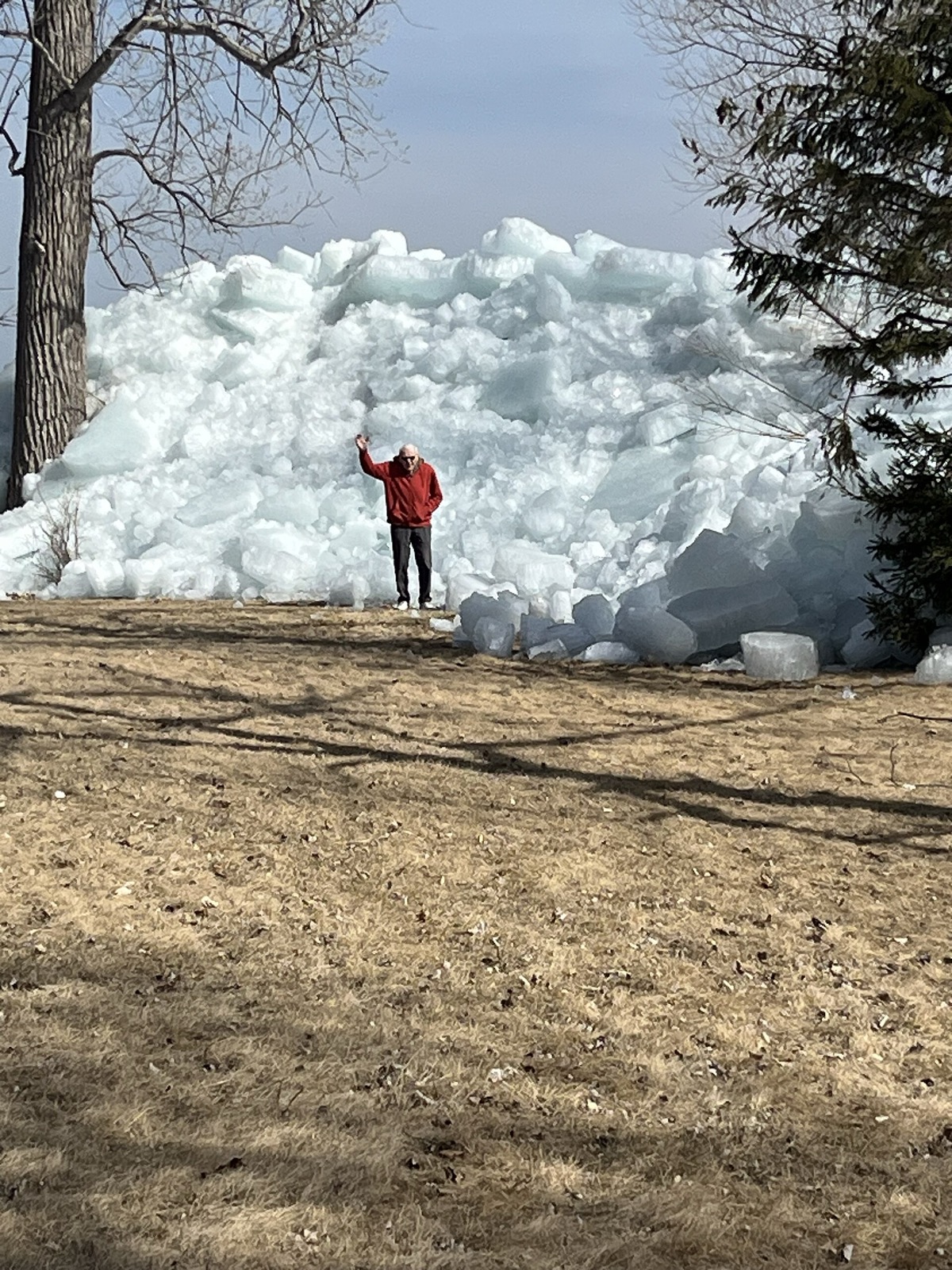
A person in a red jacket standing on brown grass at the foot of a wall of shattered lake ice piled far higher than they are
An ice shove on Lake Winnebago in Wisconsin, with a person on the bank for scale. Wind on a rotting spring sheet can drive it ashore in minutes and stack it well above head height, which is one reason a tidy single ice out date hides a genuinely messy few days. “Ice shove - Lake Winnebago, Oshkosh, WI USA - March 2025” by Jm mortellwi, CC BY-SA 4.0
Advertisement
Every lake

All 4 New Hampshire water bodies with a long record

LakeRecordMedian ice outLast 30 yearsEarliestLatestChange per century
Sunapee Lake1869 to 2019 (151)Apr 24Apr 20Mar 19 2016May 15 1888-9 days
Lake Winnipesaukee1887 to 2019 (133)Apr 20Apr 20Mar 19 2016May 13 1888-5.3 days
Umbagog Lake1880 to 2016 (119)May 1Apr 29Apr 10 1910May 24 1888-6.6 days
First Connecticut Lake1920 to 2008 (89)May 5May 3Apr 9 1921May 20 1972+1.5 days

Dates are day of year, rendered on a common non leap calendar so the same stored value always reads the same way. “Change per century” is a least squares line through the observations, shown only where a record spans 80 years or more; a century figure extrapolated from a 40 year window describes the decades that happened to be sampled rather than the lake. Where a record ends before 2010 the card says so; a great many of these series stopped when a particular person stopped keeping them.

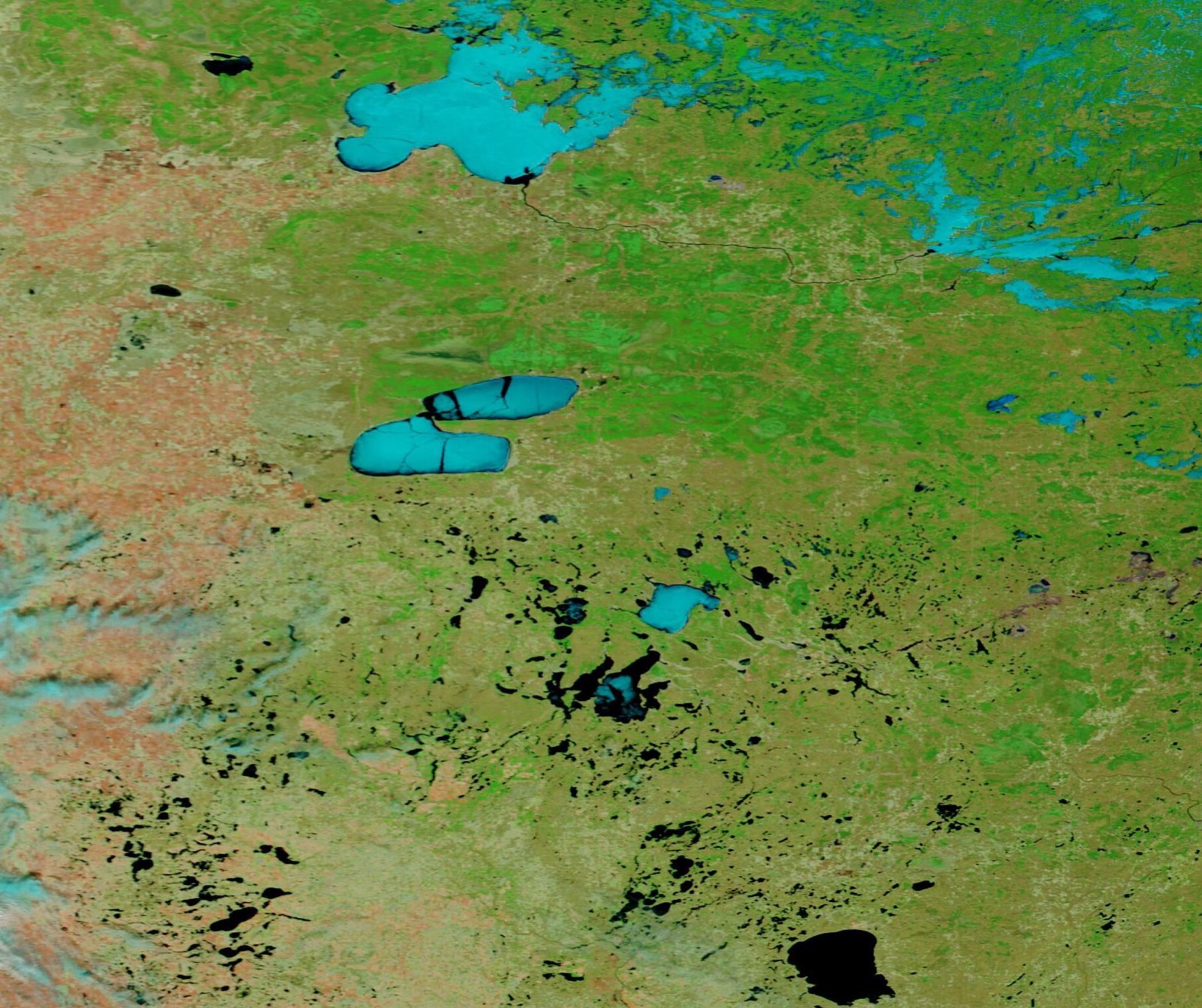
False colour satellite view of Minnesota in spring, with ice covered lakes showing as pale cyan and lakes that have already opened showing as black, against green and tan land
Spring thaw over Minnesota, in false colour. Ice still on a lake reads pale cyan; a lake that has already opened reads black. You can watch ice out happen across a whole state in a single frame, which is how agencies now sanity check reports that used to come only from people standing on a shore. “Spring Thaw in Minnesota (MODIS 2025-04-30)” — MODIS Land Rapid Response Team, NASA GSFC — Public domain
What the record says

What the New Hampshire record shows

Of the 4 New Hampshire lakes with a record long enough to state a century trend, 3 show ice out moving earlier. The median shift across those lakes is -5.3 days per century. That is a description of a line fitted to observations, not a forecast, and any single lake can and does swing three or four weeks between consecutive years.

Winnipesaukee has an unusually concrete definition. Ice-out is declared when the ice has melted enough that the M/S Mount Washington could navigate between its ports at Alton Bay, Center Harbor, Weirs Beach, Meredith and Wolfeboro. The people who make the call say openly that setting the exact date and time is non scientific.

The call comes from the air. A pilot at Emerson Aviation in Gilford flies the lake several times a day through the spring, and when the pilot makes the call it is treated as official. The lineage runs from shore observers to Bob Aldrich, who called it for around fifty years, to Alan and then Dave Emerson.

Squam draws its own line. Squam Lake next door uses a different test entirely: ice-out is when you can drive a boat from the covered bridge in Ashland to the Sandwich town beach. The Squam Lakes Association has kept that record since 1978.

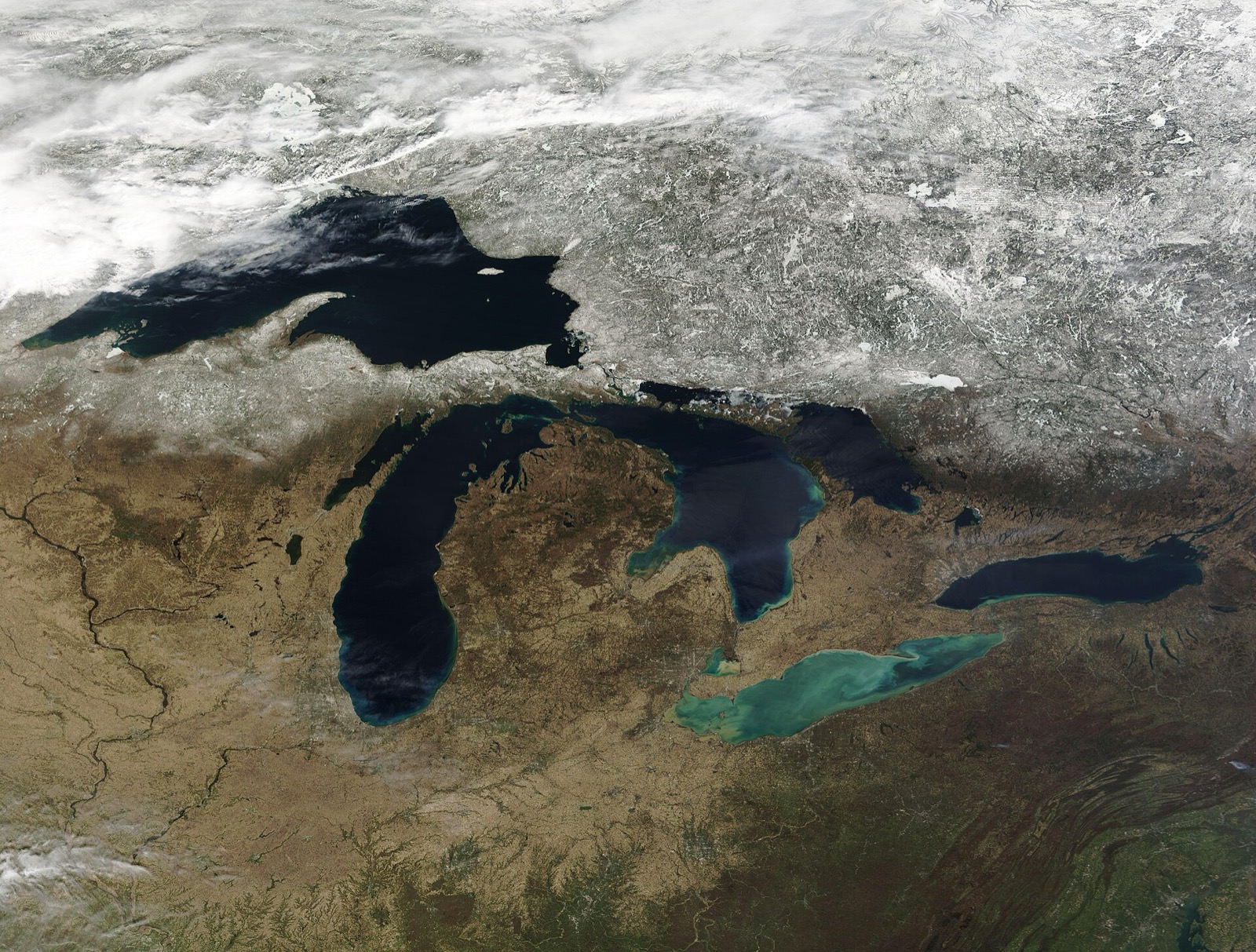
Satellite view of the Great Lakes with the northern land still under snow, the lakes themselves dark open water, and pale green sediment plumes in the shallow western basin of Lake Erie
The Great Lakes with snow still lying on the land north of them and no ice left on the water. On a lake this size, freezing over and opening are not single moments: shallow bays close first, the deep middle may never freeze at all in a mild winter, and the date somebody writes down is a judgement call. “Spring Thaw across the Great Lakes (MODIS)” — MODIS Land Rapid Response Team, NASA GSFC — Public domain
Provenance

Where these New Hampshire numbers came from

The observations

Benson, B., Magnuson, J. and Sharma, S. (2000). Global Lake and River Ice Phenology Database. (G01377, Version 1). Boulder, Colorado USA. National Snow and Ice Data Center. https://doi.org/10.7265/N5W66HP8 Accessed 2026-08-24.

4 of these lakes are also in a public domain USGS report

Which is worth knowing, because it means those series can be checked against a federal document rather than taken on trust. It also carries the observer names for every lake, which is the part of this record that is really a social history.

Hodgkins, G.A., 2010, Historical ice-out dates for 29 lakes in New England, 1807 to 2008: U.S. Geological Survey Open-File Report 2010-1214, 32 p. https://pubs.usgs.gov/of/2010/1214/

The Winnipesaukee list was assembled in 1974 by Dr. William K. Widgert, who pulled together the dates already on record back to 1887; the years since have been added one at a time.

Common questions

New Hampshire lake ice FAQ

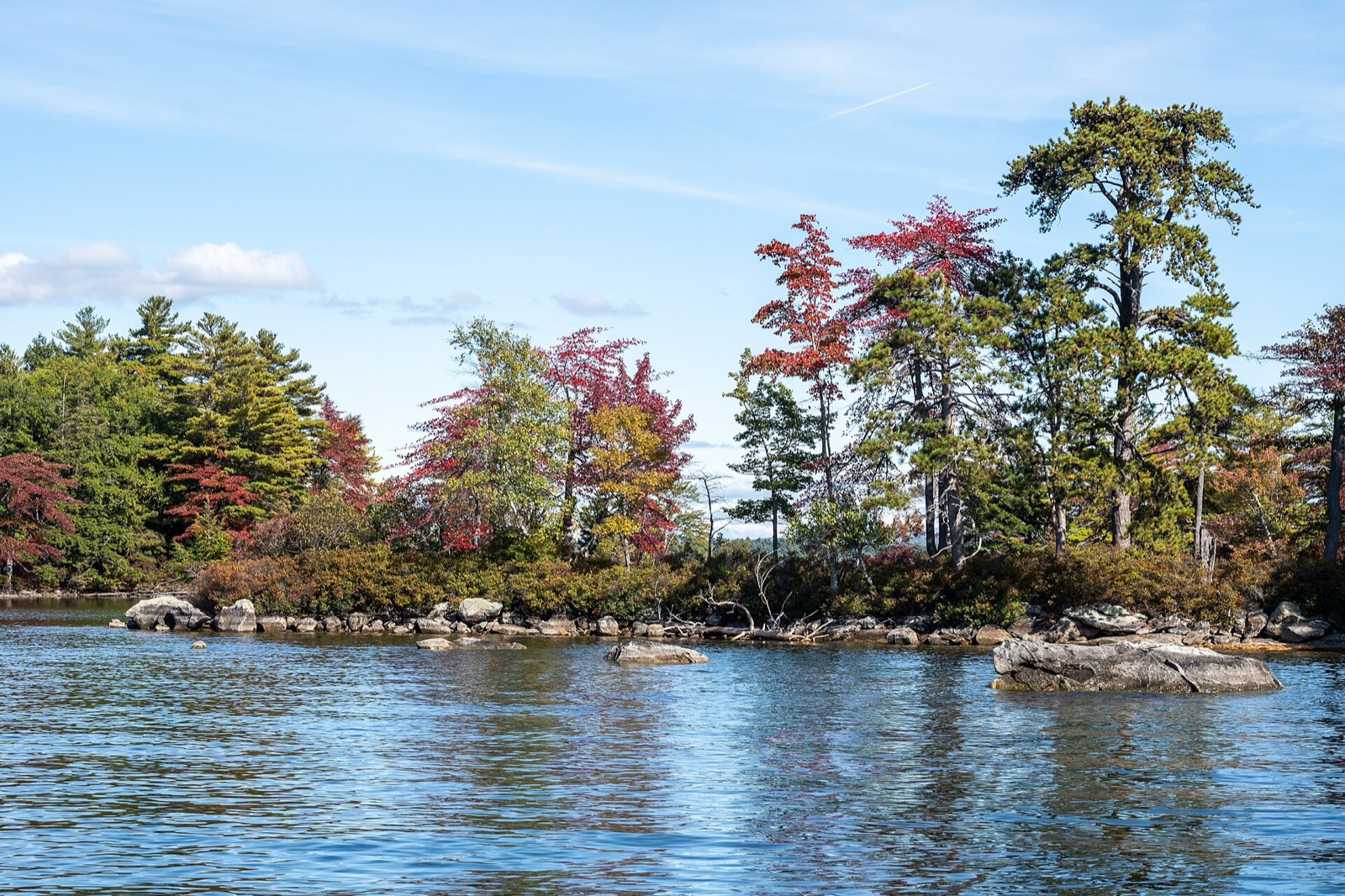
A large open lake with wooded islands and low hills on the far shore under broken cloud
New Hampshire water. Ice out is the day this becomes possible again, and in most of these records it is the day somebody decided a boat could cross. “Lake Winnipesaukee (54048636120)” by Accidental Nomad from Between States, USA, CC BY 2.0
The rest of the New Hampshire year

Plan the rest of your New Hampshire calendar

More Northeast states with lake ice records

Advertisement

Ice out and ice in dates are historical observations compiled by the National Snow and Ice Data Center and, for the New England lakes, by the U.S. Geological Survey. They describe past years only, and a past year says nothing about the ice on a lake today. For current ice and for anything involving going out on it, contact New Hampshire Fish and Game. National picture: every state with a lake ice record →
Hero image: “Lake Winnipesaukee (54048636120)” by Accidental Nomad from Between States, USA, CC BY 2.0