
Skip to content
Georgia is one of the 13 states taking applications

Georgia Heat Pump Rebates: Open, and What They Pay

What Georgia Environmental Finance Authority (Georgia's Home Energy Rebates) pays, the condition attached to each figure, who qualifies, who may do the work, and the page to apply on.

Open
Where the programme stands
one of 13 states taking applications
$16,000
Largest figure the office prints
whole home project cap
5
Figures published in all
each with the condition attached
Yes / Yes
Income rule, approved contractor
income sets the size of the award
The answer

You can apply in Georgia today

OpenGeorgia's Home Energy Rebates: Home Efficiency Rebates (HER) and Home Electrification and Appliance Rebates (HEAR)

Georgia is taking applications now, through Georgia's Home Energy Rebates: Home Efficiency Rebates (HER) and Home Electrification and Appliance Rebates (HEAR), run by Georgia Environmental Finance Authority (Georgia's Home Energy Rebates). The office has published no heat pump figure yet. It is one of only 13 states out of 50 where a homeowner can apply today.

  • Georgia prints 5 figures, the largest of them $16,000 for whole home project cap. Each one below carries the sentence or table row it came from.
  • Income decides the size of the award in Georgia, or whether there is one at all. The whole home programme is open at any income but pays a far higher share below 80% of area median income, and the appliance programme is limited to households under 150% of area median income.
  • The work has to go through a contractor the programme has approved. the household must go through a contractor approved by the programme, who does the energy assessment and is paid the rebate
  • The state says a household may use weatherization and local utility rebates alongside its own programme, but not on the same upgrade.
  • Applications go through Georgia Environmental Finance Authority (Georgia's Home Energy Rebates).

Georgia Environmental Finance Authority (Georgia's Home Energy Rebates)

Read September 23, 2026.

Advertisement
Every figure the office prints

All 5 Georgia figures

Each figure carries the condition Georgia Environmental Finance Authority (Georgia's Home Energy Rebates) attached to it, and the condition is the half that decides whether the figure applies to a particular house. Where the office wrote a sentence beside the number, that sentence is reproduced whole and linked to the page it was read from, because a paraphrase of an eligibility rule is a different statement than the rule.

Whole home project cap

$16,000

Applies HER, household under 80% of area median income reaching 35% or greater energy savings, up to 98% of cost.

Less than 80% | Greater Than or Equal To 35% | Up to 98% | $16,000
Georgia Environmental Finance Authority (Georgia's Home Energy Rebates), read September 23, 2026. Read it at the source
Whole home project cap

$10,000

Applies HER, household under 80% of area median income reaching 20% to 34% energy savings, up to 98% of cost.

Less than 80% | 20%-34% | Up to 98% | $10,000
Georgia Environmental Finance Authority (Georgia's Home Energy Rebates), read September 23, 2026. Read it at the source
Whole home project cap

$4,000

Applies HER, household at or above 80% of area median income reaching 35% or greater energy savings, up to 50% of cost.

Greater Than or Equal to 80% | Greater Than or Equal to 35% | Up to 50% | $4,000
Georgia Environmental Finance Authority (Georgia's Home Energy Rebates), read September 23, 2026. Read it at the source

Whole home project cap

$2,000

Applies HER, household at or above 80% of area median income reaching 20% to 34% energy savings, up to 50% of cost.

Greater Than or Equal to 80% | 20%-34% | Up to 50% | $2,000
Georgia Environmental Finance Authority (Georgia's Home Energy Rebates), read September 23, 2026. Read it at the source

Whole home project cap

up to $14,000

Applies HEAR household cap covering heat pumps and other electric measures, currently closed to new applications; Georgia publishes no per measure heat pump figure.

The Home Electrification and Appliance Rebates (HEAR) will provide point-of-sale rebates to households with income less than 150 percent of the area median income (AMI) in their county. Households could be eligible to receive up to $14,000. Rebates will apply to multiple appliances and measures, including, heat pumps; heat pump water heaters; heat pump clothes dryers; electric stoves, cooktops, ranges, or ovens; electric load service center (breaker box/electrical panel); electric wiring; and insulation, air sealing, and ventilation.
Georgia Environmental Finance Authority (Georgia's Home Energy Rebates), read September 23, 2026. Read it at the source
Who it is for, and who may do the work

The two conditions that end most applications

Income and the contractor list are where the largest number of applications stop, and both are usually discovered late. Nationally 34 states publish an income rule and 28 of those tier the award by it, meaning income decides how much is paid rather than only whether anything is; 23 require the work to go through a contractor the programme has approved, which generally excludes work a homeowner does themselves.

Who qualifies in Georgia

Income decides the size of the award in Georgia, or whether there is one at all. The whole home programme is open at any income but pays a far higher share below 80% of area median income, and the appliance programme is limited to households under 150% of area median income.

For the Home Efficiency Rebates (HER), rebates are available to individuals conducting energy efficiency upgrades of single-family homes and multifamily buildings. These rebates are available to households of any income. For households with a total annual income below 80 percent of the area median income (AMI), rebates can cover a higher percentage of the total project costs. The Home Electrification and Appliance (HEAR) program is only available to households with an annual income that is less than 150 percent of the area median income (AMI) of their county.
Georgia Environmental Finance Authority (Georgia's Home Energy Rebates), read September 23, 2026. Read it at the source

Who may do the work in Georgia

The work has to go through a contractor the programme has approved. the household must go through a contractor approved by the programme, who does the energy assessment and is paid the rebate

To get started, households will need to contact a program-approved contractor for a home energy assessment.
Georgia Environmental Finance Authority (Georgia's Home Energy Rebates), read September 23, 2026. Read it at the source
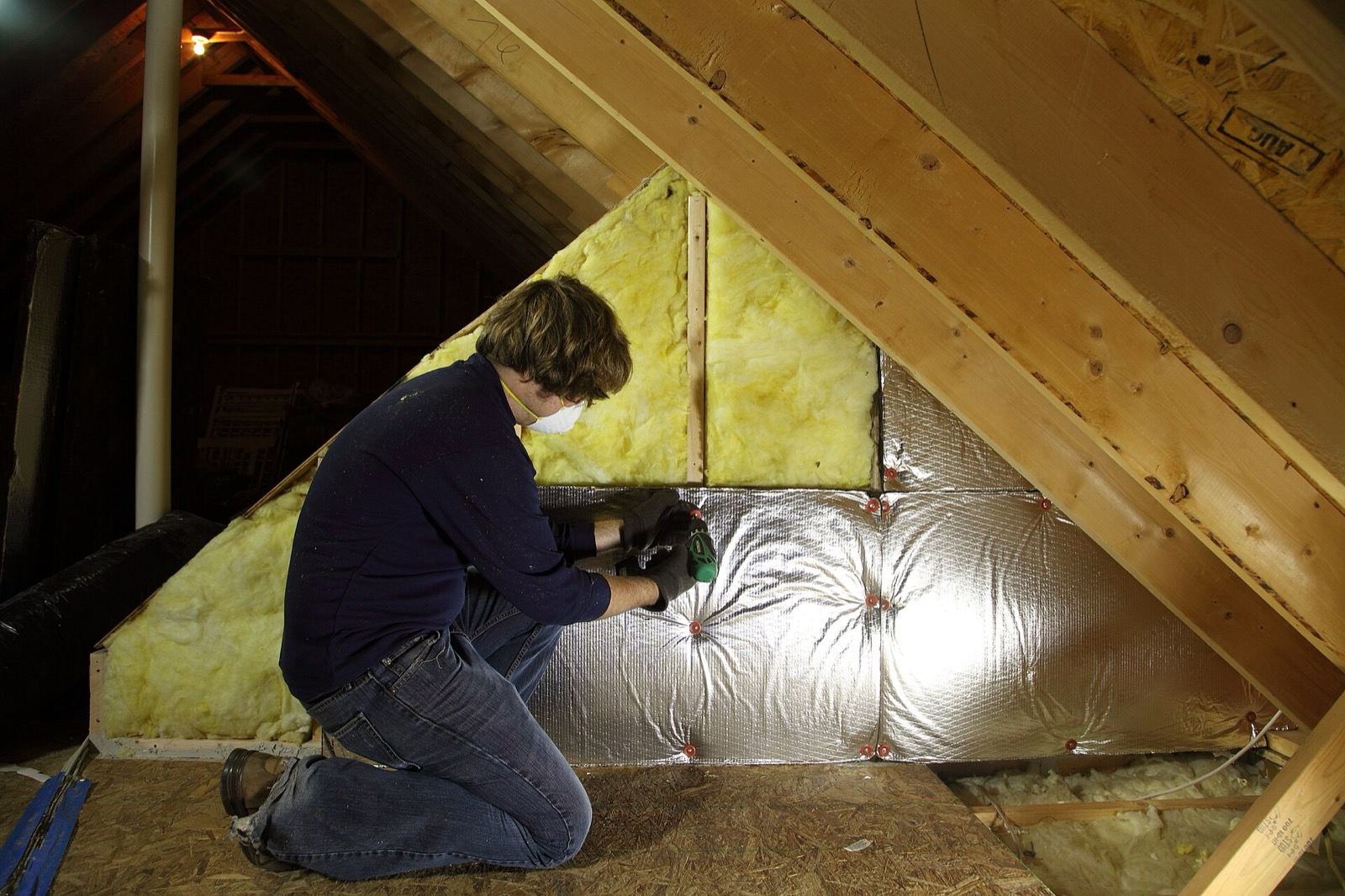
An installer in a dust mask and gloves kneeling on joists in a bare attic, laying a fresh batt of pink insulation into the bay beside several already filled, with the roof sheathing close overhead
Fifteen states print a dollar figure for insulation, which puts it fifth behind the air source pump, the whole home cap, the water heater and the electrical panel. It is also the measure most likely to be required before the rest: several offices will pay for a pump only after the envelope has been dealt with, on the reasoning that a pump sized to a leaking house is a pump sized wrong. Where an office has written that rule down, the state page quotes it. “Installing installation in an attic (9337)”, The EnergySmart Academy, CC0
What to do meanwhile

The other Georgia money

A utility programme is a different thing from a state one, with its own rules, its own contractor list and its own deadline, and in a handful of states it is worth more than the state programme it stands in for. 31 state offices publish a route like this, and on most of those pages it sits well below the announcement that brought the reader there.

What Georgia Environmental Finance Authority (Georgia's Home Energy Rebates) points at

The state says a household may use weatherization and local utility rebates alongside its own programme, but not on the same upgrade.

Georgia residents will be able to use multiple programs, including the Weatherization Assistance Program (WAP) and local utility rebates with Georgia's Home Energy Rebates. However, these funds cannot be applied to the same single upgrade.
Georgia Environmental Finance Authority (Georgia's Home Energy Rebates), read September 23, 2026. Read it at the source
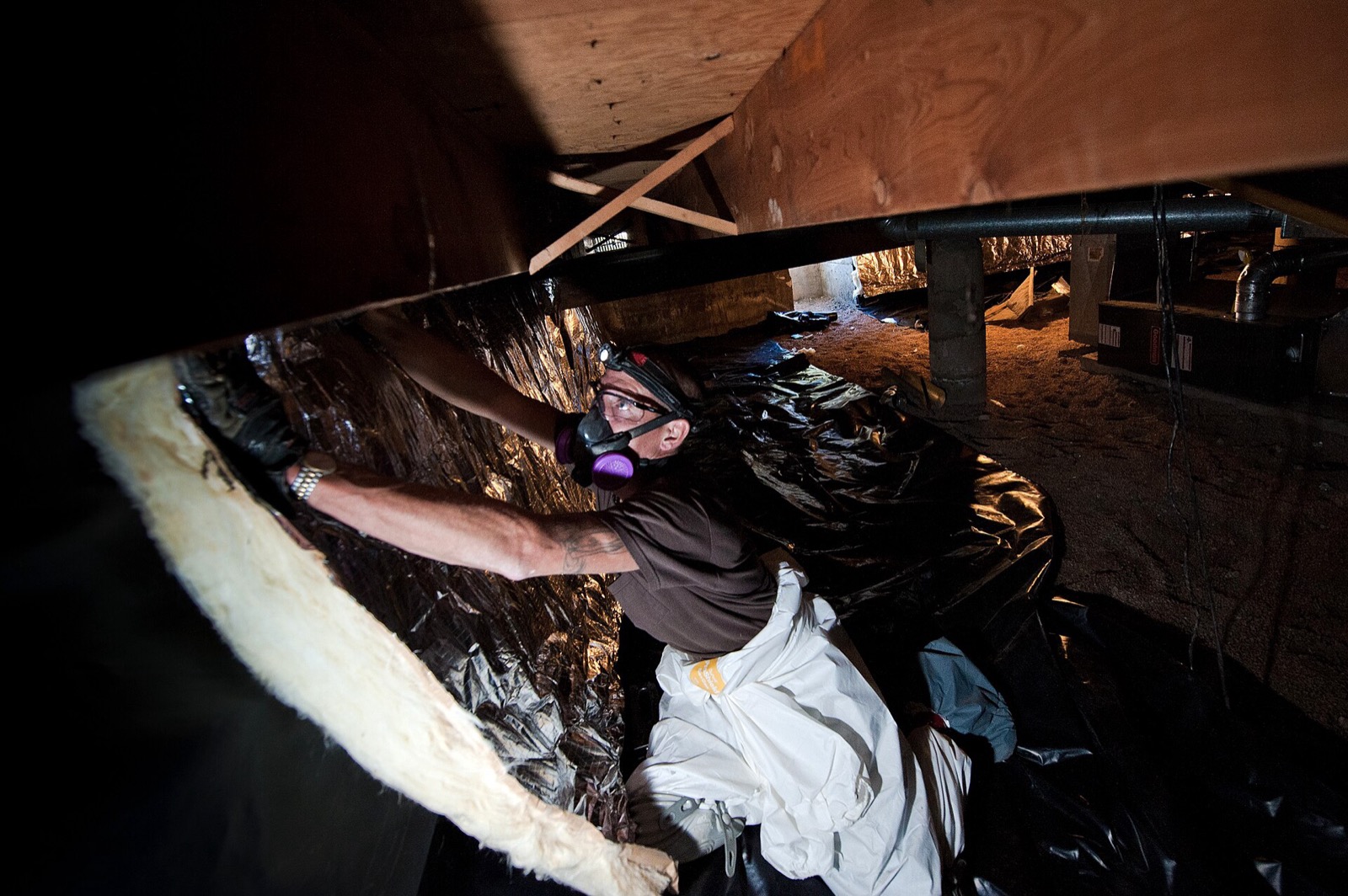
A worker in a respirator and knee pads fitting a white moisture barrier and batts of insulation into the low crawl space under a house, working on their side between the floor joists and the bare earth
Weatherization work under a floor, which for most of the country is the only home energy money with a door open on it. Thirty one state energy offices point a homeowner at a utility programme or a weatherization agency while their own rebate is still being designed, and the referral is usually buried well below the announcement. The work in this frame is what that referral leads to. “DOE weatherization services (677)”, U.S. Department of Energy, Public Domain
The other money

A Georgia rebate is not the federal tax credit

These are two separate programmes and conflating them is the commonest error on pages about this. A Georgia rebate is money off the job, applied for through Georgia Environmental Finance Authority (Georgia's Home Energy Rebates) under its own rules. The federal credit is money off a tax bill, claimed when filing, with no application and no approval step. Different timing, different paperwork, and qualifying for one says nothing about qualifying for the other.

Georgia Environmental Finance Authority (Georgia's Home Energy Rebates) is one of only 10 state offices that address on its own pages whether the two can be claimed together. Its sentence is below, exactly as written, because whether two kinds of money can be combined on one job is a tax question and the office’s own wording is the only safe answer to it.

Georgia on combining the two

Neither the HER nor HEAR may be combined with other federal grants or rebates for the same single upgrade.
Georgia Environmental Finance Authority (Georgia's Home Energy Rebates), read September 23, 2026. Read it at the source
How Georgia compares

13 states are taking applications, 31 are not

Georgia is in the smaller group. 13 of the fifty states are taking applications from homeowners, against 31 that have announced a programme and never opened it and 6 in some other state of suspension. An open programme can close: at least one state has reserved its funding, shut, and reopened more than once inside two years.

Across the country 155 separate dollar figures are printed and 21 states print none at all. The spread has little to do with climate: it tracks how each state chose to divide a federal allocation between a small number of large whole home awards and a large number of small per appliance ones.

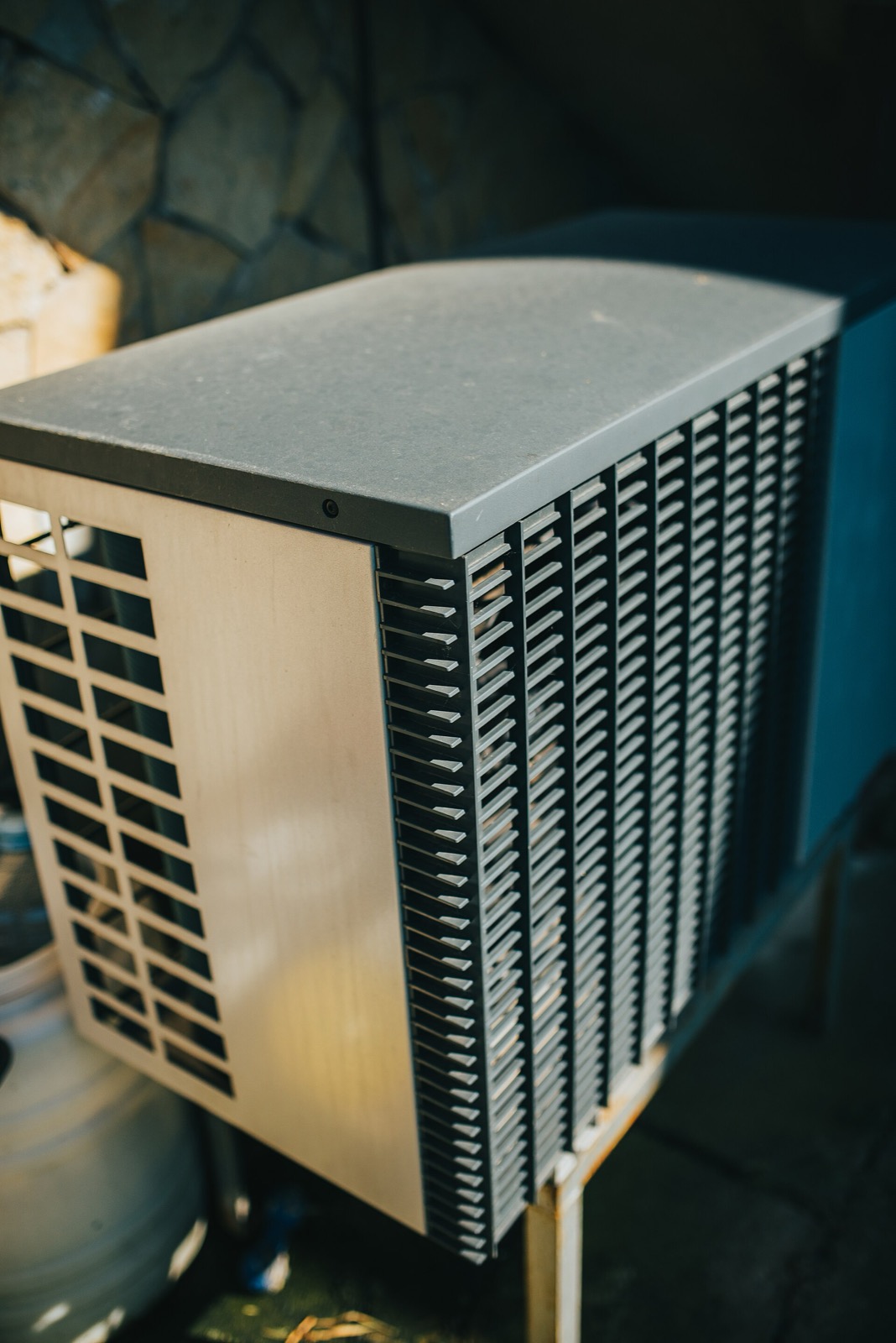
A tall grey outdoor condenser unit standing on a frame against a stone garden wall, its fins and louvred side panel filling the frame, no maker’s plate or badge visible anywhere on it
The outdoor half of a heat pump is the same box in the same place as the outdoor half of an air conditioner, which is why so many homeowners cannot tell from the yard which one they already own. It matters to the paperwork: an office that pays for a swap usually wants to know what the house burns today, and Arizona has written that from September 2026 it will pay only where the equipment being replaced was already electric. “Outdoor air conditioner unit installed in residential garden space”, Shixart1985, CC BY 2.0

Georgia heat pump rebate questions

Advertisement

Georgia read September 23, 2026 from Georgia Environmental Finance Authority (Georgia's Home Energy Rebates)’s own pages, linked beside every figure and every rule. A programme can open, reserve its funding and stop taking applications inside a single season, so the office page linked above is what governs on the day. Every state is on the home energy rebates hub.