
Skip to content
Colorado has run its programme and stopped taking applications

Colorado Heat Pump Rebates: Where They Actually Stand

What Colorado Energy Office has actually published, what it points homeowners at meanwhile, and which states are open today.

Closed
Where the programme stands
ran and stopped
up to $16,000
Largest figure the office prints
whole home project cap
8
Figures published in all
each with the condition attached
Yes / Yes
Income rule, approved contractor
income sets the size of the award
The answer

Where Colorado actually stands

ClosedColorado Home Energy Rebate Program

Colorado has run its programme and stopped taking applications. Colorado Home Energy Rebate Program is run by Colorado Energy Office. Nationally 13 of 50 states are taking applications and 31 have announced a programme without opening one.

  • Colorado prints 8 figures, the largest of them up to $16,000 for whole home project cap. Each one below carries the sentence or table row it came from.
  • The heat pump line is $8,000. It applies cold climate heat pump; HEAR single family is closed.
  • Income decides the size of the award in Colorado, or whether there is one at all. Rebate share depends on household income against county area median income, and households at or above 150% AMI are excluded from both rebate programmes.
  • The work has to go through a contractor the programme has approved. the work must be done by a contractor registered with the programme, who submits the paperwork
  • With the single family programme closed, the office points readers at its own navigator of other equipment incentives and utility bill assistance.
  • There is no application to make yet. Colorado Energy Office is the office that will run it.

Colorado Energy Office

launched in stages; Region 1 and Region 2 single family both now closed as of August 2026

Read September 23, 2026.

Advertisement
Every figure the office prints

All 8 Colorado figures

Each figure carries the condition Colorado Energy Office attached to it, and the condition is the half that decides whether the figure applies to a particular house. Where the office wrote a sentence beside the number, that sentence is reproduced whole and linked to the page it was read from, because a paraphrase of an eligibility rule is a different statement than the rule.

Whole home project cap

up to $16,000

Applies Home Efficiency Rebates for manufactured and mobile homes, stated as available in 2026.

Below 80% AMI 35% or greater 100% of project cost, up to $16,000
Colorado Energy Office, read September 23, 2026. Read it at the source
Air source heat pump

$8,000

Applies cold climate heat pump; HEAR single family is closed.

Cold climate heat pump for space heating and cooling $8,000
Colorado Energy Office, read September 23, 2026. Read it at the source
Air source heat pump

$3,000

Applies standard heat pump for space heating and cooling.

Heat pump for space heating and cooling $3,000
Colorado Energy Office, read September 23, 2026. Read it at the source
Heat pump water heater

$1,750

Heat pump water heater $1,750
Colorado Energy Office, read September 23, 2026. Read it at the source

Induction range or cooktop

$840

Electric stove, cooktop, range, or oven $840
Colorado Energy Office, read September 23, 2026. Read it at the source

Electrical panel

$4,000

Electric load service center (also known as electric panel) $4,000
Colorado Energy Office, read September 23, 2026. Read it at the source

Electrical wiring

$2,500

Electric wiring $2,500
Colorado Energy Office, read September 23, 2026. Read it at the source

Insulation

$1,600

Applies insulation, air sealing and ventilation combined.

Insulation, air sealing, and ventilation $1,600
Colorado Energy Office, read September 23, 2026. Read it at the source
Who it is for, and who may do the work

The two conditions that end most applications

Income and the contractor list are where the largest number of applications stop, and both are usually discovered late. Nationally 34 states publish an income rule and 28 of those tier the award by it, meaning income decides how much is paid rather than only whether anything is; 23 require the work to go through a contractor the programme has approved, which generally excludes work a homeowner does themselves.

Who qualifies in Colorado

Income decides the size of the award in Colorado, or whether there is one at all. Rebate share depends on household income against county area median income, and households at or above 150% AMI are excluded from both rebate programmes.

Below 80% AMI 100% of qualified project cost, up to the HEAR maximum rebate amounts 80% - 150% AMI 50% of qualified project cost, up to the HEAR maximum rebate amounts
Colorado Energy Office, read September 23, 2026. Read it at the source

Who may do the work in Colorado

The work has to go through a contractor the programme has approved. the work must be done by a contractor registered with the programme, who submits the paperwork

The Colorado Energy Office (CEO) will issue rebates through registered contractors. These registered contractors will pass the rebate savings on as discounts to households and multifamily building owners and operators.
Colorado Energy Office, read September 23, 2026. Read it at the source
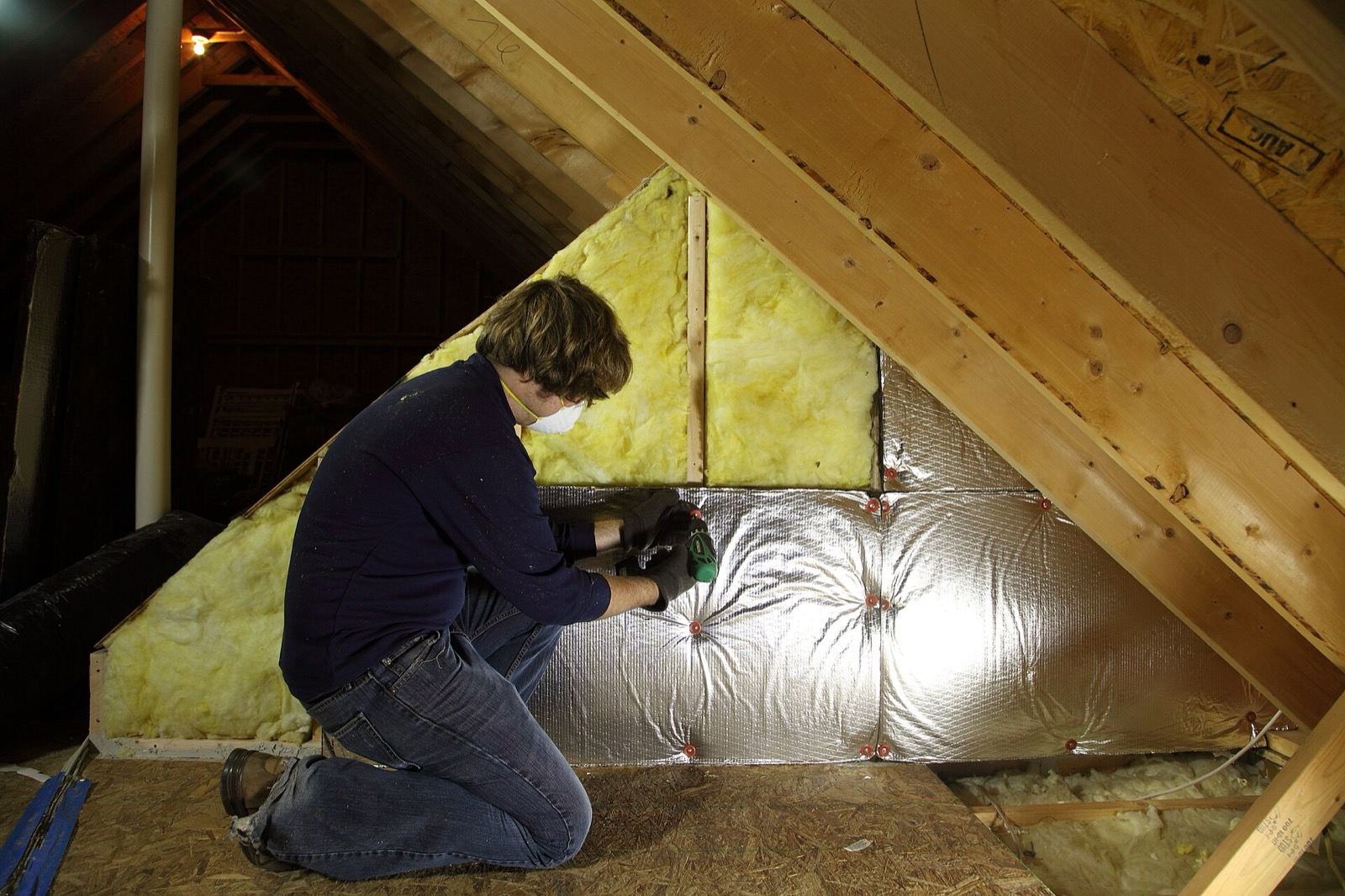
An installer in a dust mask and gloves kneeling on joists in a bare attic, laying a fresh batt of pink insulation into the bay beside several already filled, with the roof sheathing close overhead
Fifteen states print a dollar figure for insulation, which puts it fifth behind the air source pump, the whole home cap, the water heater and the electrical panel. It is also the measure most likely to be required before the rest: several offices will pay for a pump only after the envelope has been dealt with, on the reasoning that a pump sized to a leaking house is a pump sized wrong. Where an office has written that rule down, the state page quotes it. “Installing installation in an attic (9337)”, The EnergySmart Academy, CC0
What to do meanwhile

Where Colorado Energy Office sends you instead

A utility programme is a different thing from a state one, with its own rules, its own contractor list and its own deadline, and in a handful of states it is worth more than the state programme it stands in for. 31 state offices publish a route like this, and on most of those pages it sits well below the announcement that brought the reader there.

What Colorado Energy Office points at

With the single family programme closed, the office points readers at its own navigator of other equipment incentives and utility bill assistance.

Find other Colorado energy equipment incentives and utility bill assistance for your household: View the Colorado Energy Savings Navigator
Colorado Energy Office, read September 23, 2026. Read it at the source
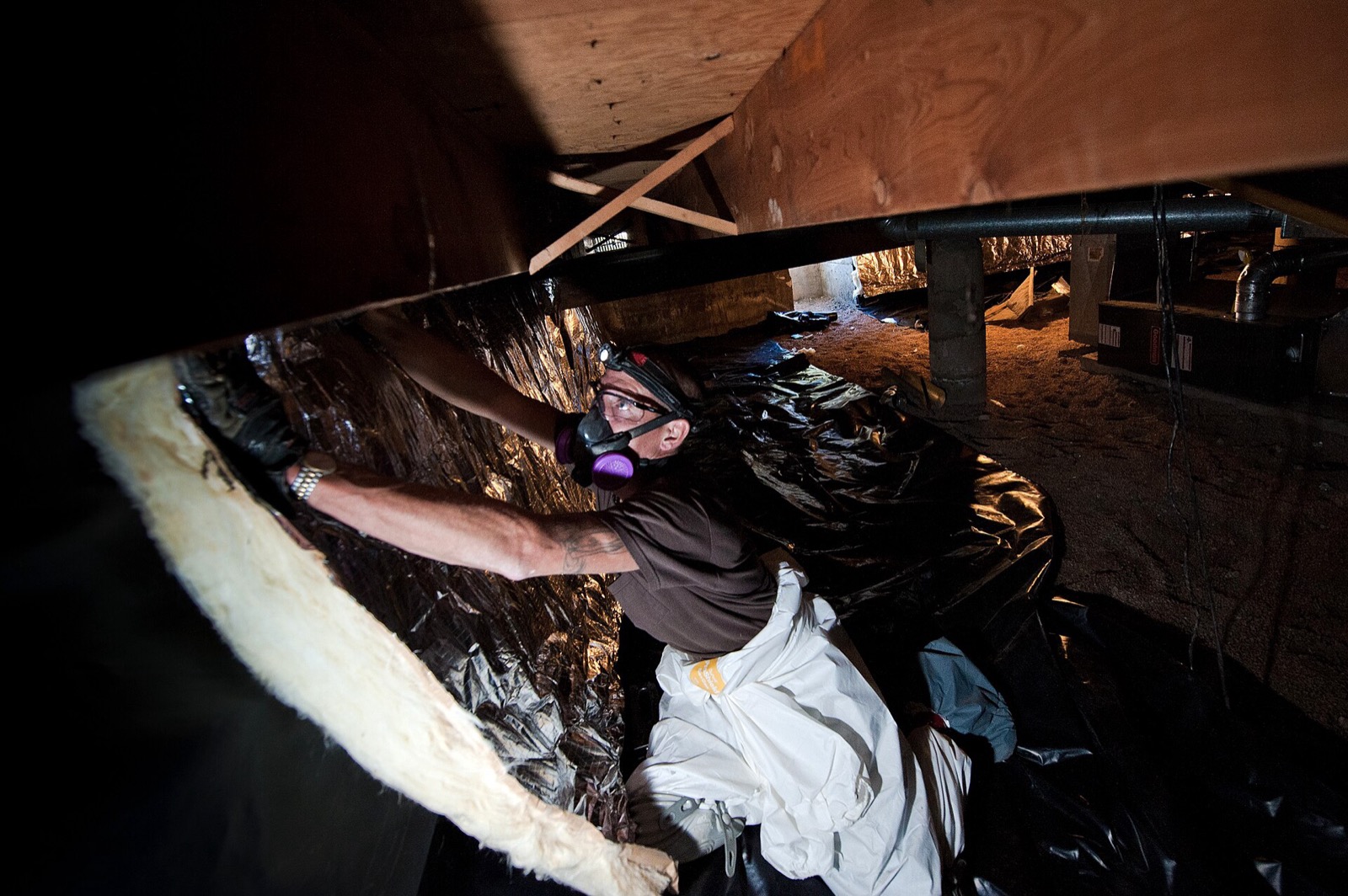
A worker in a respirator and knee pads fitting a white moisture barrier and batts of insulation into the low crawl space under a house, working on their side between the floor joists and the bare earth
Weatherization work under a floor, which for most of the country is the only home energy money with a door open on it. Thirty one state energy offices point a homeowner at a utility programme or a weatherization agency while their own rebate is still being designed, and the referral is usually buried well below the announcement. The work in this frame is what that referral leads to. “DOE weatherization services (677)”, U.S. Department of Energy, Public Domain
The other money

A Colorado rebate is not the federal tax credit

These are two separate programmes and conflating them is the commonest error on pages about this. A Colorado rebate is money off the job, applied for through Colorado Energy Office under its own rules. The federal credit is money off a tax bill, claimed when filing, with no application and no approval step. Different timing, different paperwork, and qualifying for one says nothing about qualifying for the other.

Colorado Energy Office does not address on its own pages whether the two can be claimed on one job. Only 10 state offices do, so the silence is normal rather than a signal either way.

How Colorado compares

13 states are taking applications, 31 are not

Colorado is in the larger group. Only 13 of the fifty states are taking applications from homeowners, and 31 have announced a programme without opening it, which is the commonest position in the country. The states that are open are Arizona, Connecticut, Georgia, Indiana, Maine, Michigan, New Mexico, New York, North Carolina, Rhode Island, Vermont, Washington, Wisconsin.

Across the country 155 separate dollar figures are printed and 21 states print none at all. The spread has little to do with climate: it tracks how each state chose to divide a federal allocation between a small number of large whole home awards and a large number of small per appliance ones.

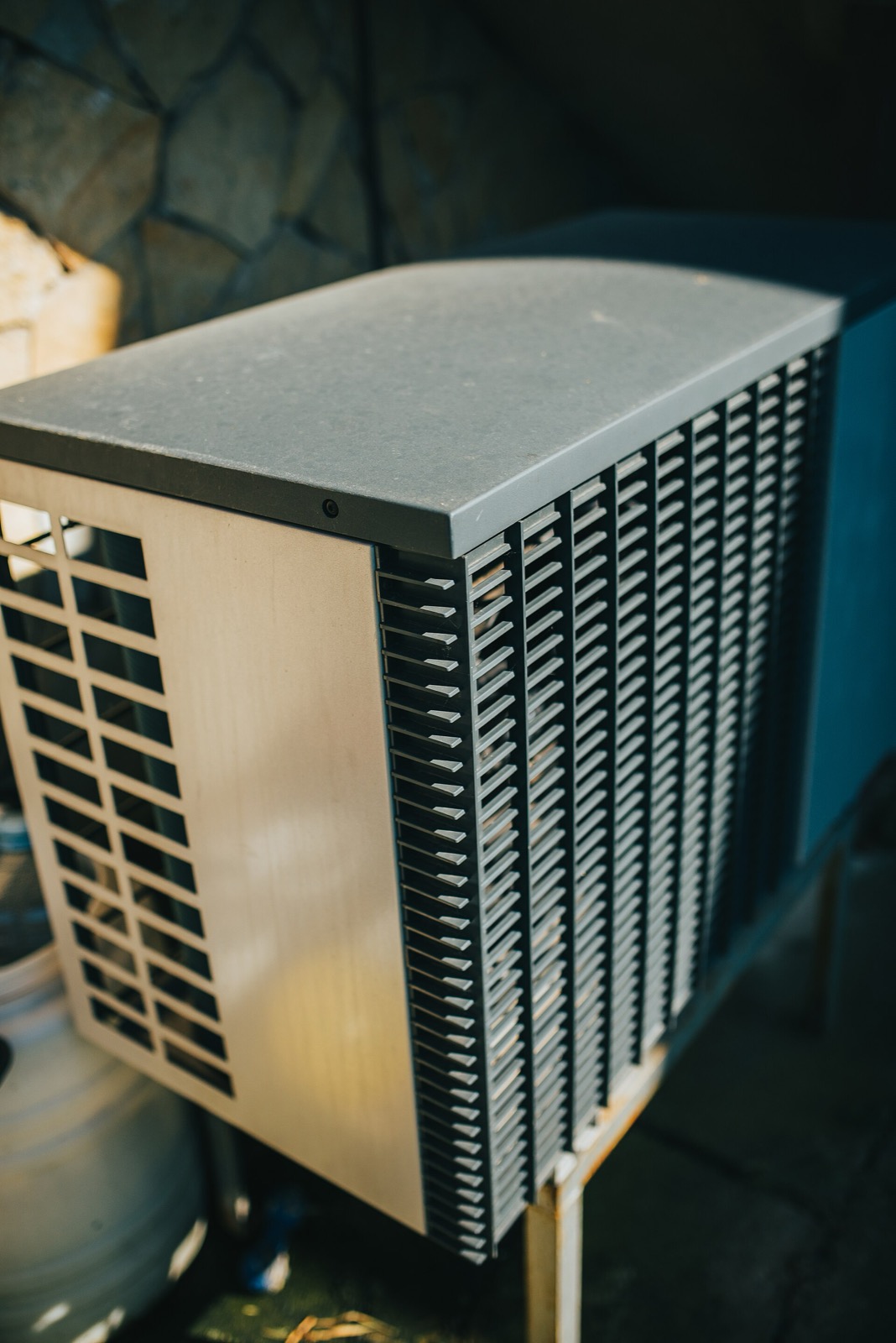
A tall grey outdoor condenser unit standing on a frame against a stone garden wall, its fins and louvred side panel filling the frame, no maker’s plate or badge visible anywhere on it
The outdoor half of a heat pump is the same box in the same place as the outdoor half of an air conditioner, which is why so many homeowners cannot tell from the yard which one they already own. It matters to the paperwork: an office that pays for a swap usually wants to know what the house burns today, and Arizona has written that from September 2026 it will pay only where the equipment being replaced was already electric. “Outdoor air conditioner unit installed in residential garden space”, Shixart1985, CC BY 2.0

Colorado heat pump rebate questions

Advertisement

Colorado read September 23, 2026 from Colorado Energy Office’s own pages, linked beside every figure and every rule. A programme can open, reserve its funding and stop taking applications inside a single season, so the office page linked above is what governs on the day. Every state is on the home energy rebates hub.