
Alabama Hurricane Season
Season dates, the months storms have actually arrived, and every strike NOAA has recorded, from the agency record.
Hurricane season is open right now: it runs June 1 to November 30. For anything live, use the National Hurricane Center, not this page.Is there a storm near Alabama right now? Go to the National Hurricane Center.
The panel just below republishes the National Hurricane Center’s own latest advisories and outlook, verbatim and timestamped. Tracks, cones and forecasts are the National Hurricane Center’s. If a storm is active or approaching, NHC is the source of official forecasts and warnings, and your emergency management agency is the source of evacuation and shelter decisions.
- National Hurricane Center for current storms, forecasts, watches, and warnings
- Your state emergency management agency for evacuation orders and shelter information
- Ready.gov hurricane preparedness for how to prepare, in FEMA’s own words
“It only takes one hurricane (or tropical storm) to cause a disaster.” NOAA Climate Prediction Center
What NHC is saying right now
Republished verbatim from the National Hurricane Center via the National Weather Service API, with NHC’s own issuance times. For anything that matters, read it at nhc.noaa.gov where it is always current.
Loading the latest NHC products…
Alabama hurricane season at a glance
Climatology and history, never a forecastAlabama's Gulf frontage is roughly 50 miles, but Mobile Bay funnels storm effects well inland, and NOAA's list carries more inland hurricane-condition entries for Alabama than for any other state.
When is hurricane season in Alabama?
The season dates are set by NOAA, they are the same for the whole Atlantic basin, and they are worth quoting rather than paraphrasing:
“The Atlantic hurricane season runs from June 1 to November 30.”National Hurricane Center, source
“The peak of the Atlantic hurricane season is September 10, with most activity occurring between mid-August and mid-October.”National Hurricane Center, source
Those are basin-wide dates. What they mean for Alabama specifically is in the month histogram below: the calendar of storms that have actually arrived here, which is narrower than the season and different for every state.
The season dates are also not walls. NHC is explicit that storms sometimes form outside the official window; the off season page counts exactly how often. See the December to May record.
NOAA’s outlook for the 2026 season
NOAA Climate Prediction Center, issued 6 August 2026. Snapshot taken 2026-08-27; always current at the source.
“NOAA's updated outlook for the 2026 Atlantic Hurricane Season indicates that a below-normal season is the most likely outcome, with low chances for a near-normal season, and a very small chance that the season would be above-normal.”
- 7 to 13 named storms
- 2 to 6 hurricanes
- 0 to 2 major hurricanes
“NOAA does not make seasonal hurricane landfall predictions. Hurricane landfalls are largely determined by the weather patterns in place as the hurricane approaches, and those patterns are usually only predictable when the storm is within several days of making landfall.” NOAA Climate Prediction Center
Which months hurricanes actually hit in Alabama
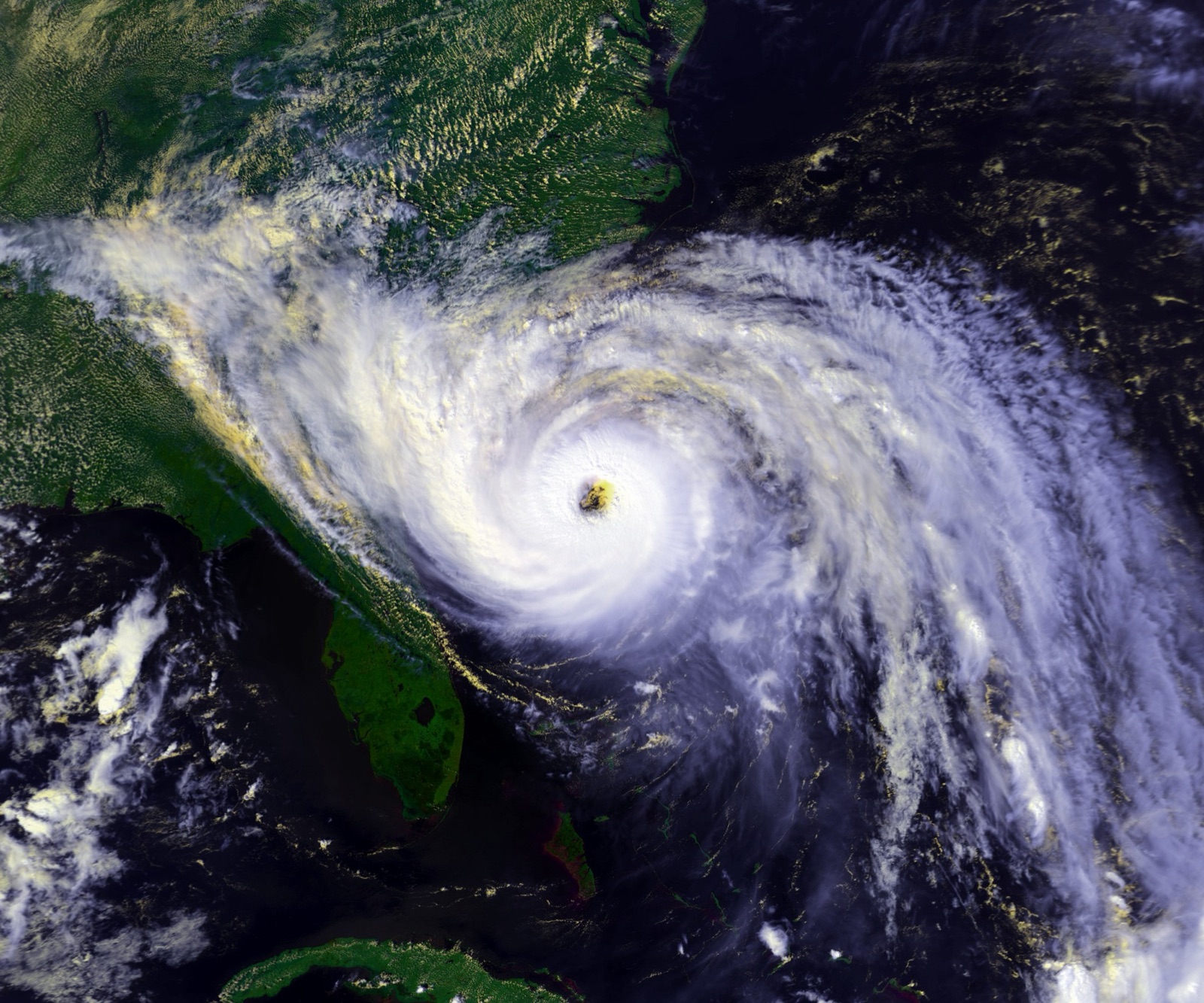
This histogram counts the hurricane strikes NOAA's landfall list attributes to Alabama, by month, across the whole 1851 to 2025 record. It is a record of what happened, not a forecast of any year.
September accounts for 11 of the 23 events in the record here. A month with zero strikes is not a month with zero risk: the basin-wide season runs June through November everywhere, and the routing block at the top of this page applies in all of them.
Every hurricane strike NOAA has recorded on Alabama
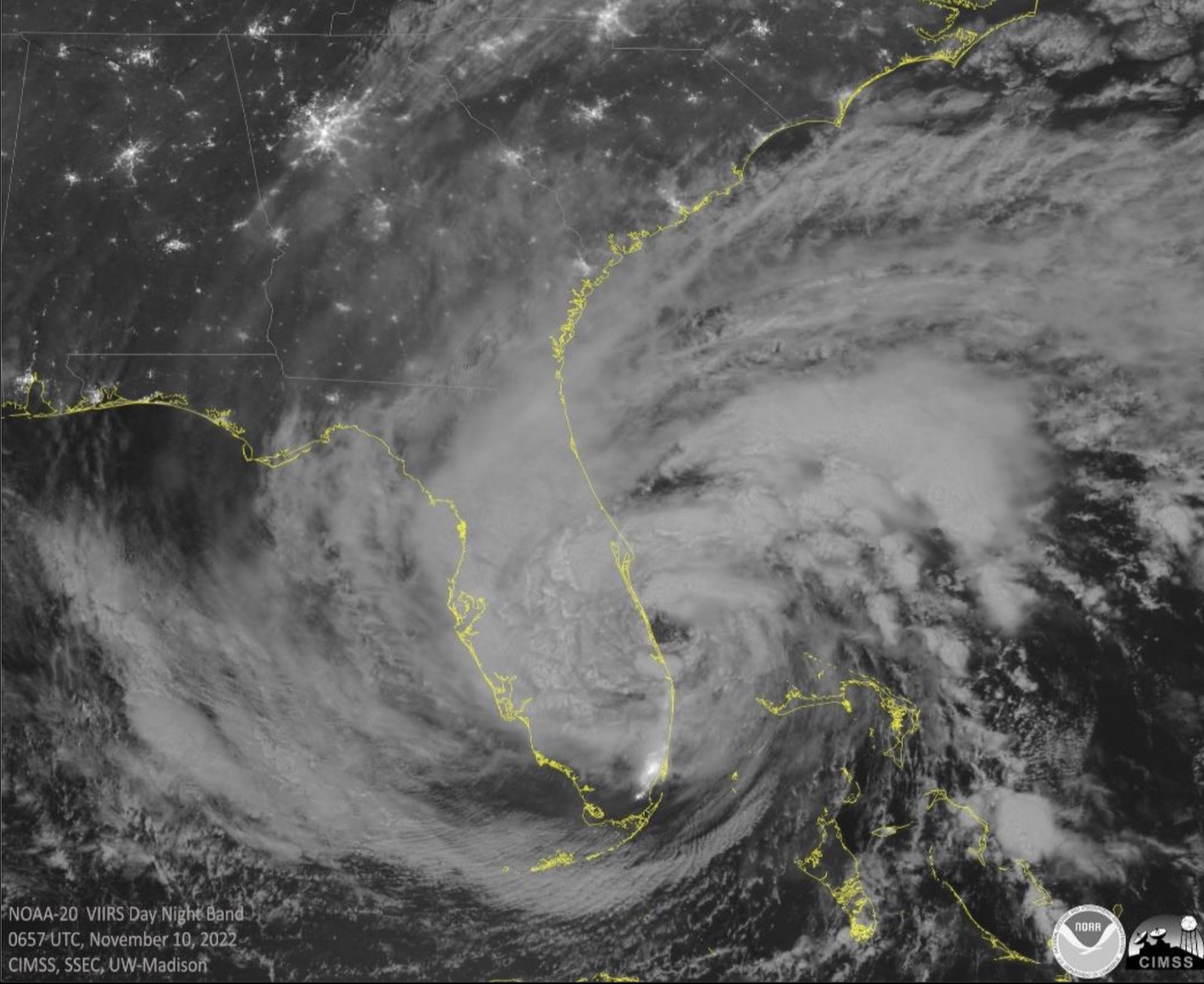
Reproduced from NOAA AOML’s continental US hurricane landfall list, with NOAA’s own per-state category attribution. “Category in Alabama” is the Saffir-Simpson category NOAA assigns for this state specifically, which is often lower than the storm’s landfall category elsewhere.
| Year | Month | Name | Category in Alabama | Highest US category | Pressure | Max wind |
|---|---|---|---|---|---|---|
| 2020 | Sep | Sally | Category 2 | Cat 2 | 965 mb | 95 kt |
| 2020 | Oct | Zeta (inland) | Category 1 | Cat 3 | 970 mb | 100 kt |
| 2005 | Jul | Dennis (inland) | Category 1 | Cat 3 | 946 mb | 105 kt |
| 2005 | Aug | Katrina | Category 1 | Cat 3 | 920 mb | 110 kt |
| 2004 | Sep | Ivan | Category 3 | Cat 3 | 946 mb | 105 kt |
| 1997 | Jul | Danny | Category 1 | Cat 1 | 984 mb | 70 kt |
| 1995 | Oct | Opal (inland) | Category 1 | Cat 3 | 942 mb | 100 kt |
| 1985 | Sep | Elena | Category 3 | Cat 3 | 959 mb | 100 kt |
| 1979 | Sep | Frederic | Category 3 | Cat 3 | 946 mb | n/a |
| 1975 | Sep | Eloise (inland) | Category 1 | Cat 3 | 955 mb | n/a |
| 1969 | Aug | Camille | Category 1 | Cat 5 | 900 mb | 150 kt |
| 1950 | Aug | Baker | Category 1 | Cat 1 | 979 mb | 75 kt |
| 1936 | Jul | Unnamed (inland) | Category 1 | Cat 2 | 964 mb | 90 kt |
| 1932 | Sep | Unnamed | Category 1 | Cat 1 | 979 mb | 75 kt |
| 1926 | Sep | Great Miami | Category 3 | Cat 4 | 930 mb | 125 kt |
| 1917 | Sep | Unnamed | Category 1 | Cat 3 | 949 mb | 100 kt |
| 1916 | Jul | Unnamed | Category 2 | Cat 3 | 950 mb | 105 kt |
| 1916 | Oct | Unnamed | Category 2 | Cat 2 | 970 mb | 95 kt |
| 1912 | Sep | Unnamed | Category 1 | Cat 1 | 986 mb | 65 kt |
| 1911 | Aug | Unnamed | Category 1 | Cat 1 | 982 mb | 70 kt |
| 1906 | Sep | Unnamed | Category 2 | Cat 2 | 958 mb | 95 kt |
| 1901 | Aug | Unnamed | Category 1 | Cat 1 | 973 mb | 75 kt |
| 1893 | Oct | Chenier Caminanda | Category 2 | Cat 4 | 948 mb | 115 kt |
| 1887 | Jul | Unnamed (inland) | Category 1 | Cat 1 | 978 mb | 75 kt |
| 1882 | Sep | Unnamed (inland) | Category 1 | Cat 3 | 949 mb | 110 kt |
| 1870 | Jul | Mobile | Category 1 | Cat 1 | 982 mb | 70 kt |
| 1860 | Aug | Unnamed | Category 2 | Cat 3 | 945 mb | 110 kt |
| 1860 | Sep | Unnamed | Category 1 | Cat 2 | 965 mb | 90 kt |
| 1859 | Sep | Unnamed | Category 1 | Cat 1 | 982 mb | 70 kt |
| 1856 | Aug | Southeastern States (inland) | Category 1 | Cat 2 | 965 mb | 90 kt |
| 1852 | Aug | Great Mobile | Category 3 | Cat 3 | 961 mb | 100 kt |
How complete is this record?
“Because of the sparseness of towns and cities before 1900 in some coastal locations along the United States, the above list is not complete for all states. Before the Gulf of Mexico and Atlantic coasts became settled, hurricanes may have been underestimated in their intensity or missed completely for small-sized systems (i.e., 2004's Hurricane Charley).”NOAA Atlantic Oceanographic and Meteorological Laboratory, Hurricane Research Division, source
What the categories mean, and how they land in Alabama
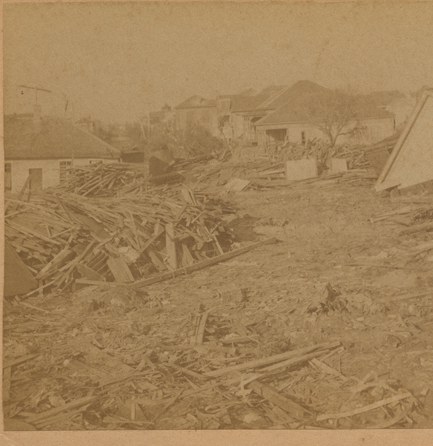
NHC’s definitions, in its own words: a tropical storm has maximum sustained winds of 39 to 73 mph, a hurricane 74 mph or higher, and a major hurricane 111 mph or higher, corresponding to Category 3, 4 or 5 on the Saffir-Simpson Hurricane Wind Scale. Category measures wind only: water, historically the deadlier hazard, is not in the number, which is one more reason a history page must never stand in for the National Hurricane Center during a real storm.
Hurricane strikes on Alabama by NOAA-attributed category in this state, 1851 to 2025.
Alabama hurricane season FAQ
More for the Alabama coast
Hurricane season by state
Hurricane season by month
Strike counts and categories are reproduced from NOAA AOML’s continental US hurricane landfall list (Revised in March 2026 to add in the 2025 season) and NOAA HURDAT2. Season dates and peak are NHC’s, quoted. These are historical records and season climatology. For a live forecast or watch: nhc.noaa.gov.
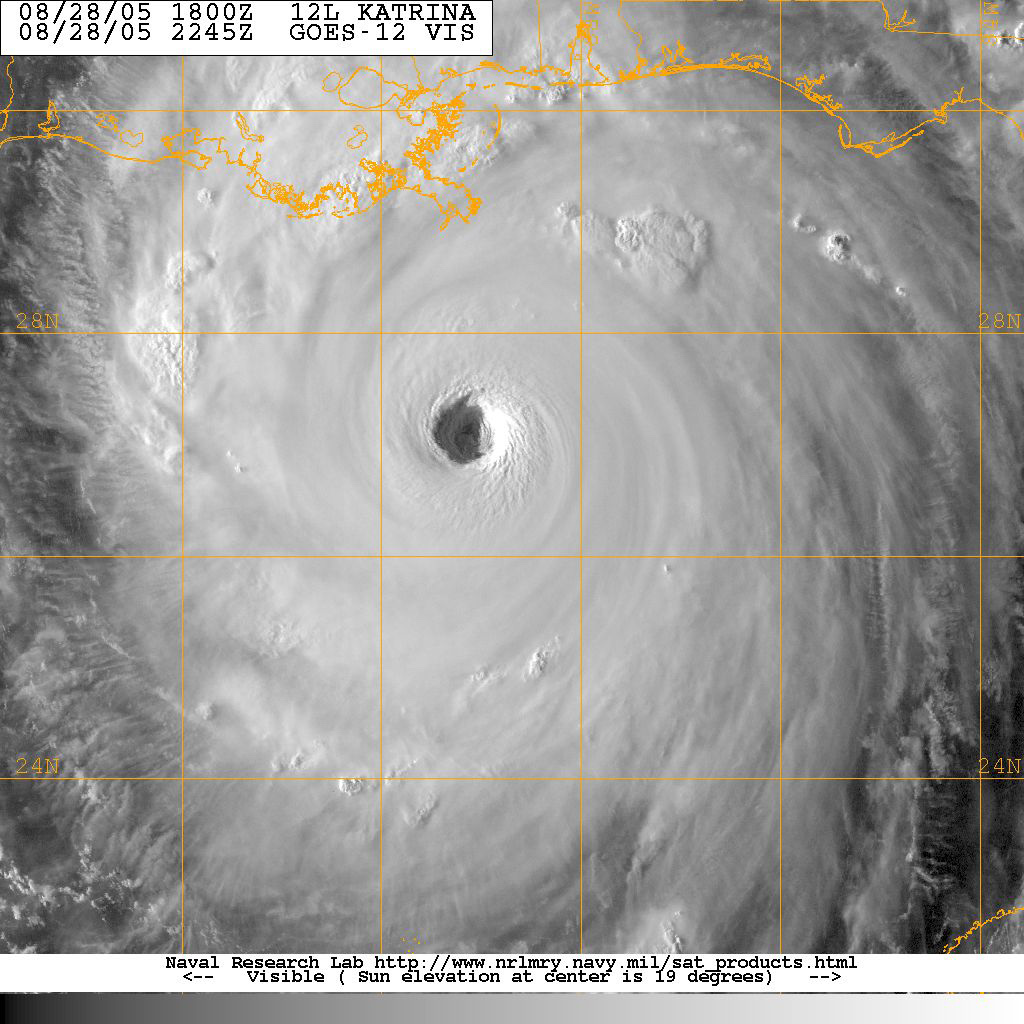
Hero image: “Katrina 2005-08-28 2245Z” — U.S. Navy / Naval Research Laboratory — Public domain