Skip to content
Connecticut, statewide, 3 cities measured

Connecticut Frost Line Depth: 42 inches

Connecticut sets one frost line depth for the whole state, 42 inches, and its plumbing amendment goes further and puts water service pipe at least 48 inches down.

42 inches
Frost line depth
one figure statewide
2021 IResidential Code
Code in force
Office of the State Building Inspector, Connecticut Department of Administrative Services
921
Freezing index
degree days a winter at Norfolk
157
Nights below freezing
a winter at Norfolk, since 1951
The answer

How deep is the frost line in Connecticut?

One statewide depth

42 inches

Connecticut's residential code sets one frost line depth for the whole state: 42 inches.

Who publishes it
Office of the State Building Inspector, Connecticut Department of Administrative Services
Code in force
2022 Connecticut State Building Code
Based on
2021 International Residential Code
Effective
Oct 1, 2022
(Amd) TABLE R301.2 CLIMATIC AND GEOGRAPHIC DESIGN CRITERIA ... SUBJECT TO DAMAGE FROM Frost Line Depth 42”
2022 Connecticut State Building Code (w/ Errata #1), Office of the State Building Inspector, Connecticut Department of Administrative Services, read September 22, 2026. Read it at the source
Advertisement
What the code asks

Footings and buried water lines in Connecticut

A frost line depth turns into two separate requirements in most codes: how far a footing has to bear below grade, and how far a buried water service has to sit below the same line. Connecticut writes both of them out.

Footings

Foundation walls, piers and other permanent supports have to reach below the 42 inch frost line, unless they are built as a frost protected shallow foundation, built to ASCE 32, or set on solid rock.

Depth
42 inches
Below the frost line
Yes, the code says so in these words
Exemptions
Protection of freestanding accessory structures with an area of 600 square feet (56 m2) or less, of light-frame construction, with an eave height of 10 feet (3048 mm) or less shall not be required. Protection of freestanding accessory structures with an area of 400 square feet (37 m2) or less, of other than light-frame construction, with an eave height of 10 feet (3048 mm) or less shall not be required. Decks and ramps not supported by a dwelling need not be provided with footings that extend below the frost line. The footing for the grade-level termination of stairs or ramps attached to decks or landings, whether the deck or landing is supported by a dwelling or not, shall only be required to be placed at least 12 inches (305 mm) below the undisturbed ground surface in accordance with Section R403.1.4.
(Amd) R403.1.4.1 Frost protection. Except where otherwise protected from frost, foundation walls, piers and other permanent supports of buildings and structures shall be protected from frost by one or more of the following methods: 1. Extended below the frost line specified in Table R301.2.(1). 2. Constructed in accordance with Section R403.3. 3. Constructed in accordance with ASCE 32. 4. Erected on solid rock.
2022 Connecticut State Building Code (w/ Errata #1), Office of the State Building Inspector, Connecticut Department of Administrative Services, read September 22, 2026. Read it at the source

Buried water lines

The state's plumbing code amendment puts water service pipe at least 48 inches deep, which is 6 inches deeper than the frost line the building code sets.

Depth
48 inches
(Amd) 305.4 Freezing. A water, soil or waste pipe shall not be installed outside of a building, or concealed in outside walls or in any place subjected to freezing temperature, unless adequate provision is made to protect such pipe from freezing by insulation or heat or both. Water service pipe shall be installed not less than 48 inches deep.
2022 Connecticut State Building Code (w/ Errata #1), Office of the State Building Inspector, Connecticut Department of Administrative Services, read September 22, 2026. Read it at the source
The winter behind it

The freezing index in Connecticut

The air freezing index is the quantity the frost provisions of the model codes are written on: add up how far each day’s mean temperature fell below freezing over a winter, in degree days, and take the deepest run the winter managed. It measures how much cold the ground had to absorb, which is why it is the honest way to set one place beside another. Norfolk is the coldest of the 3 cities on the record in Connecticut.

Norfolk

Hard

921degree days

average freezing index a winter

Hardest winter on record
1,494 degree days, winter of 1962
Hard winter, once a century
1,835 degree days
Nights below freezing
157 a year
Days that never thaw
61 a year
Winters measured
72, 1951 to 2025

Norfolk 2 SW

CityStateFreezing indexOnce a centuryNights below freezing
NorfolkConnecticut9211,835157
HartfordConnecticut4321,145130
BridgeportConnecticut21163496

Computed from NOAA National Centers for Environmental Information, Global Historical Climatology Network daily temperature records for each station, from 1951 onward. These are measurements of winter, not depths.

In context

What states with a comparable winter ask for

Only a handful of states answer with one number for the whole state, and they are the only codes that can be set beside each other directly. Ranked by the freezing index at their own reference cities, with Connecticut marked at 521 degree days for comparison alongside what those codes settled on:

  1. North Carolina3412 inches
  2. Massachusetts4224 feet
  3. Connecticut52142 inches
  4. Michigan1,12042 inches
  5. Vermont1,1485 feet
  6. Wisconsin1,1624 feet
  7. Connecticut521None published

Left to right, the mildest winters to the hardest. The figure on the right is what that state wrote into its code.

The nearest by winter are Massachusetts at 4 feet, North Carolina at 12 inches and Michigan at 42 inches. That is a reading of other states’ codes rather than a depth for an address in Connecticut: soil, drainage, snow cover and local amendments all move the figure, and the building department issuing the permit is the office whose number binds.

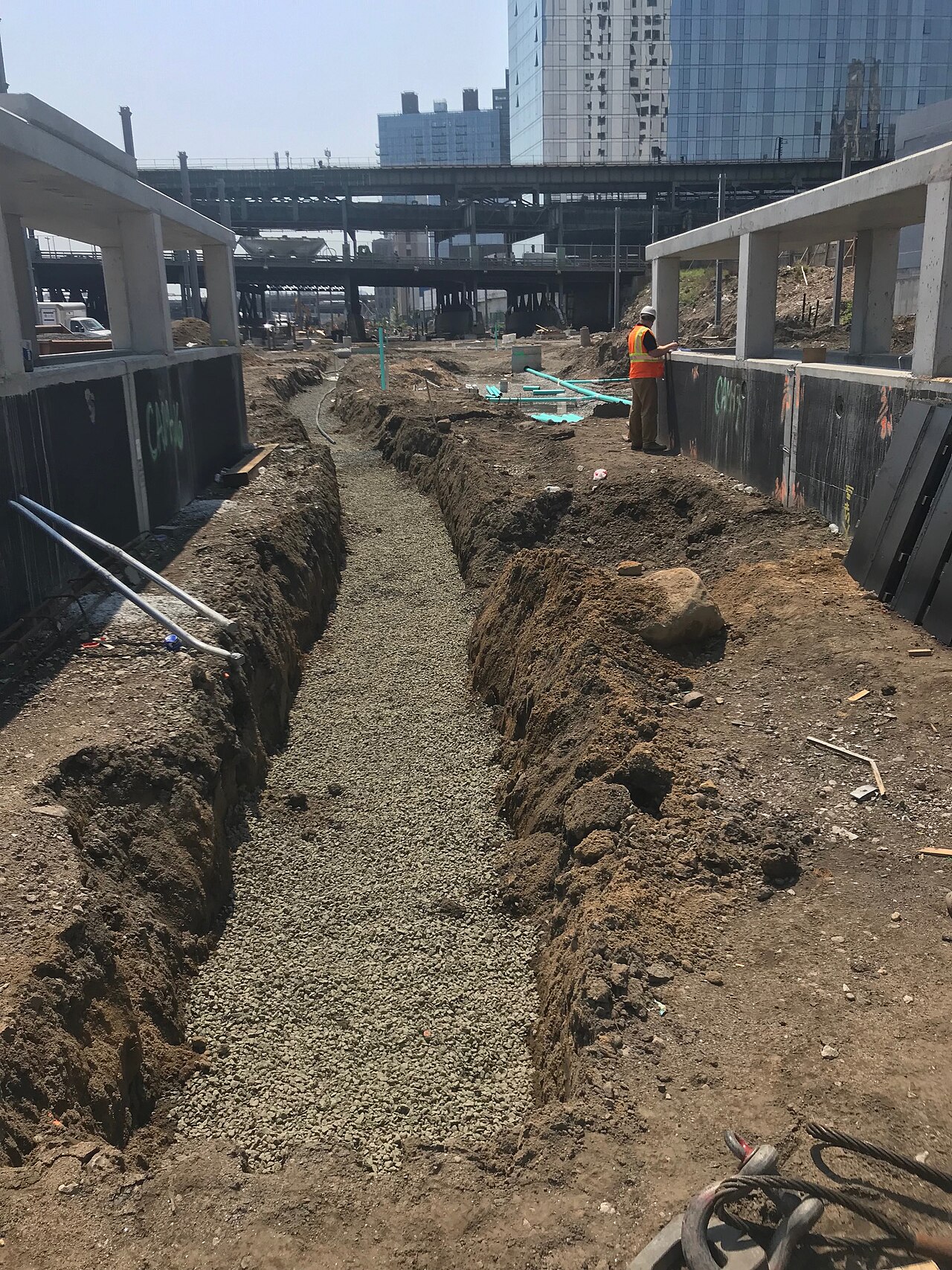
A long open trench with a gravel bed running down the middle of a city construction site, lengths of blue water pipe staged on the ground beside it
A water main trench, bedded and waiting for pipe, in Queens. Buried water service has its own depth rule in the plumbing side of a state code, written separately from the footing rule and not always to the same number. “Excavation for a water main trench in the future LIRR Mid-day Storage Yard”, MTA Capital Construction Mega Projects, CC BY 2.0

Connecticut frost line questions

Advertisement

Connecticut code read September 22, 2026 from 2022 Connecticut State Building Code (w/ Errata #1), Office of the State Building Inspector, Connecticut Department of Administrative Services. Codes are amended and a local amendment can be deeper than the state figure, so the building department issuing the permit has the number that binds. Every state is on the frost line depth hub.