
Indiana CWD Testing and Deer Carcass Rules
Indiana requires no hunter anywhere in the state to have a deer tested, offers free testing through drop off coolers and staffed locations, and lets a deer from another state cross the line only as one of seven listed forms unless it reaches a registered processor or licensed taxidermist within 72 hours.
Is CWD testing required in Indiana
Indiana has found the disease in wild deer, and Indiana Department of Natural Resources, Division of Fish, Wildlife & Nature Preserves sets no requirement to submit a sample. A test is offered on any deer a hunter brings in.
- How to submit
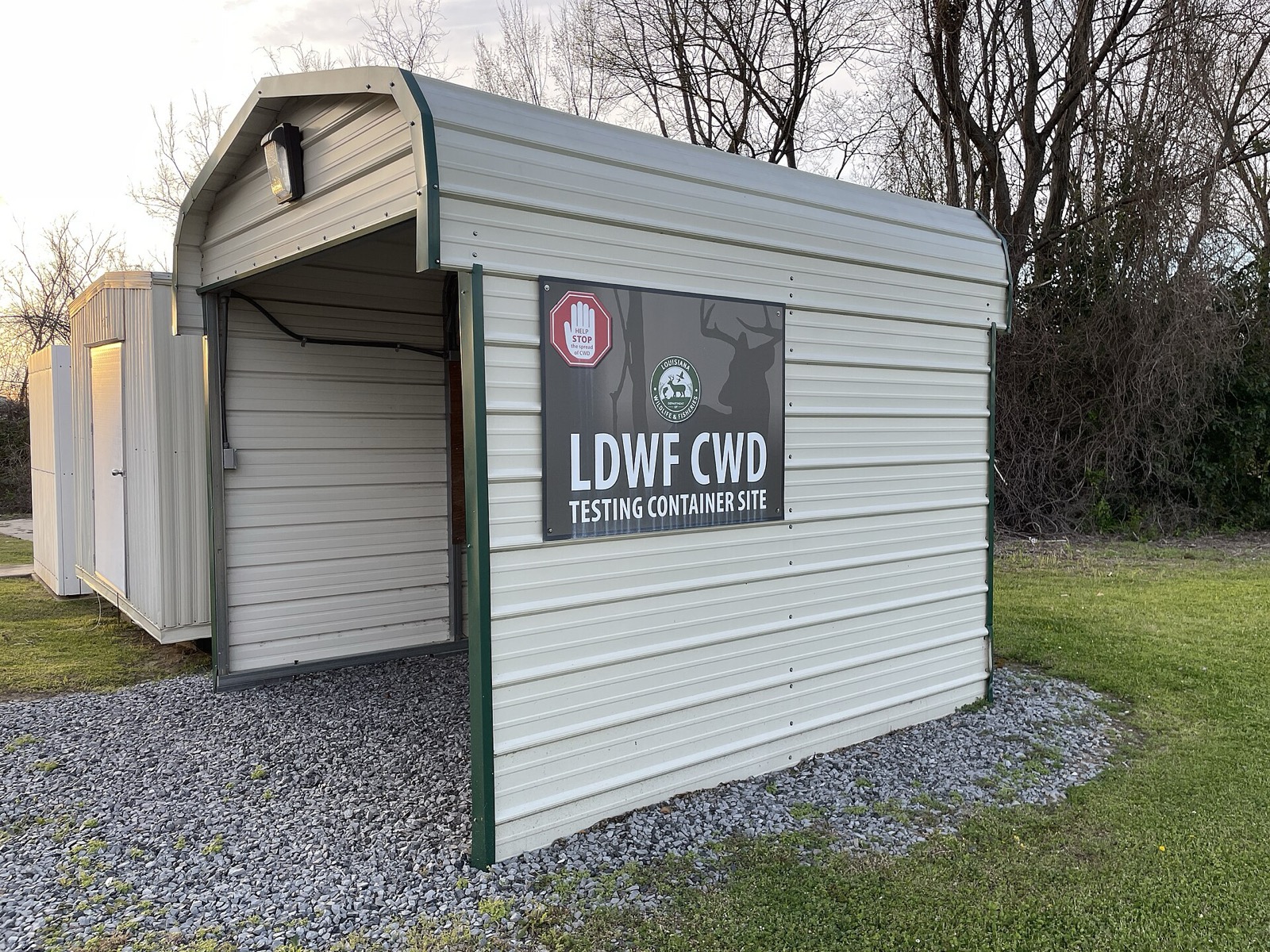
- Indiana Department of Natural Resources, Division of Fish, Wildlife & Nature Preserves names CWD drop-off cooler at participating DNR locations, participating Fish & Wildlife areas or State Fish Hatcheries by appointment, private businesses that are taking samples during the deer season and Animal Disease Diagnostic Laboratory (ADDL) at Purdue University for a fee.
- What it costs
- Indiana Department of Natural Resources, Division of Fish, Wildlife & Nature Preserves waives the fee in some places and not others: free through the DNR program, or for a fee if the hunter submits directly to the Purdue laboratory.
- How long results take
- The DNR says online results can take eight to 12 weeks.
- The zone it draws
- CWD Positive Area, and CWD Enhanced Surveillance Zone
Participation in the Indiana CWD monitoring program is voluntary.Chronic Wasting Disease (CWD), Indiana DNR Fish & Wildlife, read September 23, 2026. Read it at the source
What may be carried across the Indiana line
This is the rule a hunter is most likely to miss, because it is written by the state being entered rather than the state the animal was taken in. Reading the regulations of the state hunted in cover to cover does not surface it. Nationally, 42 of the 50 states restrict what crosses and 27 refuse an intact carcass from anywhere at all.
Indiana names the parts that may cross its line and admits nothing outside that list.
A deer or elk brought into Indiana must arrive as one of the seven listed forms, and anything still carrying the head, spinal column or small intestine has to reach a DNR registered processor or licensed taxidermist within 72 hours of entering the state.
What Indiana DNR admits, in its own categories:
- de-boned meat or commercially-processed meat which may contain bones
- carcasses or parts of carcasses with the head or spinal column attached, if they are delivered within 72 hours after entry to a deer processor registered with the Indiana DNR or a taxidermist licensed by the Indiana DNR
- antlers, including antlers attached to skull caps, if the skull cap is cleaned of all brain and muscle tissue
- hides
- upper canine teeth, also known as "buglers", "whistlers", or "ivories"
- heads, if they are delivered to a taxidermist licensed by the DNR within 72 hours after entry
- finished taxidermist mounts
Importation of carcasses and parts from white-tailed deer, mule deer or elk are allowed as follows: De-boned meat or commercially-processed meat which may contain bones.Deer Carcass Transportation, Indiana DNR Fish & Wildlife, read September 23, 2026. Read it at the source
The Indiana agency’s own words on the meat
Indiana Department of Natural Resources, Division of Fish, Wildlife & Nature Preserves publishes this:
If the deer tests positive for CWD, DNR recommends not consuming it.Chronic Wasting Disease (CWD), Indiana DNR Fish & Wildlife, read September 23, 2026. Read it at the source
That sentence is reproduced whole and unedited because it is the agency’s statement rather than a summary of one, and 30 of the 50 states here publish one of their own. The wording differs between states.
CWD in Indiana: status, zones and baiting
Indiana Department of Natural Resources, Division of Fish, Wildlife & Nature Preserves has confirmed the disease in Indiana's wild deer. The first confirmed case dates to 2024. The DNR's first CWD Positive Area is the county where the positive deer was found, LaGrange, plus the three adjacent counties of Steuben, Noble and DeKalb; the page's map is labelled as current to March 2026..
- First confirmed case
- 2024
- Moving an animal out of a zone
- The zone rule the DNR prints is about live deer rather than carcasses: a live white-tailed deer may not be moved out of a CWD Positive Area for any purpose, including rehabilitation.
- Carcass waste
- The DNR lists burying a carcass or taking it to a landfill among the steps a hunter can take to reduce the risk of CWD becoming established.
In April 2024, CWD was detected in an Indiana deer for the first time.Chronic Wasting Disease (CWD), Indiana DNR Fish & Wildlife, read September 23, 2026. Read it at the source
Zone boundaries are redrawn between seasons more often than any other rule here, usually after a new detection near an existing line. The map linked above is Indiana DNR's own and is the one that governs.
Indiana CWD questions
CWD rules in other states
Indiana read September 23, 2026 from Chronic Wasting Disease (CWD), Indiana DNR Fish & Wildlife, linked above. Carcass rules, zone boundaries and sampling requirements change between one season’s regulations and the next, and a state can add a rule mid season after a new detection, so the Indiana DNR document linked above is the one that governs. Every state is on the CWD testing hub.