
Wyoming CWD Testing and Deer Carcass Rules
Testing is free and voluntary everywhere in Wyoming and required in the hunt areas named as 2026 mandatory sampling areas, and whether you are moving an animal inside the state or bringing one in from outside, the head and spinal column have to stay behind or go to an approved landfill.
Is CWD testing required in Wyoming
Wyoming Game and Fish Department requires a sample from deer taken in the areas it names, and a test is available on a deer taken anywhere else in Wyoming.
- Where the requirement bites
- Required of deer hunters in the hunt areas the department designates as mandatory CWD sampling areas for the 2026 season, listed in the 2026 antelope, deer and elk regulation brochure.
- How to submit
- Wyoming Game and Fish Department names check stations, Game and Fish regional offices, select meat processors and taxidermists, in the field with a game warden or wildlife biologist and collect it yourself and mail to the Wildlife Health Lab.
- What it costs
- Wyoming Game and Fish Department puts the test at no charge to the hunter.
- How long results take
- The department says results are typically available in about three weeks and that hunters are not notified when they post.
It shall be a violation of Commission regulation for a hunter to fail to submit mandated CWD samples in accordance with this section.Chronic Wasting Disease Testing, Wyoming Game and Fish Department, read September 23, 2026. Read it at the source
What may be carried across the Wyoming line
This is the rule a hunter is most likely to miss, because it is written by the state being entered rather than the state the animal was taken in. Reading the regulations of the state hunted in cover to cover does not surface it. Nationally, 42 of the 50 states restrict what crosses and 27 refuse an intact carcass from anywhere at all.
Wyoming lets an intact carcass cross its line and then governs where the animal may go and what becomes of the head and spine.
A deer, elk or moose taken outside Wyoming may be brought in only if the carcass goes directly to a private residence for processing, a taxidermist, a processor or a CWD sample collection site, and the head and the whole spinal column are then disposed of in an approved landfill or incinerator.
Deer, elk or moose taken from within any other state, province or country shall only be imported into Wyoming if carcasses are transported directly to a private residence for processing, to a taxidermist, to a processor or to a CWD sample collection site provided the head and all portions of the spinal column are disposed of in an approved landfill or incinerator.Chapter 2 General Hunting Regulation, Wyoming Game and Fish Department, read September 23, 2026. Read it at the source
Chapter 2, Section 16, General Hunting Regulation
The Wyoming agency’s own words on the meat
Wyoming Game and Fish Department publishes this:
If the animal you harvested tests positive for CWD, the Centers for Disease Control and Prevention recommends you do not consume the animal's meat.Chronic Wasting Disease Testing, Wyoming Game and Fish Department, read September 23, 2026. Read it at the source
That sentence is reproduced whole and unedited because it is the agency’s statement rather than a summary of one, and 30 of the 50 states here publish one of their own. The wording differs between states.
CWD in Wyoming: status, zones and baiting
Wyoming Game and Fish Department has confirmed the disease in Wyoming's wild deer. The first confirmed case dates to 1985. The department describes CWD as now found across most of the state, and it maps the disease by hunt area and herd unit rather than by county..
- First confirmed case
- 1985
- Baiting and feeding
- Baiting and feeding banned statewide
- Moving an animal out of a zone
- Wyoming sets no CWD management zone; one statewide rule governs movement, and a whole carcass may be moved only to a camp, a residence for processing, a taxidermist, a processor or a CWD sample collection site, with the head and spinal column left at the kill site or taken to an approved landfill or incinerator.
- Carcass waste
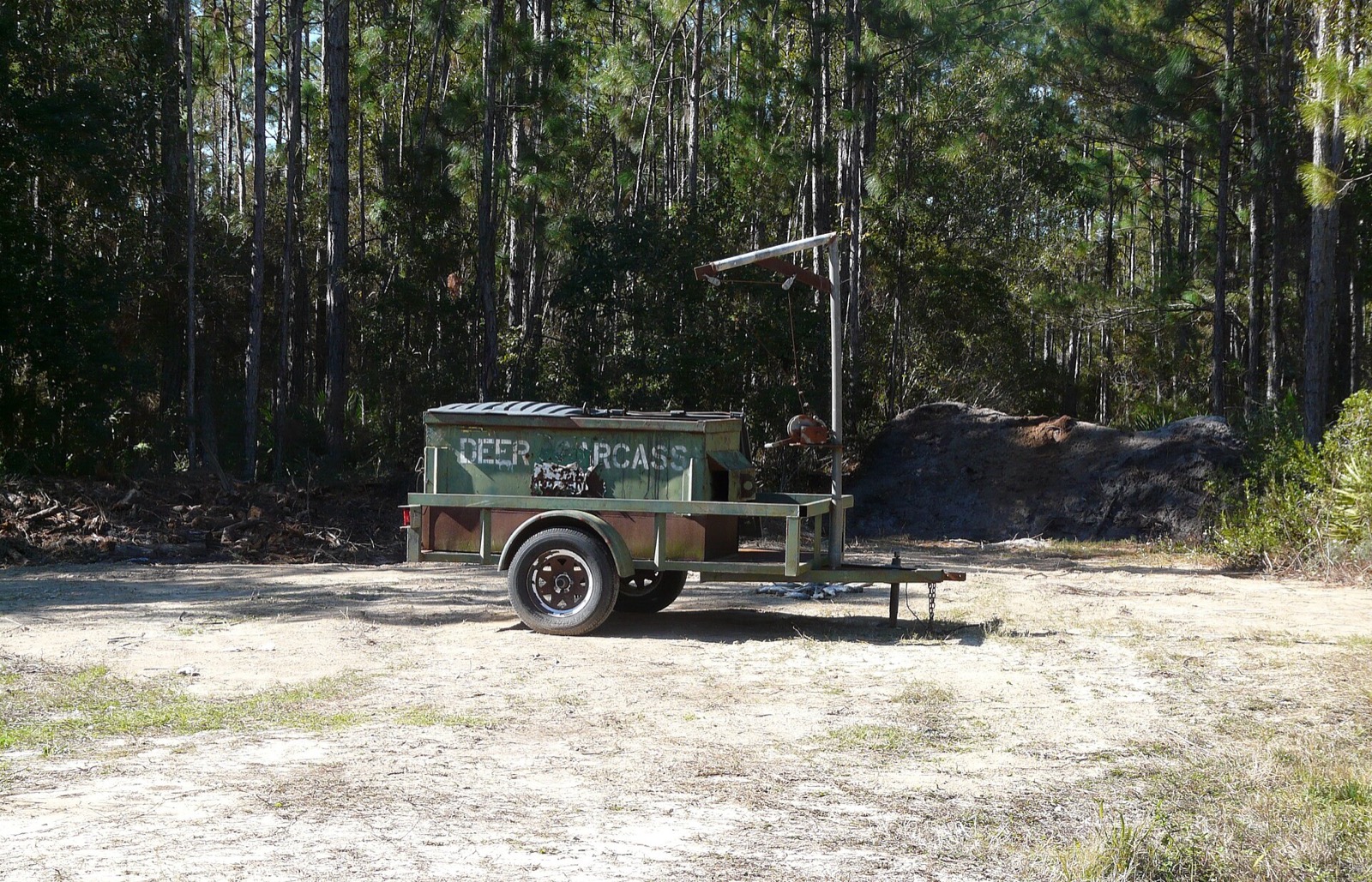
- The head and spinal column are left at the kill site or taken to an approved landfill or incinerator, and the department publishes a statewide map of carcass disposal sites and dumpsters.
CWD was first identified in free-ranging mule deer in southeastern Wyoming in 1985, followed by elk in 1986.Chronic Wasting Disease, Wyoming Game and Fish Department, read September 23, 2026. Read it at the source
Wyoming draws no management or surveillance zone, which means its rules apply the same way in every county. Several states added a first zone within a season of a first detection, so a zone boundary is the part of a state's rules most likely to change.
Wyoming CWD questions
CWD rules in other states
Wyoming read September 23, 2026 from Chronic Wasting Disease, Wyoming Game and Fish Department, linked above. Carcass rules, zone boundaries and sampling requirements change between one season’s regulations and the next, and a state can add a rule mid season after a new detection, so the WGFD document linked above is the one that governs. Every state is on the CWD testing hub.