
Wisconsin CWD Testing and Deer Carcass Rules
Testing is free and voluntary everywhere in Wisconsin with kiosks, cooperating businesses, at home lymph node extraction and DNR appointments, nothing is mandatory, and a carcass coming in from a CWD affected state has to reach a licensed processor or permitted taxidermist within 72 hours.
Is CWD testing required in Wisconsin
Wisconsin has found the disease in wild deer, and Wisconsin Department of Natural Resources sets no requirement to submit a sample. A test is offered on any deer a hunter brings in.
- How to submit
- Wisconsin Department of Natural Resources names Self-service kiosks open 24/7, In-person with cooperating meat processors, taxidermists and other business owners, At-home lymph node extraction and By-appointment with local DNR staff.
- What it costs
- Wisconsin Department of Natural Resources puts the test at no charge to the hunter.
- How long results take
- The DNR says results are typically available 10 to 14 days after the deer is brought to a sampling station.
The DNR offers hunters four ways to submit a sample from their harvested deer for CWD testing.Sampling for chronic wasting disease (CWD), Wisconsin Department of Natural Resources, read September 23, 2026. Read it at the source
What may be carried across the Wisconsin line
This is the rule a hunter is most likely to miss, because it is written by the state being entered rather than the state the animal was taken in. Reading the regulations of the state hunted in cover to cover does not surface it. Nationally, 42 of the 50 states restrict what crosses and 27 refuse an intact carcass from anywhere at all.
An intact carcass may not be carried into Wisconsin from a state or province where the disease has been found. An animal from anywhere else falls outside the rule.
A whole carcass or certain carcass parts from a state or province where CWD has been found in wild cervids may not be brought into Wisconsin unless it goes to a licensed meat processor or permitted taxidermist within 72 hours of entering the state.
Whole carcasses and certain parts of carcasses from these states and provinces are not allowed into Wisconsin unless taken to a licensed meat processor or permitted taxidermist within 72 hours of entry into Wisconsin.Carcass movement, processing and disposal, Wisconsin Department of Natural Resources, read September 23, 2026. Read it at the source
The Wisconsin agency’s own words on the meat
Wisconsin Department of Natural Resources publishes this:
The U.S. Centers for Disease Control and Prevention states that to date, there have been no reported cases of CWD infection in people. Nonetheless, as a precaution, the Wisconsin Department of Health Services (DHS) recommends that people only consume venison from healthy-appearing deer with test results indicating that CWD was not detected.Sampling for chronic wasting disease (CWD), Wisconsin Department of Natural Resources, read September 23, 2026. Read it at the source
That sentence is reproduced whole and unedited because it is the agency’s statement rather than a summary of one, and 30 of the 50 states here publish one of their own. The wording differs between states.
CWD in Wisconsin: status, zones and baiting
Wisconsin Department of Natural Resources has confirmed the disease in Wisconsin's wild deer. The first confirmed case dates to 2002. The DNR publishes statewide positive locations and county level result summaries rather than a single count of affected counties, and it maintains an interactive map of positive detections..
- First confirmed case
- 2002
- Baiting and feeding
- Banned inside the zones
- Moving an animal out of a zone
- Wisconsin sets no mandatory boundary a carcass may not cross inside the state; the DNR publishes a recommendation instead, that whole carcasses not be moved beyond the county of harvest or a county next to it.
- Carcass waste
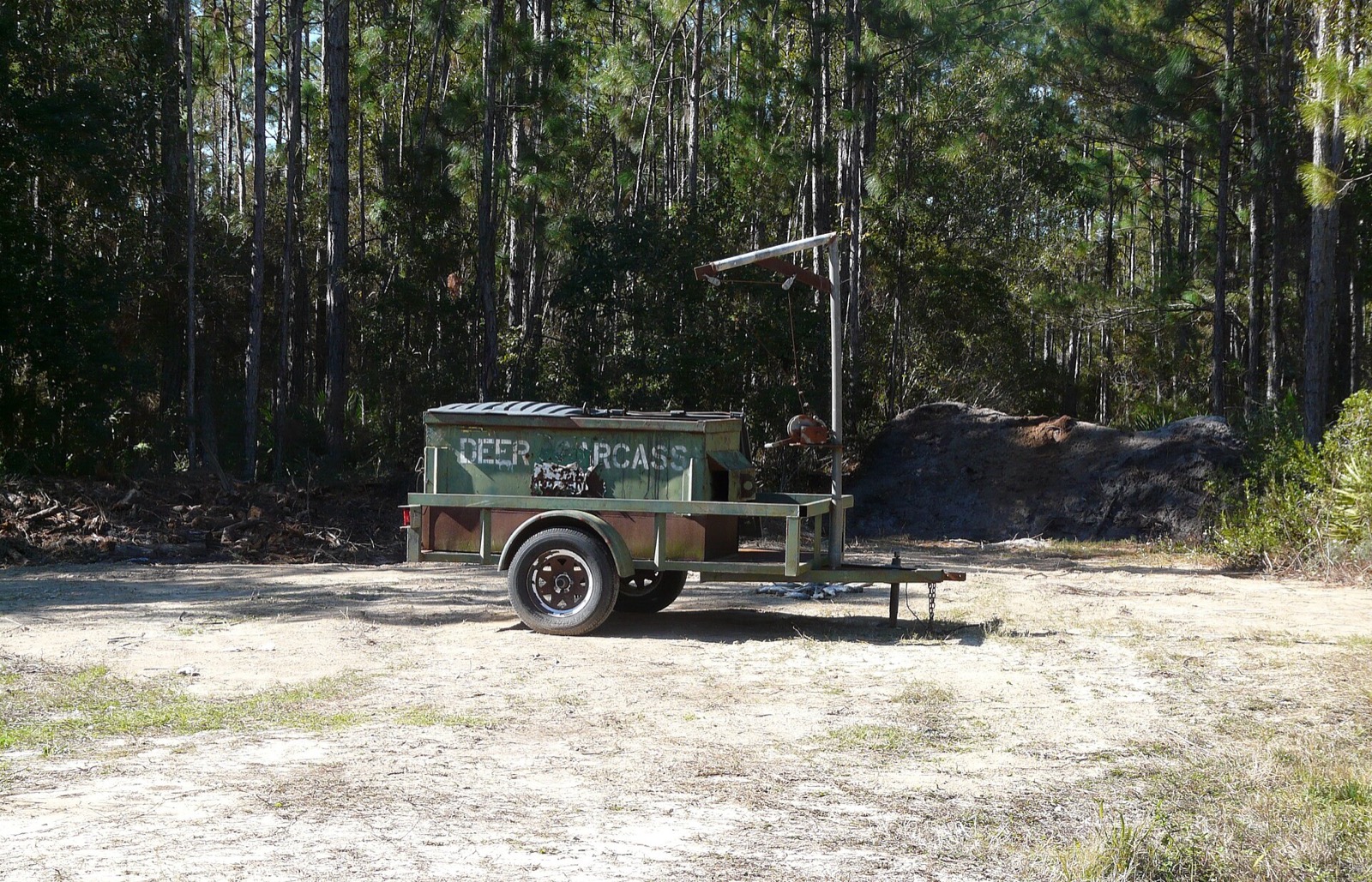
- The DNR asks hunters to get carcass waste into a landfill, a transfer station, curbside pickup where the municipality allows it, or a deer carcass waste dumpster, with burial on the land hunted as the next option.
The Wisconsin DNR began monitoring the state's wild white-tailed deer population for CWD in 1999. The first positives were found in 2002.Chronic wasting disease (CWD), Wisconsin Department of Natural Resources, read September 23, 2026. Read it at the source
Wisconsin draws no management or surveillance zone, which means its rules apply the same way in every county. Several states added a first zone within a season of a first detection, so a zone boundary is the part of a state's rules most likely to change.
Wisconsin CWD questions
CWD rules in other states
Wisconsin read September 23, 2026 from Chronic wasting disease (CWD), Wisconsin Department of Natural Resources, linked above. Carcass rules, zone boundaries and sampling requirements change between one season’s regulations and the next, and a state can add a rule mid season after a new detection, so the DNR document linked above is the one that governs. Every state is on the CWD testing hub.