
Georgia CWD Testing and Deer Carcass Rules
Testing in Georgia is free and encouraged rather than required, even inside the four county management area, but carcass disposal is now required statewide and a deer carcass from another state may only come in as meat and cleaned parts.
Is CWD testing required in Georgia
Georgia has found the disease in wild deer, and Georgia Department of Natural Resources Wildlife Resources Division sets no requirement to submit a sample. A test is offered on any deer a hunter brings in.
- How to submit
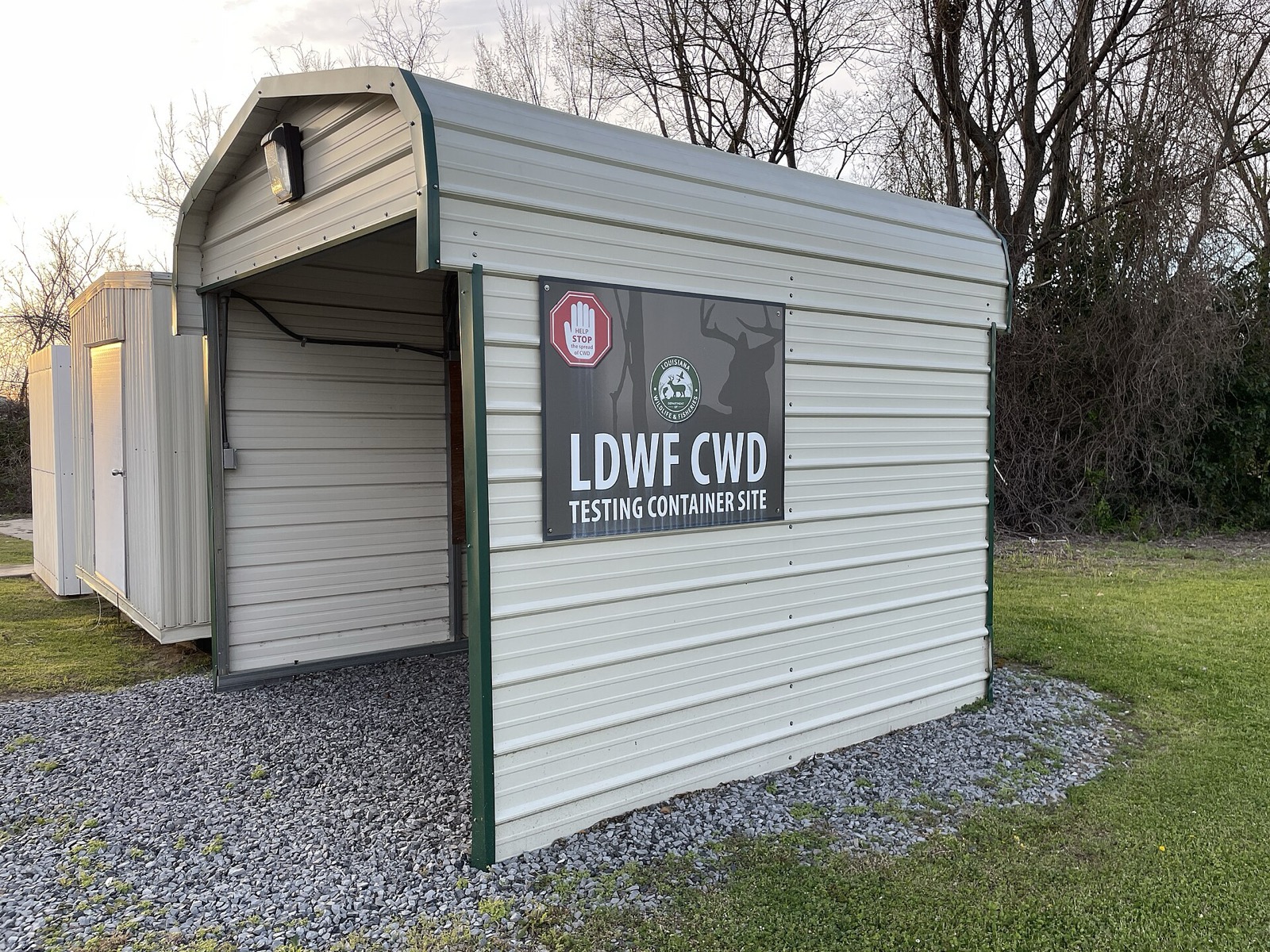
- Georgia Department of Natural Resources Wildlife Resources Division names participating deer processors, taxidermists and self-serve CWD sampling site.
- What it costs
- Georgia Department of Natural Resources Wildlife Resources Division puts the test at no charge to the hunter.
- How long results take
- the agency says two to six weeks for a deer from the management area and months for a deer from elsewhere in the state, and that it contacts the hunter directly only if the deer is positive
- The zone it draws
- CWD Management Area
If you hunt inside the CMA (Atkinson, Berrien, Lanier and Lowndes counties), testing is strongly encouraged.Testing Information: Chronic Wasting Disease, Georgia Department of Natural Resources Wildlife Resources Division, read September 23, 2026. Read it at the source
What may be carried across the Georgia line
This is the rule a hunter is most likely to miss, because it is written by the state being entered rather than the state the animal was taken in. Reading the regulations of the state hunted in cover to cover does not surface it. Nationally, 42 of the 50 states restrict what crosses and 27 refuse an intact carcass from anywhere at all.
An intact carcass may not be carried into Georgia from any other state. The parts DNR does admit are listed below.
A deer carcass may not be brought into Georgia from another state except as boned out meat, hides, a cleaned skull or skull cap with antlers, a jawbone with no soft tissue, elk ivories or a finished mount, and everything else must be left behind.
What DNR admits, in its own categories:
- boned-out meat
- hides
- skulls or skull caps with antlers attached and all soft tissue removed
- jawbones with no soft tissue
- elk ivories
- finished taxidermy mounts
Those who hunt out of state may only bring home a) boned-out meat, hides, skulls or skull caps with antlers attached and all soft tissue removed (velvet antlers are okay), b) jawbones with no soft tissue, c) elk ivories, and d) finished taxidermy mounts.CWD in Georgia: What To Know, Georgia Department of Natural Resources Wildlife Resources Division, read September 23, 2026. Read it at the source
O.C.G.A. 27-5-2.1
The Georgia agency’s own words on the meat
Georgia Department of Natural Resources Wildlife Resources Division publishes this:
CWD has not been shown to infect people, but the CDC recommends not consuming deer that test positive for CWD.Testing Information: Chronic Wasting Disease, Georgia Department of Natural Resources Wildlife Resources Division, read September 23, 2026. Read it at the source
That sentence is reproduced whole and unedited because it is the agency’s statement rather than a summary of one, and 30 of the 50 states here publish one of their own. The wording differs between states.
CWD in Georgia: status, zones and baiting
Georgia Department of Natural Resources Wildlife Resources Division has confirmed the disease in Georgia's wild deer. The first confirmed case dates to 2025. The agency names four counties in the south of the state as its CWD Management Area, drawn as the county of the positive plus any county touching a five mile radius around it.
- First confirmed case
- 2025
- Baiting and feeding
- No baiting or feeding ban published
- Carcass waste
- Carcass disposal is required statewide of hunters, processors and taxidermists, and the allowed ways are leaving the parts where the deer was killed, a commercial processor, a permitted landfill or household garbage, or deep burial or incineration.
Chronic Wasting Disease (CWD) was initially discovered in Georgia in January 2025.Chronic Wasting Disease (CWD), Georgia Department of Natural Resources Wildlife Resources Division, read September 23, 2026. Read it at the source
Zone boundaries are redrawn between seasons more often than any other rule here, usually after a new detection near an existing line. The map linked above is DNR's own and is the one that governs.
Georgia CWD questions
CWD rules in other states
Georgia read September 23, 2026 from Chronic Wasting Disease (CWD), Georgia Department of Natural Resources Wildlife Resources Division, linked above. Carcass rules, zone boundaries and sampling requirements change between one season’s regulations and the next, and a state can add a rule mid season after a new detection, so the DNR document linked above is the one that governs. Every state is on the CWD testing hub.